Joko Susilo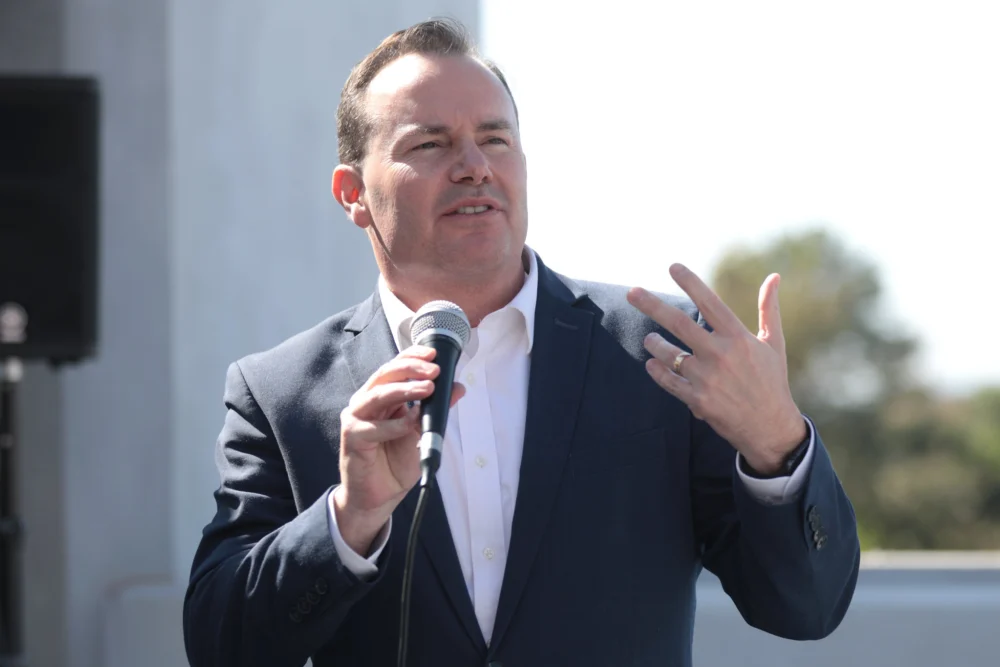
Utah Republican Senator Mike Lee has once again ignited controversy with legislative proposals that critics contend are thinly veiled attempts to undermine federal land protections, pivoting from a recent, failed bid to sell off millions of public acres to new initiatives framed around border security and disability access. Just months after withdrawing a plan in June that aimed to force the sale of up to 3.2 million acres of federal land, ostensibly to combat a national housing shortage by targeting "unused, garden-variety" parcels, Senator Lee is now championing measures that would significantly alter the management and designation of America’s most cherished natural spaces. His earlier land-sale scheme, which explicitly excluded national parks and designated wilderness areas, faced widespread bipartisan opposition, highlighting the deep public reverence for these protected landscapes.
On October 2, Senator Lee introduced the Border Lands Conservation Act, a sweeping piece of legislation designed to open vast stretches of federal land along both the U.S.-Mexico and U.S.-Canada borders to extensive development. The bill would permit road construction, timber harvesting, and the deployment of advanced surveillance systems and other forms of "tactical infrastructure" within national parks, wilderness areas, and other protected federal lands. Senator Lee justifies these drastic measures by asserting that "Biden’s open-border chaos is destroying America’s crown jewels," arguing that the proposed infrastructure is necessary to combat "environmental destruction" resulting from current border policies. "This bill gives land managers and border agents the tools to restore order and protect these places for the people they were meant to serve," Lee stated, emphasizing a perceived urgency in securing these sensitive ecological zones.
However, the geographic reach of the Border Lands Conservation Act extends far beyond immediate border zones, raising alarm among conservationists and land management experts. The legislation broadly defines "covered federal land" to include any federal land unit, or portion thereof, that shares an exterior boundary with either the southern or northern U.S. border. This expansive definition means that if a national park, forest, monument, or other designated area touches a border at any point, the entire unit—regardless of its distance from the international boundary—falls under the bill’s purview. Consequently, iconic landscapes such as California’s Joshua Tree National Park, Texas’s Big Bend National Park, Montana’s Glacier National Park, Washington’s North Cascades National Park, and Minnesota’s Boundary Waters Canoe Area Wilderness would be subject to potential development. One of the most striking examples identified by analysts is the Flathead National Forest in northwestern Montana, a vast 2.4-million-acre expanse that extends approximately 120 miles from the U.S.-Canada border, encompassing 1 million acres of pristine wilderness.

Critics argue that the bill is a pretext for undermining long-standing conservation efforts. Neal Clark, wildlands director at the Southern Utah Wilderness Alliance, articulated a common sentiment: "The big picture is Mike Lee will use any pretext to undermine public lands and conservation. It was housing six months ago, now it’s border security." This perspective suggests a consistent legislative strategy aimed at diminishing federal control and protection of public lands, irrespective of the stated justification.
The Border Lands Conservation Act proposes significant amendments to the landmark 1964 Wilderness Act, a foundational piece of environmental legislation that protects over 110 million acres of designated wilderness areas from most forms of development and human intrusion. Under Lee’s bill, the Department of Homeland Security (DHS) would gain explicit authority to conduct patrols using motorized vehicles—including cars, airplanes, and boats—and to "deploy tactical infrastructure" within these protected wilderness zones. The definition of "tactical infrastructure" is broad, encompassing observation points, remote video surveillance systems, motion sensors, vehicle barriers, fences, roads, bridges, drainage systems, and various detection devices. Furthermore, the bill would grant DHS unfettered authority to conduct immigration, terrorism, and drug enforcement activities across all federal land within 100 miles of either border, explicitly prohibiting land management agencies from restricting DHS operations. It also establishes a "Border Fuels Management Initiative" to address wildfire risks on federal border lands, linking these risks to the impacts of illegal immigration.
While Senator Lee frames the legislation as a necessary response to a border crisis, the actual trends in border crossings present a more complex picture. U.S. Customs and Border Protection data indicates that while border encounters have seen significant fluctuations and increases in recent years, particularly along the southern border, the narrative surrounding environmental degradation directly attributable to these movements is often contentious. The bill’s timing and broad scope have led many to question its true intent, especially given that only one senator from a border state, Ted Cruz of Texas, co-sponsored the legislation, alongside Sens. John Barrasso (R-Wyo.), Marsha Blackburn (R-Tenn.), Cindy Hyde-Smith (R-Miss.), Cynthia Lummis (R-Wyo.), Tom Cotton (R-Ark.), and Rick Scott (R-Fla.).
Moreover, existing federal statutes already provide substantial authority for border security operations within federal lands. Bob Krumenaker, who retired in 2023 after over 40 years with the National Park Service, including a tenure as superintendent of Big Bend National Park, points out that the Real ID Act of 2005 granted DHS the power to waive numerous federal laws, including the Wilderness Act, to facilitate the construction of border barriers and roads. A subsequent 2006 Memorandum of Understanding between DHS, the Department of the Interior, and the Department of Agriculture established a framework for inter-agency collaboration, aiming to balance border security needs with environmental protection. Krumenaker argues that this existing framework, which mandates consultation between DHS and land management agencies, "assures that, to the greatest degree possible, border security and wilderness protection can both be achieved." He warns that Lee’s bill, by creating blanket exceptions and eliminating the consultative role of land management agencies, would likely result in "unnecessary and often irreversible impacts to wilderness."

In addition to his border security initiative, Senator Lee introduced a trio of bills on October 6, collectively titled the "Outdoor Americans with Disabilities Act," aimed at expanding off-road vehicle (ORV) use in national parks and other federal lands. The stated goal is to "ensure that Americans with disabilities can access and enjoy the nation’s public lands." Senator Lee articulated his vision, stating, "The mountains, canyons, and forests managed by the federal government are part of our shared heritage, and access to them should not depend on whether someone can hike ten miles or climb a ridge." The legislation has garnered support from various off-road vehicle associations and enthusiasts, who advocate for greater motorized access to public lands.
However, disability advocates and conservation groups have strongly criticized these bills, viewing them as another attempt to weaken environmental protections under a sympathetic guise. Syren Nagakyrie, founder and director of Disabled Hikers, a nonprofit dedicated to supporting disabled individuals in outdoor pursuits, unequivocally condemned the legislation as a "shameful" maneuver. Nagakyrie stated, "People with disabilities are not political pawns to be used while catering to special interests," asserting that the bills are part of Senator Lee’s "ongoing attempts to dismantle public lands, build and prioritize roads, and sell lands to the highest bidder." Critics argue that while accessibility is crucial, promoting widespread ORV use in sensitive ecosystems can cause significant environmental damage, including habitat destruction, soil erosion, noise pollution, and disruption of wildlife, potentially detracting from the very natural experiences it claims to enhance. Many existing accessibility initiatives focus on universal design principles, which integrate inclusive access through well-designed trails, facilities, and programs that minimize environmental impact, rather than relying solely on motorized vehicle expansion.
Senator Lee’s repeated legislative efforts underscore a broader, ongoing ideological battle over the future of America’s vast public lands. This enduring conflict pits the values of conservation and wilderness preservation against calls for increased development, resource extraction, and expanded access, often framed within arguments concerning economic growth, national security, or, as in the latest proposals, social equity. The proposals highlight the deep tension between federal management responsibilities and state or local control, a debate that has simmered for decades, particularly in the Western United States. As these bills move through the legislative process, they will undoubtedly face intense scrutiny from environmental organizations, disability rights advocates, land managers, and the public, all vying to shape the destiny of these irreplaceable national treasures.