Roger Danuarta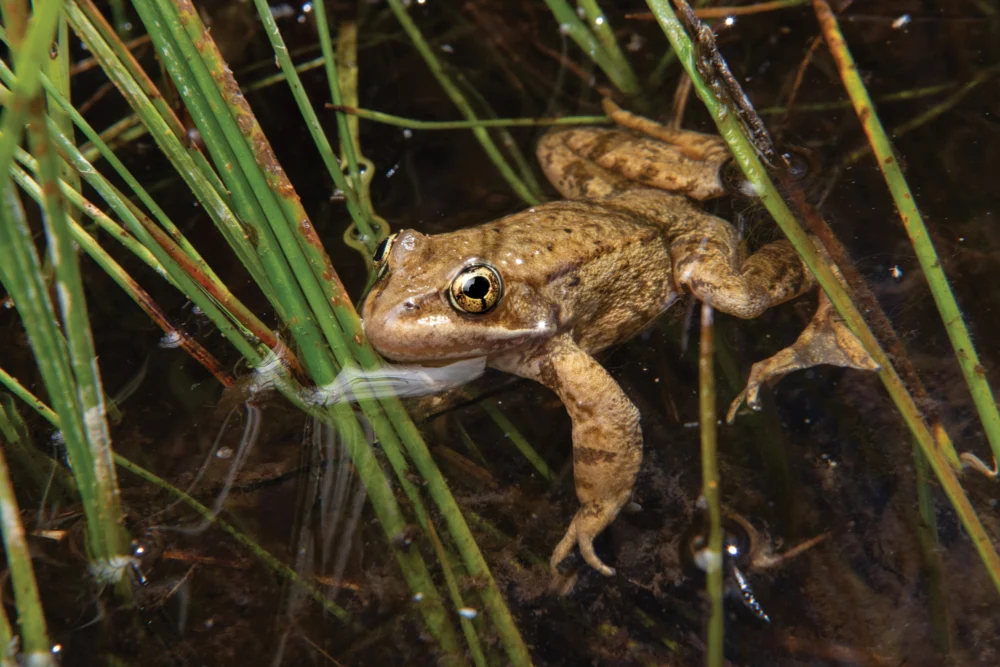
For years, a poignant symbol of environmental decline haunted the high-altitude wetlands of Lassen Volcanic National Park in Northern California: a lone female Cascades frog, the last of her kind known to amphibian survey crews. This resilient amphibian, consistently sighted near Juniper Lake, was a familiar yet somber presence, annually seeking a mate in a landscape where all others had vanished. Her final appearance in 2007 marked a silent, local extinction, leaving the park’s once-thriving Cascades frog populations in the realm of memory. This profound loss served as a critical turning point for ecologist Karen Pope, then with the Forest Service, who recognized the urgency for direct intervention. "We’ve gotten to a place where, if we sit back, we’re going to keep watching the last frog," Pope articulated, underscoring the shift from mere observation to active, restorative conservation.
Now, a pioneering collaborative effort, uniting diverse stakeholders from timber companies and federal agencies to academic institutions, is actively reversing this dire trend. In a remarkable display of inter-organizational synergy, the National Park Service, the U.S. Forest Service, the California Department of Fish and Wildlife, and scientists from Washington State University have partnered with private industry — specifically Sierra Pacific Industries and Collins Pine timber companies — to reintroduce the Cascades frog (Rana cascadae) to Lassen Volcanic National Park. This ambitious undertaking represents a beacon of hope for a species facing a litany of modern environmental challenges, including the pervasive threat of chytrid fungus.

The Cascades frog, an integral component of montane and subalpine ecosystems across its extensive range from Northern California through the Cascade Range to British Columbia, plays a vital role in maintaining ecological balance. These medium-sized, highly aquatic frogs are often found in ponds, lakes, and slow-moving streams, where they serve as both predator, controlling insect populations, and prey, supporting a variety of birds, mammals, and reptiles. Their decline signals broader ecosystem health issues, making their recovery paramount for the region’s biodiversity.
The threats confronting Rana cascadae are multifaceted and severe, emblematic of the global amphibian crisis. Foremost among these is Batrachochytrium dendrobatidis (Bd), commonly known as chytrid fungus, a virulent pathogen that has driven hundreds of amphibian species worldwide to extinction or near-extinction. This microscopic fungus infects the skin, disrupting the frogs’ ability to respire and regulate water and electrolytes, ultimately leading to cardiac arrest. In California, chytrid has already decimated populations of at least two native frog species and gravely compromised three others, including the Cascades frog. Beyond disease, the species grapples with mounting pressures from prolonged drought cycles, exacerbated by climate change, which reduce critical aquatic habitats necessary for breeding and tadpole development. Habitat degradation, stemming from historical land use practices such as logging and grazing, further fragments and diminishes suitable environments. Invasive species, particularly non-native trout historically stocked in high-elevation lakes for recreational fishing, pose a significant predatory threat to vulnerable frog eggs and tadpoles, disrupting natural food webs.
Intriguingly, the last robust populations of Cascades frogs at the southern edge of their range in the Lassen region thrive on lands managed by Sierra Pacific Industries and Collins Pine. Researchers observe that these specific populations exhibit a mysterious resilience to the chytrid fungus, faring significantly better than their counterparts elsewhere. While the exact mechanisms remain under investigation, scientists hypothesize that unique microclimates, specific habitat characteristics, evolved genetic resistance, or even the presence of beneficial skin microbiota might contribute to this enhanced survival. This unique refuge population has become the critical source for the park’s reintroduction efforts, offering a genetic lifeline for the species’ recovery.

In early September, the concerted reintroduction effort commenced. A dedicated team of rubber-booted biologists, equipped with nets and a shared sense of purpose, carefully waded into the timber companies’ pristine waterways. Their mission: to collect dozens of healthy young Cascades frogs and delicate froglets, recently metamorphosed from tadpoles, destined for their new homes in Lassen. This meticulous collection process prioritizes the well-being of the donor population while securing viable individuals for translocation.
Before their journey to the national park, the collected amphibians underwent a crucial week-long "frog spa" treatment, a carefully managed intervention designed to boost their chances of survival. Ryan Wagner, a Ph.D. candidate at Washington State University and the lead manager of the reintroduction project, meticulously oversaw daily antifungal solution baths. In plastic tubs, batches of wriggling frogs were gently sloshed in dilute antifungal mixtures, ensuring thorough coating of their sensitive skin. While this treatment does not guarantee permanent immunity, as chytrid may linger and re-exposure is inevitable, it provides a vital advantage. By combating initial infections during the frogs’ vulnerable early life stages, when their immune systems are still developing and much of their energy is directed towards growth, the baths significantly tip the odds in their favor.
The next critical phase involved identifying suitable reintroduction sites within Lassen Volcanic National Park. "We were really trying to be selective with the sites," Wagner explained, highlighting the rigorous criteria involved. What might appear promising from an aerial perspective often lacked the nuanced features essential for amphibian survival. Ideal habitats had to be shallow enough to facilitate successful breeding, yet deep enough to remain partially unfrozen through the harsh Sierra Nevada winters, providing crucial refuge. Critically, these chosen locations also needed to boast a rich abundance of aquatic insects, a primary food source for the developing frogs. "If you don’t have all three, you probably aren’t going to be able to support Cascades frogs here for very long," Wagner emphasized, underscoring the delicate balance required for long-term sustainability.

Ultimately, two exceptionally promising sites were identified. On September 9, two teams, laden with backpacks containing plastic cups, each housing a single, carefully monitored frog, embarked on their respective journeys to these chosen havens. Among the release team was Karen Pope, whose early observations of the park’s last frog had ignited this very initiative, alongside Nancy Nordensten, the park’s chief of resources, and Ryan Wagner. With palpable anticipation, they carefully opened the cups. Some frogs, eager for freedom, sprang out in a blur, splashing into the water and streaking away into the shallows. Others required gentle coaxing, nudged into their new wild surroundings. As the frogs settled, gathering on sun-drenched stones and logs, snapping up insects, they appeared remarkably at home. The human handlers’ faces reflected a mixture of beaming excitement and quiet, hopeful concern with each release. "Putting the first frogs in the water – it caught me off guard how emotional it was," Pope later confessed, articulating the profound significance of the moment. Miles away, across the park’s rugged hills and valleys, the second team mirrored this poignant scene, releasing their own charges.
By the close of that momentous morning, Lassen Volcanic National Park’s Cascades frog population had surged from zero to a hopeful 117 individuals. Yet, this initial triumph marks only the beginning of a challenging journey. The reintroduced frogs must navigate a gauntlet of natural and anthropogenic obstacles: evading predators, enduring the harsh winter months, resisting disease, and, critically, successfully breeding on their own to establish self-sustaining populations. The future of such vital conservation efforts also hangs precariously on external factors. Potential cuts in funding for the Forest Service and national parks could severely constrain future reintroduction initiatives, underscoring the vulnerability of long-term environmental projects to political and budgetary shifts.
As Roland Knapp, a distinguished biologist at the University of California, Santa Barbara, who works on reintroducing closely related species across the Sierra Nevada but is unaffiliated with this specific project, observes, there is no pre-existing blueprint for such complex amphibian reintroduction efforts. "Instead, scientists are writing that manual as they go," Knapp stated, highlighting the innovative and adaptive nature of modern conservation. This ongoing, iterative process of learning, adapting, and refining strategies is precisely what is needed to reverse the pervasive amphibian decline witnessed across the American West and globally. "You’ve done the reintroduction, but now you’ve got all the learning that comes from that," Knapp added, emphasizing that the release is merely the overture. "You’re not done. You’ve just started." The reintroduction of Cascades frogs to Lassen Volcanic National Park stands as a testament to dedicated conservation, offering a vital lesson in ecological resilience and the unwavering commitment required to restore the delicate balance of our natural world.