Roger Danuarta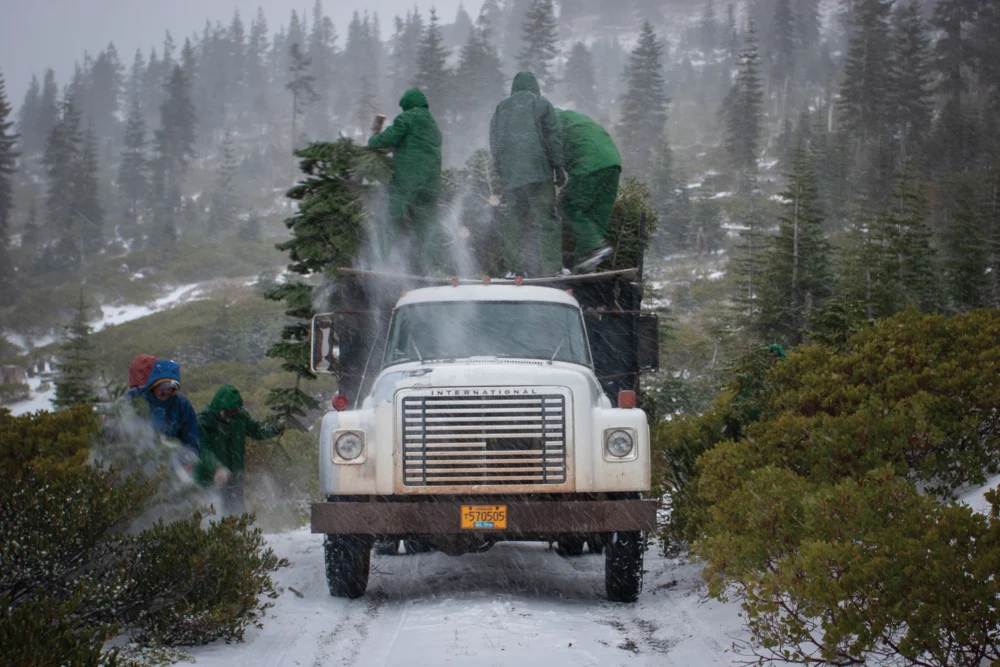
High on the formidable volcanic slopes of Northern California’s Cascade Range, where the air thins and bites with an icy chill, a centuries-old tradition unfolds amidst the rustling of ancient pines. Between the first frost of mid-October and the heavy snowfalls that typically blanket the region by November, the resonant thrum of chainsaws cuts through the dense, resin-sweet forest air. Here, in the crisp morning half-light, a small, dedicated crew meticulously harvests wild red firs, scientifically known as Abies magnifica, destined to become treasured Christmas trees in homes across the nation. These majestic conifers, more affectionately known as silvertips for their distinctive, fine, silver-tinged needles, thrive in the rugged, high-altitude terrain between 6,500 and 8,000 feet. This challenging environment, characterized by scorching summer droughts and brutally cold winters, sculpts the trees into their iconic concentric branching patterns, a hallmark of their resilience and beauty.

The unique Abies magnifica possesses a remarkable characteristic that sets it apart in the competitive Christmas tree market: its needles "set" after the ground freezes, ensuring exceptional needle retention that can last well into March, long after other fir varieties have withered. This natural advantage, combined with their sturdy branches and pleasing aroma, makes silvertips a highly sought-after, premium choice for holiday decorators. However, the window for harvesting these prized trees is exceptionally narrow, often lasting a mere two or three weeks. It is a relentless race against time, a delicate balance between waiting for sufficient cold to "set" the needles and the impending heavy snows that can quickly render the mountain roads impassable, driving workers off the slopes and halting operations entirely.

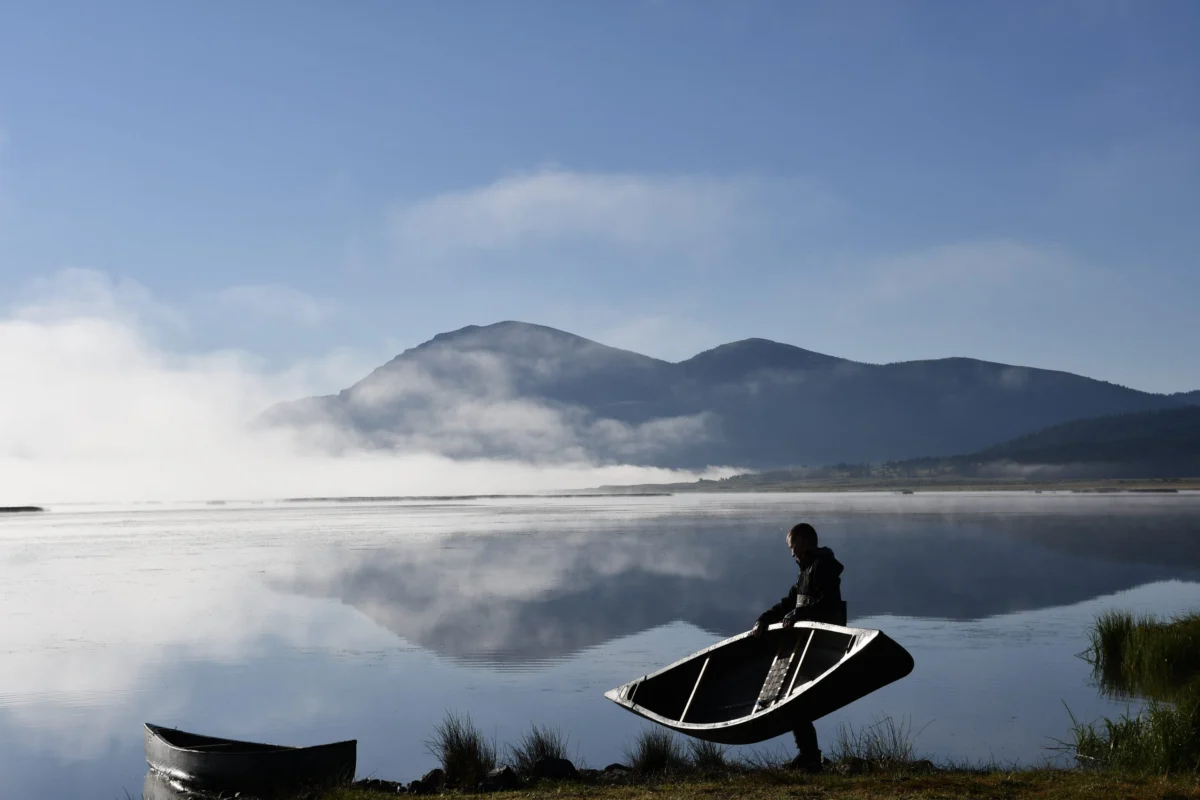
John Wayne Strauch, an octogenarian affectionately known as "Bambi" by his peers, embodies the spirit of this demanding livelihood. With five decades of experience as a wild Christmas tree harvester, Strauch owns over 300 acres of crucial timber rights on Worley Mountain, nestled between the serene Eagle Lake and the town of Susanville, California. His profound connection to the land and the trees is palpable. "You only get a few weeks," Strauch often remarks, highlighting the intense seasonal pressure. "If the ground doesn’t freeze, the needles won’t set. If it snows early, you’re done." Despite the immense physical toll and the often-slim profit margins, Strauch and his crews persevere. "Why are we doing this?" he muses, "Guys are barely breaking even… but we just keep doing it." This enduring dedication speaks to a profound attachment to a way of life, a commitment to bringing a piece of wild California wilderness into the festive homes of countless families.

Strauch’s journey into this arduous profession began in the early 1970s, alongside his godfather, Joe McNally. Both were novices, drawn by the allure of adventure and the promise of carving a living from the land. Their education came through countless trials and tribulations: wrestling broken trucks from deep snowdrifts, witnessing entire harvests disappear under sudden blizzards, and enduring the numbing cold that stiffened fingers and tested resolve. Yet, every winter, they returned, driven by the singular mission to deliver these magnificent trees. Their resilience forged a deep understanding of the forest’s rhythms and the intricate demands of wild harvesting.

Today, the backbone of Strauch’s operation comprises primarily migrant Mexican workers, many of whom travel north each winter after seasons spent laboring in the agricultural fields of orchards and vineyards. This transient workforce brings invaluable skills and an unwavering work ethic to the remote mountain terrain. However, as Dan Barker, who assists in overseeing the harvest, notes, recent dramatic shifts in immigration policy and the escalating threat of Immigration and Customs Enforcement (ICE) raids have introduced new layers of profound uncertainty and danger to this already precarious work. These external pressures not only threaten the livelihoods of the workers but also imperil the continuity of this unique cultural and economic practice, highlighting the intersection of environmental stewardship and complex socio-political realities.

A typical harvest operation employs two crews, totaling approximately 18 men, who operate with a remarkable synergy honed by years of shared effort. The team includes a cook, two drivers, two skilled cutters, a bail operator, and a larger contingent responsible for the arduous task of hauling freshly cut trees from the deep recesses of the forest. Roles are fluid, with individuals rotating to maximize efficiency and spread the physical burden. Cutters, employing specialized wedge and relief cuts, demonstrate an astonishing precision, felling 40-foot red firs without damaging their delicate branches, guiding them gently to the forest floor. Each silvertip is then painstakingly hauled by hand through dense brush and challenging terrain down steep ridgelines to a central processing area. Here, the trees undergo a meticulous grading process, evaluated for their shape, symmetry, and color, and categorized into grades: 2s, 1s, primos, and the coveted double primos. Each grade corresponds to a different price point, reflecting the tree’s aesthetic quality and market value. For instance, an 8-foot double primo might command around $250 at a retail lot, while a grade 2 tree of the same size would fetch approximately half that amount. This detailed classification system creates a direct, albeit complex, link between the high-country forests of California and the living rooms hundreds of miles away where these trees will stand as symbols of holiday cheer.

Crucially, the sustainability of this wild harvest hinges on an ancient and ingenious forestry practice known as coppicing, or more specifically in this context, "stump culturing." Unlike conventional logging that fells trees at their base, the cutters here make precise cuts above the base, leaving several whorls of branches intact. Within a few years, one of these remaining branches, responding to internal biological signals, will turn towards the sun and grow into a new, vibrant tree, ready for future harvests. "We’re not clear-cutting," Strauch emphasizes, underscoring the regenerative nature of their approach. "The better we take care of the trees, the better they take care of us. Some, we’ll get five, 10 harvests. Those are the mothers." This method allows the forest to renew itself naturally, without the need for intensive replanting, soil tilling, or chemical spraying, ensuring a continuous, ecological cycle that has sustained these slopes for decades. It stands as a testament to indigenous wisdom and a sustainable alternative to the high-intensity cultivation seen in many modern Christmas tree farms.

Strauch’s Worley Mountain stand, producing roughly 7,000 trees annually, represents one of the nation’s last commercial wild Christmas tree harvests. While its scale may appear modest when compared to the vast operations of farmed Christmas tree plantations, its true value lies in the rarity of the silvertip firs, the inherent sustainability of its harvesting methods, and the deep-seated relationship between the land and the labor that defines it. This niche market appeals to consumers seeking a more authentic, environmentally conscious choice, a product with a story rooted in the wild. The future of this unique industry, however, is increasingly imperiled by the intensifying impacts of global climate change. Extreme early-season heat, such as that experienced in May and June, has scorched thousands of young trees, burning delicate new growth before it can mature and threatening the very regeneration that coppicing relies upon. Furthermore, this forest, once a thriving bastion of red firs, bore the scars of the devastating 2021 Antelope Fire, one of many catastrophic blazes that have dramatically reshaped Northern California’s forest landscape in recent years. These fires not only destroy existing trees but also alter ecosystems, making future regeneration more challenging and increasing the vulnerability of the remaining stands.

Despite these mounting challenges—from climate change-induced threats and the precarious nature of seasonal migrant labor to the sheer physical demands of the work—the crews persist. As Dan Barker articulates, "These are beautiful trees with a beautiful story. We don’t just want people to accept them—we want them to love them like we do." The wild silvertip Christmas tree harvest is more than just an economic endeavor; it is a profound act of stewardship, a living legacy that connects generations of dedicated workers to the pristine wilderness of Northern California, offering a tangible piece of its enduring beauty to homes across the West.