

 Rocky Gerung
Water users across the American Southwest are bracing for the stark reality of reduced Colorado River allocations for cities and agricultural operations, as the federal government released a new management plan for the vital waterway. The proposed 10-year strategy, issued by the Bureau of Reclamation, introduces a framework designed to adapt to fluctuating hydrological conditions that impact the river’s flow, with operational adjustments potentially occurring every two years. This plan signals a departure from current agreements, suggesting substantial cuts to water allotments previously envisioned for the Lower Basin states of Arizona, California, and Nevada. Meanwhile, the Upper Basin states—Colorado, New Mexico, Utah, and Wyoming—may be asked to implement voluntary conservation measures.
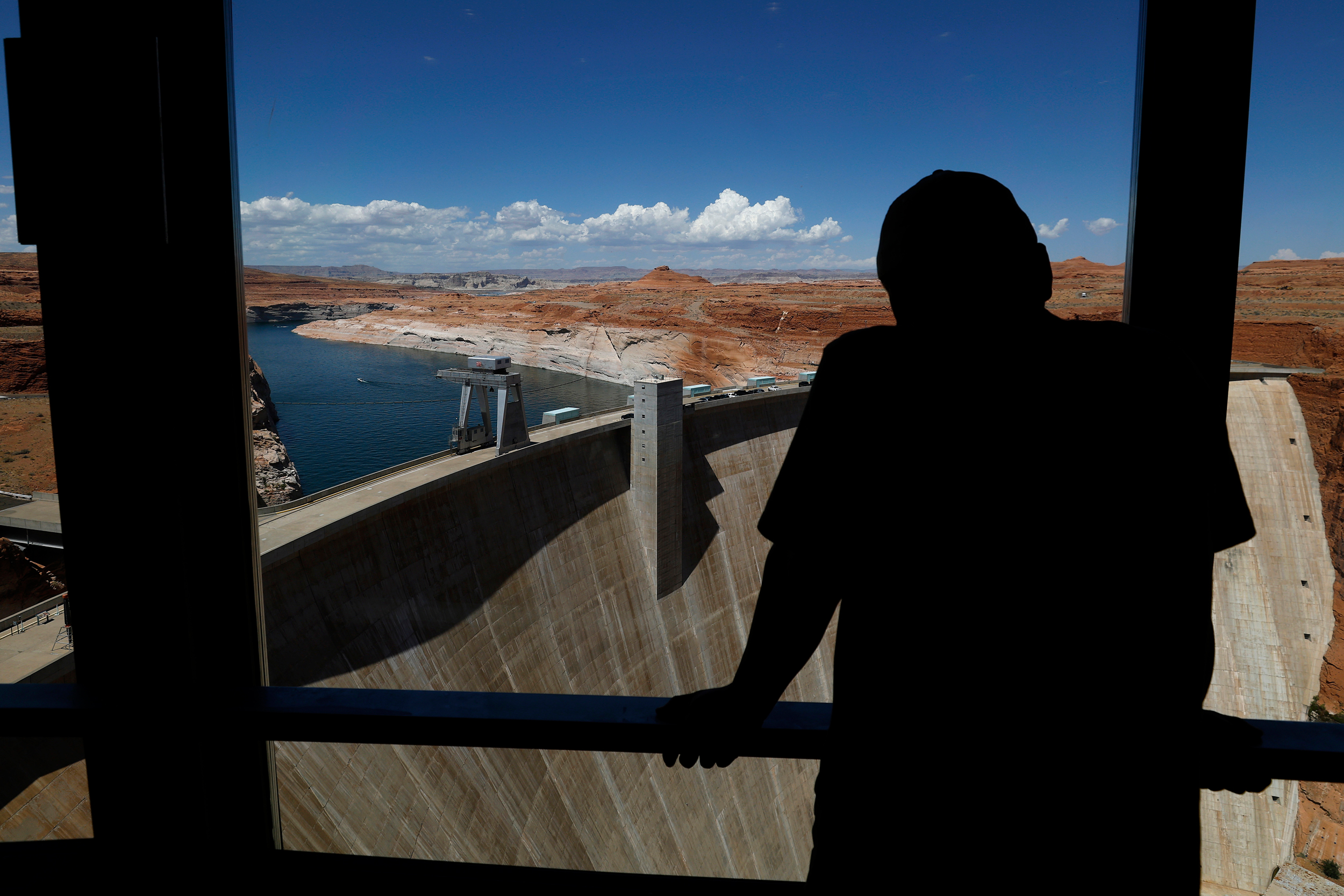
The existing interim guidelines and drought contingency plans, forged in 2007 and 2019 respectively, are slated to expire in 2027. Negotiations for a successor agreement, which were due this year, have encountered significant roadblocks, with the seven basin states repeatedly failing to reach a consensus on a path forward. The Bureau of Reclamation, as the steward of critical river infrastructure like the Hoover and Glen Canyon dams—which impound the nation’s largest reservoirs, Lake Mead and Lake Powell—plays a pivotal role in shaping the river’s management. The agency’s final environmental impact statement, released on Friday, precedes a federal record of decision that will finalize operations for the river over the next two years.
Andrea Travnicek, the Interior Department’s assistant secretary for water and science, emphasized the plan’s objective to strike a delicate balance between adaptability and predictability for the Colorado River system, which is indispensable to the 40 million people who depend on it. She highlighted the unprecedented hydrologic conditions and the potential for considerable impacts on water users, stating that the plan allows for new flexibility to respond to evolving circumstances and the possibility of future consensus among the states.
The Bureau of Reclamation is considering a range of releases from Lake Powell, the reservoir situated near the Utah-Arizona border that demarcates the upper and lower basins, between 5 million and 12 million acre-feet to downstream states. To put this into perspective, one acre-foot of water can typically supply about two to four households for a year. Under the proposed scenario, the Lower Basin, including allocations for Mexico, could face steep reductions in their water rights, potentially losing 1.5 million acre-feet in both 2027 and 2028.
Specifically, this proposal would necessitate Arizona relinquishing 760,000 acre-feet from its river allotment, California reducing its share by 440,000 acre-feet, and Nevada by 50,000 acre-feet, aligning with a proposal submitted by the Lower Basin states themselves. Beyond 2028, the potential for cuts in the Lower Basin could escalate, reaching as high as 3 million acre-feet. The Arizona Department of Water Resources has unequivocally labeled such figures as "unacceptable," asserting in a public statement that such reductions would have a devastating impact on Arizona’s water users and its economy.
The Bureau of Reclamation appears to be seeking voluntary reductions from the Upper Basin states, up to 200,000 acre-feet. The agency has also discussed the possibility of transferring water from federally managed dams within the Upper Basin downstream, contingent on prevailing hydrological conditions. JB Hamby, California’s Colorado River Commissioner, underscored the fundamental challenge facing the river, stating that the proposal acknowledges the reality that the Colorado River no longer reliably produces sufficient water to meet all the established uses and expectations built around it. He added that this challenge is a shared responsibility across the Basin, necessitating specific, measurable reductions in water consumption by every state.
A spokesperson for the Colorado Department of Natural Resources indicated that the state is currently analyzing the newly released document. Governors from the Upper Basin states released a joint statement expressing encouragement that the proposed new operating guidelines will more accurately reflect the existing water supply, which they deem essential for any practical plan moving forward.
The Colorado River, a lifeline for an arid region, is arguably the most climate-stressed waterway in the United States. It supplies water to an estimated 35 to 40 million people across seven Western states, 30 Native American tribes, and two Mexican states as it traverses the Southwest, a landscape characterized by some of the country’s most arid and drought-stricken territories. Furthermore, millions of Western residents rely on the electricity generated by the Hoover and Glen Canyon dams, crucial sources of renewable energy for the region.
The foundational 1922 Colorado River Compact, which allocated water rights among the river’s users, presumed an available supply of approximately 17.5 million acre-feet for the two basins and Mexico. However, the historical average of the river’s natural flow has consistently fallen short, averaging around 14.7 million acre-feet. Recent data from the Bureau of Reclamation reveals a dramatic decline, with the average flow plummeting to approximately 11.2 million acre-feet between 2020 and 2024. During this same period, the agency calculated that average water use and evaporative losses across the entire basin exceeded 13 million acre-feet, highlighting a significant deficit.
John Berggren, regional policy manager at Western Resource Advocates, commented that the operational ranges proposed by the Bureau of Reclamation are precisely what is needed to address the critical imbalance between supply and demand. However, he cautioned that these are merely proposed ranges, and the actual management decisions made over the next two years and in subsequent years will be the determining factor in whether the system can be brought back into balance. Berggren expressed hope that the short-term certainty provided by this federal plan will help to unblock the stalled negotiations among the states. He urged basin commissioners not to continue with past approaches that have proven ineffective, advocating for a fresh perspective and a concerted effort to reach a seven-state agreement.
The Bureau of Reclamation’s final environmental impact statement was initially intended to formalize the management plan that the basin states have yet to finalize. Despite the missed deadlines for state-level negotiations, Reclamation remains open to a collaborative agreement, which is widely considered the most effective route to achieving a sustainable, long-term operating framework for the river.
Negotiations have stalled primarily over the contentious issue of whether future water cuts should be mandatory across the entire basin. Decades of overconsumption have led to the Lower Basin now utilizing less water than its apportioned share, according to federal accounting; consequently, these states advocate for future reductions to be shared equitably among all seven states. The Upper Basin, which has historically used less than its legally entitled water volume, has strongly resisted demands for mandatory cuts, preferring to offer voluntary conservation measures. Governors from the Upper Basin states argue that variable environmental conditions, such as this year’s record-low snowpack, inherently limit their water usage.
The absence of a unified seven-state agreement, even with the federal government proposing management options, significantly increases the likelihood of legal disputes among states dependent on the Colorado River, potentially leading to protracted adjudication by the Supreme Court. Nevertheless, the proposal to manage the river in an adaptive manner, responsive to hydrological fluctuations, represents a crucial step toward long-term sustainability in a basin facing diminishing water resources. Celene Hawkins, Colorado River program director at The Nature Conservancy, believes this approach is essential for addressing how to live in the basin with substantially less water moving forward. Hawkins expressed optimism that this federal action will serve as a catalyst for reaching a seven-state agreement, enabling more effective conservation efforts for both communities and the river ecosystem itself.








