

 Joko Susilo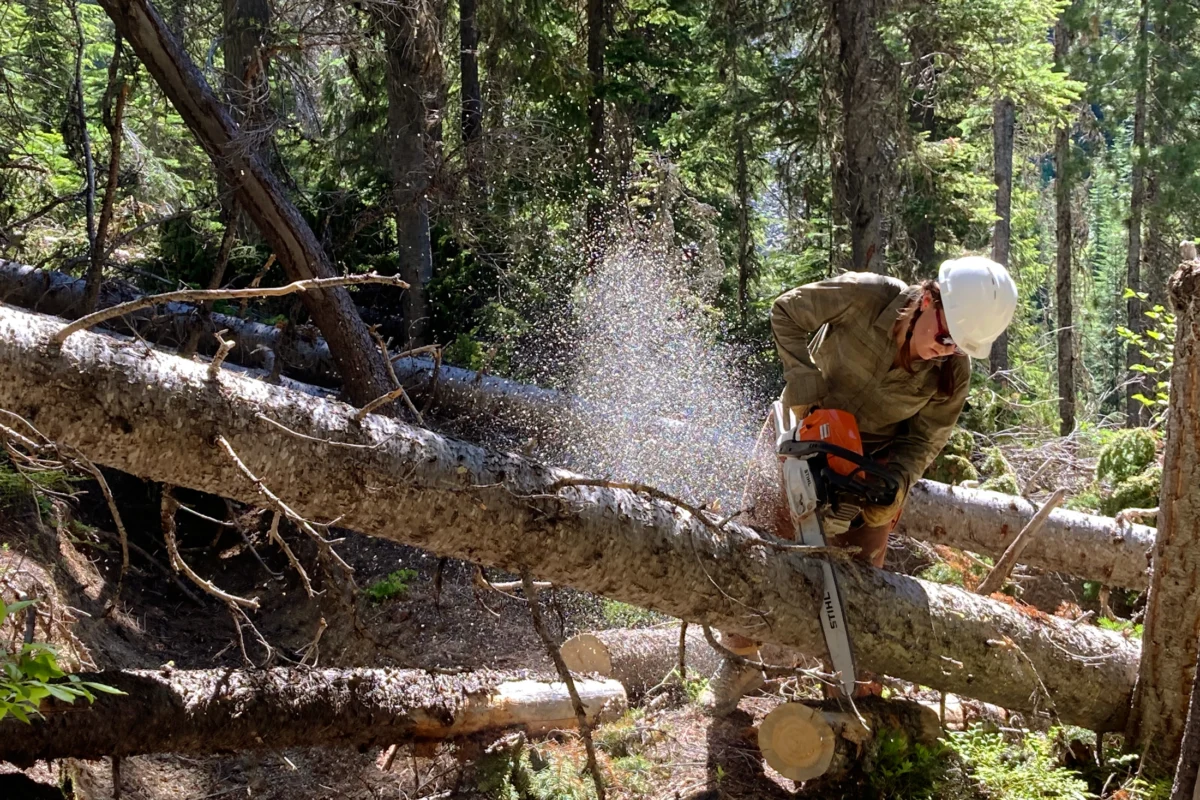
For those dedicated individuals tirelessly maintaining the backcountry trails of America’s vast federal lands, the rhythmic rasp of a crosscut saw is a familiar, if arduous, companion. Often, as these crews labor to clear another immense, fire-scarred fir from a remote pathway, a curious hiker will pause, posing the inevitable question that encapsulates a broader misunderstanding: "What, they don’t let you use chainsaws?" The answer, a firm but patient "No," unveils a core tenet of federally designated wilderness areas: a stringent prohibition on motorized equipment. This rule necessitates the continued use of traditional hand tools, like the iconic two-person crosscut saw, a tool echoing the black-and-white photographs of early 20th-century loggers.
While "wilderness" in the common vernacular often evokes a romantic, untamed landscape, an abstract notion of any wild or remote expanse, within the context of federal public lands, it is a proper noun, precisely defined by the landmark 1964 Wilderness Act. This pivotal legislation establishes designated wilderness areas as tracts of 5,000 or more contiguous, roadless acres that meet specific criteria, including providing "opportunities for solitude," enabling "unconfined recreation," and remaining free of "permanent improvements." The Act, a cornerstone of American conservation, meticulously protects these areas from development and imposes far stricter regulations on activities within their boundaries than on other public lands.
Earlier this spring, a decision by the U.S. Forest Service (USFS) ignited a fervent debate among conservationists, as the agency granted the Idaho Outfitters and Guides Association permission to use chainsaws for clearing a limited number of trails within Idaho’s vast Frank Church-River of No Return Wilderness. This move triggered immediate alarm among some wilderness advocacy groups, who perceived it as a dangerous precedent, warning of an incremental erosion of the very protections enshrined in the Wilderness Act and accusing the agency of succumbing to special-interest pressures. Yet, conspicuously absent from much of the public discourse were the voices of the very individuals on the front lines: the skilled trail workers. These professionals, who dedicate years to the demanding task of clearing logs and brush from trails, grapple firsthand with the escalating devastation wrought by climate change and the chronic underfunding of federal stewardship programs. They have long championed greater flexibility regarding chainsaw use in wilderness areas, often finding their pragmatic insights overshadowed by ideological purity tests.

The challenge of maintaining wilderness trails has become increasingly Sisyphean. Having personally spent eight years on trail crews within Washington’s fire-prone and heavily timbered Cascade Range, primarily engaged in the relentless task of clearing downed logs, the author intimately understands this struggle. The ranger district on the Okanogan-Wenatchee National Forest, for example, encompasses over 700 miles of trail, with approximately half traversing designated wilderness. The experience involved cutting thousands of logs, meticulously using crosscut saws on wilderness paths and efficiently employing chainsaws in non-wilderness zones. This dichotomy highlights the practical chasm between policy and operational reality.
The escalating impacts of global climate change have dramatically exacerbated the problem. The American West, along with many other regions worldwide, faces an unprecedented increase in the frequency and intensity of wildfires, which leave behind vast swaths of unstable, fire-scarred trees that continue to fall for years, even decades, after the initial blaze. Beyond fire, other climate-fueled phenomena, such as widespread beetle infestations weakening entire forests, unusually wet and heavy snowfalls that topple mature trees, and increasingly extreme wind events, all contribute to a monumental buildup of deadfall. Each season, with an average trail crew of merely four or five individuals and a handful of dedicated volunteers, these teams are fortunate to clear even half of their district’s total trail mileage. Districts grappling with smaller crews, or in some tragic cases, no dedicated crew at all, manage to clear significantly less, leaving miles upon miles of vital pathways slowly disappearing under a tangle of timber.
The consequences of these unsafe and impassable trails extend far beyond mere inconvenience for recreational users. They critically hinder emergency backcountry evacuations, impeding the swift and safe retrieval of injured hikers or stranded individuals. They compromise effective fire management, making it exceedingly difficult for firefighters to access remote areas and establish crucial firebreaks, thereby escalating the risk of wildfires spreading uncontrollably. Furthermore, impassable trails obstruct scientific monitoring efforts, limiting researchers’ ability to study and understand vital ecosystems within these protected areas. Perhaps most significantly, they restrict public access to wilderness, stifling the growth of a diverse community of wilderness lovers and defenders – a community vital for the long-term stewardship and political support these invaluable landscapes desperately need.
Trail workers are, at their core, driven by a profound commitment to keeping public lands accessible. This mission aligns directly with the foundational purpose of the Wilderness Act itself, which explicitly mandates that the government administer wilderness "for the use and enjoyment of the American people"—a phrase so central it appears three times within the law’s text. Yet, it becomes exceedingly difficult to experience, let alone enjoy, a wilderness that remains inaccessible. As the renowned naturalist David Attenborough sagely observed, people are unlikely to care about protecting what they have never had the opportunity to experience firsthand.

While the author takes immense pride in their skill as a sawyer, cherishing the strenuous rhythm and deep camaraderie of pulling a crosscut saw with a partner, the relentless, physically demanding nature of the work, log after log, year after year, eventually takes a significant toll on both body and morale. This firsthand experience leads to a critical re-evaluation of the agency’s seemingly inflexible, no-exceptions ban on chainsaws in wilderness areas. A single cut with a chainsaw can be completed in mere seconds, a stark contrast to the minutes, or even hours, required for the same cut with a crosscut saw. This inefficiency not only delays progress but also significantly increases sawyers’ prolonged exposure to inherent hazards, such as unstable standing dead snags, known as "widowmakers." In the current ecological reality of today’s fire-altered forests, coupled with the dire staffing levels of federal agencies, a blanket prohibition on chainsaws often feels performative; instead of robustly protecting wilderness, it inadvertently contributes to its gradual disappearance, as trails vanish and access dwindles.
Effective wilderness access in the 21st century demands a multifaceted approach: both significantly larger and better-paid trail crews and the judicious, targeted use of chainsaws where appropriate. It is crucial to note that the word "chainsaw" itself does not appear anywhere in the original Wilderness Act. Section 4(c) of the Act broadly prohibits the use of "motorized equipment" in wilderness areas "except as necessary to meet minimum requirements for the administration of the area." This crucial exemption provides a legal pathway for flexibility. The National Park Service (NPS), for instance, has long interpreted the clearing of trails as a "minimum requirement" for wilderness administration, and consequently, allows its wilderness trail crews to utilize chainsaws. Given the overwhelming buildup of deadfall that is now obliterating countless wilderness trails within national forests, the compelling need for the Forest Service to adopt a similar, pragmatic interpretation is undeniable.
Even if every ranger district across the Western United States were to achieve full staffing next year—a prospect that seems increasingly remote given chronic budgetary constraints and recruitment challenges—the relentless forces of nature would continue: trees would fall, fires would burn, and crews would remain locked in a seemingly hopeless game of catch-up. Chainsaws, utilized strategically, could fundamentally alter this dynamic, helping to render the monumental workload manageable once again, preventing the irreversible loss of access.
The consequences of this ongoing struggle are already starkly visible. When the author began working for the Forest Service in 2016, their district crew had already ceased maintaining over a dozen minor wilderness trails. A decade later, the situation has dramatically worsened, with crews now struggling to keep open major trails that represent the only remaining access points to entire backcountry zones, as well as critical sections of iconic through-routes like the Pacific Crest Trail. The abandonment of these vital trails would not only shrink the accessible wilderness but also inevitably concentrate an ever-increasing number of visitors into high-profile, already popular areas such as the Enchantments or busy national parks like Mount Rainier, regions already contending with significant challenges related to overuse and environmental impact.

Consider the Frank Church-River of No Return Wilderness, currently at the epicenter of the chainsaw debate. This vast wilderness area, a testament to complex land use history, contains dozens of airstrips and private ranches that predate the Wilderness Act, welcoming fly-in guests and offering a highly exclusive, often expensive, form of access. In contrast, maintained trails provide a far more equitable and affordable pathway to wilderness for the broader public. Preserving and expanding this form of access is paramount for fostering an inclusive wilderness ethic.
Furthermore, technological advancements offer promising solutions. Today’s sophisticated battery-powered saws provide a viable, significantly quieter alternative to traditional gas-powered chainsaws, substantially mitigating concerns about noise pollution. Hikers frequently report that encountering a trail crew at all is a rare event, making the likelihood of even hearing a chainsaw in the vastness of the wilderness exceedingly low. Ultimately, the most noticeable and beneficial impact of allowing a carefully regulated use of chainsaws in wilderness areas would be the proliferation of more miles of safe, accessible, and passable trails. This would, in turn, create invaluable new opportunities for a wider demographic of people to experience, enjoy, and ultimately become ardent protectors of the irreplaceable wilderness heritage.








