

 Joko Susilo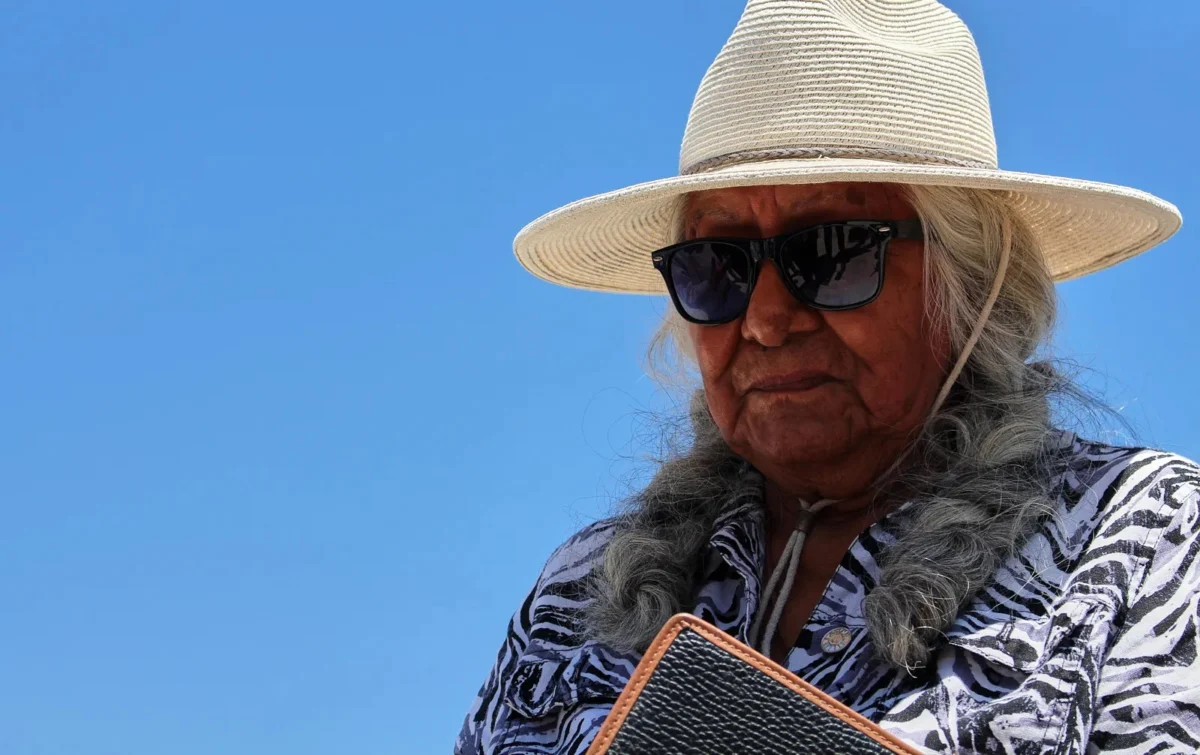
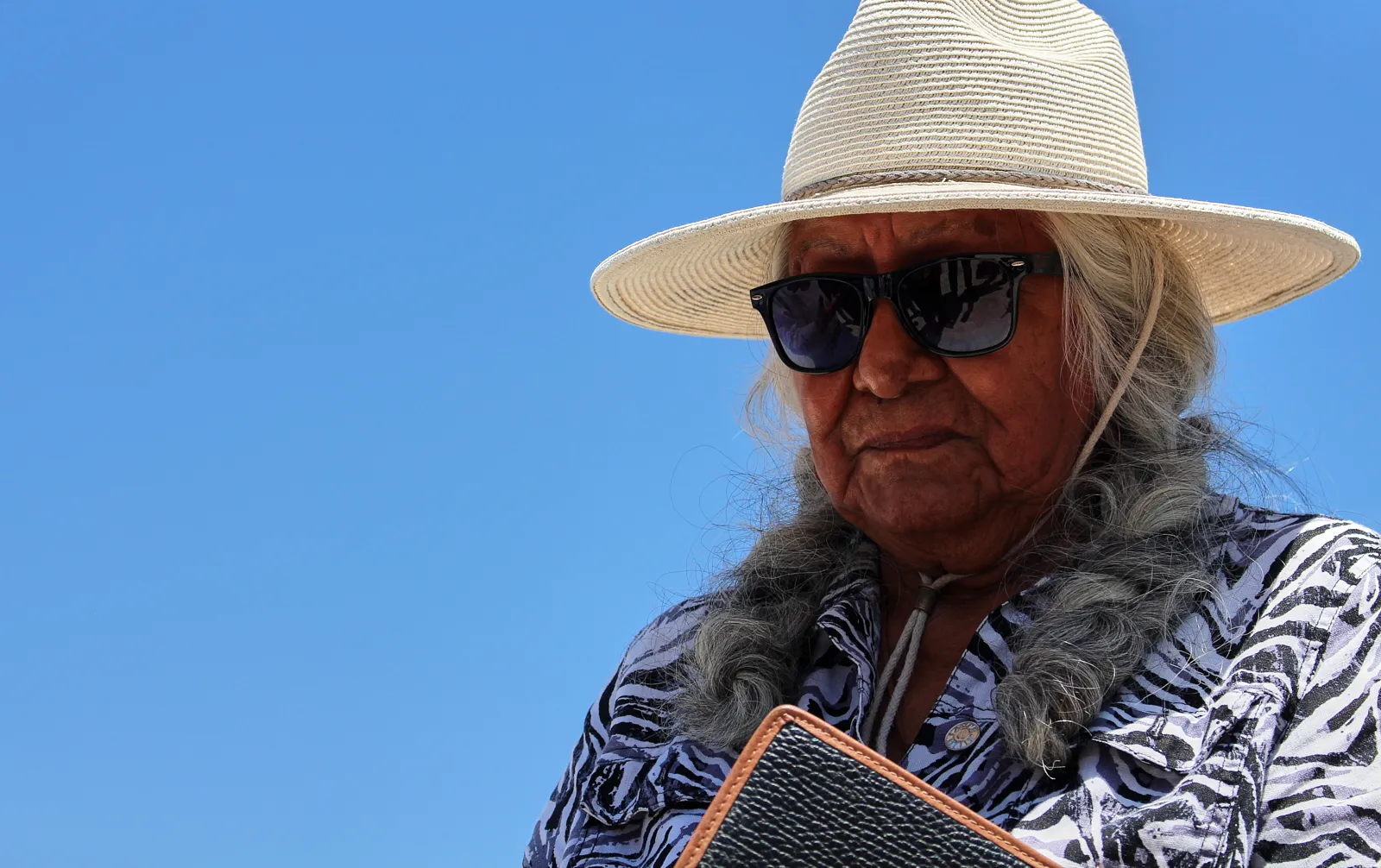
With a voice resonating with resolve and a deep connection to her heritage, Marquez Eiler articulated the profound affront the proposed border wall represented. "All of my lifetime of work has been for the memories of my ancestors, of what they went through. With the incoming wall, should it be disrupted? That’s just another slap in the face, as far as I’m concerned, to my ancestors. And so I ask: Why?" Her poignant question echoed the sentiments of over a hundred community members gathered at a subsequent town hall, where hopes were expressed for a federal pause in construction, mirroring a similar reprieve granted in Texas after public outcry.
Quitobaquito Springs holds immense spiritual and historical significance for the Hia-Ced O’odham, the Tohono O’odham, and other Indigenous peoples spanning Southern Arizona and Mexico. For countless generations, these communities have undertaken religious pilgrimages and ceremonies at this unique desert ecosystem. The looming threat of a new border wall, slated for construction on protected federal lands approximately 30 miles west of the Tohono O’odham Nation, sparks grave fears that this irreplaceable spring could be irreparably damaged, potentially drying up. Such an outcome would not only devastate a critical water source in an arid region but also erase a living testament to ancestral traditions and cultural continuity.
The Tohono O’odham Nation finds itself embroiled in a two-front battle to safeguard its heritage and lands. On one front, the federal government plans to erect a towering 30-foot border wall directly on O’odham sovereign territory. Simultaneously, an adjacent federal land parcel, home to Quitobaquito, faces the threat of a new border fence. These contentious projects are integral to a broader, ambitious initiative from the previous administration, earmarking nearly $50 billion in taxpayer funds for extensive border wall construction across the southwestern United States. This federal drive for enhanced border security, often framed in terms of national sovereignty, clashes fundamentally with the inherent and historical sovereignty of the Tohono O’odham Nation, which has endured for millennia.

The current struggle is not an isolated incident but rather the latest chapter in a long and often fraught history between the U.S. government and Indigenous nations. The Tohono O’odham people originally inhabited a vast expanse of land that knew no arbitrary borders, their way of life intrinsically tied to the natural landscape. The imposition of the U.S.-Mexico boundary, a consequence of the 1854 Gadsden Purchase, was enacted without the consent or even the consultation of the O’odham, effectively cleaving their nation and families in two. To this day, O’odham citizens on both sides of this artificial divide continue to traverse their ancestral lands, maintaining cultural and familial ties that predate the modern border. While the Nation has collaborated with border officials on issues of crime and security, it has consistently resisted the construction of walls that physically separate its people and desecrate sacred ancestral domains. This ongoing tension has escalated into legal battles and high-profile standoffs, embodying a profound clash between federal authority and tribal self-determination.
Within the Organ Pipe Cactus National Monument, a designated biosphere reserve renowned for its unique Sonoran Desert flora and fauna, Quitobaquito Springs sits approximately 13 miles west of the Lukeville port of entry. Here, the proposed construction involves a formidable 30-foot-tall border fence, intended to stand a mere 150 feet from an existing barrier. Marquez Eiler’s deep concern extends to the potential loss of access to lands her Tribal Nation has revered for generations, integral to their religious traditions. The Organ Pipe Cactus National Monument itself, established by President Franklin Roosevelt in 1937, was conceived as a preserve for the "ecological wonders of the country," a mission that now appears to be in direct conflict with federal border policies.

A few miles east of the spring, the landscape already bears the scars of preliminary work. Construction equipment, belonging to federal government contractors, stands idle near the border, surrounded by land already cleared of vegetation. Cactuses, many of which are protected species and deeply sacred to the O’odham people who traditionally view plants as living ancestors, are marked with colored strings. A rope delineates the proposed path for the second border wall. Should this line extend westward, Quitobaquito pond lies directly in its destructive trajectory. Such bulldozing would not only decimate legally protected desert flora but also obliterate cultural artifacts and spiritual landscapes, causing irreparable harm to the O’odham’s ancestral belief systems. The ecological implications are equally dire: Quitobaquito is a rare aquatic habitat supporting several endangered species, including the Quitobaquito pupfish, the Sonoyta mud turtle, the desert caper plant, and the tiny Quitobaquito tryonia springsnail. Any disruption to the delicate hydrological balance of the springs, whether through construction vibrations, water table alterations, or increased human activity, could push these vulnerable species closer to extinction, diminishing global biodiversity.
On another front, about 30 miles east of Quitobaquito, the administration plans to replace existing low steel fencing with a 30-foot barrier in three areas of O’odham land. In June, the Tohono O’odham Nation formally challenged these plans by filing a lawsuit against the Department of Homeland Security, seeking to block border wall construction on its reservation. The lawsuit unequivocally states the Nation’s long-standing opposition to the wall, despite its cooperative relationship with the Department on other matters. It powerfully argues that the wall would inflict "significant devastation on the Reservation, including the destruction of mountain peaks sacred to the O’odham." Furthermore, the legal challenge highlights how the construction would "fray the ties between O’odham communities and families on opposite sides of the border, interfere significantly with O’odham religious rituals and practices, and destroy plant and animal resources sacred to the O’odham." The Nation’s legal filing also pointed to earlier instances where federal contractors, while building walls adjacent to O’odham land, had "destroyed ancestral sites of great importance," including the irreparable damage caused in April to the Las Playas Intaglio, a 1,000-year-old fish-shaped geoglyph in Arizona’s Cabeza Prieta National Wildlife Refuge.

In its legal response, the federal government argued that the Tohono O’odham Nation failed to demonstrate that the border wall construction exceeded federal authority, asserting the U.S. government’s "preexisting right to secure the border." The memorandum emphasized, "While the United States has worked — and will continue to work — cooperatively with Plaintiff to promote their shared interest in border security, Plaintiff does not hold veto power over the United States’ sovereign duty to secure its borders." This stance underscores the profound legal and philosophical divide between the federal government’s interpretation of national sovereignty and the inherent, treaty-recognized sovereignty of Indigenous nations.
The tensions escalated physically when, after tribal leaders posted "No Trespassing" signs on August 7, federal contractors, accompanied by approximately 20 "masked, armed" Border Patrol agents, entered the tribal nation’s lands in the early hours of August 25. Rodney Scott, then U.S. Customs and Border Protection commissioner, affirmed CBP’s commitment to advancing the border wall project across the 62 miles impacting the Tohono O’odham Nation. He contended that the project would "close one of the most dangerous smuggling and trafficking corridors on the Southwest border: remote desert that has facilitated decades of drug loads, migrant deaths, and cartel activity." A Department of Homeland Security spokesperson further clarified that the "worksites are inside the 60-foot Roosevelt Reservation," referring to a strip of federally managed land along the U.S.-Mexico border, established by executive order in the early 20th century, which grants the federal government extensive powers for border security operations.

U.S. Representative Adelita Grijalva, who toured Quitobaquito Springs with tribal leaders last August, voiced strong support for the O’odham’s cause. "After standing here today, seeing this land, and directly hearing from the nation, I am more convinced than ever, this is not just a border construction project," Grijalva stated. "This is about tribal sovereignty, it’s about sacred land, it’s about history, culture and spiritual practices of the O’odham people and others." Tohono O’odham Chairman Verlon Jose and Vice Chairwoman Carla Johnson organized the visit, emphasizing that for their people, the land itself is a living church, a place of profound ceremony and prayer. Chairman Jose highlighted a grim precedent, noting that during the construction of the first border fence between 2019 and 2020, contractors had blasted through O’odham burial sites on Monument Hill. "This is not ours to own. It is ours to protect, to protect for the people. To protect for you and I and everyone the creator has placed here on this earth," Jose passionately declared, underscoring the universal responsibility to stewardship.
Hours after the visit to Quitobaquito, the International Sonoran Desert Alliance, co-founded by Marquez Eiler, hosted a vibrant town hall in Ajo, approximately 40 miles north of the springs. More than 100 residents filled the Ajo Plaza Rec Hall, listening to Grijalva, Jose, and Johnson detail their efforts to halt construction and sharing their collective concerns. Attendees voiced anxieties over the survival of the region’s unique wildlife, including the endangered Quitobaquito pupfish, the Sonoyta mud turtle, the desert caper plant, and the Quitobaquito tryonia, a tiny springsnail, all of which depend on the fragile spring ecosystem. Many criticized the exorbitant taxpayer cost of the border fence, exceeding $46 billion across projects from California to Texas, arguing that such funds could be better allocated to comprehensive, humane immigration reform. Sara Mae Williams, Justice of the Peace in Ajo and a proud citizen of the Tohono O’odham Nation, articulated the core sentiment: "Why do we not want a wall? Because we are not afraid of who is on the other side. It’s us. It’s our people. It pains me when they try to divide us." This powerful statement resonated with the community, highlighting the humanitarian dimension of a policy that severs ancient familial and cultural ties.

The day following the town hall, Representative Grijalva, joined by fellow Democratic federal lawmakers from border regions—Reps. Veronica Escobar of Texas and Raul Ruiz and Juan Vargas of California—sent a strongly worded letter to the Departments of Homeland Security and the Interior. The letter urged the administration to immediately cease further border wall construction "until meaningful government-to-government consultation has occurred with the Tohono O’odham Nation and Congress has received a full accounting of the project’s impacts on Tribal lands, cultural resources, and surrounding communities." This bipartisan congressional pressure underscored the growing national awareness and concern regarding the wall’s multifaceted consequences.
Despite these efforts, U.S. District Judge Richard J. Leon denied the Nation’s motion for a preliminary injunction on August 14. In his written opinion, the judge stated that the Tohono O’odham Nation was "unlikely to succeed on the merits because the federal Roosevelt Reservation exists along the international border and, in any event, plaintiff has not established that construction of a border wall will indeed alter Reservation boundaries." While acknowledging the international border’s significance to both the U.S. and the Nation, Judge Leon emphasized that a preliminary injunction was "unwarranted," yet he expressed a clear expectation for the government to "follow through on its guarantees of consultation and cooperation with the Nation to address the Nation’s concerns regarding border wall construction." Undeterred, the Tohono O’odham Nation swiftly appealed Judge Leon’s decision to a higher court on August 26, simultaneously requesting a stay of construction while the appeal proceeded. As the federal government pledged to vigorously oppose both the injunction and the appeal, the legal battle continues to unfold. Chairman Jose’s unwavering commitment at the town hall encapsulated the enduring spirit of his people: "We will not let this destroy our sacred sites, our burial sites, our holy places, the places of our ancestors. We will not let it destroy our environment. We will not let it further divide our people. We will not let it divide our reservation." His powerful declaration serves as a rallying cry, affirming the Tohono O’odham Nation’s steadfast resolve to protect its land, culture, and sovereignty against an encroaching border.







