Rocky Georgio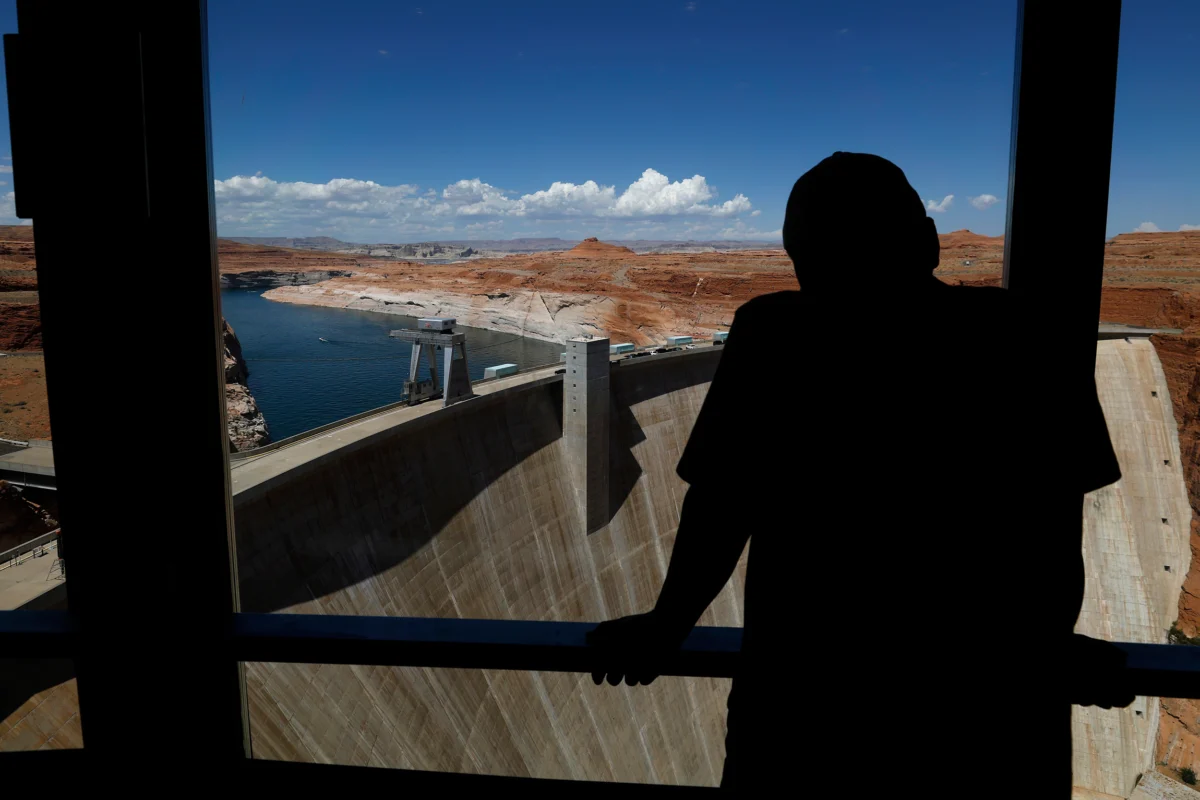
Water managers and communities across the American Southwest now face the stark reality of potentially drastic reductions in their Colorado River allocations, as the federal government released a new management plan outlining operations for the next decade. The Bureau of Reclamation’s comprehensive environmental impact statement, a critical document preceding a federal record of decision, lays out a framework for managing the vital waterway under increasingly challenging hydrological conditions. This federal intervention comes as state-level negotiations for a long-term agreement have faltered, with critical deadlines for consensus having passed repeatedly.
The proposed 10-year management approach introduces a degree of flexibility, allowing for adjustments to river operations every two years based on evolving hydrological realities. This adaptive strategy is designed to address the persistent and worsening imbalance between the water available in the Colorado River system and the demands placed upon it by millions of people, extensive agricultural operations, and numerous tribal nations. Notably, the plan signals potential mandatory cuts for users in the Lower Basin—comprising Arizona, California, and Nevada—while encouraging voluntary conservation measures in the Upper Basin states of Colorado, New Mexico, Utah, and Wyoming.
The existing interim guidelines and drought contingency plans, forged in 2007 and more recently in 2019, are slated to expire in 2027, underscoring the urgency for a new, sustainable operating framework. The Bureau of Reclamation’s role is central to this process, as it oversees critical infrastructure like the Hoover and Glen Canyon dams, which form Lake Mead and Lake Powell, respectively. These reservoirs, the largest in the United States, are not only crucial for water storage but also for hydroelectric power generation, a vital resource for the region.
Andrea Travnicek, the Interior Department’s assistant secretary for water and science, emphasized the plan’s dual aims of balancing predictability with necessary flexibility in a statement accompanying the release. She highlighted the unprecedented hydrologic conditions and the potential for significant impacts on water users, asserting that the plan allows for responsive adjustments to changing circumstances and the possibility of future consensus among the basin states.
Under the proposed framework, releases from Lake Powell, a key demarcation point between the upper and lower basins, could range from 5 million to 12 million acre-feet annually to downstream states. An acre-foot, a standard unit of water volume, can typically supply a household for one to two years. The most significant proposed reductions are earmarked for the Lower Basin, which, along with Mexico, could face steep cuts. Initial proposals suggest potential losses of 1.5 million acre-feet in both 2027 and 2028.
Specifically, Arizona could see its allocation reduced by 760,000 acre-feet, California by 440,000 acre-feet, and Nevada by 50,000 acre-feet, based on a proposal submitted by the Lower Basin states. However, the prospect of even deeper cuts looms beyond 2028, with potential reductions reaching up to 3 million acre-feet for the Lower Basin. This figure has drawn sharp criticism, with the Arizona Department of Water Resources deeming it "unacceptable" and warning of devastating consequences for the state’s water users and economy.
For the Upper Basin, Reclamation is exploring voluntary reductions of up to 200,000 acre-feet, with the possibility of transferring water from federally managed dams downstream, contingent on hydrological conditions. JB Hamby, California’s Colorado River Commissioner, articulated the core challenge: "The proposal responds to a fundamental reality: the Colorado River no longer reliably produces enough water to support all the uses and expectations built around it." He stressed that addressing this shared challenge necessitates specific, measurable reductions in water use by every state.
Responses from the Upper Basin states have been cautiously optimistic. A spokesperson for the Colorado Department of Natural Resources indicated the state is actively analyzing the document. Governors from the Upper Basin released a joint statement expressing encouragement that the new guidelines would better align with existing water supply realities, which they believe must form the bedrock of any practical future plan.
The Colorado River system, a lifeline for an estimated 35 to 40 million people across seven Western states, 30 tribal nations, and two Mexican states, is recognized as one of the most climate-stressed waterways in the United States. It traverses some of the nation’s most arid and drought-prone landscapes, providing essential water for municipal, agricultural, and ecological needs. The hydroelectric power generated by the Hoover and Glen Canyon dams is also a critical component of the region’s energy infrastructure.
The foundational agreement governing the river’s use, the 1922 Colorado River Compact, was predicated on an estimated annual flow of approximately 17.5 million acre-feet. However, historical data reveals that the river’s natural flow has averaged closer to 14.7 million acre-feet. This supply has dwindled dramatically in recent years, with provisional data from Reclamation indicating an average of only 11.2 million acre-feet between 2020 and 2024. Compounding this scarcity, average water use and evaporative losses across the basin during the same period exceeded 13 million acre-feet, creating a significant deficit.
John Berggren, regional policy manager at Western Resource Advocates, views the operational ranges proposed by Reclamation as essential steps toward rectifying the supply-demand imbalance. However, he cautions that the actual implementation of these ranges over the coming years will be the true determinant of the system’s recovery. Berggren hopes that the short-term certainty offered by the federal plan will provide the impetus needed to break the stalemate in state-level negotiations, urging commissioners to move beyond past ineffective approaches and embrace new strategies to achieve a seven-state agreement.
While Reclamation’s environmental impact statement was initially intended to codify an agreement among the basin states, the agency has kept the door open for a negotiated solution, widely considered the most durable path to long-term river management. The core of the ongoing impasse lies in the fundamental disagreement over whether water use reductions should be mandatory across the entire basin. The Lower Basin, which federal accounting suggests currently uses less water than its allocated share due to decades of overdraw, advocates for shared future cuts. Conversely, the Upper Basin states, which have historically utilized less than their entitled water rights, have resisted mandatory reductions, proposing voluntary conservation instead. They argue that variable environmental conditions, such as this year’s record-low snowpack, already impose natural limits on their water consumption.
The absence of a unified seven-state agreement, even with the prospect of federal management options in place, significantly heightens the likelihood of interstate litigation, with disputes likely to be adjudicated by the Supreme Court. Celene Hawkins, Colorado River program director at The Nature Conservancy, described the proposed adaptive management approach as essential for long-term sustainability in a basin facing diminished water resources. She expressed hope that this federal action will serve as a catalyst for a seven-state agreement, enabling effective collaboration for the benefit of communities and the river ecosystem itself.