Johny Prima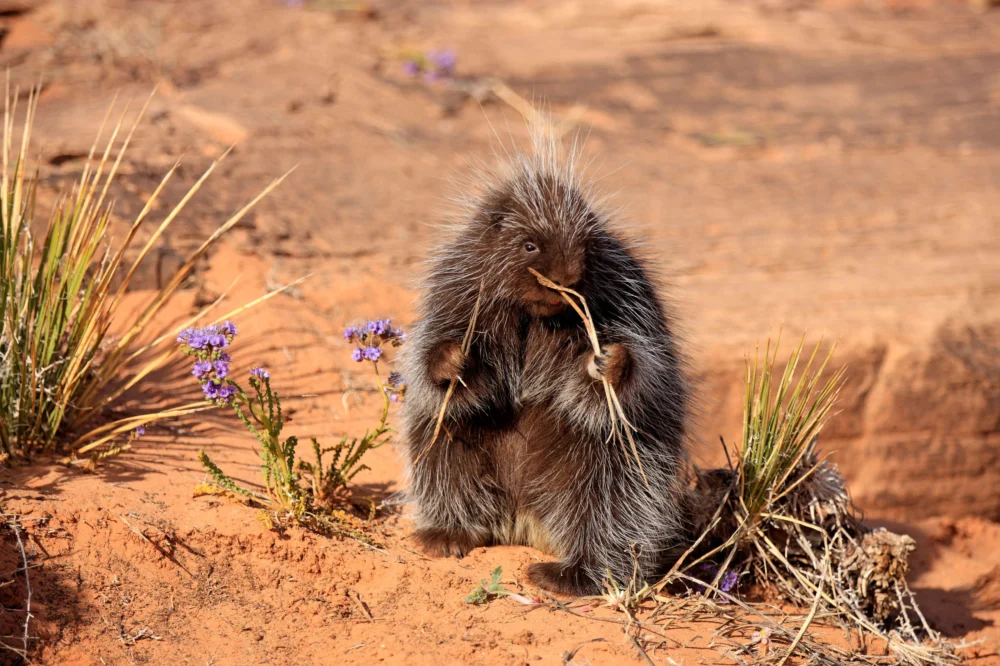
Once an iconic, albeit elusive, inhabitant of North American forests, the porcupine, or Erethizon dorsatum, is now disappearing at an alarming rate, prompting a race against time for scientists and Indigenous communities to understand and reverse its decline. For generations, the creature, known as kaschiip to the Karuk Tribe of Northern California, held a significant place in the intricate tapestry of both ecological balance and cultural heritage. However, direct encounters with these distinctively quilled rodents have become increasingly rare, transforming vivid memories into poignant echoes of a bygone era.
Emilio Tripp, a dedicated wildlife manager and a proud citizen of the Karuk Tribe, recounts a fleeting glimpse from his youth in the late 1990s—a ghostly silhouette against the night sky, perhaps his only brush with a wild porcupine. Decades later, the memory endures, a testament to the species’ profound elusiveness and its current scarcity. Tripp, now 43, notes that such sightings are virtually unheard of among younger tribal members. Instead, recollections of abundant kaschiip come predominantly from elders, whose memories stretch back to a time before the turn of the millennium when porcupines were a more common fixture in their ancestral lands. Today, any encounter—a tragic roadkill, a shadowy movement in the darkness—registers not as a routine observation, but as a rare, often melancholic, reminder of what has been lost. This pervasive absence has sparked a deep concern within the Karuk community, encapsulated by Tripp’s sentiment: "Everyone’s concerned. If there were more observations, we’d hear about it."
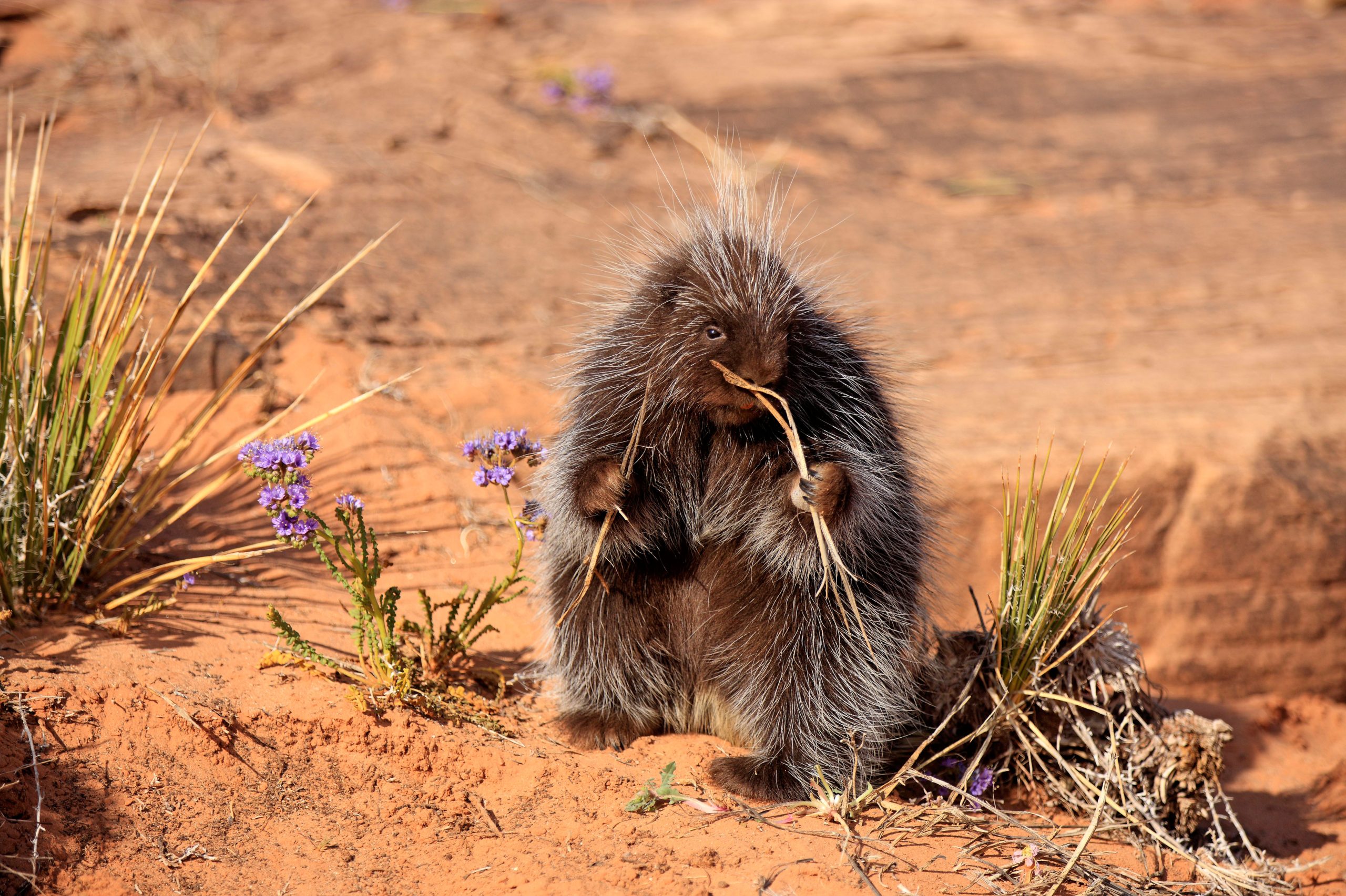
The Karuk Tribe’s experience is not an isolated incident; it mirrors a disturbing trend unfolding across the entire Western United States. Porcupine populations are dwindling, a silent erosion of biodiversity that challenges researchers to pinpoint the precise causes and remaining strongholds. In response, wildlife scientists are intensifying their efforts to map current distributions, analyze environmental factors, and identify the underlying reasons for this rapid decline. Simultaneously, Indigenous communities like the Karuk Tribe are not merely observing; they are actively charting ambitious plans for ecological restoration, aiming to welcome these culturally vital animals back into their ancestral forests.
Porcupines are instantly recognizable as "walking pincushions," formidable in their defense with an estimated 30,000 barbed quills covering their bodies. While an effective deterrent against most predators, this unique armor can also be a liability, as they are known to accidentally quill themselves. Characterized by their deliberate, often clumsy movements, these large, nocturnal rodents navigate their habitats to forage on foliage and, critically, the nutrient-rich inner bark of trees. This bark-gnawing habit, however, historically positioned them as antagonists in the eyes of the burgeoning timber industry. Throughout the 20th century, a widespread perception of porcupines as pests led to extensive poisoning and hunting campaigns across the U.S. Records from Vermont, for instance, reveal a staggering culling of over 10,800 porcupines between 1957 and 1959 alone. In California, the U.S. Forest Service declared "open season" on porcupines in 1950, operating under the misguided belief that the species posed an existential threat to pine forests.
Despite the cessation of state bounty programs by 1979, porcupine numbers have failed to rebound significantly. This lack of recovery is compounded by a historical dearth of consistent monitoring, making it difficult for scientists to definitively ascertain whether populations are still actively declining or simply struggling to recover from decades of intense persecution. Nevertheless, anecdotal evidence paints a clear picture of scarcity. Veterinarians report fewer cases of pets injured by quills, rural homeowners observe fewer porcupines in their backyards, and hikers attest to the increasing difficulty of spotting them in areas where they were once common. The ecological ramifications of this decline are already manifesting. In California’s Sierra Nevada, for example, the endangered fisher, a member of the weasel family, is experiencing nutritional deficiencies due to the diminished availability of porcupines, a vital protein source. This has led to scrawnier individuals and smaller litters, illustrating a cascading effect throughout the food chain.

Beyond their ecological role, porcupines hold profound cultural significance for Indigenous peoples, including the Karuk Tribe. Their quills are meticulously woven into traditional baskets and other ceremonial items, embodying a deep connection to the land and its resources. However, the scarcity of local porcupines now forces the tribe to import quills, a practice that, while practical, represents a tangible loss of cultural connection and sovereignty over traditional practices. "It’s important for porcupines to be a part of our landscape. That’s part of why they’re chosen to be part of this ceremonial item," Tripp emphasizes, highlighting how the absence of kaschiip severs a vital link between tribal members and their ancestral homelands.
Erik Beever, a seasoned ecologist with the U.S. Geological Survey, views the porcupine’s vanishing act as a stark symptom of a broader, more insidious trend: the accelerating decline of biodiversity across the globe, often occurring faster than scientists can track it. He describes it as a "silent erosion of animal abundance," where species may be increasing or declining without anyone even noticing, underscoring a critical gap in ecological monitoring and data collection. This challenge is particularly acute for species like the porcupine, which, despite its distinct appearance, is not always a high priority for conservation funding compared to more charismatic megafauna.
To bridge this knowledge gap, scientists like Tim Bean, an ecologist at California Polytechnic State University, and his team have embarked on extensive research, meticulously poring over a century’s worth of public records. Their work has illuminated shifts in porcupine distribution patterns across the Pacific Northwest, revealing a concerning retreat from traditional conifer forests and an unexpected emergence in non-traditional habitats such as deserts and grasslands. Beever is now spearheading a similar, ambitious study across the entire Western U.S. to gain a comprehensive understanding of the species’ current status.

Several theories are currently under investigation to explain why porcupines have not recovered. One significant concern is the proliferation of illegal marijuana farms, often hidden deep within forests. These illicit operations frequently employ highly toxic rodenticides, which, while intended for pests, indiscriminately kill a wide array of wildlife, including porcupines. Another complex factor being considered is the unintended consequence of increased protections for apex predators like mountain lions. While crucial for ecosystem health, a rebound in predator populations in certain areas, potentially coupled with other stressors, could place additional pressure on species like porcupines, which are a significant prey item. Furthermore, porcupines possess a naturally low reproduction rate, typically birthing only a single offspring at a time, making them inherently more vulnerable to population declines and slower to recover from environmental pressures or historical persecution.
The very nature of porcupines presents significant challenges for researchers. As generalist herbivores, they inhabit a diverse range of forest types, making it difficult to predict their presence. Their cautious nature also makes them notoriously difficult to bait for camera traps, a common tool in wildlife monitoring. Scientists have experimented with various lures, from brine-soaked wood blocks and peanut butter to even porcupine urine, with only mixed success. The extent of this difficulty is starkly illustrated by the Central Sierra Environmental Resource Center’s 34 years of camera trap surveys in the Sierra Nevada, which have yielded only three porcupine sightings. "It’s a mystery," admits John Buckley, the center’s executive director, expressing bewilderment as to why the species isn’t recovering even in undisturbed habitats like Yosemite National Park.
Despite these formidable challenges, the Karuk Tribe remains resolute in its commitment to bringing kaschiip back. Current camera trap surveys have shown only scant evidence, with one "hotspot" area yielding a mere single photograph. "That’s how rare they are," Tripp laments. Undeterred, Karuk biologists are exploring innovative methods, including deploying trained dogs to conduct scat surveys, which can provide crucial genetic and dietary information about existing populations without direct contact. Reintroducing the species, however, presents a delicate ecological balancing act. Given the current scarcity, it remains uncertain whether existing, already diminished porcupine populations can afford to lose individuals for reintroduction elsewhere. Yet, for Tripp, the urgency to act is paramount. The ecosystem, he observes, shows no signs of healing on its own. "Things don’t seem to be getting better in over the course of my lifetime," he notes with a trace of weariness.

Nevertheless, a profound sense of hope persists. Tripp, alongside his wife and daughter, continues to participate in basket-weaving events, meticulously incorporating quills into their artistry, thereby upholding the Karuk Tribe’s ancient traditions that revere the porcupine. This unwavering dedication is a powerful, stubborn act of optimism – a belief that through concerted conservation efforts, scientific inquiry, and the enduring power of cultural connection, the Karuk Tribe will, in time, be able to welcome kaschiip home, restoring not only an ecological keystone but also a vital piece of their identity.