

 Roger Danuarta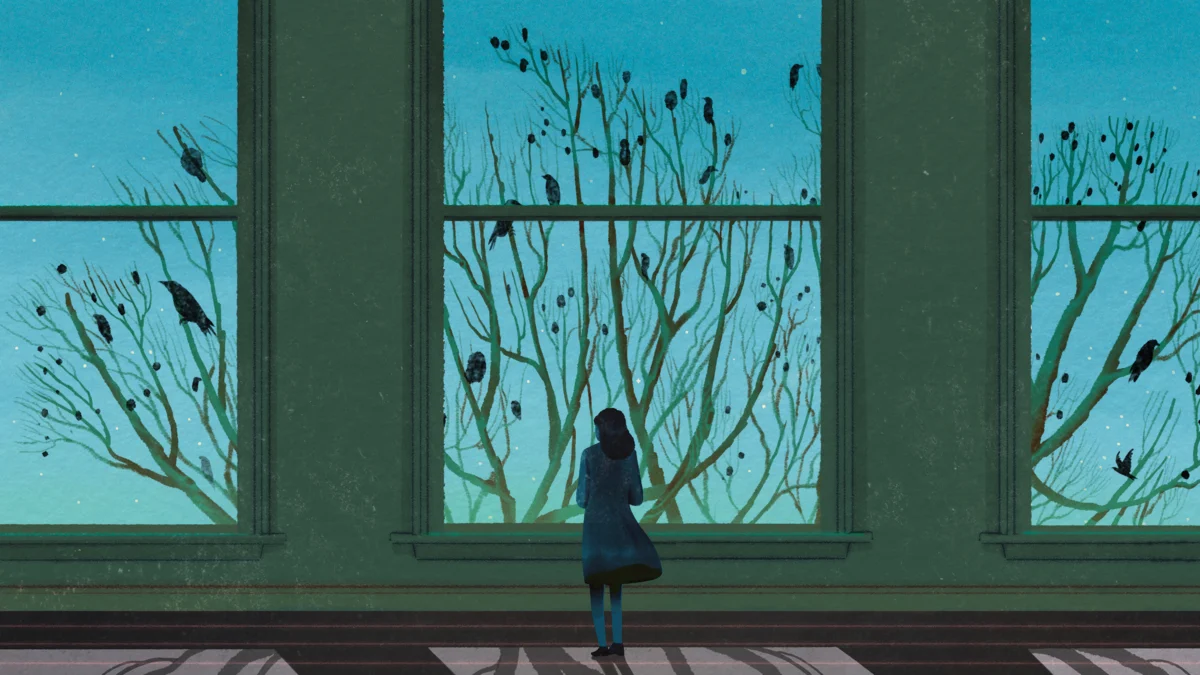
In the hushed heart of downtown Portland, where streetlights cast a sepia glow upon towering edifices, a silent drama unfolds each winter night. Crows, typically boisterous and ever-present, perch in bare-limbed trees and on building ledges, their black forms stark silhouettes against the urban backdrop, heads tucked beneath still wings. The usual nocturnal symphony of the city—the rumble of trash trucks, the distant hum of bar chatter, the whoosh of late-night buses—is punctuated only by the occasional, startled caw of a sentry crow, disturbed by an onlooker. This profound quietude, a stark contrast to their daytime clamor, marks the mysterious winter roost of thousands of American crows, a phenomenon that has captivated local naturalists and revealed deeper insights into urban ecology and human-wildlife coexistence.
It was in the pre-dawn hours, around 3 AM, that this unique spectacle truly came alive during a recent trek through the city’s grid with local birder and naturalist Gary Granger. Since 2017, Granger and his wife, Rebecca, have meticulously documented this remarkable gathering, sharing their findings through talks, social media, and their dedicated website, pdxcrowroost.com. On a rare, rain-free February night, an accompanying observer witnessed firsthand the intricate patterns of this avian metropolis, a sprawling community of corvids choosing the concrete jungle as their seasonal sanctuary.
American crows, highly intelligent and adaptable members of the corvid family, typically spend their days dispersed across the landscape, either individually or in small family groups. They forage for food, engage in complex social interactions, and, particularly during the spring and summer breeding seasons, fiercely defend their territories. However, with the arrival of colder weather, typically from November through March, a profound shift occurs. Thousands of these birds abandon their solitary or small-group routines, converging on downtown Portland in a synchronized, often boisterous, nightly migration. This daily ritual begins with a raucous pre-roost assembly, a chaotic ballet of squawking, preening, and ostentatious aerial acrobatics. As twilight deepens into night, the cacophony gradually subsides, and the multitude of crows disperses, settling into specific trees and onto building ledges throughout the urban core. Once established in their roost, Granger noted, a remarkable tranquility descends; squabbling ceases, displacement is rare, and the birds, surprisingly, do not eat. Their sole purpose in this urban haven is collective rest.
Navigating at least seven miles of downtown streets, the sheer scale of the roost gradually became apparent. Initially, the presence of the sleeping birds was subtle, easily overlooked amidst the city’s artificial glow. Over a hundred crows might be hunkered down in trees outside a Nike store, seemingly unbothered by decorative fairy lights or passing vehicles. But with time, an observer’s eye adjusts, anticipating their presence, especially in the stark shadows cast by brightly illuminated buildings. The sight of hundreds, then thousands, of crows sleeping along a bustling urban street, utterly oblivious to the surrounding human activity, evokes a profound sense of entering a parallel dimension, a hidden natural world thriving beneath the veneer of human civilization. On that particular night, the Grangers’ careful count surpassed 12,000 individual crows, a testament to the immense scale of this avian phenomenon.

These massive urban crow roosts are not unique to Portland; they are a widespread and fascinating phenomenon observed in cities across North America and, indeed, in various urban centers globally. Yet, the precise reasons behind this collective avian migration to metropolitan areas remain a subject of ongoing scientific inquiry and debate. Several hypotheses have been put forward, each offering a partial explanation, but none fully encapsulating the complex motivations of these intelligent birds.
One common theory posits that cities offer a warmer microclimate, an "urban heat island" effect where concrete and asphalt absorb and radiate heat, providing a refuge from colder rural temperatures. However, this theory is challenged by observations that roosting crows rarely huddle for warmth, often perching on the exposed outer limbs of trees, vulnerable to wind and rain. Another suggestion points to the abundance of food sources in urban environments, from discarded human scraps to readily available invertebrates. Yet, studies consistently show that crows disperse widely during the day to forage, often traveling significant distances back to the city specifically for the night’s roost, indicating the roost itself is not primarily a feeding ground.
A more compelling hypothesis centers on predator avoidance. While cities are not entirely devoid of predators – owls and hawks, natural adversaries of crows, can still be found – they generally offer fewer large, mammalian predators compared to rural landscapes. Intriguingly, some roosts, like one documented in Irvine, California, begin the night in urban areas only to move into nearby wetlands, rich with potential predators, suggesting a nuanced calculation of risk. However, it is the avoidance of one specific predator that perhaps offers the most profound insight: humans.
Throughout much of the settler history of the United States and other developed nations, crows have been systematically reviled and persecuted as agricultural pests. Perceived as threats to crops and livestock, they became targets of widespread eradication campaigns. Historical accounts paint a stark picture: a 1940 issue of Life magazine, for instance, chillingly described an Illinois Department of Conservation campaign where game wardens and farmers employed dynamite to destroy crow roosts, subsequently clubbing stunned survivors. In a single winter, the department boasted a "score" of 328,000 crows eliminated, a testament to the brutal efficiency of these efforts.
Modern research into corvid intelligence offers a crucial lens through which to understand the crows’ adaptive behavior. Studies have unequivocally demonstrated that crows possess remarkable cognitive abilities, including long, socially shared memories, the capacity to distinguish individual human faces, and the ability to transmit information about threats to other crows, even across generations. It is entirely plausible, then, that generations of crows, having experienced or learned of the brutal persecution in rural agricultural lands, made a collective, albeit instinctual, "decision" to relocate their winter roosts to urban areas, perceiving cities as comparatively safer havens.

Despite this learned adaptation, the city is not without its own set of challenges for the crows, or for the humans who share their space. While they do not eat at the roost, they do, inevitably, excrete. Their droppings, frequent and plentiful, leave tell-tale white smatterings on sidewalks and public spaces, often likened to crusts of snow. For many urban dwellers and businesses, this becomes a significant nuisance and a perceived public health concern.
For a period, downtown Portland grappled with this issue through conventional means, employing pressure-washing teams and even a specialized Zamboni-like sidewalk-cleaning machine affectionately dubbed the "Poopmaster 6000." However, the sheer volume of droppings meant accumulation continued unabated. In more recent years, Downtown Portland Clean & Safe, a non-profit organization funded by local businesses and property owners, has adopted a different strategy: falconry. They contract falconers, at an annual cost of approximately $55,000, to deploy Harris’ hawks several nights a week. The hawks’ presence acts as a deterrent, harassing the crows away from the core business district. While this hazing method does achieve temporary success in dispersing the crows, Gary Granger has observed that these intelligent birds quickly learn the falconers’ schedules, returning to the patrolled areas once the hawks depart for the night. The result is sidewalks that are cleaner, perhaps, but far from pristine, highlighting the ongoing, complex dynamic between urban wildlife and human priorities.
From a human perspective, the frustration with the mess is understandable. Crows roost across hundreds of city blocks, leaving a visible impact under virtually every tree and building ledge they inhabit. Yet, a deeper consideration suggests a moral imperative for greater accommodation. Humans were the aggressors, attacking these birds in their sleep and systematically transforming their historical habitats into sprawling urban ecosystems. To then express annoyance when crows, through an extraordinary feat of adaptation and learned behavior, choose these altered landscapes as their best chance for winter survival, seems a profound irony. If crows have determined that spending their nights among us offers the highest probability of surviving the winter, then it falls upon humanity to find more sustainable and respectful ways to coexist.
As dawn approached, a subtle shift in the sky – a faint blue at the edges, a sharper definition in the clouds – signaled the impending sunrise, a cue the crows instinctively recognized. The restless energy among the roosting birds began to mount. Granger led the way to Pioneer Courthouse Square, a central brickwork plaza typically bustling with food trucks and tourists, but now serving as the crows’ grand morning check-in. Hundreds of crows who had rested there began to stir, shaking off sleep, shimmying, and stretching their wings. Thousands more streamed in from distant trees and buildings to the west, arriving in wave after wave, then splitting into different branches, a grand reunion. The silence of the night gave way to a shocking cacophony, a crescendo of cawing voices clamoring over one another, ebbing and flowing into a croaking roar, a vibrant declaration of their collective awakening.
Witnessing this powerful dawn ritual, one could not help but draw profound parallels. The exuberant gatherings, the resilience in the face of adversity, the unwavering togetherness – these are not merely avian behaviors but reflections of broader themes of community and survival. Like the crows, marginalized human communities have often gathered in places where they are not straightforwardly welcome, where their presence is sometimes perceived as an unsightly stain on an otherwise "uncontaminated" society. Yet, like the crows, these communities have banded together, asserting their right to exist, to find sanctuary, and to thrive: "Here, we will come together. Here, we will make ourselves safe." The wisdom of the crows, in their adaptive resilience and their choice of collective safety, offers a compelling, silent challenge to human perceptions of urban space and the ethics of coexistence with the natural world.







