

 Joko Susilo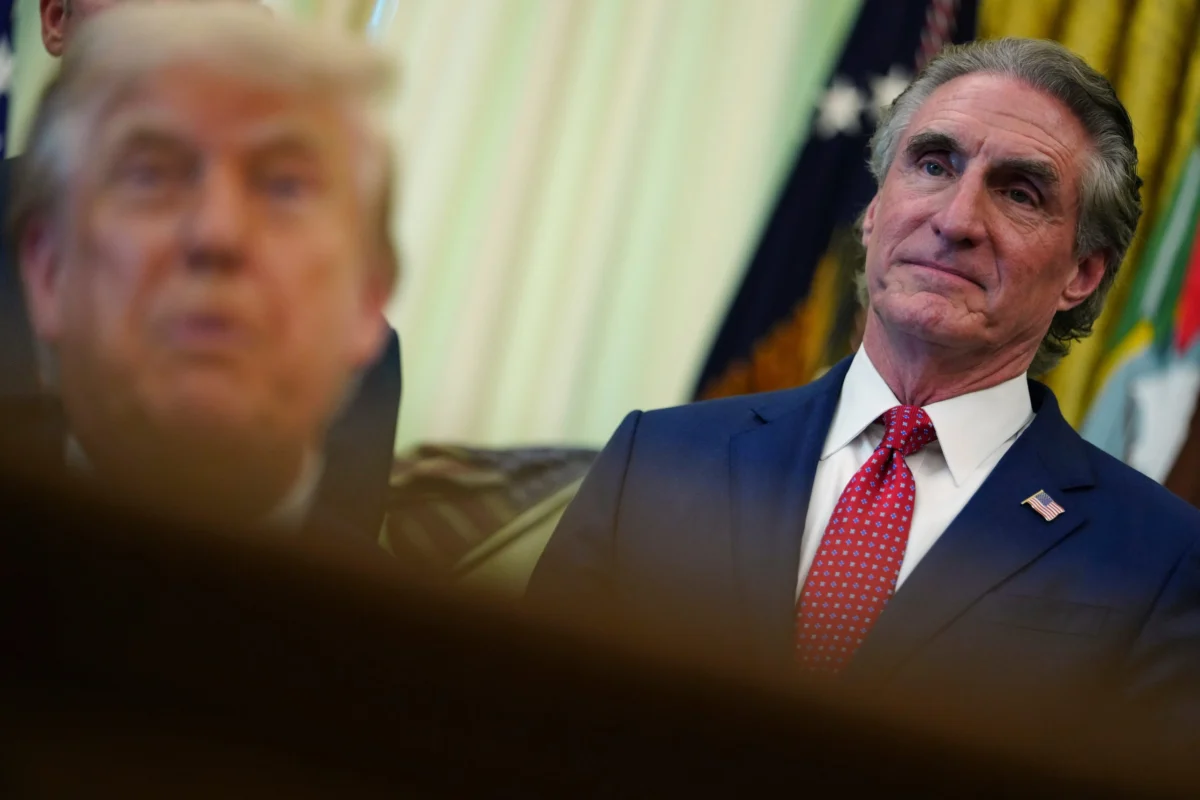
On September 14, the U.S. Fish and Wildlife Service (USFWS) issued a controversial internal memo that fundamentally reinterprets the scope of the Endangered Species Act (ESA), a cornerstone of American environmental law. This directive effectively legalizes the accidental killing of protected wildlife, a move that critics contend hollows out one of the nation’s most vital conservation statutes. Under the new interpretation, the "take" prohibition of the ESA would no longer apply to harm that is not "intentionally directed against a particular animal or animals." This shift could allow industrial operations, from timber companies felling forests to energy firms causing oil spills, to inadvertently decimate populations of vulnerable species without legal repercussions, provided the harm was not explicitly targeted. For instance, while hunting a peregrine falcon would remain illegal, a logging operation could inadvertently wipe out an entire family of falcons or destroy their critical nesting habitat, and an energy company could inadvertently exterminate an entire fish species through an environmental catastrophe like an oil spill, all without facing the full force of the law.

This radical reinterpretation bears the distinct hallmarks of Interior Secretary Doug Burgum’s policy agenda, raising significant alarm among conservationists and environmental policy experts. Burgum, with less than two years in office, has rapidly accumulated a record of actions that many observers describe as profoundly detrimental to America’s natural heritage. His tenure has seen the dramatic reduction of iconic national monuments, including a staggering 3 million acres from Bears Ears and Grand Staircase-Escalante, reversing protections for culturally and ecologically significant landscapes. He has also overseen the opening of vast swathes of the ecologically fragile Arctic wildlands to oil and gas drilling, a move with potentially irreversible environmental consequences. Beyond these high-profile decisions, Burgum has streamlined the approval processes for uranium mining and various fossil fuel projects, often circumventing established environmental review procedures. Moreover, his department has approved large-scale data centers on public lands with minimal public input, further signaling a prioritization of industrial development over conservation and public participation. These actions have drawn comparisons to some of the most controversial Interior Secretaries in history, including James Watt, known for his anti-environmental rhetoric during the Reagan administration; Gale Norton, who opened vast areas to development under George W. Bush; and even Albert B. Fall, infamously linked to the Teapot Dome scandal for illicitly leasing federal oil reserves.
Despite this escalating pattern of resource exploitation, Burgum initially garnered an unexpected degree of support from certain segments of the environmental community at the outset of the Trump administration’s second term. Many viewed him as a potential "bright spot" within a cabinet otherwise perceived as hostile to environmental protection. His self-portrayal as a pragmatic, old-school Western Republican, coupled with his record as North Dakota’s governor – where he had pledged to make the oil-rich state carbon-neutral by 2030 through a combination of renewable energy development and carbon capture technologies – contributed to this perception. The Outdoor Recreation Roundtable, a influential coalition of businesses and organizations focused on outdoor activities, notably endorsed his nomination in January 2025. They lauded Burgum’s "history of support for outdoor recreation, the outdoor recreation economy, and the protection of public lands and waters," deeming his leadership "critical." This endorsement, signed by major outdoor gear companies like REI, helped secure his confirmation in the U.S. Senate with an overwhelming 80 to 17 vote, including support from conservation-minded Democrats representing states like New Mexico, Colorado, Nevada, and Arizona.

However, a closer examination of Burgum’s political past revealed inconsistencies that, in hindsight, foreshadowed his current trajectory. As governor, his "carbon-neutral" ambitions were intertwined with strong support for controversial projects, such as a carbon dioxide pipeline championed by Continental Resources, a massive oil and gas company founded by his close associate, Harold Hamm. Furthermore, Burgum’s administration implemented draconian measures to suppress protests against the Dakota Access Pipeline, issuing evacuation orders and signing legislation that criminalized dissent. Energy Transfer, the company behind the pipeline, subsequently made significant financial contributions to Burgum’s 2020 re-election campaign, highlighting a pattern of close ties between his political career and the fossil fuel industry.
During his confirmation hearing, Burgum openly articulated his vision for managing the Interior Department "like a business." He spoke of the "trillions of dollars of assets" buried beneath the nation’s public lands, referring to them as "the balance sheet of America." He argued that the government was "restricting its balance sheet" by not fully exploiting these resources. While these statements certainly raised red flags for environmentally conscious lawmakers, he attempted to assuage concerns by adding that his focus on resource extraction would exclude wilderness areas, national parks, and "those areas we have to absolutely protect for their precious stuff." This caveat proved to be a fleeting assurance.

Immediately upon taking office, Burgum emerged as one of the most fervent proponents of the administration’s "energy dominance" agenda, a policy framework that prioritizes the aggressive extraction of domestic energy resources over environmental protection. Under his stewardship, the amount of Bureau of Land Management (BLM) acreage leased to oil and gas companies surged to levels not seen since the George W. Bush administration. The agency accelerated drilling permit approvals and drastically curtailed environmental review processes, exemplified by a uranium mine in Utah that received full approval in a mere two weeks. His department also oversaw dozens of other significant regulatory rollbacks, including a redefinition of "take" under the Migratory Bird Treaty Act, further weakening protections for avian species. The sheer scale and speed of these changes prompted REI CEO Mary Beth Laughton to publicly retract the company’s earlier endorsement, signaling a growing disillusionment with Burgum’s policies.
While Burgum initially appeared to uphold his pledge to safeguard national monuments, parks, and other areas he deemed "precious," this commitment proved ephemeral. His actions increasingly demonstrated that the only "precious" considerations were the support of corporate allies, the admiration of the political base, and, critically, the approval of the President. In an astonishingly short period, Burgum systematically dismantled crucial environmental safeguards, leaving vast stretches of America’s public lands vulnerable to unchecked corporate exploitation. He moved to eliminate the Biden-era ban on new oil and gas leases around Chaco Culture National Historical Park, a UNESCO World Heritage Site with profound Indigenous cultural significance. Furthermore, he again unilaterally reduced the boundaries of Bears Ears and Grand Staircase-Escalante National Monuments, despite their immense ecological value and historical importance. In a significant blow to tribal sovereignty and co-management efforts, Burgum also eliminated the Intertribal Bears Ears Commission, a body established to provide Indigenous communities a voice in the monument’s management. The immediate consequence of these boundary changes was stark: within a week of the new boundaries taking effect on September 11, at least 13 new mining claims were filed within the newly unprotected areas of Bears Ears alone, underscoring the direct link between policy shifts and resource extraction.

Even when assessed purely on his self-professed "pro-business" terms, Burgum’s tenure has been a demonstrable failure. His policies have arguably undermined the nation’s true "balance sheet" by actively obstructing the development of clean energy. He has blocked viable solar and onshore wind projects, paid offshore wind companies to abandon federal leases, and scrapped the Public Lands Rule, which sought to balance conservation with other land uses. By drastically reducing royalty rates on oil and gas leases, he has diminished the revenue streams that the government and taxpayers receive from the extraction of public resources. Moreover, Burgum’s administration has eviscerated methane emissions limits on oil and gas facilities, allowing drillers to release this potent greenhouse gas and other pollutants directly into the atmosphere. Methane, with a global warming potential far exceeding carbon dioxide over a 20-year period, represents both an environmental hazard and a significant economic waste, as millions of dollars’ worth of natural gas are simply vented or flared. His aggressive push to expand public-lands grazing, a practice often subsidized by taxpayers, further exemplifies his poor business acumen, as charging less than $2 a month for a cow to consume a ton of public forage generates minimal profit while often leading to overgrazing and ecological degradation.
Beyond these policy decisions, Burgum has also become the primary facilitator for the President’s more ostentatious and politically charged vanity projects. He has eagerly funneled tens of millions of dollars from the budgets of the country’s "precious" national parks into initiatives such as the construction of a ballroom and triumphal arch, as well as the widely criticized reflecting pool renovation, which drew scrutiny for its cost and aesthetic choices.

Less than two years into his tenure, it has become unequivocally clear that Burgum is more than a mere ideologue; he is a naked opportunist. His actions reveal a willingness to compromise his integrity and credibility, sacrificing the long-term health of the nation’s public lands and wildlife for the short-term benefit of corporate allies, the political adulation of a fervent base, and, crucially, to maintain his position and favor with the President. As a result, Burgum has not only failed in his fundamental role as a steward of the environment and its invaluable wildlife but has also demonstrated a profound inability to manage public resources effectively, even by his own stated business principles. History will ultimately render its verdict on whether he stands as the worst Interior Secretary of all time, but his legacy is already firmly established as arguably the most disappointing.









