Joko Susilo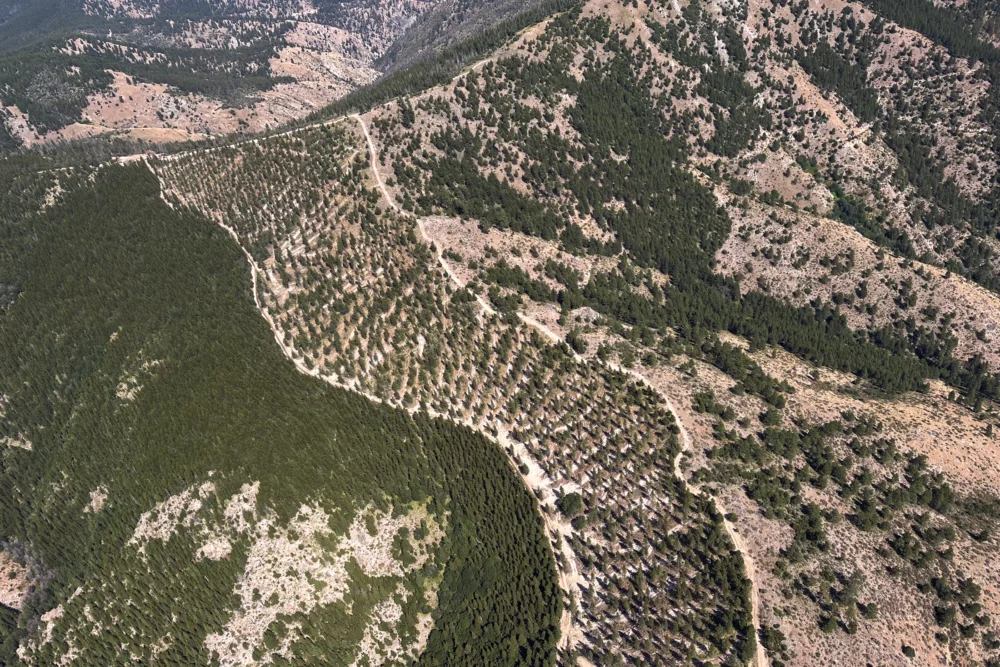
A landmark piece of legislation, the "Fix Our Forests Act," stands on the cusp of Senate approval after successfully navigating the House of Representatives, poised to fundamentally reshape how the federal government approaches the vital stewardship of nearly 200 million acres of the nation’s forests. This comprehensive bill, a collaborative effort championed by U.S. Senators John Hickenlooper (D-Colo.), John Curtis (R-Utah), Tim Sheehy (R-Mont.), and Alex Padilla (D-Calif.), recently emerged from a key Senate committee with a decisive 18-5 vote, showcasing a rare alignment of bipartisan consensus in a politically polarized era. The urgent imperative behind this legislative drive is stark: an unprecedented wildfire crisis gripping communities across the country, demanding immediate and strategic intervention. Senator Hickenlooper underscored this urgency, stating unequivocally, "There is a wildfire crisis across much of the country – our communities need action now. Wildfires won’t wait."
This proposed legislation marks the most significant congressional endeavor in recent memory specifically designed to combat the escalating threat of wildfires, which have ravaged landscapes from the American West to global hotspots like Australia, the Mediterranean, and Canada. The bill incorporates a suite of provisions aimed at proactive forest health and community protection, notably promoting controlled prescribed burning and strategic forest thinning in regions identified as highly susceptible to fire. These practices are crucial for reducing hazardous fuel loads that have accumulated over decades of fire suppression, creating a tinderbox effect across vast forested areas. Furthermore, the act emphasizes the critical importance of working collaboratively with local communities to establish "defensible space" around homes and infrastructure, a key strategy for mitigating damage and enhancing safety when fires inevitably occur. It formally acknowledges the ecological role of wetlands as natural buffers against the spread of wildfires and fosters cross-boundary programs, encouraging cooperation among counties, states, and tribal nations—entities often fragmented in their land management approaches but united by the shared threat of wildfire. A cornerstone of the bill is also the reauthorization of the 2009 Collaborative Forest Landscape Restoration Program (CFLRP), which provides essential funding for diverse groups to collaborate on large-scale fire mitigation and broader forest health initiatives.
According to Michael O’Casey, public-lands director for the Theodore Roosevelt Conservation Partnership, the current state of many Western forests is precarious. "When you’re out hunting and in the woods in Western forests, you can see a lot of woods aren’t in good shape," he observed, lamenting that "they’re too thick and ready for fire, frankly." This vulnerability, he explained, is largely a legacy of over a century of aggressive fire suppression policies, which, while initially intended to protect timber resources and settlements, inadvertently led to an unnatural accumulation of dense undergrowth and diseased trees. This historical imbalance has been compounded by intensifying droughts, the accelerating impacts of climate change, and the increasing prevalence of insect infestations and diseases, all of which contribute to an environment ripe for catastrophic megafires. O’Casey articulates a clear hope that the Fix Our Forests Act will equip federal agencies with the tools needed to prevent the kind of destructive, fast-moving infernos that have increasingly scorched the Western United States, leaving behind ecological devastation and profound economic and social disruption.

Currently, the U.S. Forest Service manages to treat approximately 4 million acres annually through various forest management techniques. While this represents a significant effort, it is but a fraction of the nearly 200 million acres under federal jurisdiction that are in need of attention. Critics and proponents alike agree that this pace is insufficient to address the scale of the crisis. O’Casey stresses the urgency of accelerating management efforts in areas "where it’s needed most," expressing optimism that the bill will "facilitate more management on forest lands to keep the health of ecosystems in mind." This push for increased action, however, comes tethered to several provisions that have ignited a fierce debate among environmental advocates and industry stakeholders, highlighting the inherent tension between expediting action and upholding established environmental protections.
One of the most contentious aspects of the bill involves proposed changes to bedrock environmental laws, particularly the National Environmental Policy Act (NEPA). Currently, the Forest Service must undertake a period of public comment and a thorough environmental review process under NEPA before undertaking projects that significantly alter forest landscapes, unless the project is deemed small-scale and unlikely to have a "significant effect on the human environment." Such exemptions, often framed as emergency declarations, typically apply to projects up to 2,000 or 3,000 acres in size. However, the Fix Our Forests Act proposes to dramatically increase this threshold to 10,000 acres. This expansion, critics argue, would allow for larger projects to bypass crucial public and scientific scrutiny.
Further escalating concerns, another controversial provision would grant the Forest Service authority to implement logging and landscape alterations within expansive "fireshed management areas"—regions that can encompass up to 250,000 acres, often comparable in size to entire national forest ranger districts—without the prerequisite consultation with tribal nations and the public, or adherence to the standard environmental review process. Anna Medema of the Sierra Club and Blaine Miller-McFeeley, a legislative representative with Earth Justice, contend that these provisions fundamentally weaken critical environmental safeguards, effectively granting the Forest Service permission to initiate massive projects with significantly diminished public oversight. Conversely, proponents like O’Casey argue that these measures are essential to cut through bureaucratic "red tape" and enable the agency to respond with the speed and agility required to tackle urgent forest health challenges that have historically been mired in protracted administrative processes.
The bill also introduces significant limitations on judicial review, a crucial mechanism for holding federal agencies accountable. It seeks to shorten the statute of limitations for challenging forest management decisions from the current six years to a mere 150 days. This compressed timeline, critics warn, could severely restrict the ability of environmental groups, tribal communities, and concerned citizens to legally challenge projects they deem harmful or inconsistent with environmental law. Adding another layer of concern, the legislation stipulates that neither the Forest Service nor the Bureau of Land Management (BLM) would be consistently required to consult with the U.S. Fish and Wildlife Service (USFWS) to update forest plans in response to newly listed endangered species or updated information about existing listed species. This carve-out raises fears that critical habitat protections and species recovery efforts could be undermined, potentially impacting biodiversity and ecosystem resilience.

Compounding these structural changes, critics point to a glaring omission: the bill appropriates no new federal funding specifically for forest thinning, prescribed burns, or the creation of defensible spaces around communities. This absence of new financial investment is particularly troubling given that the Forest Service is already facing severe resource constraints, having seen thousands of employees depart from the Department of Agriculture. Susan Jane Brown, an Oregon-based staff attorney for Silvix Resources, a nonprofit environmental law firm, highlights the agency’s drastically underfunded and understaffed state. Miller-McFeeley further cautioned that, in the context of the previous administration’s "Big Beautiful Bill," which mandated annual timber quotas for the Forest Service, the remaining staff might be pressured to prioritize logging projects over broader ecological restoration efforts, even those without commercial value. "You tie those together, and it’s an existential threat to our forests and communities that survive because of them," Miller-McFeeley asserted, painting a stark picture of potential negative consequences.
Acknowledging the valid concerns raised by critics, O’Casey emphasized that any bipartisan legislation inherently involves compromise. He firmly refutes the notion that the Fix Our Forests Act constitutes a "congressionally authorized logging free-for-all." He points out that many Western forests are choked with dense stands of timber that hold little commercial value, such as small-diameter ponderosa pine and juniper, yet contribute significantly to hazardous fuel loads. O’Casey maintains that the bill will encourage the science-backed thinning of these areas, ultimately serving as a net positive for the long-term health of old-growth forests, critical water supplies, and communities perpetually threatened by fire. However, he also recognizes that without new federal appropriations, cities, counties, tribal nations, states, and nonprofit organizations will need to continue their advocacy and fundraising efforts to secure the necessary resources for projects like wetland restoration and community-level fire resiliency initiatives. The divergent perspectives underscore the complex reality of forest management in an era of climate crisis, with a significant segment of stakeholders expressing trepidation about the bill’s potential pitfalls rather than enthusiasm for its proposed solutions.