

 Joko Susilo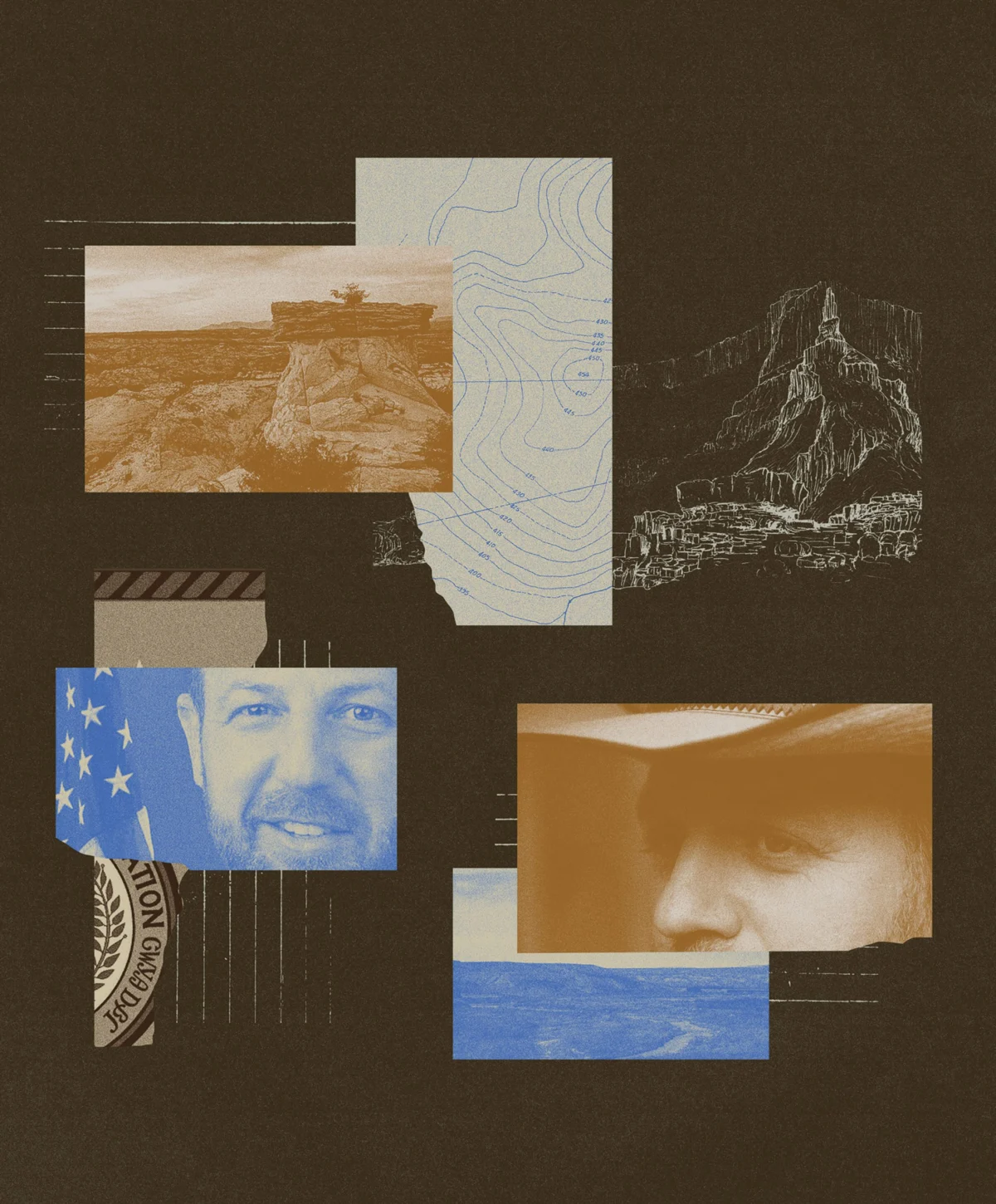
The core grievance of the movement centered on the perceived overreach of federal agencies like the Bureau of Land Management (BLM) and the U.S. Forest Service, which managed the majority of Western lands. Critics frequently complained about regulations that limited grazing, mining, and logging, often citing what they saw as disproportionate federal protections for wildlife over human economic activity. One Idaho resident at the convention voiced a common sentiment, decrying federal land managers for wanting to "lock up 700,000 acres for 600 birds." While the Reagan administration, despite its rhetorical alignment, ultimately did not usher in the sweeping transfers of land ownership that many rebels desired, these underlying resentments did not dissipate; they simmered for decades, occasionally boiling over into highly visible confrontations that captured national attention.
By 2016, this long-standing tension reached a new flashpoint with Ammon Bundy’s armed occupation of the Malheur National Wildlife Refuge in Oregon. This event starkly illustrated how the struggle over public lands had evolved, becoming inextricably linked with a broader, more belligerent anti-government ideology prevalent within certain right-wing factions. This ideology, which found a potent champion in Donald Trump, capitalized on a deep-seated distrust of federal authority and a romanticized view of Western individualism. Trump’s rhetoric, particularly his claims that federal lands were "locked up, off-limits, closed" and that "you can’t go hunting, you can’t go fishing, you can’t do anything, you can virtually not even walk on it," resonated with those who felt disenfranchised by federal land management policies. These claims, though often factually inaccurate regarding public access, fueled a narrative of government overreach that culminated in his administration’s decision to drastically reduce the size of Bears Ears and Grand Staircase-Escalante national monuments. In a move that stripped protections from more than 2.9 million acres of culturally and ecologically significant land, Trump effectively echoed the grievances of Nice’s unnamed Idahoan from nearly four decades prior, demonstrating the enduring power of this narrative in contemporary American politics.
The history of Grand Staircase-Escalante, designated a national monument by President Bill Clinton in 1996, offers a vivid illustration of these complex dynamics. Paul Larmer, in his 1997 report "Beauty and the Beast," explored the communities bordering the newly protected area. The monument’s establishment had preempted a major proposal to mine an estimated 62 billion tons of coal, a significant economic blow for many locals who had envisioned jobs and prosperity from extraction industries. Larmer observed the initial fierce opposition, but also noted that some opponents quickly began to recognize an undeniable shift: "Southern Utah’s mining, logging and ranching are in decline; and the region is already a public-lands playground for the world." This observation highlighted the uncomfortable transition of a region grappling with the decline of its traditional extraction-based economy and the rise of a new tourism industry, complete with its own seasonal boom-and-bust cycles. Larmer presciently asked, "Would the anger and resentment fade?"

It did not. Despite significant economic growth in neighboring counties between 2001 and 2022, with jobs increasing by 51% and per capita incomes by 41%, Grand Staircase-Escalante has remained a potent political lightning rod. The monument continues to channel anxieties about the future of rural communities, sparking debates over how Western lands are best utilized and valued. These anxieties often morph into profound questions of community identity: Who are we? What do we stand for? The conflict underscores a persistent national challenge: how to balance economic development, environmental conservation, and the diverse cultural values embedded in the landscape.
The interplay of identity and political ideology is further illuminated in Graham Lee Brewer’s 2019 profile, "Markwayne Mullin is for Trump — and Indian Country." Brewer captured Mullin during his tenure as an Oklahoma representative, before his ascent to the Senate and later, his confirmation as Secretary of the Department of Homeland Security (DHS) under a subsequent administration. Mullin, a citizen of the Cherokee Nation, presents a complex figure in American politics, often challenging "stereotypical notions of what it means to be Indigenous, either in how he looks or how he operates as a lawmaker." Brewer described a politician seemingly full of contradictions: an ultra-conservative known for bipartisan deal-making, and a white-passing individual who advocates for tribal sovereignty, yet serves an administration that has often rolled back measures intended to bolster that very sovereignty.
A prominent example of this tension is the Trump administration’s drastic reduction of Bears Ears National Monument, which simultaneously eliminated its unique tribal land commission, a pioneering model for co-management with Indigenous nations. This move was a significant setback for tribal self-determination and conservation efforts. Since taking the helm at DHS, Mullin has invoked his Native identity to defend his department against accusations of racism, even as DHS moves forward with constructing new segments of the U.S.-Mexico border wall. This construction often occurs along the southern boundary of the Tohono O’odham Nation Reservation in Arizona, despite the tribe’s vocal objections, raising critical questions about tribal consultation, land rights, and cultural preservation. Brewer’s profile grappled with the fundamental question: "Is Markwayne Mullin good or bad for Indian Country?" While some Indigenous communities held hope that Mullin would leverage his cabinet position to champion their interests, it remains unclear whether he is willing or able to challenge the policies of an administration whose actions have often been perceived as hostile to tribal sovereignty.
Many of the foundational tensions that permeate these archival stories continue to animate the current election season. During the Sagebrush Rebellion, the "rebels" skillfully presented themselves as the authentic voice of the West, a narrative often perpetuated by media, despite Nice’s reporting that their policy proposals were broadly unpopular. Today, this idealized image of the "authentic" Westerner—often depicted as white men in cowboy hats—persists, flattening the region’s immense demographic and cultural complexity. This oversimplification obscures the diverse populations, including a growing number of Indigenous peoples, Latinos, and urban dwellers, who collectively shape the contemporary West.

This complexity is vividly reflected in several high-stakes races this fall, where Western states could prove pivotal in determining control of both chambers of Congress. The Alaska Senate race, for instance, pits Mary Peltola, a moderate Democrat and Alaska Native who grew up deeply connected to traditional fishing livelihoods near the Bering Sea, against Republican incumbent Dan Sullivan, who hails from Cleveland and attended Harvard. This contest is more than a simple partisan battle; it embodies the clash of different identities, economic priorities, and visions for the future of resource management and Indigenous rights in a rapidly changing region. The outcome of such races will not only influence federal policy on public lands, energy development, and environmental protection but also send a powerful message about who truly represents the American West in the 21st century.
These origin stories, drawn from decades of reporting, offer invaluable context for understanding the present moment, yet they do not dictate the future. Instead, they serve as a powerful reminder that the trajectory of our collective future—particularly regarding critical issues like land stewardship, Indigenous rights, and the balance of power—is never predetermined. It is actively being shaped, day by day, through ongoing debates, policy decisions, and the choices made by individuals and communities across the nation.







