Rocky Gerung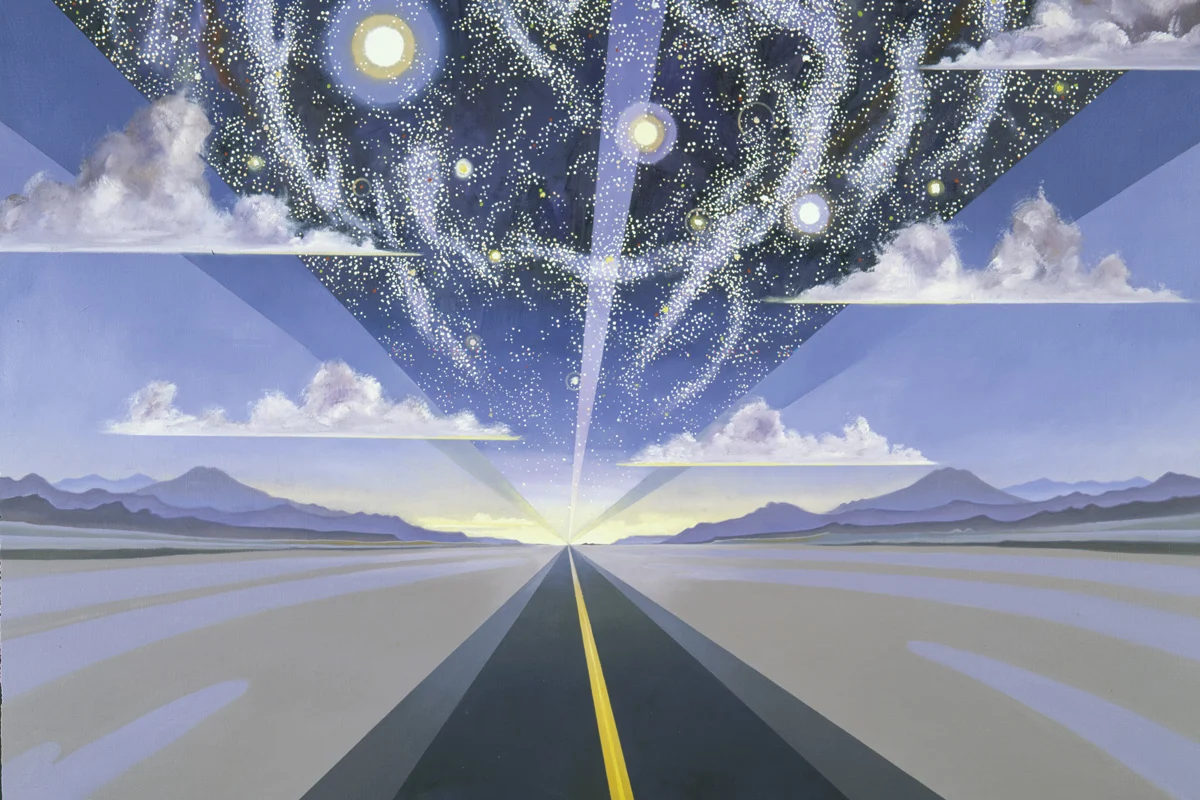
Many of the featured artists exhibit strong connections to the American Southwest and California, landscapes imbued with a rich history of spiritual seeking. The exhibition draws inspiration from the region’s unique topography, from the stark beauty of Joshua Tree to the spiritual draw of Sedona, Arizona, and Crestone, Colorado. These natural environments, characterized by their rugged terrains, expansive skies, and perceived energetic vortices, serve as both backdrop and muse for artists exploring the permeable boundary between the physical and spiritual realms. Their work often juxtaposes these awe-inspiring natural settings with deeply personal, sometimes fantastical imagery that challenges established notions of reality and the self.
The artistic expressions within "A Queer Arcana" range from the overtly symbolic to the subtly evocative. Ingo Swann’s 1986 painting, Proto Adam, depicts a celestial figure emerging from a desert river, a potent metaphor for creation and transformation. Clarity Haynes’s Altar for Laura Aguilar (2022), a pastel tribute to the late photographer, incorporates imagery from Aguilar’s groundbreaking nude self-portraits, celebrating the reclamation of the body and its inherent power. Eric-Paul Riege’s chestplate [3] (2026), a meticulously woven textile, elegantly merges traditional Diné cosmology with contemporary queer lived experience, illustrating how ancestral wisdom can inform and enrich modern identities. These works, among many others, highlight the multifaceted ways queer artists engage with their heritage, their present realities, and their visions for the future.
The exhibition also embraces more exuberant and avant-garde expressions of queer spirituality. Several pieces feature bold, often humorous depictions of cosmic phenomena and mythological beings, including explicit representations of sexuality and otherworldly encounters. Magazine archives within the exhibit further document a history of witchcraft and goddess worship, revealing the enduring appeal of these practices for those seeking alternative frameworks for understanding the world and their place within it. This curated selection suggests a deliberate effort to showcase the breadth and depth of queer engagement with magical and spiritual traditions, moving beyond a singular, monolithic representation.

Curator David Evans Frantz articulated the exhibition’s core thesis, stating, "Queer artists, activists, and cultural producers have long sought spiritual practices outside the mainstream to affirm their identities, build community, and envision new ways of being in an often-oppressive world." This sentiment resonates deeply within the exhibition’s presentation, particularly with the prominent inclusion of Gloria Anzaldúa’s influential words. The exhibition highlights Anzaldúa’s self-identification as a "spiritual mestiza," underscoring her view of spiritual seeking as an inherently queer act—a way of navigating the world and the infinite with a unique perspective shaped by lived experience and a profound sense of self. This framing positions queer spirituality not as an outlier, but as a vital and dynamic force in understanding human consciousness and connection.
One particularly arresting piece is Edgar Fabián Frías’s video installation, Give Us Home Spider: Ritual 5: TXI Cement Quarry, Bloomington, CA (2017). As a brujx—a gender-neutral term in Spanish for a magic practitioner—and a descendant of the Wixárika people, Frías uses performance and ritual to address pressing environmental and social justice issues. The video documents a series of rituals organized by Frías across Southern California aimed at confronting environmental racism and health disparities. Growing up in close proximity to the quarry featured in the work, Frías experienced firsthand the detrimental effects of industrial pollution, specifically hexavalent chromium, a carcinogen linked to increased rates of cancer and autoimmune diseases within their community. The ritual depicted involves Frías and thirteen other healers, adorned in vibrant colors, engaging in a symbolic act of healing and reclamation, using music, movement, and offerings to connect with the land and to protest its exploitation.
Frías’s ritual, performed nearly a decade prior to the exhibition’s opening, carries a potent contemporary relevance, especially in the context of widespread environmental crises. The recent memory of smoke from the Lineage Fire in Los Angeles, carrying toxic fumes from industrial negligence, serves as a stark reminder of the ongoing struggles against environmental injustices. Frías’s work is a powerful call to acknowledge historical harms and to actively engage in processes of healing and reconciliation, both for communities and for the Earth. This call to action extends beyond specific spiritual practices, emphasizing the universal importance of recognizing suffering, combating denial, and fostering meaningful resistance against systemic inequities. Even the quiet act of acknowledging the brief life of a desert cottontail, as recounted in a personal anecdote preceding the exhibition’s description, becomes a profound ritual of remembrance and respect for all life.
The exhibition "A Queer Arcana" is not a spontaneous occurrence but rather a deliberate convergence of past and present, a testament to the enduring power of community and ancestral wisdom. The artworks and artifacts serve as conduits, connecting contemporary audiences with the voices of those who came before, urging them to foster connections and to actively resist not only queer oppression but all forms of subjugation. The exhibition implicitly invites viewers to engage in acts of creative defiance, from challenging corporate decisions that harm communities to implementing personal protective rituals for their creative spirits. It advocates for building solidarity with non-human beings, recognizing the interconnectedness of all life.

The timing of the exhibition visit coincided with the Summer Solstice, a traditional period of celebration and reflection. The inclusion of queer tarot decks, such as those developed by trans activist Rachel Pollack, further enriched the immersive experience, offering tools for introspection and guidance. The author’s own spiritual journey, deeply rooted in nature—from stargazing and Qi Gong to birdwatching and river cleanups—has been further informed by the practice of tarot. As a Libra Sun with a Scorpio Moon, the author finds tarot readings invaluable for navigating indecision and resolving deep-seated grievances. The MotherPeace deck, a pioneering feminist and queer creation from the 1970s, stands as a significant element in the author’s personal cosmology, representing a fusion of spiritual traditions and personal identity.
Drawing a card from the MotherPeace deck on the Summer Solstice revealed the "Son of Cups," a card symbolizing "meditative awareness." The imagery on the card—a naked man serenely playing a flute on the sea, surrounded by seagulls, with datura flowers unfurling like sails below—evokes a profound sense of peace and connection to the natural world. This visual resonates with the author’s personal experiences, including the unexpected blooming of sacred datura flowers on their wedding night, a potent symbol of nature’s beauty and mystery, and the poignant moment of honoring a young cottontail rabbit, a small act of ritual that underscored the profound interconnectedness of life and death in the desert landscape. These personal narratives, interwoven with the exhibition’s themes, highlight the deeply personal and universal nature of spiritual exploration.