Rocky Georgio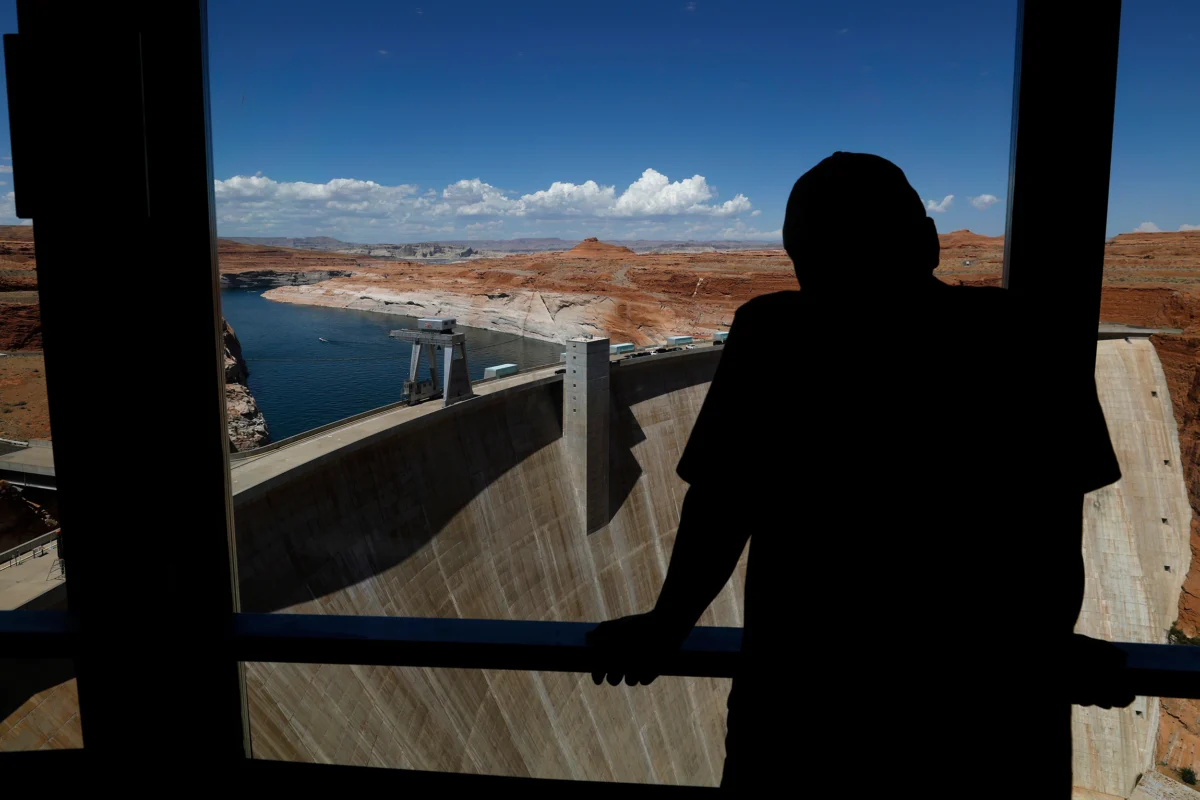
The future of water access for millions in the American Southwest hangs in the balance as a new federal management plan signals the strong possibility of significant reductions in Colorado River usage for both cities and agricultural operations. The U.S. Bureau of Reclamation’s newly released 10-year management approach for the vital waterway introduces a framework designed to adapt to fluctuating hydrological conditions, with provisions for operational adjustments every two years. This federal plan proposes curtailments to water allocations previously agreed upon by the Lower Basin states – Arizona, California, and Nevada – while allowing the Upper Basin states of Colorado, New Mexico, Utah, and Wyoming to implement voluntary conservation measures.
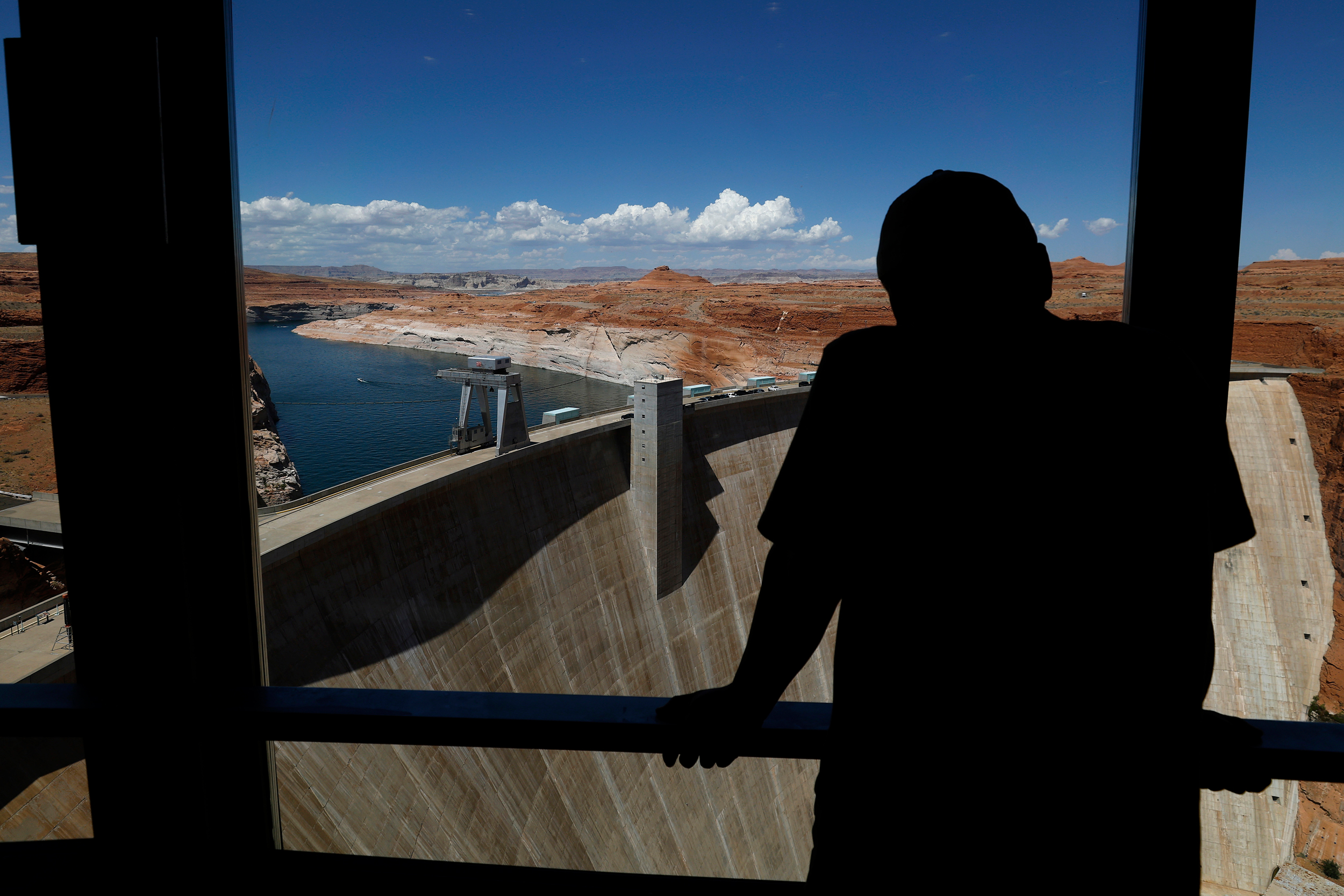
This development arrives as existing interim guidelines and drought contingency plans, established in 2007 and 2019, are slated to expire in 2027, and negotiations for a successor agreement have hit a significant impasse. The seven Colorado River Basin states have repeatedly missed deadlines to reach a consensus on how to manage the river’s diminishing flows, leaving the federal government to step in with its own operational blueprint. The Bureau of Reclamation plays a critical role in managing the river’s infrastructure, including the iconic Hoover and Glen Canyon dams, which impound Lake Mead and Lake Powell, the nation’s two largest reservoirs and crucial water storage facilities. The agency’s final environmental impact statement, released Friday, sets the stage for a federal record of decision that will finalize river operations for the next two years, prior to the full implementation of the 10-year plan.
"This plan strikes a balance between flexibility and predictability for the Colorado River system that is vital to the 40 million people who rely on it given unprecedented hydrologic conditions and the potential for considerable impacts on water users," stated Andrea Travnicek, Interior’s Assistant Secretary for Water and Science, in an announcement accompanying the plan’s release. She further elaborated that the approach "allows a new flexibility to respond to changing conditions and potential consensus," underscoring the adaptive nature of the proposed management.
Under consideration are release volumes from Lake Powell, the critical reservoir that marks the boundary between the upper and lower basins, ranging from 5 million to 12 million acre-feet to the downstream states. An acre-foot of water, a standard unit of measurement for water volume, can typically supply about two to four households for a year. The most significant implications appear to be for the Lower Basin, including Mexico, which could face substantial cuts to their water allocations. Specifically, the plan suggests a potential reduction of 1.5 million acre-feet in both 2027 and 2028 for the Lower Basin.
Breaking down these proposed cuts, Arizona would see its allotment reduced by 760,000 acre-feet, California by 440,000 acre-feet, and Nevada by 50,000 acre-feet, following a proposal submitted by the Lower Basin states themselves. However, the situation could become even more precarious beyond 2028, with potential reductions in the Lower Basin escalating to as much as 3 million acre-feet.
The Arizona Department of Water Resources has vehemently opposed these figures, labeling them "unacceptable" in a public statement. "Such reductions would devastate Arizona’s water users and its economy," the agency declared, highlighting the profound economic and social consequences that would ensue.
In contrast, the Bureau of Reclamation appears to be seeking voluntary reductions from the Upper Basin states, estimating a need for up to 200,000 acre-feet. The agency also discussed the possibility of transferring water from federally managed dams within the Upper Basin downstream, contingent upon hydrological conditions.
"The proposal responds to a fundamental reality: the Colorado River no longer reliably produces enough water to support all the uses and expectations built around it," commented JB Hamby, California’s Colorado River Commissioner. He emphasized that this challenge is shared across the entire Basin, necessitating "specific, measurable reductions in water use by every state."
Representatives from the Colorado Department of Natural Resources indicated that the state is currently "analyzing" the federal document. Meanwhile, governors from the Upper Basin states expressed cautious optimism, stating they were "encouraged that new operating guidelines will better reflect existing water supply, which must underpin any practicable plan going forward."
The Colorado River stands as one of the most climate-stressed waterways in the United States, a critical artery supplying water to an estimated 35 to 40 million people across seven Western states, 30 Native American tribes, and two Mexican states. Its course winds through some of the nation’s most arid and drought-prone landscapes, and the hydroelectric power generated by the Hoover and Glen Canyon dams is essential for millions of Western residents. The foundational 1922 Colorado River Compact, which allocated water rights, was based on an assumed availability of roughly 17.5 million acre-feet annually for the two basins and Mexico. However, the river’s natural flow has historically averaged closer to 14.7 million acre-feet, a figure that has plummeted dramatically in recent years. Provisional data from the Bureau of Reclamation indicates that the average natural flow between 2020 and 2024 has fallen to a concerning 11.2 million acre-feet. Compounding this deficit, the agency calculated that average water use and evaporative losses across the basin during the same period exceeded 13 million acre-feet, creating a significant supply-demand imbalance.
John Berggren, regional policy manager at Western Resource Advocates, acknowledged the necessity of the operational ranges proposed by Reclamation. "The operational ranges that Reclamation put forward, they’re the right things that we need to be doing in order to fix the supply and demand imbalance," he stated, adding that the true impact will depend on the agency’s actual operational decisions. Berggren expressed hope that the short-term certainty provided by the federal plan might help to break the deadlock in negotiations among the states. "I hope [the basin commissioners] don’t just keep doing what they’ve been doing for the last two or three years, ’cause that clearly hasn’t worked," he urged. "I hope they try and take this opportunity to change things up. Let’s try something new and hopefully get to a seven-state agreement."
The Bureau of Reclamation’s final environmental impact statement was initially intended to formalize a management plan agreed upon by the basin states. Despite the missed deadlines for state-level negotiations, Reclamation has kept the door open for a negotiated agreement, which is widely considered the most viable path toward a sustainable, long-term operating framework for the river.
The ongoing stalemate in negotiations centers on the contentious issue of whether water reductions should be mandatory across the entire basin. Decades of exceeding allocated water rights have led to the Lower Basin currently using less water than it is officially apportioned, according to federal accounting. Consequently, Lower Basin states advocate for future cuts to be shared equitably among all seven states. The Upper Basin states, which have historically used less than their full entitlements, have strongly resisted mandatory reductions, proposing voluntary conservation as an alternative. They argue that variable environmental conditions, such as this year’s record-low snowpack, naturally limit their water consumption.
The absence of a unified seven-state agreement, even with the federal government’s proposed management options in place, heightens the risk of protracted legal battles, potentially leading to lawsuits between states that would ultimately be adjudicated by the U.S. Supreme Court.
Nevertheless, the federal proposal to manage the river adaptively in response to hydrological shifts is viewed by some as a necessary step. "The kind of agreement that we are going to need to really think about long-term how do we live in this basin with much less water moving forward," commented Celene Hawkins, Colorado River Program Director at The Nature Conservancy. Hawkins expressed her hope that this federal action will serve as a catalyst for a seven-state agreement, enabling "really good work for communities and for the river itself."