Johny Prima
Each morning, as the first light barely touches the horizon, a profound connection to the land and ancestral wisdom awakens in the American Southwest, a practice observed for millennia by Indigenous peoples. This sacred ritual, often involving an offering of corn pollen, harvested from the red clay soils of places like the Zuni Mountains, embodies a philosophy that places individuals precisely where they are meant to be, fostering an intricate presence with all existence. It is a belief system deeply embedded in the land, guiding its adherents through life as a continuous journey that demands intentionality and purpose. Facing east towards the majestic Sandia Mountains, gratitude is expressed for the dawn, and peaceful intentions are set for the day, honoring grandparents, their forebears, and the younger generations of ancestors who no longer breathe the morning air alongside the living. This timeless offering of corn pollen at one’s feet echoes through generations, a practice stretching back "forever," a testament to enduring cultural resilience and spiritual continuity.
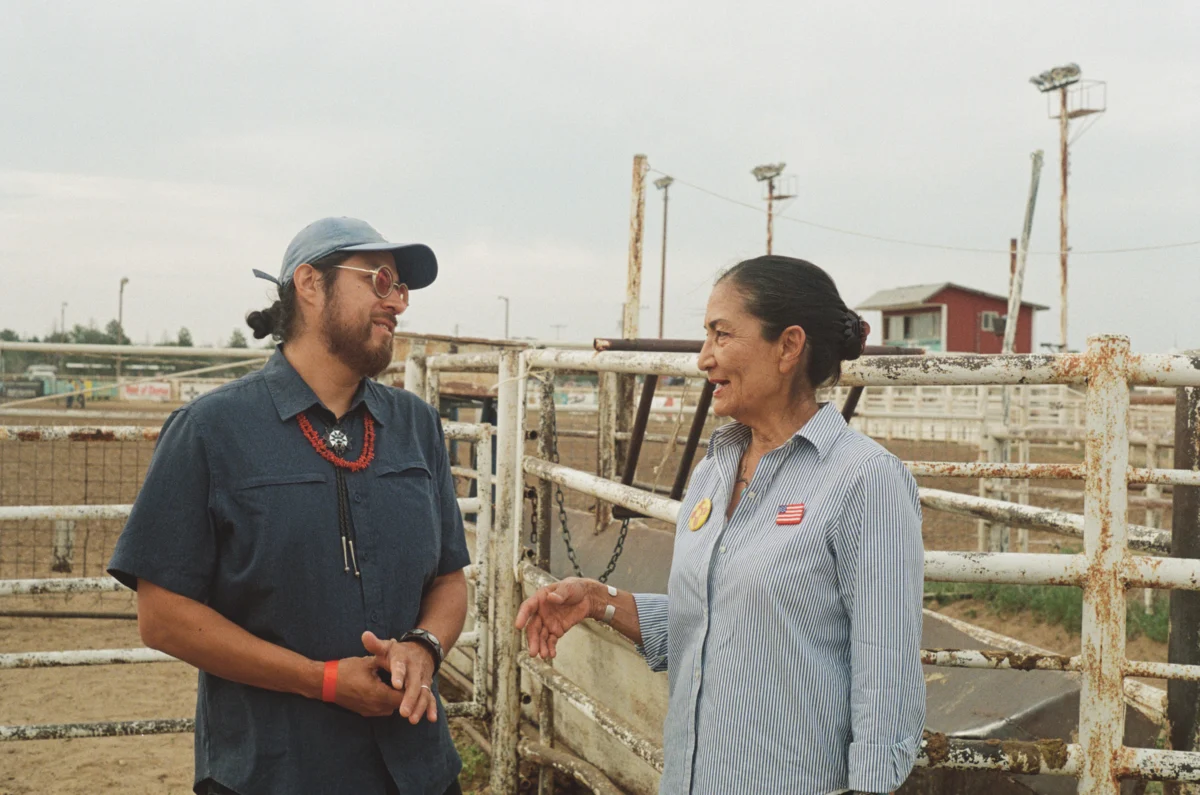
This ancient "corn pollen trail" has now converged with the modern political landscape, illuminating the journey of Deb Haaland, a distinguished relative from the Laguna and Jemez Pueblos, whose days also begin with a similar reaffirmation of her heritage. "I wake up every morning, and I recommit myself to the things that I was taught by my grandparents," Haaland shared in April, speaking outside a pivotal energy summit in Santa Fe. Her grandparents, contemporaries of many Pueblo elders, shared a vast reservoir of knowledge and traditional lifeways, shaping a collective inheritance that resonates powerfully in the present moment. Haaland, who made history as the first Indigenous Secretary of the Interior during the Biden administration, has been relentlessly crisscrossing New Mexico since 2025. Her tireless campaign has taken her from the rural towns of Gallup and Shiprock to the political corridors of Santa Fe, before returning to her Albuquerque home each night, a testament to her dedication. She attributes her remarkable trajectory, now as a leading candidate in New Mexico’s gubernatorial race and a key figure in the nation’s post-Trump reconstruction, to the indomitable resilience of her ancestors. This reconstruction period, often characterized by efforts to rebuild democratic institutions, restore environmental protections, and foster social cohesion after a period of significant national upheaval, finds a unique and powerful voice in Haaland’s Indigenous perspective.
Should Haaland secure victory, she would not only become New Mexico’s third consecutive female governor, underscoring the state’s progressive political leanings, but also the first Native American to ever hold the state’s highest office. Her commanding 45-percentage-point victory in the Democratic primary, widely considered her most formidable electoral challenge, signals a strong mandate from the electorate. Haaland’s campaign platform champions a broad progressive agenda: expanding access to public health care, strengthening crucial state environmental regulations, increasing the state minimum wage to improve economic equity, strategically leveraging profits from the energy sector to fund innovative progressive policies, and, crucially, advancing tribal sovereignty. Each of these pillars reflects a deep understanding of New Mexico’s unique challenges and opportunities, particularly its diverse population and reliance on natural resources.

The prospect of a Native American governor presents a compelling, and at times, complex dynamic. The very authority of the gubernatorial position, historically rooted in state structures that often perpetuated systemic racism and violence against Indigenous communities, appears to stand in direct contrast to the tribal self-determination movements that have fought against such injustices. Yet, an Indigenous leader in this role transforms it from within, offering an unprecedented opportunity to bridge historical divides. If elected, Haaland’s primary responsibility would include carefully managing relationships with New Mexico’s 23 federally recognized tribal nations, a task for which she is uniquely qualified. Her approach would be informed by instruments such as the New Mexico State-Tribal Collaboration Act of 2009, a landmark piece of legislation that mandates state agencies to forge working partnerships and negotiate policies with tribes. This act, in essence, creates a state-level framework mirroring the federal government’s trust and treaty obligations to Indigenous nations, a domain Haaland understands intimately. Her tenure as Interior Secretary provided a national platform to demonstrate how a leader grounded in land-based beliefs could effectively steward federal lands and champion Indigenous rights, setting a precedent for environmental policy and tribal relations across the nation.
This wealth of experience, coupled with her profound cultural roots, places Haaland in an unparalleled position to significantly advance tribal sovereignty within the United States. As the first Native American woman to potentially serve as governor, her leadership would not only be groundbreaking but would also continue a legacy of Pueblo governance that predates multiple colonial administrations in the region. Her vision for New Mexico is shaped by these deep historical and cultural currents, offering a blueprint for a more equitable and sustainable future.
When discussing the national political climate and its impact on New Mexico, Haaland emphasized the state’s distinct electoral landscape. "Donald Trump took 3% of our voters in the last election, and I’m going to get those back," she asserted, highlighting her focus on reclaiming disaffected voters by addressing tangible economic concerns. She critiqued the former president’s rhetoric, noting, "Donald Trump promised to lower costs for people. He’s not focused on that at all. He’s making things more expensive, and at the same time, he’s focused on terrorizing our neighborhoods and creating chaos all over, not just New Mexico but all over the country. So people want us to pay attention to the issues that affect them." This perspective underscores a broader national sentiment for stable governance and practical solutions to everyday economic pressures.
Engaging with non-Native populations on the complex issue of tribal sovereignty demands a nuanced approach, rooted in historical understanding. Haaland consistently emphasizes the enduring presence of Pueblo Indians in the Rio Grande Valley since the late 1200s, with ancestral homelands far exceeding current tribal boundaries. Many tribes have actively sought to repurchase land, expanding their land bases to restore historical connections. "Any corporation, project developer or emerging leader needs to know and understand that history," Haaland explained, highlighting the critical importance of historical awareness. She acknowledged the deep skepticism among tribes, born from "decades" of exploitation. "It’s up to [outsiders] to develop that relationship, make sure they are being transparent and upfront about all of the information, so that a relationship of trust can develop, and perhaps tribes will get on board with those opportunities and move forward with them," she affirmed, stressing that trust is earned through consistent, respectful engagement. Even when direct land ownership is not at stake, projects visible from tribal lands necessitate consultation and respect for Indigenous perspectives, underscoring the expansive nature of tribal sovereignty beyond mere borders.

This growing recognition of "tribal capital"—the economic, cultural, and political contributions of Indigenous nations—is increasingly evident in boardrooms across the state. Haaland noted a shift in industry leaders’ attitudes: "Talking to industry leaders on the campaign trail, one of the first things they talk about with me is that they have somebody who is reaching out to tribes, somebody who is collaborating with tribes." New Mexico’s State-Tribal Collaboration Act has been instrumental in institutionalizing this recognition, formally acknowledging the immense value tribes bring to the state, from economic development to cultural richness, and cementing the state’s responsibility to respect tribal sovereignty and land bases.
Water management in arid New Mexico, a state perpetually grappling with drought and increasing population demands, remains a paramount concern. Haaland’s vision prioritizes sustainability and human needs. "If industry wants to move to New Mexico, [it] needs to be sustainable. Water should be prioritized for people," she declared, signaling a clear policy direction that would place community well-being above unfettered industrial expansion. This stance is particularly critical given the escalating impacts of climate change, which disproportionately affect water-scarce regions.
The federal government’s recent dismantling of environmental protections, particularly those related to the Environmental Protection Act (EPA), presents both a challenge and an opportunity for states like New Mexico. Haaland unequivocally asserted the state’s imperative to fill this regulatory void. "We absolutely have to fill the gap. We don’t have a choice," she stated, criticizing federal actions that weaken environmental safeguards. "The federal government is firing people, they’re cutting all these programs, but [it] still has an obligation to our state, and I’m going to do everything I can to make [it] live up to that. We can’t just let our environment go by the wayside because Donald Trump has decided that he wants to pocket a bunch of money." This highlights a growing trend across the United States where states are stepping up to implement their own climate and environmental policies in the face of federal inaction or deregulation.
To protect New Mexico’s interests and its citizens, Haaland outlined a proactive legal strategy. As governor, she would empower state agencies, the attorney general, and the Legislature to challenge powerful entities. "We have to hire more lawyers so that we can sue the federal government when [it] needs to be sued for encroaching on our state sovereignty, or ruining our environment," she explained. This aggressive legal approach would also target the federal government for "taking funds away from people who are promised benefits" and major companies for harms inflicted upon New Mexicans. "I think that we really need to build that out, because New Mexico has to press these issues with the federal government in a big way. I think that’s how we do it, through the courts," Haaland emphasized, indicating a readiness to leverage legal avenues to protect state and citizen rights.

A deeply personal and profoundly important aspect of Haaland’s platform concerns education about the federal Indian Boarding School era. She passionately argued that "Native American History is American history. Every single American in this country owns that history — that terrible, violent, horrible federal Indian Boarding School history." These schools, active from the late 19th to mid-20th centuries, aimed to assimilate Indigenous children by forcibly separating them from their families, cultures, and languages, inflicting intergenerational trauma that continues to impact communities today. Haaland recounted her own family’s harrowing experience: "My grandparents were put on a train and sent to St. Catherine’s here in Santa Fe. My great-grandfather was only able to visit my grandmother twice in the five years she was separated from her family, because all he had was a horse and a wagon to travel." She further highlighted New Mexico’s central role in this dark chapter, noting that Fort Union, north of Las Vegas, served as a "way station" where Native children were stripped of their identities before being sent to various boarding schools. This brutal process involved shaving heads, burning traditional clothes, and forcing children into uniforms, all designed to eradicate their Indigenous heritage. "New Mexico has a deep history when it comes to federal Indian boarding schools. We have an important state; we have an important history. It’s a history that every New Mexican should know about. We all have an obligation to that," Haaland concluded, advocating for a comprehensive curriculum that ensures all children understand this vital, often overlooked, part of American history. Her commitment to this issue reflects a broader national movement towards truth and reconciliation for the enduring legacy of these institutions, a movement she championed at the federal level during her tenure as Interior Secretary, launching an investigation and a "Road to Healing" tour across the country.