Johny Prima
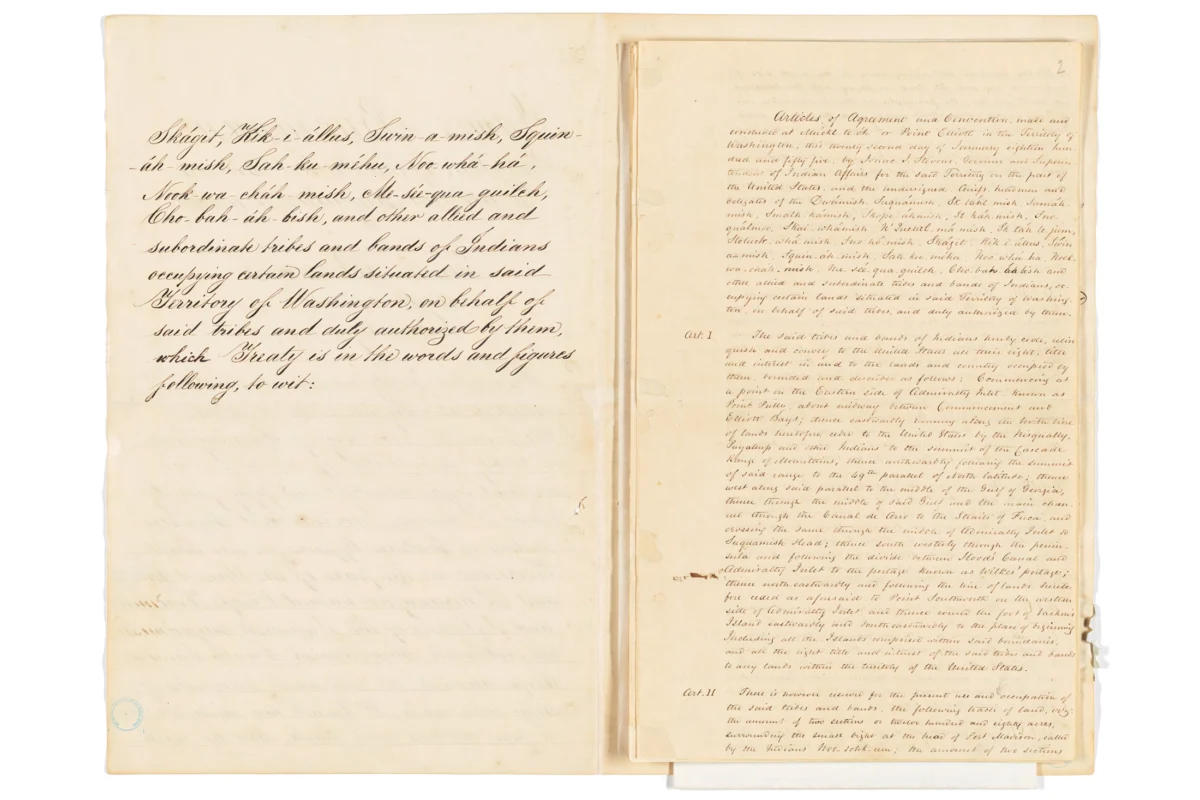
The 1855 Treaty of Point Elliott, a foundational document defining political relationships between the modern-day United States and over 20 Pacific Northwest tribal nations, traces its origins to the harrowing year of 1792. It was then that siʔaɫ, a Duwamish and Suquamish boy of about six, later known as Chief Seattle, witnessed a foreign vessel, laden with diseases, anchor in what is now Miller Bay, Washington. This event marked the beginning of a devastating demographic shift, observed by siʔaɫ and his community, then numbering in the thousands, perhaps tens of thousands, according to the contemporary Suquamish Tribe. The English captain represented the vanguard of an encroaching world, unable to communicate in any of the region’s diverse Indigenous languages. Sixty-three years later, by the treaty’s signing, only 272 Suquamish people had survived the ravages of introduced diseases and escalating colonial pressures, while colonizers had firmly established their own territorial government. For Chief Seattle, navigating this stark new reality, a formal treaty offered perhaps the sole viable path to negotiate lasting protections and ensure the survival of his descendants.

"Chief Seattle signed that treaty with the government after witnessing so many deaths that he had to be looking out for survival for future generations," explained Rob Purser (Suquamish), director of treaty rights for the Suquamish Tribe. "There wasn’t no way of fighting your way out of that problem." Faced with overwhelming