Roger Danuarta
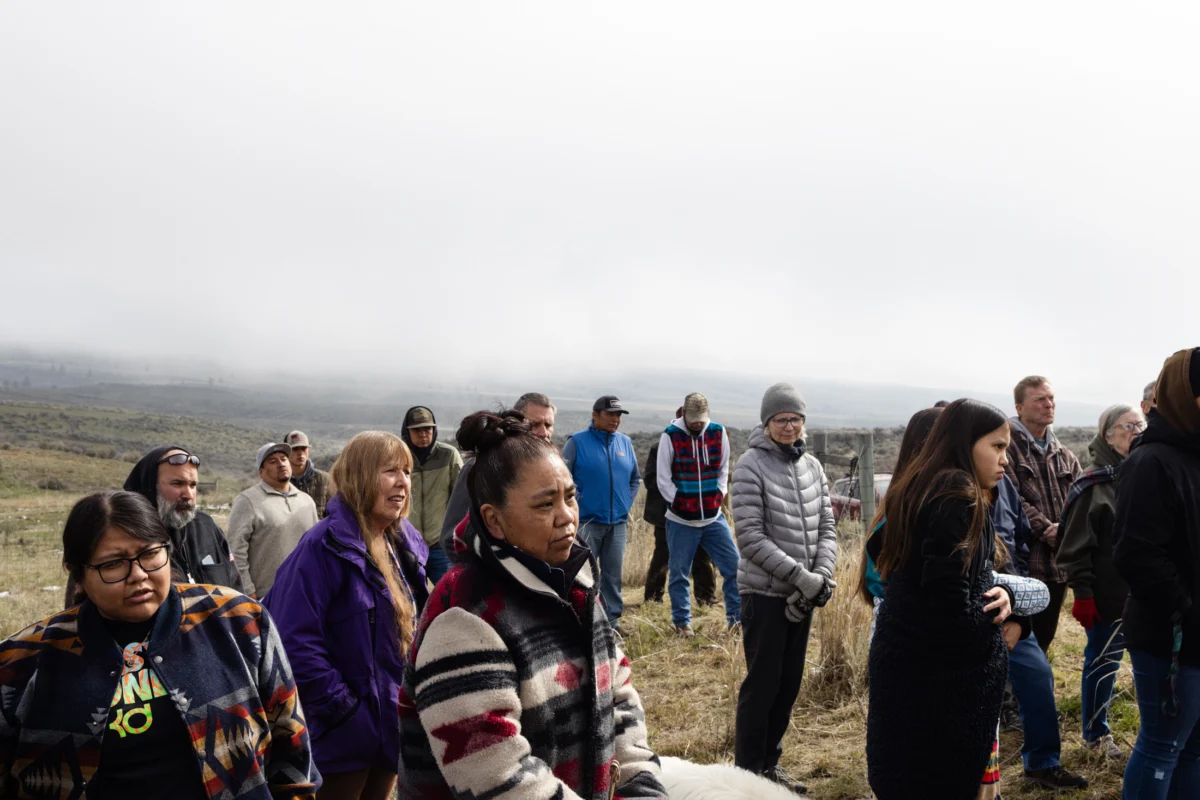
However, this perceived chasm of opinion, so often amplified by media portrayals and political rhetoric, might be a profound misrepresentation of reality. Countering these entrenched caricatures, extensive surveys of public opinion consistently reveal that a significant majority of people, both in the United States and across the globe, harbor positive views towards wolves. This unexpected trend holds true even within politically conservative U.S. states, areas frequently assumed to be bastions of opposition to wolf conservation. A recent study conducted in Montana, for instance, a state with a robust wolf population and a strong agricultural tradition, found that an increasing majority—74% of residents in 2023—expressed tolerance or strong tolerance for wolves. Such findings challenge the very foundation of the perceived conflict, suggesting that the public discourse might be dramatically out of step with actual public sentiment.
This persistent perception of deep conflict, often fueled by sensationalist headlines and political grandstanding, begs a critical question: what if these exaggerated portrayals, and the underlying assumptions of intractable division they reinforce, are not merely reflecting conflict, but actively generating and exacerbating it? This intriguing hypothesis formed the core of a groundbreaking study published on January 6, 2026, which delved into the psychological underpinnings of this contentious issue, aiming to understand the human dynamics at play in wolf conservation.
The researchers behind this study are social scientists dedicated to exploring the human dimensions of complex environmental issues, ranging from the management of escalating wildfires to the intricate challenges of wildlife coexistence, such as with grizzly bears. Their work employs sophisticated tools from psychology, sociology, and political science to examine the multifaceted ways in which individuals and communities interact with nature and, crucially, with each other when confronting environmental dilemmas. A consistent finding in this field is that the quality of human relationships and perceptions often exert a more profound influence on conservation outcomes than the biological or ecological realities of the species or ecosystems themselves. In essence, many conservation challenges are, at their heart, people problems.

Among the most potent, yet frequently underestimated, forces shaping these dynamics is social identity—the fundamental psychological drive that compels individuals to categorize themselves into distinct groups and to earnestly uphold the boundaries of those groups. Social identity theory, a cornerstone concept in social psychology, posits that once individuals internalize their membership within a particular group, they are naturally predisposed to favor their "in-group" (us) and to regard "out-groups" (them) with varying degrees of wariness or even antagonism. While strong group loyalties can foster cohesion and collective action, they also carry significant costs. These loyalties can profoundly distort how individuals perceive and interpret information, even objectively verifiable facts, and significantly intensify intergroup conflict.
The influence of social identity can be so powerful that it shapes how people interpret objective realities, leading them to misjudge physical distances or sizes and to automatically assume the worst intentions of those outside their group. When this identification becomes exceptionally deep, a phenomenon known as identity fusion can occur, where an individual’s personal identity becomes inextricably intertwined with their group identity. This heightened state of allegiance can compel individuals to engage in behaviors they might otherwise deem morally objectionable, particularly when they perceive their group to be under existential threat. Such forces, for example, have been observed to contribute to high-profile cover-ups of reprehensible conduct, where group loyalty overrides ethical considerations.

In their recent research, the scientists rigorously tested how the activation of political identities—simply reminding participants of their affiliations with a particular political party—impacted their perceptions of wolves in the U.S. Across two extensive studies involving over 2,200 participants drawn from nine states with established wolf populations, a striking and consistent pattern emerged. When participants’ political identities were explicitly activated, their attitudes toward wolves became significantly more polarized. Democrats exhibited a stronger affinity for wolves, while Republicans demonstrated an increased aversion. This divergence created the illusion of deep partisan division.
Conversely, when participants’ political identities were not activated, they generally held positive attitudes toward wolves, largely irrespective of their political leanings. This critical finding suggests that the underlying sentiment across the political spectrum is far more unified than typically portrayed. A subsequent experiment, designed to probe the mechanisms behind this polarization, asked participants to estimate the attitudes of both their fellow party members and members of opposing parties toward wolves. The researchers discovered that this identity-based polarization was primarily driven by participants’ assumptions about their in-group. People incorrectly believed that others within their own political party held more extreme views about wolves than they actually did. These mistaken assumptions, in turn, powerfully shaped their own stated attitudes toward the species, pushing them towards a more extreme stance to align with a perceived group norm.

In a profound and somewhat tragic twist, the study concluded that the very caricatures of conflict, so prevalent in media and political discourse, were themselves actively creating the conflict. This situation presents an ironic paradox: a scenario where a substantial degree of underlying agreement exists among the populace, yet the public discourse becomes fiercely polarized not due to genuine, deep-seated differences in values or opinions, but largely because individuals imagine and project extreme views onto their peers. The ecological significance of wolves, as keystone predators capable of triggering trophic cascades and restoring ecosystem health—demonstrated vividly in Yellowstone National Park—is often lost amidst this manufactured human conflict. While legitimate concerns regarding livestock depredation and the economic impact on rural communities are real and require effective mitigation strategies, the study suggests that the social and political framing of these issues often overshadows the potential for collaborative solutions.
Fortunately, the same powerful psychological forces capable of dividing people can also be harnessed to unite them. The research provided an optimistic path forward. When participants were presented with accurate information about the actual views of others—specifically, that most members of their own political party held broadly positive attitudes toward wolves—their own attitudes moderated significantly. This simple intervention demonstrates the profound impact of correcting misperceptions of group norms.

Other effective strategies for fostering unity involve activating "cross-cutting" identities, which are shared identities that transcend traditional divisions. For instance, an individual might identify not only as a rancher but also as a dedicated conservationist, or as a hunter who is simultaneously a passionate wildlife advocate. On a broader scale, all respondents are members of their respective communities, citizens of their nation, and ultimately, members of a shared humanity. By highlighting these blended and universally shared identities, the sense of "us versus them" can be significantly diminished, thereby opening crucial pathways for more constructive dialogue and collaborative problem-solving. This approach moves beyond simplistic labels to find common ground based on shared values like healthy landscapes, thriving wildlife, and sustainable livelihoods.
The debate surrounding wolf management, often perceived as an intractable clash of fundamental values, does not have to remain so. The research offers compelling evidence that when individuals look beyond the sensationalized caricatures of conflict and acknowledge the substantial common ground that already exists among diverse groups, a transformative shift in the public conversation becomes possible. By understanding and strategically addressing the psychological drivers of polarization, societies can begin to forge pathways not only to successful coexistence with wolves, ensuring the ecological integrity of natural systems, but also to greater harmony and cooperation within human communities themselves, fostering a more unified approach to complex global environmental challenges.