Joko Susilo
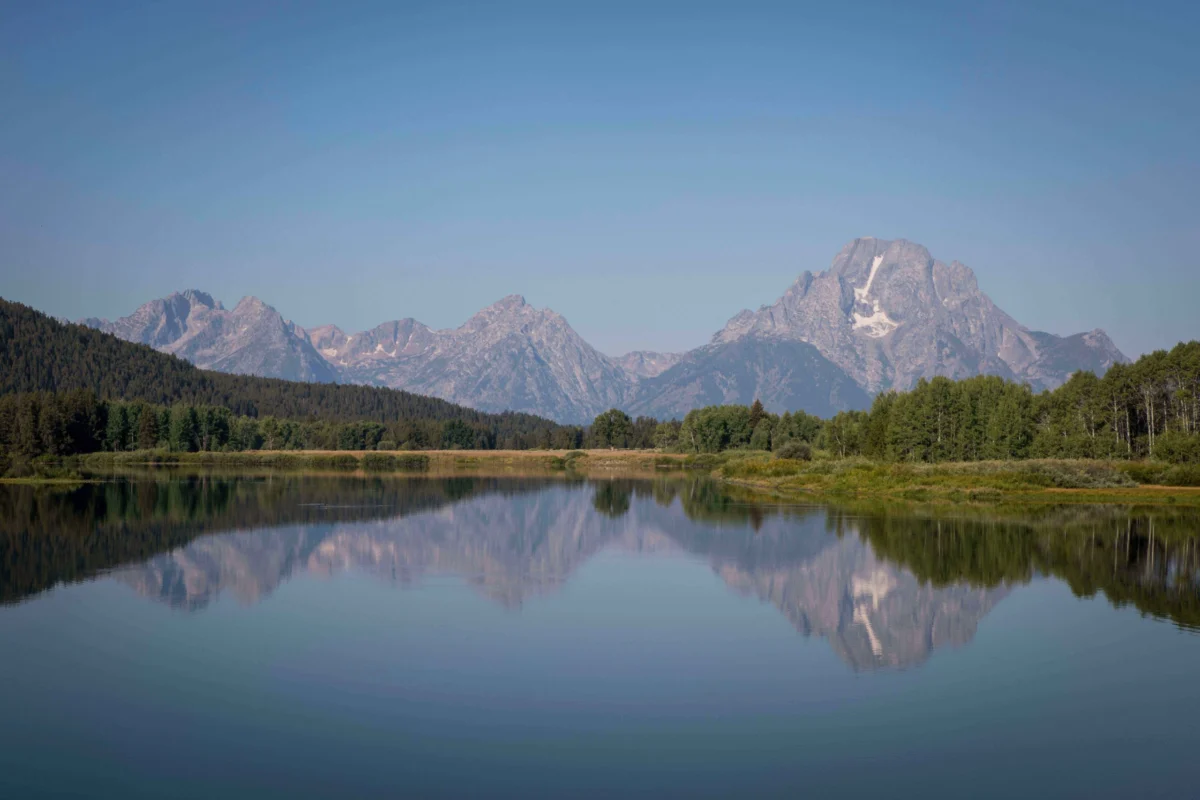
For Jeff Muratore, a devoted hunter in Wyoming, few matters hold greater significance than the enduring fate of public lands. These vast expanses, where he diligently tracks elk and deer to sustain his family, finds moments of profound solace, and imparted the traditions of hunting to his grandchildren, represent an invaluable heritage. A staunch Republican throughout his life, Muratore embodies traditionally conservative principles such as limited government and reduced regulation, having even cast his vote for former President Donald Trump. Yet, in Wyoming’s recent August primary, his deeply held convictions regarding public lands compelled him to diverge from the party line. He found himself unable to endorse Megan Degenfelder, the gubernatorial candidate who had secured Trump’s backing. Instead, Muratore supported Eric Barlow, a state senator whose established record demonstrated a stronger commitment to safeguarding the lands collectively owned by all Americans and stewarded by federal entities like the U.S. Forest Service and the Bureau of Land Management. This electoral calculus was not new; in 2026, a year after Utah Senator Mike Lee, a Republican, championed an effort to divest approximately three million federal acres, citing the need to stimulate affordable housing development, Barlow had successfully spearheaded a resolution recognizing the critical importance of public lands to Wyomingites. As Muratore meticulously completed his ballot, the future of these cherished lands remained paramount in his thoughts, leading him to vote against his own state senator, Bob Ide, who had introduced unsuccessful legislation in 2025 demanding the federal government cede its public lands to the state.
Muratore, a former leader of the Wyoming chapter of the nonprofit Backcountry Hunters and Anglers, was not an isolated case. Across the "Equality State," a discernible trend emerged as voters rejected candidates perceived as hostile to public lands and wildlife, instead favoring more moderate Republicans like Barlow. This electoral tide notably led to a significant reversal for the right-wing Wyoming Freedom Caucus, which lost its majority in the Wyoming House of Representatives, now holding only 10 of 62 seats heading into the next legislative session. Its allies in the state Senate, including Ide, faced similar defeats, marking a stunning setback for a voting bloc that had aspired to secure a legislative supermajority. While other pressing issues, such as the Freedom Caucus’s controversial proposals to defund segments of the University of Wyoming and its entanglement in a statewide campaign finance scandal, undeniably influenced voters, many political observers concur that candidates’ stances on public lands played a pivotal role in their electoral fortunes. Wes Allen, co-owner of Sunlight Sports, a long-standing outdoor outfitter in Cody, articulated this sentiment, stating, "The threat level to our access to the lands that we own as citizens of the United States and the state of Wyoming finally hit a tipping point. When we had candidates locally and for statewide offices who stood up and said they believed in public lands and wouldn’t want to sell public lands, it was a powerful statement."
Wyoming’s political landscape has long been characterized by its deeply conservative leanings. The state once elected moderate Democrats such as Teno Roncalio, the last Democrat to represent Wyoming in Congress, and former Governor Dave Freudenthal. However, since Freudenthal’s departure from office in 2011, Republicans have secured all of Wyoming’s statewide and federal offices, alongside the vast majority of seats in the state Legislature. Currently, Republicans hold 56 of 62 House seats and 29 of the Senate’s 31 seats, meaning that the most consequential political contests often unfold not in the November general election, but in the August Republican primary. In recent years, a distinct ideological divide emerged within the Republican party, pitting traditionally conservative, fiscally and socially conservative Republicans against the more ideologically libertarian and often confrontational Freedom Caucus, a coalition of firebrands who achieved a House majority in 2024 amidst a national surge of anti-“woke” sentiment.
Emboldened by their 2024 victories, the Freedom Caucus, however, experienced significant political missteps in 2025 and 2026, according to Gail Symons, a seasoned Wyoming policy analyst who operates Civics307, a voter education platform. These lawmakers targeted revered state institutions, including the University of Wyoming and the Wyoming Business Council, the state’s primary economic development agency. The Caucus proposed an 11% budget cut, equating to approximately $40 million, from the university’s budget and made concerted efforts to defund and dismantle the Business Council entirely. Many of the legislators who ultimately lost their seats in August had not only voted for but also co-sponsored Ide’s contentious public-lands transfer bill in 2025. Interestingly, some, like Representatives John Bear of Gillette and Chip Neiman of Hulett, also lent their support to Barlow’s public-lands resolution in 2026, highlighting the complex and sometimes contradictory nature of political positions.
John Bear, the former chairman of the Freedom Caucus, conceded that public-lands policy likely contributed to his primary defeat, though he believes the public fundamentally misunderstood his stance. While Bear advocates for the transfer of federal lands to state control, he maintains that states, including Wyoming, would not subsequently sell them off. He argued, "Once we have 100% of the resources and revenue from those public lands, we would double our revenue and be quite easily able to manage those lands," asserting that public-land supporters had "duped people into believing that public lands were at risk." However, this perspective directly contrasts with a comprehensive 2016 study commissioned by the Wyoming Legislature, which concluded that state management of public lands would not only be prohibitively expensive but would also entangle the state in a "bureaucratic maze" of complex congressional laws and directives, indicating a significant financial and administrative burden.
Beyond direct land transfer proposals, some members of the Freedom Caucus championed other controversial wildlife management bills. These included legislation that would have allowed landowners to sell valuable hunting licenses, a move that critics argued could exacerbate inequalities in hunting access and potentially commodify a public resource. Another measure mandated unlimited statewide mountain lion hunting, raising serious concerns among wildlife conservationists about potential ecological imbalances and impacts on predator populations. Perhaps most controversially, another proposed measure would have compelled the Wyoming Game and Fish Department to issue free "bear coupons," enabling resident elk hunters to kill grizzly bears – a species still under federal protection – as well as black bears outside the Greater Yellowstone Ecosystem. This proposal sparked outrage among environmental groups and raised legal questions regarding conflicts with federal endangered species protections. None of these contentious measures advanced to the governor’s desk, while Barlow’s public-lands resolution successfully passed. This divergence, Symons and others noted, indicated a clear responsiveness from voters to their local lawmakers’ positions on these critical issues.
Symons further observed, "The Freedom Caucus misread quite a few things, not the least of which the degree to which Wyoming citizens of every political persuasion really, really feel strongly about public lands." Concurrently, a robust opposition movement against the Freedom Caucus began to coalesce. Zach Lentsch, a backcountry mountain guide and the son of a Wyoming game warden, spearheaded the formation of Protect Wyoming, the state’s first dedicated public-lands Political Action Committee (PAC). Lentsch recognized the limitations of traditional nonprofit organizations, which, as 501(c)(3) entities, are legally restricted from advocating for or against political candidates. To circumvent these constraints, he and the group’s treasurer, Chris Allen, actively raised funds, organized public events, and engaged in door-to-door canvassing, specifically targeting candidates with the most extreme views on public lands. Their efforts yielded remarkable success: "All 33 candidates that we preferred — that were on our pro-public lands and wildlife slate — won," Lentsch proudly reported.
Like Lentsch and Symons, Allen, the Cody business owner, has witnessed the cyclical nature of Wyoming politics, observing a gradual but consistent drift further to the right, particularly concerning public-land policy. Despite consistent bipartisan polling data indicating strong support for public lands among Wyoming voters, these same voters have historically elected lawmakers who favored transferring federal lands to state control or even selling off national forests, parks, and other federally managed areas. This complex dynamic is also reflected at the national level. Republican voters in Wyoming elected current U.S. Representative Harriet Hageman, who once embraced the moniker "Wicked Witch of the West" for her outspoken stance on public lands, over Sam Mead for U.S. Senate. In 2024, Hageman notably supported Utah’s attempt to return Bureau of Land Management (BLM) land to state control, an initiative that ultimately failed in the Supreme Court. She has also actively advocated for overturning widely popular national policies such as the Roadless Rule, which prohibits road construction in certain pristine areas of national forests, a move that would open up vast tracts of wilderness to potential development. In stark contrast, Mead made the protection of public lands a central pillar of his campaign platform.
Symons provides insight into this apparent dichotomy, suggesting that voters made a strategic distinction: they opted to send a Trump-aligned, confrontational figure to Washington D.C. while simultaneously choosing more moderate candidates for local and state offices. Hageman’s significantly greater name recognition compared to Mead also played a role. Allen attributes the decisive swing in local elections partly to a heightened public concern over public lands, spurred in no small measure by Senator Lee’s persistent push to privatize or sell off these federal assets. "I don’t think it was widely accepted that our politicians would willingly give up protections for public lands," Allen reflected. "But in the last couple of years, it became clear there were certain people who don’t believe we should have public lands, who believe we should give away most of our lands to other entities. And they’re not doing that because they think it’s good policy, but because they simply don’t believe in public lands." In Allen’s estimation, the August primary marked a pivotal moment, the first time a majority of voters collectively concluded that protecting public lands was among their foremost concerns. While neither Allen, Symons, nor Muratore anticipate this to be the final fluctuation in the ongoing debate over public lands, as Muratore aptly put it, "it is a pretty big bump in the road," signaling a significant, if potentially temporary, shift in Wyoming’s political landscape concerning its most cherished natural assets.