

 Joko Susilo
A comprehensive analysis from the Center for American Progress has underscored the vital role of 31 national monuments designated since the Clinton administration in securing potable water for millions of Americans, even as these protected areas face persistent threats of downsizing or revocation under the Trump administration’s agenda to expand extractive industries on public lands. The study, employing advanced geospatial data, quantified the extensive network of rivers and watersheds nestled within these monument boundaries, revealing that over 13 million individuals rely directly on water supplies originating from or flowing downstream of these critical conservation zones. Alarmingly, the report highlighted that approximately 83 percent of the water traversing these federally protected lands lacks any alternative safeguards beyond the monument designations themselves, making their continued protection paramount for regional water security.
These national monuments collectively shield more than 21,000 miles of waterways across the United States, a figure nearly double the total mileage protected under the renowned National Wild and Scenic Rivers System. This significant scope of protection encompasses a diverse array of hydrological features, from pristine alpine streams to vital desert oases, all contributing to the nation’s freshwater reserves. The findings emerge at a time when the Trump administration is actively evaluating the potential reduction or elimination of several national monuments, prompting widespread concern among environmental advocates, scientists, and communities dependent on these natural resources.
The administration’s stance has been clear, with a series of actions signaling its intent to re-evaluate established conservation designations. In March, the Trump administration initially announced its plan to dismantle California’s Chuckwalla and Sáttítla Highlands national monuments, a decision later retracted from a White House fact sheet, though the underlying intent remained evident. The following month, reports from The Washington Post indicated that the administration was actively considering downsizing or entirely eliminating six national monuments, sparking fears of significant ecological and cultural losses. Further cementing this aggressive posture, the U.S. Department of Justice issued an opinion in June asserting the president’s inherent power to rescind national monument designations, a sharp departure from decades of legal precedent and interpretations of the Antiquities Act of 1906, which grants presidents the authority to create monuments but does not explicitly detail the power to revoke them.
This renewed push by the Trump administration echoes actions taken during its previous term, when it significantly shrank Bears Ears and Grand Staircase-Escalante national monuments, initially established by the Obama and Clinton administrations, respectively. These controversial decisions, which reduced the monuments to mere fractions of their original sizes, were met with fierce opposition and were ultimately reversed by President Joe Biden upon assuming office, highlighting the deeply polarized nature of public land management in the United States.
Should national monument designations be downsized or entirely eliminated, the landscapes and ecosystems surrounding these crucial waterways would lose their current protections from various extractive industries, including oil and gas drilling, hardrock mining, and large-scale grazing operations. The consequences of such deregulation are profound and multi-faceted. Contaminants from these industrial activities—ranging from toxic chemicals and heavy metals associated with mining to hydrocarbons and wastewater from oil and gas operations—could seep into streams, rivers, and groundwater aquifers, compromising water quality for downstream communities. Moreover, these industries often demand vast quantities of water for their operations, particularly in arid regions already grappling with chronic water scarcity, thereby further depleting vital supplies for human consumption, agriculture, and ecosystem health. While certain limited mining and grazing activities may be permitted within existing national monuments, these are typically subject to stringent regulations and scale limitations that would likely be relaxed or removed entirely if monument protections were lifted.
Drew McConville, a senior fellow for conservation policy at the Center for American Progress and a co-author of the recent report, emphasized the inherent interconnectedness of land and water. "Landscapes and waterways go hand in hand," McConville stated. "The clean water depends on what comes into them from natural lands… Just protecting the wet stuff itself doesn’t guarantee that you’re keeping [water] clean and durable." This perspective underscores the holistic nature of ecosystem protection, where the health of aquatic systems is inextricably linked to the integrity of the surrounding terrestrial environment.
The study further illuminated the disproportionate impact that diminished protections could have on vulnerable populations. It found that the proportion of historically marginalized communities residing within the watersheds of the studied national monuments is notably higher than the national average for watersheds. These communities, often Indigenous tribes or low-income populations, frequently possess a deeper cultural connection to the land and rely more directly on local natural resources, making them particularly susceptible to environmental degradation and water contamination. Compounding this vulnerability, 23 of the national monuments examined in the report are situated in regions projected to experience severe water shortages in the coming decades due to the escalating impacts of climate change, rendering already arid downstream areas even drier and more susceptible to ecological collapse.
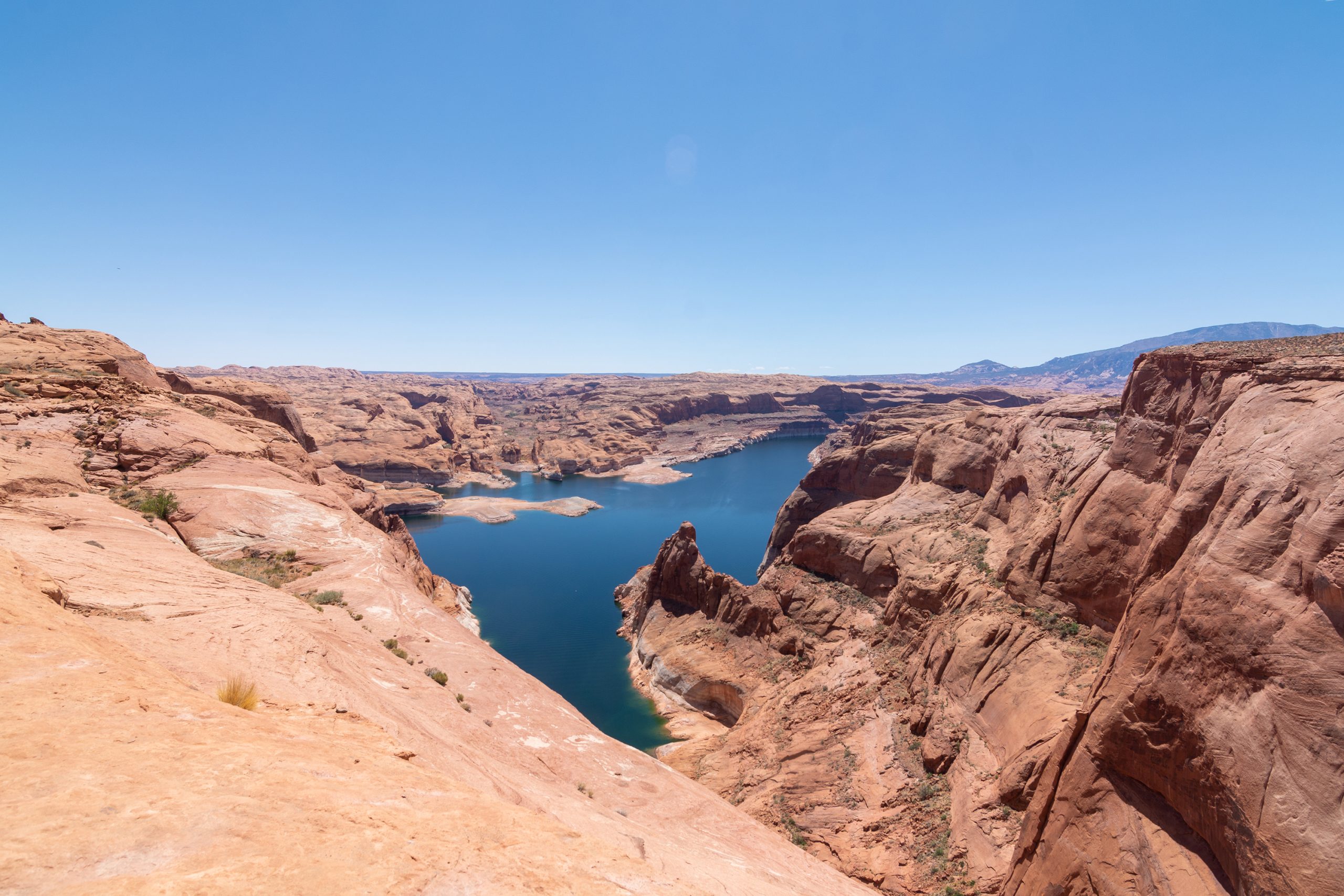
Grand Staircase-Escalante National Monument in southern Utah serves as a potent illustration of these complex challenges. According to the analysis, this sprawling monument protects an impressive 2,517 miles of waterways, yet nearly 90 percent of its internal watersheds are anticipated to face significant declines in water levels. The monument strategically straddles the Upper and Lower Colorado River Basins, with the pristine Paria and Escalante rivers flowing within its boundaries and Lake Powell, the nation’s second-largest reservoir and a critical water source for millions across the Southwest, situated just to its south.

While Grand Staircase-Escalante is frequently perceived as a sparse, arid expanse, its hydrological significance cannot be overstated, particularly its role in sustaining the broader Colorado River System. Jackie Grant, executive director of Grand Staircase Escalante Partners, a nonprofit dedicated to the monument’s protection, explained that the monument plays a crucial role in regulating water flow from the Paunsaugunt Plateau in Bryce Canyon National Park, much of which originates as vital snowpack before melting and traversing downstream. "People don’t think of water when they think of Grand Staircase-Escalante National Monument," Grant noted. "So when we can bring this view of water and how important it is to the protection of the monument, it helps us put another building block in our case for supporting the monument, because not only is it important for the animals, the native plants, the geology and the paleontology, water plays a huge role in the monument, and the monument protects the water itself."
Spanning an expansive 1.87 million acres of federal land, Grand Staircase-Escalante is one of the nation’s most extensive national monuments, safeguarding an astonishing array of biodiversity, unique geological formations, and invaluable archaeological resources that tell the story of millennia of human habitation. However, this same landscape also harbors vast deposits of valuable minerals, including a nine-billion-ton coal deposit buried within its central core, alongside reserves of uranium and nickel. The Trump administration has consistently championed policies aimed at boosting domestic coal production and has aggressively pursued a pro-mining agenda throughout its tenure, placing these protected areas directly in the crosshairs of resource extraction interests. Grant warned of the severe risks: "It’d be very easy to contaminate either one of those rivers if mining were to take place in the center section of the monument."
The debate over national monument protections extends beyond immediate environmental concerns, touching upon the foundational principles of public land management and the balance between conservation and resource utilization. Margaret Walls, a senior fellow at Resources for the Future who has extensively studied national monuments, though not involved in this specific report, highlighted that while monuments are typically designated to preserve cultural or historical landmarks, their often-overlooked function in safeguarding critical water resources is equally important. Walls underscored that even if monument protections are loosened, these areas remain federal lands, meaning their change in status does not automatically guarantee development. However, a downgrade in protection status significantly eases the path for industrial activities that could otherwise be restricted. "We don’t protect waterways the way we do land," Walls observed, "we’re going to get those water benefits by protecting the land." This statement encapsulates a fundamental truth in environmental conservation: the health of aquatic ecosystems is inextricably linked to the health of the surrounding terrestrial landscapes, making comprehensive land protection a de facto strategy for water security. The ongoing political and legal battles over national monuments thus represent a critical juncture for the future of clean water, public health, and the enduring legacy of America’s protected natural heritage.







