Rocky Gerung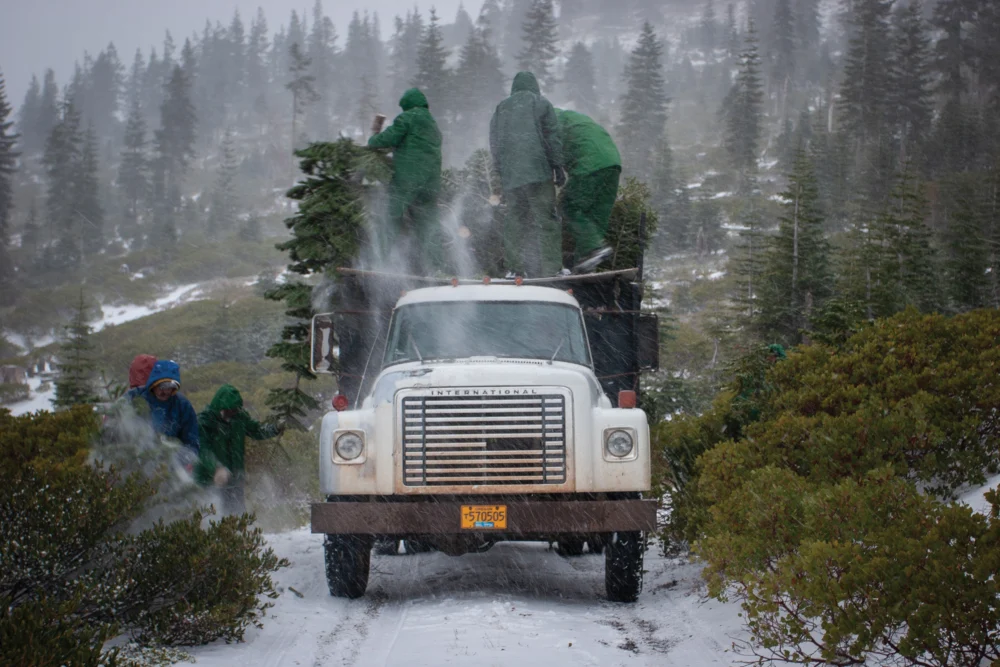
High on the volcanic slopes of Northern California’s Cascade Range, where the air is crisp and the landscape unforgiving, a dedicated crew races against time and the elements to bring a touch of wild Christmas magic to homes across the nation. For a fleeting two to three weeks each year, before winter’s snows render the mountain roads impassable, the resonant hum of chainsaws cuts through the pine-scented air as workers meticulously harvest the iconic red fir, also known as the silvertip. These magnificent trees, scientifically classified as Abies magnifica, are prized for their dense, silvery-green needles and their ability to thrive in challenging high-altitude environments, typically between 6,500 and 8,000 feet. Their distinctive, symmetrical branching patterns are a testament to the extreme conditions they endure, from scorching summer heat to the deep freezes of winter.

The harvesting season is dictated by nature’s calendar, a narrow window between the first mid-October frosts, which are crucial for setting the needles, and the onset of heavy snowfall that blankets the terrain. John Wayne Strauch, known affectionately as Bambi, has been a part of this wild harvest for half a century. Now 80, he holds timber rights on over 300 acres of Worley Mountain, a rugged expanse situated between the vastness of Eagle Lake and the town of Susanville, California. Strauch’s journey into this demanding profession began in the early 1970s alongside his godfather, Joe McNally. Together, they learned the harsh realities of the trade through trial and error, facing broken-down trucks mired in snowdrifts and the frustration of watching their hard-won efforts buried by sudden storms. Despite these challenges, their shared goal remained constant: to capture the essence of the wild and deliver it into people’s homes as cherished Christmas trees.

This year, however, the traditional rhythm of the harvest faces an added layer of complexity. The workforce largely comprises migrant workers, many of whom travel north each winter after completing their tasks in the region’s orchards and vineyards. According to Dan Barker, who assists in overseeing the operation, recent shifts in immigration policies and an increased risk of Immigration and Customs Enforcement (ICE) raids have introduced significant uncertainty and anxiety for these essential laborers. The precariousness of their immigration status adds another layer of hardship to an already physically demanding and seasonally limited profession.

The operation typically involves two crews, totaling around 18 individuals, who form the core of the harvest. Their roles are diverse, including a cook to sustain them in their remote location, two drivers to manage the logistics of transporting the trees, two skilled cutters who expertly fell the trees, and a bail operator who prepares them for shipment. The remaining crew members are responsible for hauling the harvested trees from deep within the dense forest. This dedicated team works with remarkable efficiency, moving swiftly to cut and drag the silvertips down steep, often treacherous ridgelines. Once gathered, the trees undergo a rigorous grading process, meticulously assessed for their shape, symmetry, and the vibrancy of their color. They are categorized into grades ranging from 2s and 1s to the highly coveted "primos" and "double primos," with pricing directly correlating to these distinctions. A prime example of this valuation is an 8-foot tree; a "double primo" silvertip could fetch approximately $250 at a retail lot, while a "2" of the same height might only command about half that amount.

The sustainability of this wild harvest is rooted in an ancient forestry practice known as coppicing, or more specifically, stump culturing. This method involves making a precise cut above the tree’s base, leaving a portion of the trunk and several whorls of branches intact. This allows the tree to regenerate naturally. Within a few years, one of the remaining branches receives the necessary biological cues to pivot towards the sun, transforming into a new, vigorous leader that will eventually grow into a harvestable tree. Strauch emphasizes the long-term vision of this practice, stating, "We’re not clear-cutting. The better we take care of the trees, the better they take care of us. Some, we’ll get five, 10 harvests. Those are the mothers." This regenerative approach ensures a continuous yield from the same stumps for decades, effectively creating a forest that replenishes itself without the need for artificial replanting, tilling, or chemical treatments – a testament to a harmonious and sustainable relationship between humans and the natural world.

Strauch’s operation on Worley Mountain yields approximately 7,000 trees annually, representing one of the last remaining commercial wild Christmas tree harvests in the United States. While its scale is modest compared to the vast, cultivated Christmas tree farms, its significance lies in the unique qualities of the silvertip – its inherent rarity, its sustainable harvesting method, and the profound connection it embodies between the land and the labor that nurtures it. "These are beautiful trees with a beautiful story," Barker notes. "We don’t just want people to accept them – we want them to love them like we do."

The very landscape from which these trees are harvested is itself a testament to the forces of nature and the impacts of climate change. The 2021 Antelope Fire, one of many blazes that have dramatically reshaped the Northern California wilderness, left its mark on areas that were once thriving stands of fir. This environmental context adds another layer of challenge and resilience to the work, as harvesters navigate forests altered by fire and increasingly unpredictable weather patterns. Extreme early-season heat, for instance, has been observed scorching young trees, hindering their growth before they can mature.

The process of felling a towering red fir is a feat of skill and precision. Cutters employ a careful technique, using wedge and relief cuts to guide the majestic 40-foot trees gently to the ground, preserving their branches intact. This meticulous approach ensures that the tree arrives at its destination in pristine condition, ready to become the centerpiece of holiday celebrations. Each tree is then hauled by hand through dense undergrowth, a labor-intensive process that underscores the raw effort involved in bringing these natural decorations from remote mountainsides to urban living rooms.

As the sun dips below the horizon, casting long shadows across the rugged terrain, the work often continues by the glow of headlamps and the powerful beams of truck lights. The camaraderie forged in such demanding conditions is palpable, a shared understanding born from facing the elements together. The quiet dignity of the silvertips, standing tall against the backdrop of a starlit sky or the ethereal glow of a rising full moon, speaks to the enduring appeal of a wild Christmas.

This tradition, though facing pressures from environmental changes and evolving labor landscapes, continues to thrive due to the dedication of individuals like Strauch and his crews. Their commitment to a sustainable, time-honored practice not only provides a livelihood but also preserves a unique connection to the natural world, offering a tangible piece of the wilderness that carries with it the scent of pine and the spirit of resilience. The silvertips, with their unique ability to retain their needles well into spring, serve as a lasting reminder of the wild origins and the careful stewardship that brings them into our homes.