Johny Prima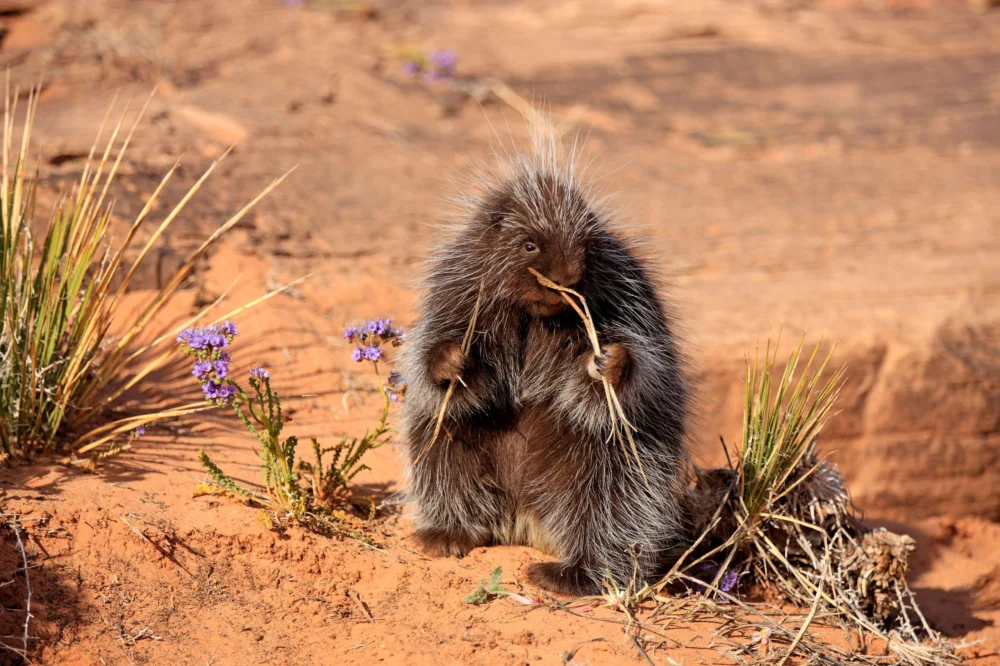
The concern voiced by Tripp, who notes, “Everyone’s concerned. If there were more (observations), we’d hear about it,” resonates far beyond Northern California. Across the entire Western United States, populations of the North American porcupine (Erethizon dorsatum) are dwindling, a phenomenon that has galvanized wildlife scientists into a race against time to map their remaining habitats, unravel the mysteries of their disappearance, and develop strategies for their recovery. Among the most proactive are communities like the Karuk Tribe, who are charting ambitious plans to restore these culturally significant creatures to their ancestral forests, recognizing their integral role not only in the ecosystem but also in their cultural heritage.
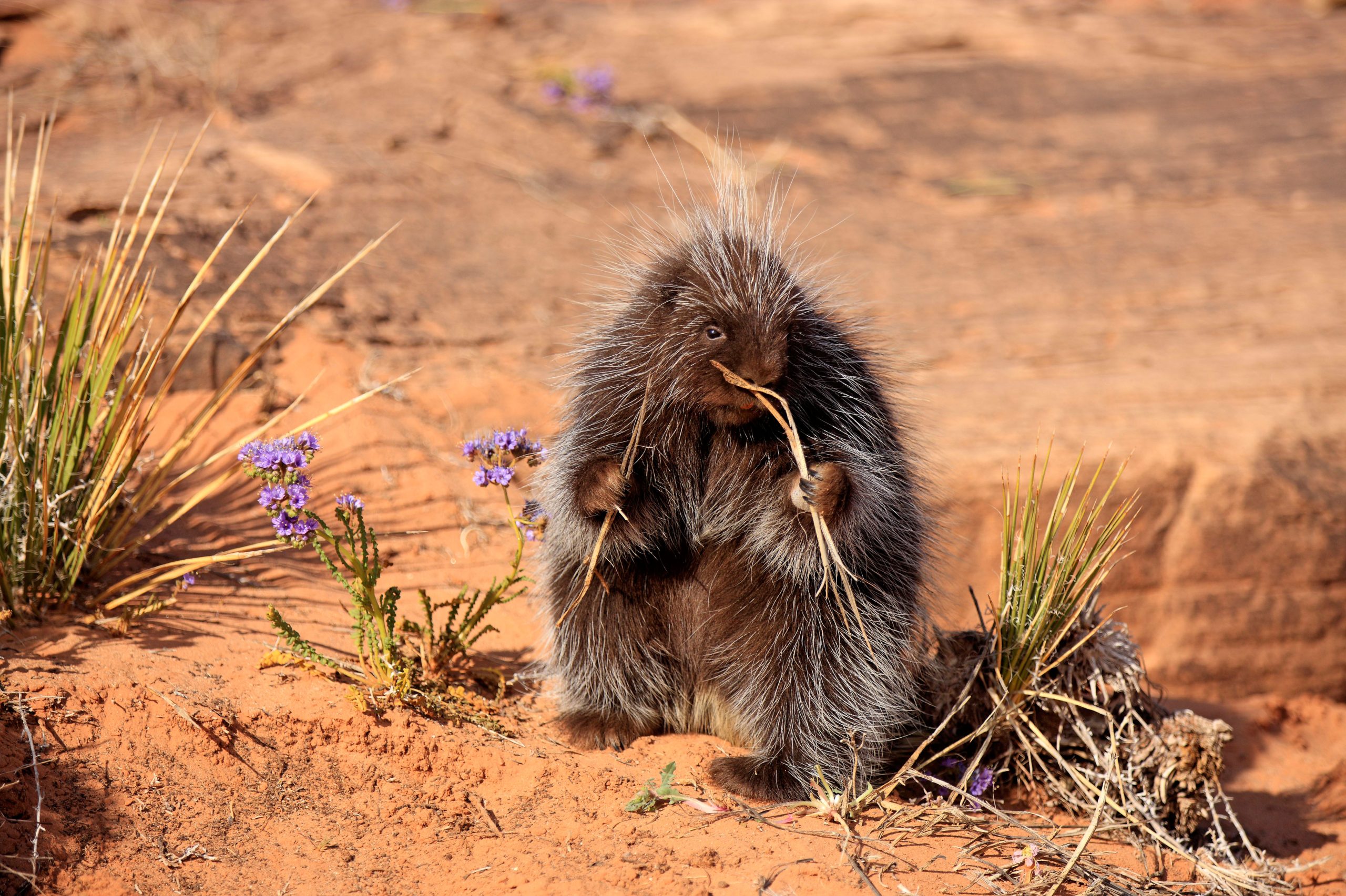
Porcupines are, by nature, walking fortresses, armed with an impressive arsenal of some 30,000 quills that offer formidable protection against predators. These quills, specialized hairs with barbed tips, detach easily upon contact, embedding themselves into an attacker, causing pain and potential infection. Despite this formidable defense, the porcupine’s overall demeanor is often described as "big and dopey and slow" by ecologists like Tim Bean of California Polytechnic State University, who has conducted extensive research, including collaring these animals. They navigate their arboreal world with a characteristic waddle, primarily under the cloak of night, seeking out a diet rich in foliage, buds, and, crucially, the nutrient-dense inner bark (cambium layer) of trees, especially during harsh winter months when other food sources are scarce. This specific dietary habit, however, has historically cast the porcupine in an unfavorable light, particularly within the timber industry.
For much of the 20th century, porcupines were widely regarded as pests, their bark-gnawing tendencies seen as a direct threat to commercial lumber operations and forest health. This perception fueled widespread poisoning and hunting campaigns across the U.S. Records from states like Vermont illustrate the scale of these efforts, where over 10,800 porcupines were culled between 1957 and 1959 alone. In California, the Forest Service declared an "open season" on porcupines in 1950, asserting that the species posed an existential threat to pine forests. While state-sponsored bounty programs largely ceased by 1979, the damage was done, and porcupine populations have struggled to rebound. Modern surveys conducted by researchers in diverse regions including British Columbia, Arizona, western Montana, and Northern California consistently indicate that porcupines remain scarce, failing to reach their historical numbers. The lack of comprehensive, long-term monitoring data on porcupine populations prior to these declines makes it challenging for scientists to definitively determine whether the current scarcity represents a continuing downward trend or a persistent failure to recover from decades of intense persecution.
Yet, anecdotal evidence from those who remember their common presence paints a clear picture of decline. Veterinarians across the West report a significant decrease in treating pets injured by porcupine quills, a once-common occurrence. Longtime rural residents note the conspicuous absence of porcupines in their backyards, where they were once regular, if unwelcome, visitors. Hikers’ accounts from wilderness areas underscore the increasing rarity of encounters, suggesting a broad-scale disappearance from ecosystems where they once thrived. This void is not without ecological consequences. In the Sierra Nevada mountain range, an endangered member of the weasel family, the fisher (Pekania pennanti), is suffering directly from the porcupine’s scarcity. Fishers rely on porcupines as a significant protein source, and with their disappearance, fisher populations in the Sierras are notably scrawnier and produce smaller litters compared to their counterparts in regions where porcupines are still present. This ecological ripple effect highlights the porcupine’s critical, though often underappreciated, role in maintaining the health and balance of forest food webs.
Beyond their ecological importance, porcupines hold profound cultural significance for the Karuk Tribe. Their quills are traditionally woven into intricate baskets and incorporated into various ceremonial items, embodying a deep connection between the people and their land. The inability to gather quills locally means the tribe now often imports them, a practice that represents more than just an inconvenience; it signifies a lost connection to their homelands and traditional practices. As Tripp eloquently states, “It’s important for (porcupines) to be a part of our landscape. That’s part of why they’re chosen to be part of this ceremonial item.” The absence of kaschiip severs a tangible link to ancestral knowledge and sustainable resource management, impacting cultural continuity.

Erik Beever, an ecologist with the U.S. Geological Survey, views the porcupine’s vanishing act as a symptom of a larger, more alarming trend: a pervasive decline in biodiversity across the nation, often proceeding faster than scientists can accurately track. He refers to this phenomenon as a "silent erosion of animal abundance," where species like the porcupine disappear without adequate public awareness or scientific understanding of the underlying causes. This insidious decline underscores a global challenge, where countless less charismatic species face similar fates, highlighting critical gaps in ecological monitoring and conservation strategies worldwide.
To address this knowledge deficit, scientists are intensifying their efforts. Tim Bean and his team meticulously compiled a century’s worth of public records, including roadkill databases, wildlife agency reports, and citizen science observations, to map porcupine distribution patterns across the Pacific Northwest. Their findings revealed a worrying trend: porcupines are dwindling in their traditional conifer forest habitats but are surprisingly appearing in non-traditional environments such as deserts and grasslands. This habitat shift raises questions about climate change adaptation, resource availability, and human disturbance. Building on this regional work, Beever is now spearheading a similar, more extensive study across the entire Western U.S., aiming to create a comprehensive picture of porcupine populations and identify critical areas for conservation.
Several theories are being investigated to explain why porcupine populations have failed to recover. One significant factor is the proliferation of illegal marijuana cultivation sites, often hidden deep within forests. These operations frequently employ highly toxic rodenticides, intended for other pests, which inadvertently poison porcupines and other wildlife, creating a ripple effect through the food chain. Another complex theory suggests an unintended consequence of successful conservation efforts for apex predators. Increased protections for species like mountain lions, while vital for ecological balance, may have led to a rise in predation pressure on porcupines in some areas. Compounding these external pressures is the porcupine’s inherent biology: they have a relatively low reproductive rate, typically birthing only a single offspring at a time, making their populations slow to recover from any form of decline.

Monitoring porcupines presents unique challenges for researchers. As generalist herbivores capable of inhabiting a wide variety of forest types, pinpointing their exact locations can be akin to finding a needle in a haystack. Furthermore, their cautious nature and diet make them difficult to bait effectively for camera traps. Scientists have experimented with various lures, from brine-soaked wood blocks and peanut butter to porcupine urine, with only mixed success. The Central Sierra Environmental Resource Center, for instance, has conducted 34 years of both baited and unbaited camera surveys in the Sierra Nevada, yet porcupines have appeared in their footage a mere three times. John Buckley, the center’s executive director, admits, “It’s a mystery. We still don’t understand (why) they’re not reproducing and filling back in where there’s very little disturbance of their habitat, like Yosemite National Park.” This lack of recovery in pristine areas underscores the complexity of the issue, suggesting that multiple, interacting factors are at play.
Undeterred by these challenges, the Karuk Tribe is committed to bringing porcupines back to their ancestral lands. Their initial efforts involve pinpointing any existing healthy populations. Years of camera trap surveys within Karuk territory have yielded meager results; one area considered a "hotspot" by Tripp produced only a single photograph of a porcupine. This scarcity drives the tribe to explore innovative methods, including employing trained conservation dogs to conduct scat surveys, a more effective way to detect elusive species over large areas. Reintroducing a species requires a delicate balance of ecological and ethical considerations. The rarity of porcupines raises concerns about whether already small source populations can afford to lose individuals for reintroduction elsewhere. Despite these complexities, Tripp feels a profound urgency to act, observing that the ecosystem does not appear to be healing on its own. “Things don’t seem to be getting better in over the course of my lifetime,” he reflects, emphasizing the need for direct intervention. Yet, a resilient optimism shines through his actions. Tripp, alongside his wife and daughter, continues to participate in basket-weaving events that honor the porcupine and incorporate quills, ensuring the perpetuation of Karuk age-old traditions. This unwavering commitment is a small but potent act of hope – a steadfast belief that, with concerted effort and profound respect for the natural world, the Karuk Tribe will one day be able to welcome kaschiip back home.