Joko Susilo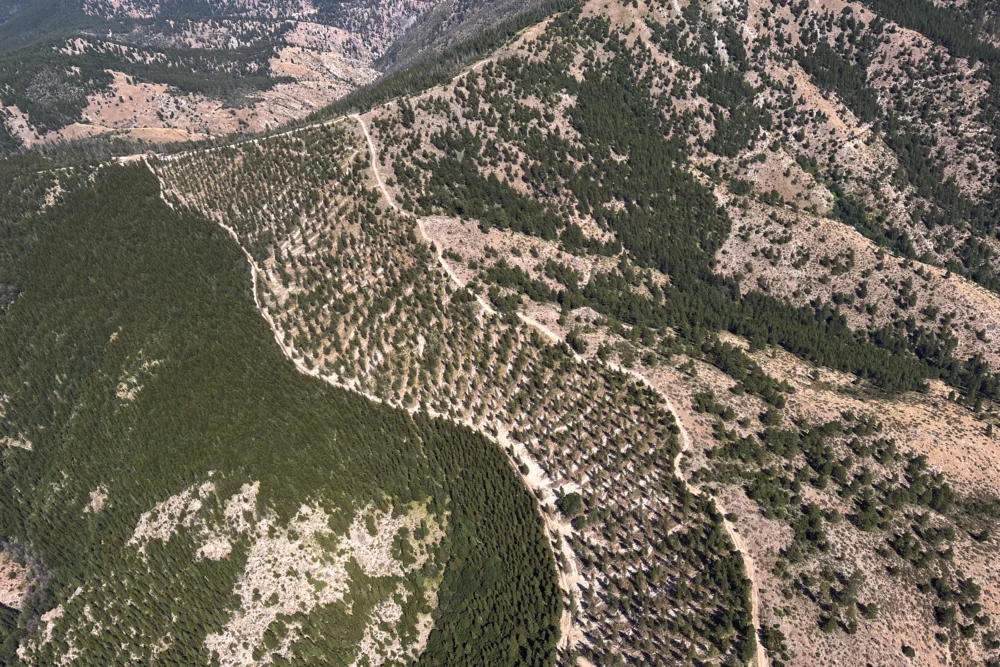
A landmark piece of legislation, the Fix Our Forests Act, now stands poised for Senate approval following its successful passage through the House, promising to redefine how the federal government manages nearly 200 million acres of the nation’s forests through thinning, prescribed burning, and other crucial interventions. Sponsored by a bipartisan coalition including U.S. Senators John Hickenlooper (D-Colo.), John Curtis (R-Utah), Tim Sheehy (R-Mont.), and Alex Padilla (D-Calif.), the bill recently emerged from a Senate committee with significant cross-aisle support, garnering 18 votes in favor against just five opposed, signaling a rare consensus on an issue of growing national urgency. Senator Hickenlooper emphasized the immediate need for action, stating, "There is a wildfire crisis across much of the country – our communities need action now. Wildfires won’t wait." This legislative effort marks the most substantial congressional undertaking in recent memory to address the escalating wildfire threat, a crisis fueled by a complex interplay of historical land management practices, climate change, and expanding human development into fire-prone landscapes.
The proposed legislation encompasses a range of provisions designed to bolster forest health and protect communities from the devastating impacts of increasingly frequent and intense wildfires. Central to its strategy are measures promoting prescribed burning and targeted forest thinning in areas most susceptible to fire, alongside initiatives aimed at empowering communities to create defensible spaces around vulnerable homes and infrastructure. Critically, the bill formally recognizes the ecological role of wetlands as natural buffers against wildfires, integrating them into broader management strategies. It also champions cross-boundary programs, fostering collaboration among counties, states, and tribal nations, acknowledging that wildfires do not respect jurisdictional lines. A cornerstone of the bill’s approach is the reauthorization of the 2009 Collaborative Forest Landscape Restoration Program (CFLRP), a vital mechanism that funnels funding to diverse groups engaged in collaborative fire mitigation and forest health projects. Michael O’Casey, public-lands director for the Theodore Roosevelt Conservation Partnership, highlighted the dire state of many Western forests, observing, "When you’re out hunting and in the woods in Western forests, you can see a lot of woods aren’t in good shape. They’re too thick and ready for fire, frankly." He further explained that over a century of aggressive fire suppression, combined with the intensifying pressures of drought, climate change, and disease, has left these ecosystems in a weakened, overgrown, and highly combustible state, making them ripe for the megafires that have become a tragic hallmark of recent years across the American West and beyond.

The scale of the challenge is immense. The U.S. Forest Service currently manages approximately 193 million acres of forest land, yet it treats only about 4 million acres annually through various restoration and mitigation efforts. This represents a mere fraction of what experts believe is necessary to restore ecological balance and reduce fire risk across vast swathes of federal land. O’Casey underscored the urgency, stating that forest managers must intensify their efforts "where it’s needed most" and expressed optimism that the bill "will facilitate more management on forest lands to keep the health of ecosystems in mind." The global context of this crisis underscores the bill’s significance; from the record-breaking infernos in Canada that blanketed North American cities in smoke to the catastrophic blazes in Australia, Europe, and the Amazon, wildfires are increasingly recognized as a global climate and ecological emergency. Their impacts extend far beyond immediate destruction, affecting air quality across continents, disrupting vital carbon sinks, accelerating biodiversity loss, and displacing communities.
However, the Fix Our Forests Act, while widely praised for its intent to accelerate wildfire mitigation, also contains provisions that have ignited significant concern among environmental advocates, who argue that the bill prioritizes speed over established environmental protections and public oversight. One contentious element is the expansion of exemptions from the National Environmental Policy Act (NEPA). Currently, the Forest Service can undertake projects without extensive public comment or a full NEPA process if the project is deemed relatively small and unlikely to have a "significant effect on the human environment," typically limited to projects up to 2,000 or 3,000 acres. The new bill proposes to raise this threshold substantially to 10,000 acres. This change, according to Anna Medema of the Sierra Club, would allow for larger-scale interventions without the robust public and environmental review processes designed to ensure accountability and mitigate unintended consequences.
Further deepening the controversy is a provision that would permit the Forest Service to conduct logging and landscape alterations across a "fireshed management area" without mandatory consultation with tribal nations and the public, or without undergoing a comprehensive environmental review. A fireshed, defined as a landscape unit for fire management, can encompass an area as vast as 250,000 acres, equivalent in size to many Western national forest ranger districts, as highlighted by Blaine Miller-McFeeley, a legislative representative with Earth Justice. Medema and Miller-McFeeley collectively warn that these provisions could grant the Forest Service broad authority to initiate massive projects with minimal public scrutiny, potentially sidelining local communities and indigenous groups whose traditional ecological knowledge and stewardship practices are invaluable. Conversely, O’Casey argues that these measures are essential to cut through bureaucratic red tape, enabling the agency to act swiftly and decisively on projects that might otherwise languish for years, caught in protracted legal battles or administrative processes.

The bill also seeks to significantly curtail judicial review by shortening the statute of limitations for lawsuits challenging Forest Service decisions from six years to a mere 150 days. This reduction raises alarm among environmental groups who view judicial review as a critical safeguard, ensuring federal agencies adhere to legal mandates and environmental statutes. Limiting this window could make it exceedingly difficult for concerned parties to challenge potentially harmful or poorly conceived projects. Moreover, the legislation contains language that would relieve the Forest Service and the Bureau of Land Management (BLM) of the explicit requirement to always consult with the U.S. Fish and Wildlife Service (USFWS) to update forest plans in response to newly listed endangered species or new information concerning existing listed species. Critics, including Susan Jane Brown, an Oregon-based staff attorney for Silvix Resources, a nonprofit environmental law firm, fear this could weaken protections for vulnerable wildlife and ecosystems, undermining the intent of the Endangered Species Act.
Beyond these procedural and environmental concerns, critics also point to a glaring omission: the bill appropriates no new funding for the extensive forest thinning or defensible space creation it advocates. This lack of new financial commitment is particularly troubling given that the Forest Service is already grappling with severe underfunding and understaffing, with the Department of Agriculture having shed thousands of employees in recent years. Miller-McFeeley cautioned that in the absence of new resources, coupled with the previous administration’s "Big Beautiful Bill" mandate for the Forest Service to meet annual timber quotas, the agency’s remaining staff might be pressured to prioritize logging projects over more ecologically nuanced restoration efforts. He articulated a profound concern that "You tie those together, and it’s an existential threat to our forests and communities that survive because of them."
O’Casey acknowledged the validity of the concerns raised by environmental groups, recognizing that any bipartisan legislative effort inherently involves compromise. However, he adamantly refutes the characterization of the bill as a "congressionally authorized logging free-for-all." He explained that many Western forests are choked with thick stands of timber, often of low commercial value like ponderosa and juniper, that desperately need thinning to reduce fuel loads and restore ecological health. O’Casey maintains that the bill is structured to encourage such necessary work, guided by the best available science, and believes its long-term impact will be a net positive for old-growth forests, vital water supplies, and communities living on the front lines of the wildfire crisis. Despite his optimism for the bill’s framework, he conceded that without new federal appropriations, cities, counties, tribal nations, states, and nonprofits will continue to bear the heavy burden of lobbying for and funding essential projects like wetland restoration and community fire resiliency. The deep divisions and anxieties surrounding the bill underscore the complex challenge of balancing urgent environmental action with democratic process and ecological integrity, a debate where, as O’Casey observed, "There are a lot of people who are really afraid of the bill for what it could do rather than excited about what it could do." The passage of this act will undeniably reshape America’s approach to forest management and wildfire mitigation, with profound implications for its vast public lands and the communities nestled within them.