Rocky Georgio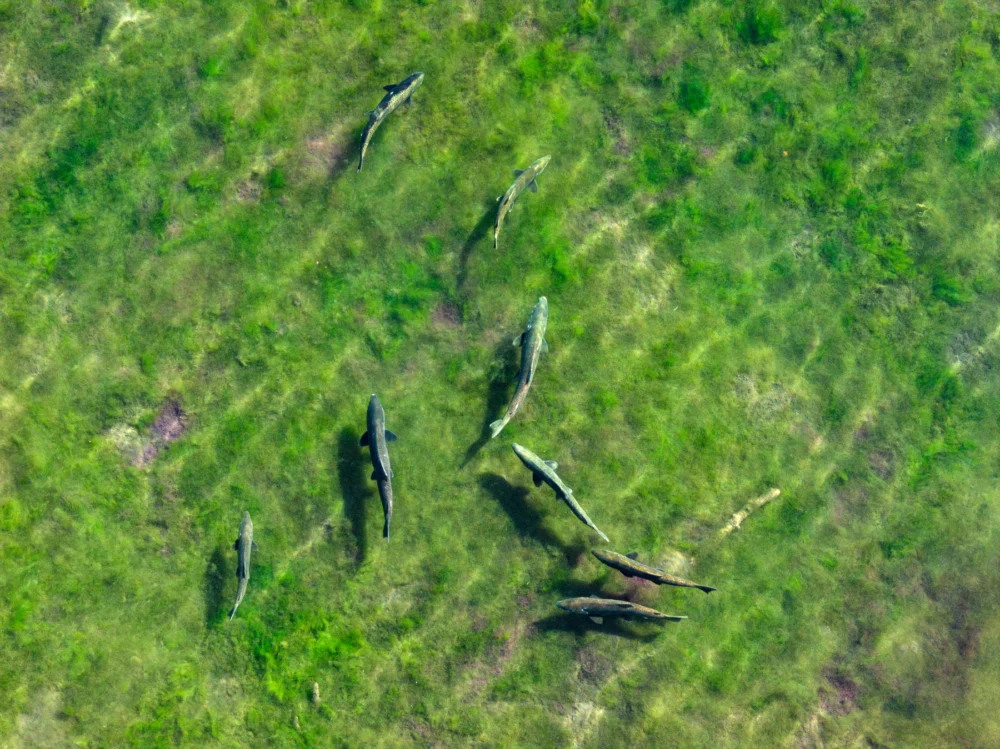
One year after the largest dam removal project in history, salmon have successfully returned to the headwaters of the Klamath River, a significant achievement marking their reappearance in areas they hadn’t accessed for approximately 115 years. This momentous occasion is chronicled in Amy Bowers Cordalis’s new book, The Water Remembers, which delves into the intergenerational fight to preserve the Klamath and Yurok way of life. The book weaves together memoir, historical narrative, meticulous legal analysis, and Yurok storytelling, reflecting Cordalis’s own journey from witnessing a devastating fish kill in 2002 as a tribal fisheries intern to her current role as general counsel for the Yurok Tribe. "I felt really compelled to write this at a time when it could end on such a high note, so that we could show the world how Indigenous resistance, Indigenous resilience, Indigenous knowledge, can lead to these massive victories," Cordalis stated, emphasizing the book’s message of hope.
In a recent conversation, Cordalis shared that she had spent the previous day on the river with members of her nonprofit, Ridges to Riffles, and Karuk Tribe staff, actively tagging salmon to support habitat restoration efforts. These collective endeavors have already resulted in the replanting of an estimated 19 billion native seeds within the former reservoir areas, with ongoing projects dedicated to restoring 20,000 acres of vital spawning grounds, a process expected to continue through 2028 and beyond.

Reflecting on the research for The Water Remembers, Cordalis described the experience as profoundly emotional, deepening her respect for the efforts of her ancestors and previous generations. Their tireless fight, often at great personal risk, was essential to maintaining their Yurok identity and way of life. She acknowledged that the current successes on the Klamath River are a direct result of their sustained resistance.
Cordalis recalled growing up hearing stories of the "fish wars," a deeply traumatic period for the Yurok people and her family. Despite their ancestral practice of fishing, federal marshals, equipped with riot gear and powerful jet boats, frequently intervened to confiscate nets and disrupt their activities. These confrontations often escalated into violent clashes, yet the Yurok ultimately prevailed, securing their right to fish while others continued unimpeded. Cordalis characterized these actions as a profound injustice, an arbitrary and unjust criminalization of their cultural practices, and a clear instance of racial profiling.
The book also incorporates details from oral history interviews conducted with her family in the 1980s, providing a rich tapestry of historical context. In the latter part of the book, Cordalis shares her personal narrative, reflecting on her legal career and gaining a newfound appreciation for how prior generations strategically positioned the Yurok Tribe to achieve the monumental goal of dam removal on the Klamath River. This achievement stands as the largest river restoration project in history, and Cordalis hopes readers will experience the profound sense of accomplishment that comes from witnessing this multigenerational epic culminate in victory.

Cordalis drew parallels between her own experiences and those of her great-grandmother, Geneva, who faced hardship bootlegging salmon while witnessing extensive destruction of Yurok lands from canneries and timber companies. Cordalis herself experienced the devastating impact of a major fish kill on the river. She spoke about how, for her, injustice served as a significant source of trauma, and her response was to channel that hurt and grief into action. She dedicated herself to law school with the intensity of someone whose family and people’s future depended on it, a commitment born from witnessing such profound environmental and cultural loss.
The book’s potential impact in the current political and environmental climate is a driving force for Cordalis. She believes it can serve as an antidote by demonstrating that even the most marginalized communities can enact significant change, highlighting the critical importance of coalitions and mutual support. She stressed the value of acknowledging potential failures as part of the process, recognizing that even a single successful strategy can lead to monumental achievements. The removal of the dams and the return of salmon to Oregon are testament to this, and Cordalis presents the book as a blueprint detailing the multifaceted approach that led to this success, encompassing grassroots movements, legal strategies, and political alliances. Ultimately, she hopes the narrative will resonate deeply, inspiring readers to understand the profound impact of their actions and to maintain hope and resilience in the face of challenges, echoing the Yurok spirit of perseverance even in the face of setbacks.
The continuous nature of advocacy and stewardship was a key takeaway for Cordalis when discussing how, even after her great uncle Ray Mattz won a Supreme Court fishing rights case, the federal government continued to restrict Yurok fishing. Later, when Yurok people could fish without persecution, the salmon runs had collapsed, shifting the focus to dam removal. This highlights the perpetual need for vigilance and action across generations. Cordalis framed this as the essence of being a steward: choosing to step up and respond to the needs of the environment. She referenced the historical role of Indigenous peoples globally as stewards, adapting to the needs of their lands, waters, and creatures. The Yurok worldview, she explained, posits that the land and its inhabitants were created for mutual benefit, emphasizing a balance that ensures sufficiency for all. This perspective, she believes, offers a pathway to re-evaluate humanity’s relationship with the natural world and to adopt a sustainable way of life.

With the dams now removed, the immediate need is river restoration. Through her nonprofit, Ridges to Riffles, Cordalis is actively involved in restoration projects within the former dam areas. She is also helping to lead an intertribal group that integrates traditional ecological knowledge with modern science to advise on these restoration efforts. The pursuit of a more natural hydrograph for the river is another key objective. These actions reflect a responsive approach to the river’s evolving needs, embodying the role of stewards in maintaining ecological balance. Cordalis expressed that this stewardship is an honor.
Cordalis recounted a poignant memory of herself and her siblings gazing at the dams, wishing they could dismantle them. The surreal experience of later pressing a detonator to initiate the demolition of COPCO 1 Dam on her birthday was a dreamlike realization of that childhood wish. She described the profound emotional release she felt upon witnessing the dams’ removal, comparing it to the relief of seeing a loved one recover from severe pain. Tears flowed, she felt, not just for herself but for multiple generations of her family, believing that their ancestors found deeper peace knowing their struggles had led to such a significant positive outcome. She concluded by emphasizing that collective action, partnership with nature, and mutual kindness are the cornerstones for achieving meaningful change.
The impact of the dam removals on the salmon populations has been swift and significant. Cordalis reported receiving updates from colleagues indicating that salmon are now abundant throughout the river system. She described harvesting larger, more resilient salmon in August, noting their strength and size, which surpassed anything seen in years. Salmon have now successfully navigated past Iron Gate Dam, reaching Keno Dam, Link River Dam, Upper Klamath Lake, and extending into the Williamson and Sprague Rivers—a journey of approximately 300 river miles from her home village of Rek-woi. This migration, taking a couple of months, signifies a healthier river environment, characterized by cooler, cleaner water. The removal of the dams has also fostered a sense of reunion among the people of the Klamath Basin, reconnecting communities that were separated for over a century. The interconnectedness of the river’s ecosystem means that events impacting the mouth of the river also affect the upper reaches, and vice versa. This renewed connection offers an opportunity to re-evaluate relationships and work towards healing the basin, which has historically been marked by water disputes.

Cordalis drew a profound connection between the healing of the Klamath River and the healing of individuals, likening it to the hydrologic cycle within our own bodies. Observing the river’s recovery, she believes, facilitates internal healing and allows people to remember what a healthy planet felt like. This collective yearning for a return to ecological balance is palpable. Engaging in meaningful causes, working in harmony with nature, and embracing stewardship, she concluded, fosters internal healing and enables a powerful sense of remembrance and well-being.