

 Joko Susilo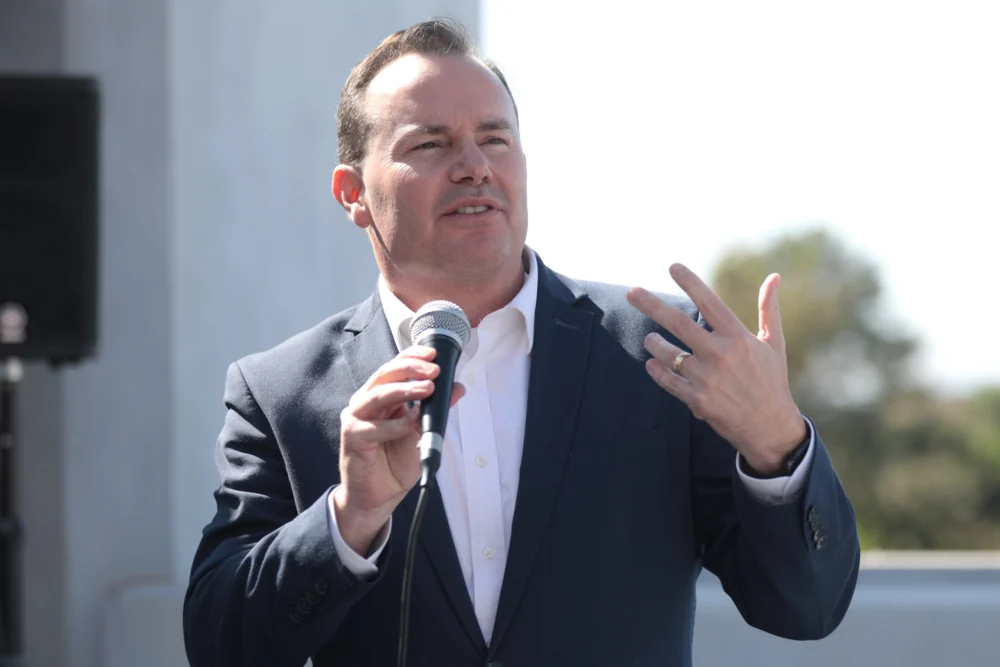
On October 2, Senator Lee unveiled the "Border Lands Conservation Act," a legislative initiative designed to open millions of acres of federal land along both the United States’ southern and northern borders to extensive development. This includes areas within national parks and protected wilderness, which would become accessible for road construction, timber harvesting, the installation of advanced surveillance systems, and any other "tactical infrastructure" deemed essential for border enforcement. Lee framed the bill as a necessary response to what he describes as "environmental destruction" caused by "the Biden Administration’s open-border policies." In a statement announcing the bill, Lee declared, "Biden’s open-border chaos is destroying America’s crown jewels," asserting that his legislation would equip land managers and border agents with the necessary tools "to restore order and protect these places for the people they were meant to serve." This language underscores a growing political narrative that links environmental degradation in border regions directly to immigration policies, a perspective that has been a recurring theme in recent American political discourse.
Despite being presented as an immigration enforcement measure, the geographical scope of Lee’s legislation extends far beyond the immediate vicinity of the U.S.-Mexico border, encompassing vast stretches of federal land along the U.S.-Canada border as well. The bill broadly defines "covered federal land" as any federal property "located in a unit, or in a portion of a unit, or within 1 or more parcels of land that shares an exterior boundary with the southern border or northern border." This definition implies that if any part of a designated federal unit – be it a national park, national forest, or national monument – touches either international boundary, the entirety of that unit falls under the bill’s provisions, regardless of its distance from the actual border. This expansive interpretation would bring iconic and ecologically sensitive areas under its purview, including all of Joshua Tree National Park in California, Big Bend National Park in Texas, Glacier National Park in Montana, North Cascades National Park in Washington, and Minnesota’s pristine Boundary Waters Canoe Area Wilderness. Perhaps one of the most striking examples identified by analysts is the Flathead National Forest in northwestern Montana, a sprawling 2.4-million-acre expanse that extends approximately 120 miles inland from the U.S.-Canada border and contains a million acres of designated wilderness. This broad definition has raised alarms among conservationists, who fear that the bill’s true intent may be to facilitate widespread access and development across protected areas under the guise of national security.

A critical component of the proposed legislation involves significant amendments to the landmark 1964 Wilderness Act, a cornerstone of American conservation law that safeguards over 110 million acres of designated wilderness from development and human disturbance. Lee’s bill would specifically permit the Department of Homeland Security (DHS) to conduct patrols using motorized vehicles, including cars, airplanes, and boats, within these protected areas. Furthermore, it would authorize DHS to "deploy tactical infrastructure," a term broadly defined within the bill to include observation points, remote video surveillance systems, motion sensors, vehicle barriers, fences, roads, bridges, drainage systems, and various detection devices. This expansion of authority would grant DHS unfettered power to conduct immigration, terrorism, and drug enforcement activities across all federal land situated within 100 miles of either border, effectively removing the ability of traditional land management agencies to restrict DHS operations. The bill also introduces a "Border Fuels Management Initiative," ostensibly to mitigate wildfire risks on federal border lands, linking these environmental concerns to what sponsors describe as impacts exacerbated by illegal immigration.
The timing and premise of the "Border Lands Conservation Act" have drawn scrutiny, particularly when juxtaposed with recent data on border apprehensions. The legislation comes despite a steep decline in unauthorized migrant crossings at the U.S.-Mexico border. Current figures indicate that Border Patrol is on track to record fewer than 250,000 apprehensions at the southern border this year, a stark contrast to the 1.5 million reported last year. This projected total would represent one of the lowest numbers of southern border arrests recorded since 1970, suggesting that the "open-border chaos" described by Senator Lee may not align with official statistics. Ironically, Senator Lee has previously commended former President Donald Trump’s border policies, tweeting in an April post that they exemplify "what a secure border looks like." This apparent contradiction between current claims of an uncontrolled border and past praise for policies that led to historically low apprehension rates raises questions about the true motivations behind the urgent need for such sweeping legislative changes to public lands. The bill’s list of cosponsors, including Senators John Barrasso (R-Wyo.), Marsha Blackburn (R-Tenn), Cindy Hyde-Smith (R-Miss), Cynthia Lummis (R-Wyo.), Tom Cotton (R-Ark.), and Rick Scott (R-Fla.), includes only one senator from a border state, Ted Cruz (R-Texas), further fueling debate over the bill’s relevance to the actual challenges faced by communities directly on the border.
Conservation groups and former federal land managers have voiced strong opposition, characterizing the legislation as a thinly veiled attack on environmental protections. Neal Clark, wildlands director at the Southern Utah Wilderness Alliance (SUWA), emphatically stated, "The big picture is Mike Lee will use any pretext to undermine public lands and conservation. It was housing six months ago, now it’s border security." Clark further warned that the bill could serve as a "backdoor" for constructing roads through sensitive landscapes and potentially transform a 100-mile-wide swath of federal land along both borders into a vast surveillance zone. Bob Krumenaker, who retired in July 2023 after over four decades with the National Park Service, including five years as superintendent of Big Bend National Park, offered a critical analysis of the bill. While acknowledging that Bureau of Land Management lands in the Southwest would likely bear the heaviest impact, Krumenaker pointed out that the Department of Homeland Security already possesses significant authority to carry out its mission. He cited the Real ID Act of 2005, which notably grants DHS the power to waive numerous federal laws, including the Wilderness Act, to facilitate the construction of border barriers and roads. Additionally, a 2006 Memorandum of Understanding (MOU) between DHS, the Interior Department, and the Department of Agriculture established a collaborative framework aimed at balancing border security imperatives with environmental protection. Krumenaker’s analysis highlighted the critical role of this existing consultation process: "The required consultation under the MOU between DHS and the land management agency assures that, to the greatest degree possible, border security and wilderness protection can both be achieved." He warned that by eliminating this consultative role and creating "blanket exceptions" within the Wilderness Act for nonconforming uses, the bill "will likely result in unnecessary and often irreversible impacts to wilderness."

Beyond his border security initiatives, Senator Lee also introduced a separate trio of bills on October 6, aimed at significantly expanding off-road vehicle (ORV) use across national parks and other federal lands. These proposals are framed as efforts to "ensure that Americans with disabilities can access and enjoy the nation’s public lands." Lee articulated his vision by stating, "The mountains, canyons, and forests managed by the federal government are part of our shared heritage, and access to them should not depend on whether someone can hike ten miles or climb a ridge." This legislative package, dubbed the "Outdoor Americans with Disabilities Act," has garnered support from several off-road vehicle associations and enthusiasts, suggesting an alignment with specific recreational interests.
However, the senator’s proposals for disability access have also met with sharp criticism from disability advocates, who view them as a cynical appropriation of their cause. Syren Nagakyrie, founder and director of Disabled Hikers, a non-profit organization dedicated to supporting disabled individuals in outdoor activities, condemned the legislation as a "shameful" attempt. Nagakyrie accused Lee of trying "to use the disability community in his ongoing attempts to dismantle public lands, build and prioritize roads, and sell lands to the highest bidder." The statement emphasized a fundamental principle within disability advocacy: "People with disabilities are not political pawns to be used while catering to special interests." Critics argue that true accessibility involves a diverse range of accommodations and thoughtful infrastructure planning that respects natural environments, rather than a blanket expansion of motorized access that could harm fragile ecosystems and detract from the experiences of other users, including those with different types of disabilities who seek quiet, natural spaces. Many existing federal policies already strive for accessibility, often focusing on paved pathways, accessible visitor centers, and adaptive equipment programs, which differ significantly from the widespread ORV access proposed by Lee.
These legislative pushes by Senator Lee underscore a persistent ideological battle over the management and future of America’s vast public lands. This conflict often pits states’ rights and resource extraction interests against national conservation priorities and the preservation of natural heritage for future generations. Globally, nations grapple with balancing national security needs with environmental stewardship, often seeking integrated solutions that mitigate ecological damage. The proposed changes, if enacted, could set a dangerous precedent, allowing national security or specific recreational interests to override established environmental protections and potentially fragment critical habitats. The debate surrounding these bills highlights the complex interplay between federal authority, environmental ethics, and the evolving definitions of public access and national interest, drawing a clear battle line between those who advocate for expanded development and those who champion the enduring value of pristine wilderness and carefully managed public spaces. This ongoing legislative skirmish will undoubtedly shape the landscape of American public lands for decades to come, with profound implications for both their ecological integrity and their accessibility for all citizens.







