Roger Danuarta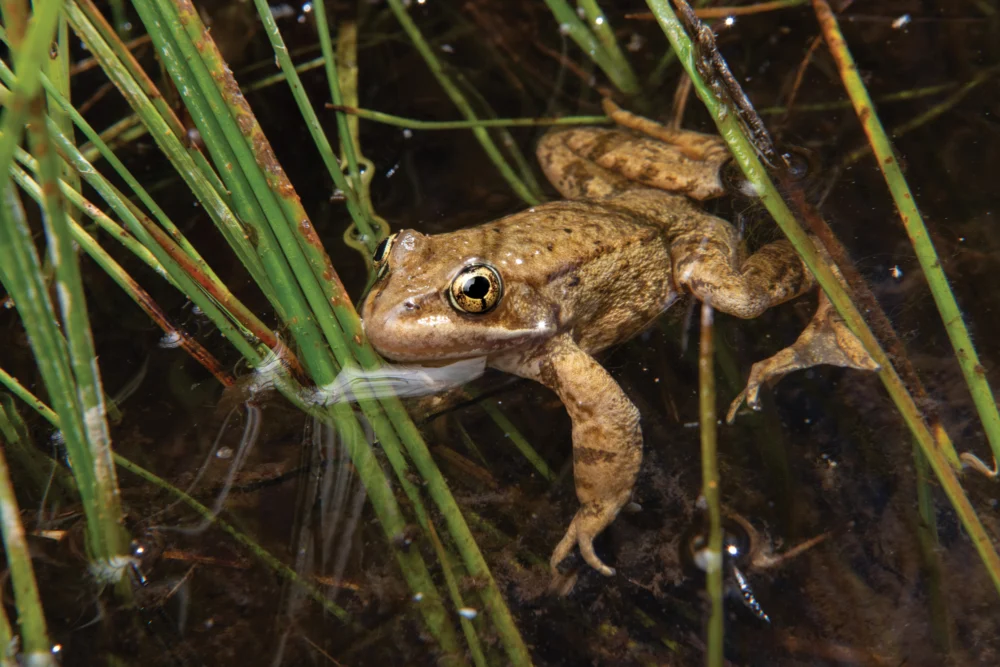
This shift in philosophy has now blossomed into a formidable collaborative effort, uniting diverse stakeholders including timber companies, the National Park Service, the U.S. Forest Service, the California Department of Fish and Wildlife, and scientists from Washington State University, all committed to restoring the Cascades frog to its ancestral home within Lassen Volcanic National Park. The Cascades frog, Rana cascadae, a species historically distributed across much of the Cascade Range from northern California to Washington, faces a daunting array of existential threats that have pushed it to the precipice of survival, particularly in its southern range in California. These pressures include persistent and increasingly severe droughts, extensive habitat degradation from human activities, the unchecked predation by non-native trout species introduced for recreational fishing, and, perhaps most insidiously, the devastating global amphibian chytrid fungus, Batrachochytrium dendrobatidis (Bd).
The chytrid fungus represents one of the most significant biological threats to biodiversity in recorded history, responsible for population declines and extinctions in hundreds of amphibian species across every continent where amphibians are found. This microscopic pathogen attacks the keratin in amphibian skin, interfering with their ability to respire and regulate water and electrolytes, ultimately leading to cardiac arrest in many infected individuals. In California alone, the fungus has been implicated in the near eradication of at least two other native frog species and has severely compromised populations of several more, including the Cascades frog, highlighting the urgent need for proactive conservation measures.

In a remarkable twist of fate and a testament to the power of cross-sector cooperation, the last robust, healthy population of Cascades frogs at the southern extent of their range in the Lassen region thrives not within a protected federal park, but on lands managed by private timber companies, Sierra Pacific Industries and Collins Pine, adjacent to the national park. Scientists have observed a perplexing resilience to the chytrid fungus within this particular population, a phenomenon that remains a subject of ongoing research. While the exact reasons for this localized resistance are not yet fully understood, researchers hypothesize that a combination of unique habitat features – such as specific water chemistry, vegetation structure, or microclimates – and potentially evolved genetic resistance within the frog population itself may be contributing factors, offering invaluable insights into potential strategies for broader amphibian recovery.
Capitalizing on this vital source population, early September witnessed a meticulous operation as a team of rubber-booted biologists, equipped with specialized nets, carefully waded into the timber companies’ aquatic strongholds. Their mission was to collect dozens of young Cascades frogs and tiny froglets, those delicate amphibians just past their tadpole stage, destined for reintroduction into Lassen Volcanic National Park. Before their journey to new homes, these precious captives embarked on what researchers affectionately termed a "weeklong frog spa," a crucial preparatory phase designed to maximize their chances of survival.
Ryan Wagner, a Ph.D. candidate at Washington State University and the lead manager of this complex reintroduction project, alongside his dedicated team of technicians, meticulously oversaw the daily regimen. Batches of wriggling frogs were carefully transferred into plastic tubs containing a dilute antifungal solution. With gentle, rhythmic sloshing, Wagner and his team ensured that the medicinal mixture thoroughly coated each amphibian’s entire body, a critical step in combating potential chytrid infections. Though some frogs instinctively attempted to escape, a soft prod would gently guide them back into their therapeutic baths, underscoring the delicate balance between intervention and respecting their wild nature.

This antifungal treatment, while not a definitive cure-all, serves as a vital tactical advantage. The ubiquitous chytrid fungus can linger on the frogs’ skin, and once released into the wild, they will undoubtedly confront it again in their new environment. However, these prophylactic baths significantly improve the odds of survival by mitigating infections during the frogs’ most vulnerable early life stages. During this period, their limited energy reserves are primarily channeled into rapid growth and development, often leaving their nascent immune systems less robust. By reducing the fungal load at this critical juncture, scientists aim to give the young frogs a stronger start, allowing them to build resilience before facing the full environmental pressures.
The next critical phase involved identifying and preparing the optimal habitats for the reintroduced frogs within the national park. "We were really trying to be selective with the sites," Wagner emphasized, highlighting the rigorous criteria applied to site evaluation. From a broad aerial perspective, approximately a dozen locations within the park appeared promising. However, a "frog’s-eye view" quickly revealed the limitations of most. Ideal reintroduction sites had to meet a precise trifecta of ecological requirements: they needed to be sufficiently shallow to facilitate successful breeding and egg deposition, yet deep enough to prevent complete freezing during the harsh winter months, thereby providing crucial overwintering refugia. Crucially, these sites also had to be rich in diverse insect populations, ensuring a plentiful food supply for the growing frogs. "If you don’t have all three, you probably aren’t going to be able to support Cascades frogs here for very long," Wagner concluded, underscoring the delicate ecological balance required for the species’ long-term viability.
Ultimately, after extensive surveying and analysis, two pristine sites within the vast expanse of Lassen Volcanic National Park emerged as the most suitable havens. On a crisp September 9th morning, two teams, their backpacks laden with plastic cups each cradling a single, precious frog, embarked on their respective journeys to these designated locations. Karen Pope, the ecologist whose emotional encounter with Lassen’s last Cascades frog had galvanized this entire initiative, was present for this momentous occasion, alongside Nancy Nordensten, the park’s chief of resources. With a mixture of anticipation and reverence, Pope, Nordensten, and Wagner carefully unsealed the cups. Some frogs, eager for their newfound freedom, sprang out in a blur of motion, splashing into the water and streaking away into the aquatic vegetation. Others required gentle coaxing, nudged tenderly into their new wild homes. As the frogs dispersed, some settled on sun-drenched stones and logs, basking in the warmth, their eyes scanning their surroundings, while others immediately began snapping up insects in the shallows, a natural and reassuring sign of their adaptation. The expressions on the human handlers’ faces mirrored the profound significance of the moment, shifting between beaming excitement at the success of their mission and a quiet, hopeful concern for the future of these fragile creatures.

Wagner, Pope, and a technician remained at one of the release sites for hours, exchanging observations and quietly witnessing the frogs acclimate to their new environment. "Putting the first frogs in the water — it caught me off guard how emotional it was," Pope later reflected, articulating the deep personal connection forged through years of dedicated effort. Miles away, across the rugged hills and valleys of the national park, the second team was simultaneously releasing its own cohort of frogs, collectively contributing to a monumental day for amphibian conservation.
By the end of that morning, the Cascades frog population within Lassen Volcanic National Park had dramatically increased from a harrowing zero to a hopeful 117 individuals. This initial success, however, marks merely the beginning of a long and arduous journey. In the challenging months and years ahead, these reintroduced frogs must navigate a gauntlet of natural threats, successfully evade predators, endure the harsh realities of winter, maintain their health in the face of persistent pathogens, and, critically, establish a self-sustaining breeding population. The long-term viability of such ambitious conservation efforts, however, hinges on consistent governmental support and sustained funding, a challenge often faced by environmental programs globally, particularly amidst shifting political priorities and budgetary constraints. Reduced allocations for agencies like the Forest Service and national parks could severely constrain future reintroduction efforts and the ongoing monitoring crucial for success.
Roland Knapp, a distinguished biologist at the University of California, Santa Barbara, who is actively involved in reintroducing closely related species across the Sierra Nevada but is unaffiliated with this specific project, emphasizes the pioneering nature of this work. He notes that when it comes to reintroducing Cascades frogs and other amphibians to their former habitats, no established manual exists to guide the way. Instead, scientists are quite literally "writing that manual as they go," learning and adapting with each successive effort. This adaptive management approach, characterized by continuous learning and refinement, is paramount to reversing the precipitous decline of amphibians throughout the Western United States and beyond. "You’ve done the reintroduction, but now you’ve got all the learning that comes from that," Knapp wisely added. "You’re not done. You’ve just started." This sentiment underscores the ongoing commitment and scientific rigor required to ensure that the return of the Cascades frog to Lassen Volcanic National Park is not just a fleeting moment of triumph, but the foundation for a thriving, resilient population for generations to come, symbolizing a broader commitment to global biodiversity preservation.