Roger Danuarta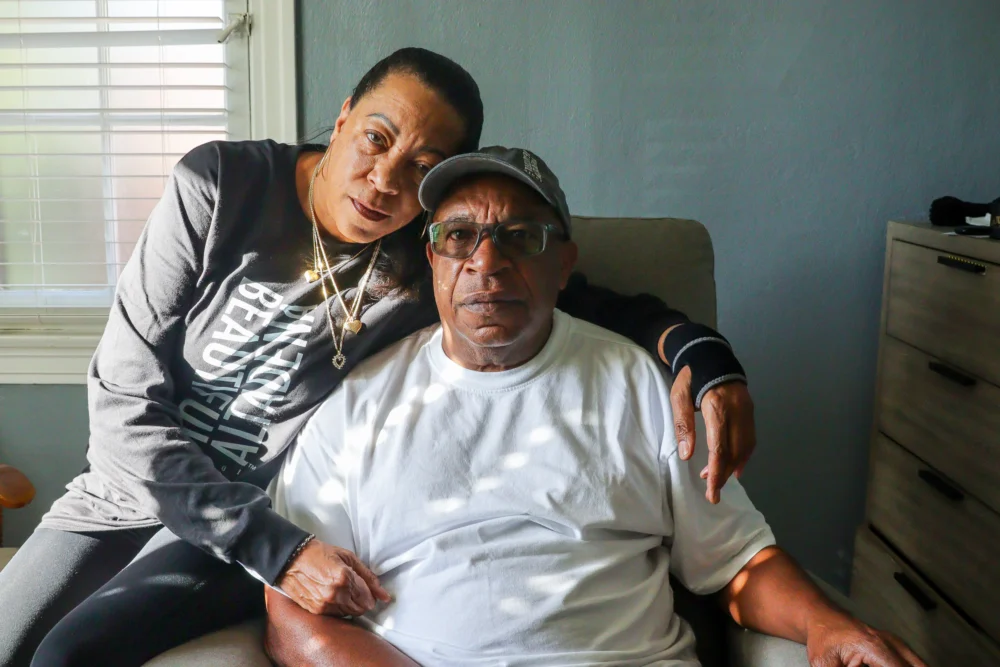
The verdant embrace of Altadena, a community once renowned for its luxuriant tree canopy, has been dramatically stripped away, leaving a landscape that starkly reveals the scars of the devastating Eaton Fire and exposes profound social disparities in its aftermath. For residents like Adonis Jones, whose childhood memories are interwoven with the thick oaks and pines that once defined his neighborhood, the transformation is a deeply personal violation. Standing on the barren site where his master bedroom will one day rise, he now commands an unobstructed view straight down to downtown Los Angeles – a vista once obscured by a dense forest, now a poignant symbol of loss. "You can look down on the city now because there ain’t no trees," Jones remarked, a sentiment echoed by many as he spent his first New Year’s away from the home he knew for decades.
Before the catastrophic Eaton Fire, Altadena boasted the fifth-highest tree canopy coverage among Los Angeles County’s 584 ZIP codes, a defining characteristic that drew generations of families to its tranquil, almost rural setting. This lush environment provided a crucial respite for Black families who migrated from the Jim Crow South during the Great Migration, seeking not just economic opportunity but also a sense of peace and belonging away from the urban sprawl and racial discrimination prevalent elsewhere. The wooded streets fostered an organic community infrastructure, encouraging informal interactions among neighbors who wandered through the shaded lanes, exchanging news or casual greetings. This natural canopy was more than just aesthetic; it was a cornerstone of the community’s social fabric, providing literal and metaphorical shade for a vibrant, interconnected life.

The inferno, which swept through the area, irrevocably altered this cherished landscape. In the year since the fire, Altadena has lost at least half of its trees, and local arborists warn that the destruction may not yet be fully realized. The disappearance of this extensive green infrastructure carries far-reaching consequences beyond the visible scars. Trees play a vital role in urban ecosystems, mitigating the urban heat island effect, improving air quality by filtering pollutants, reducing soil erosion, and supporting local biodiversity. Their loss contributes to hotter summers, increased energy consumption, and a diminished sense of well-being for residents. The absence of shade also directly impacts public health, particularly for vulnerable populations, making outdoor activities uncomfortable and potentially dangerous during heatwaves, which are becoming more frequent and intense due to global climate change.
Moreover, the recovery trajectory following the Eaton Fire maps a familiar and troubling pattern of inequity, casting a long shadow over the promise of rebuilding. Research conducted by UCLA has revealed that Black homeowners in Altadena were not only the most likely demographic to lose their homes in the blaze but are also demonstrably the least likely to have made significant progress toward rebuilding them. This demographic holds the lowest number of approved permits for reconstruction and the highest share of desolate, empty lots, highlighting systemic barriers that impede equitable recovery. This disparity is not merely coincidental but deeply rooted in historical injustices and contemporary challenges.
Historical redlining practices, which systematically denied services and investments to predominantly Black neighborhoods, played a significant role in concentrating Black families into specific areas of Altadena that proved to be most vulnerable to the fire’s destructive path. These legacy practices resulted in underinvestment in infrastructure and emergency preparedness in these communities. Compounding this historical disadvantage, a series of critical failures during the fire itself meant that these same areas, disproportionately inhabited by Black and Latino households, were among the last to receive crucial evacuation orders, exacerbating their losses. Furthermore, the UCLA research indicates that Black and Latino households were more than twice as likely as their white counterparts to lack adequate homeowner’s insurance, a direct consequence of long-standing wealth gaps, discriminatory lending practices, and the challenges of accessing affordable coverage in high-risk zones. This absence of comprehensive insurance coverage leaves many homeowners financially crippled, struggling to fund expensive rebuilding efforts and navigate complex bureaucratic processes.

For Adonis Jones, now 67, the daily reality of his neighborhood is a bittersweet blend of envy and hope. He observes the tangible progress of others—a neighbor’s roof being framed, a foundation poured across the street—while his own property, a place he called home for 55 years, remains an untouched expanse of dirt enclosed by a chain-link fence. His experience exemplifies the protracted and often frustrating bureaucratic hurdles faced by many. After weeks of anxious anticipation, the Jones family discovered that their initial permit applications had not even reached the correct department, forcing them to restart the arduous process more than half a year after their lot was cleared. Gabriella Carmona, one of the UCLA researchers, aptly describes this agonizing blend of anticipation and obstruction: "This mix of hope and hurdles shows recovery is still fragile."
The fragility Carmona describes is vividly etched across Altadena’s evolving landscape. The modest, single-story homes that once housed generations of Black history and sustained community bonds are increasingly being replaced by larger, two-story modern structures that dominate the now-sterile environment. This shift signals a potential displacement crisis, as rising construction costs and property values threaten to price out long-term residents, paving the way for a different demographic and changing the very character of the community. While residents are required to plant new trees on their lots as part of the rebuilding permits, most, including the Jones family, are planting saplings—thin, nascent trees that will take decades to mature and restore the majestic shade and ecological benefits of the ancient oaks and pines that were lost. Jones humorously, yet poignantly, questioned whether he or his neighbors would live long enough to sit beneath the branches they are now mandated to plant, underscoring the intergenerational nature of this loss and recovery.
Black homeowners in Altadena, many of whom skew older, face particular vulnerabilities. They are especially susceptible to underinsurance, making them prime targets for predatory buyers who capitalize on distress by offering low prices for fire-damaged properties. This demographic also struggles with the immense financial and logistical burden of navigating multi-year rebuilds, which can deplete retirement savings and erode hard-won intergenerational wealth. The increasing prevalence of investors purchasing fire-damaged properties further intensifies concerns about community displacement and the erosion of Altadena’s unique social fabric.

The loss for the Jones family extends beyond the physical destruction; it has settled within them as a profound shift in their perception of stability and control. The fire shattered the unspoken assumption that a lifetime spent in one place guarantees security. Every step toward rebuilding is shadowed by the gnawing question: What if another disaster strikes, and everything resets to zero once more? This profound grief is mirrored in small, everyday details, such as Denise Jones’s refurbished diamond ring, which bears a permanent, small hole from the fire’s intense heat—a tangible reminder of what was lost, yet also a testament to enduring resilience.
Despite these immense challenges, the Jones family, like many in Altadena, continues to show up for life and for their community. Adonis, who spent 42 years coaching football in the area, still encounters former players and neighbors, and conversations inevitably turn to the fire and his empty lot. These interactions serve as both painful reminders and vital connections. They continue to engage with life, whether learning how to cultivate plants in their rental home or enjoying a round of golf with friends. Witnessing firsthand how this fire’s impact has landed unevenly across their community, they have arrived at a simple yet profound philosophy, distilled from a year of overseeing a barren lot and a lifetime of observing others confront adversity: "Don’t take life for granted."
The journey of restoration for Altadena will be long and arduous, both for its natural environment and its human communities. The trees will take their time to grow, and the families will take theirs to heal and rebuild. Yet, an enduring hope persists that future generations will one day gather beneath the re-established canopy, sharing stories and laughter, just as people once did when Altadena disappeared beneath the shade of its majestic trees, a testament to resilience in the face of escalating climate challenges and the pursuit of environmental justice.