Roger Danuarta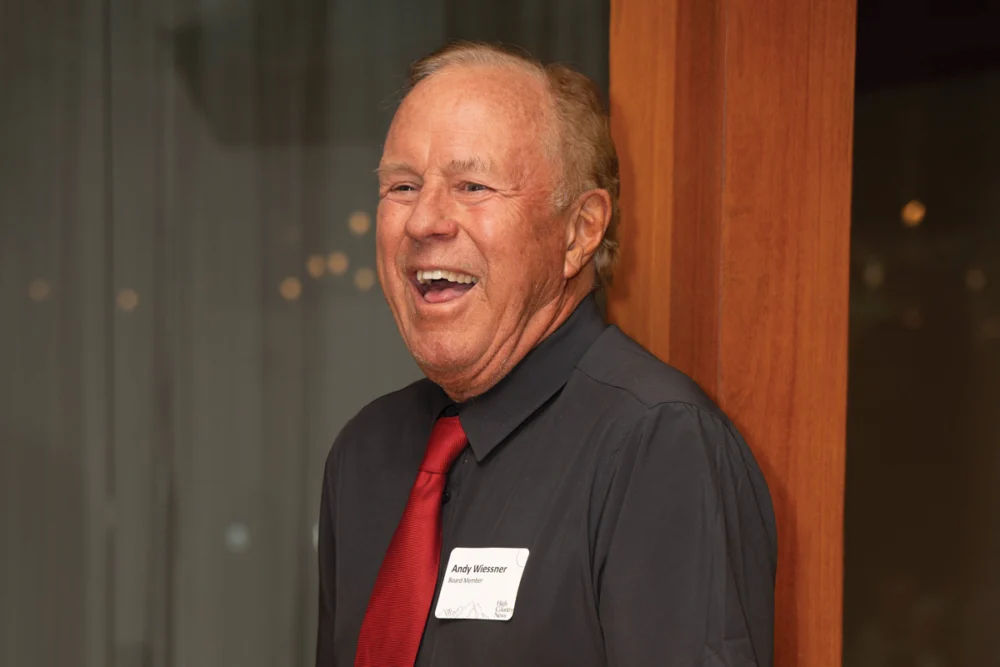
Wiessner’s foundational connection to the natural world was forged in the rustic embrace of Stowe, Vermont, where he attended a quintessential one-room schoolhouse. His upbringing, far from urban confines, instilled an inherent reverence for the wild, as his mother, Muriel, encouraged him and his sister to roam freely through the extensive woodlands of the North Country. This early immersion in nature was further intensified by the formidable legacy of his father, Fritz Wiessner, a legendary figure in the annals of mountaineering and rock climbing. Fritz Wiessner, renowned for his pioneering ascents and daring expeditions across continents, exposed his son to the rigors and majesty of the world’s highest peaks. Andy vividly recalls being "dragged up all kinds of horrible peaks in the Alps" during his teenage years, an experience that included a memorable ascent of Switzerland’s Schreckhorn, aptly named the "horn of terror." While these early adventures cultivated a profound love for mountaineering and the alpine environment, Andy candidly admits that the technical intricacies of rock climbing never quite captured his enduring passion.
Armed with an undergraduate degree from Dartmouth College and a Juris Doctor from Boston University, Wiessner journeyed to Washington, D.C., in 1974, at a pivotal moment in American environmental policy. This era marked the zenith of legislative efforts to protect the nation’s wilderness heritage, spurred by growing public awareness and the burgeoning environmental movement that followed the landmark passage of the Wilderness Act of 1964. It was within this dynamic legislative landscape that Ohio Representative John Seiberling, a Democrat and the influential chairman of the House Subcommittee on Public Lands, recognized Wiessner’s unique blend of legal acumen and deep understanding of the natural world. Seiberling enlisted Wiessner to assist in the monumental task of surveying vast tracts of Western lands, often by airplane or helicopter, which had been identified and recommended for inclusion in the National Wilderness Preservation System. Wiessner, reflecting on those demanding yet exhilarating years, encapsulated the experience with profound simplicity: "I had the best job in the world."

His work during this period proved transformative. A writer for High Country News in 1985 observed that Wiessner might have single-handedly contributed more to the protection of wildlands in the Western United States than any other individual. Representative Seiberling himself corroborated this extraordinary impact, noting that during his five-year leadership of the subcommittee, it successfully processed legislation that designated over 200 wilderness areas across 34 states, collectively adding an astounding 64 million acres to the National Wilderness Preservation System. To put this into perspective, this expansion was equivalent to safeguarding an area larger than many European countries, a testament to the scale and ambition of the conservation efforts of that time. Seiberling unequivocally stated, "Andy Wiessner has worked on every acre," underscoring the unparalleled scope of his influence. Wiessner’s diligent efforts, often involving meticulous boundary adjustments and intricate legislative drafting, helped solidify the protections for iconic landscapes ranging from vast desert expanses to towering mountain ranges, ensuring their preservation for future generations.
Following his impactful tenure on Capitol Hill, Wiessner made the logical transition westward, embracing a new challenge with the Western Land Exchange Company, now known as the Western Land Group. This firm specialized in complex public-private land swaps, a mechanism often employed to consolidate fragmented public lands, particularly in regions burdened by historical "checkerboard" land ownership patterns originating from 19th-century railroad grants. Wiessner staunchly maintained that "the public always got good land out of the deal," citing a notable exchange he helped facilitate with Plum Creek Timber Co. This particular swap effectively untangled a complex mosaic of private and public parcels around Washington’s Central Cascades, a region encompassing the ecologically vital Alpine Lakes Wilderness. Such exchanges aimed to create more contiguous public holdings, improving management efficiency, enhancing wildlife corridors, and expanding recreational opportunities. However, this specialized work, by its very nature, often ignited spirited debate and public controversy, highlighting the inherent tensions between private interests and the public good in land management.
One such proposed land trade in Western Colorado brought Wiessner into direct opposition with two of his dearest and longest-standing friends, Ed and Betsy Marston, the former publisher-editor team who profoundly shaped High Country News. Wiessner, representing billionaire Bill Koch, argued that the proposed exchange would strategically bring invaluable wildlife habitat around Blue Mesa Reservoir into public ownership, thereby benefiting regional biodiversity. Yet, the deal also threatened to block a cherished public trail leading into the pristine Raggeds Wilderness, a point of contention that Ed Marston, a fierce advocate for public access, vociferously opposed. The proposed land swap ultimately faltered, a testament to the powerful local opposition it generated. Despite the professional clash, the personal friendship between Wiessner and the Marstons endured, demonstrating the deep bonds that can transcend even the most impassioned policy disagreements. Betsy Marston, however, remained steadfast in her critical view of such transactions, articulating a widely held skepticism: "What it taught me was that land trades are usually proposed by the wealthy, and they are almost always bad for the public." Her statement underscores a broader concern about the potential for private gain to overshadow public interest in complex land dealings, a debate that continues to resonate in contemporary conservation circles.

Beyond his legislative and land transaction achievements, Wiessner proved an indispensable force in ensuring the institutional vitality of High Country News. Betsy Marston and others frequently lauded his "fearlessness" as a fundraiser, a quality that proved critical to the publication’s resilience. In the early 1990s, he spearheaded efforts to rally donations that enabled HCN to purchase its iconic headquarters building in Paonia, Colorado, a tangible symbol of its commitment to place-based journalism in the West. Decades later, as the publication adapted to changing media landscapes, its staff dispersed across the vast region, leveraging digital connectivity. The subsequent sale of the Paonia building, a decision born of strategic foresight, allowed HCN to reinvest significantly in its digital infrastructure and to establish a vital family, medical, and emergency leave program for its employees. Poignantly, a dedicated customer service team continues to operate from a corner office within the very building Wiessner helped secure, a testament to the enduring legacy of his vision.
His fellow board members, both past and present, consistently lauded Wiessner’s profound and lifelong passion for the American West, coupled with his remarkably generous spirit. Dan Luecke, who served as board president in the 1990s, eloquently stated that "Andy fit perfectly with HCN‘s motto — a publication ‘for people who care about the West.’" Luecke further noted Wiessner’s rare ability to care deeply without attempting to impose his will, a crucial attribute for volunteer leaders in public interest and nonprofit organizations. Wayne Hare, who served on the board from 2008 to 2021, simply described Andy as "one of the kindest people that I have ever known," a sentiment echoed by countless colleagues and friends.
Wiessner’s hospitality became legendary among HCN staff and board members. His home in Old Snowmass, Colorado, frequently transformed into a de facto bed and breakfast, offering a warm and welcoming haven for those dedicated to the publication’s mission. He delighted in hosting fundraisers, often taking charge in the kitchen to prepare delectable crostini appetizers, and, after guests had departed, would share his cherished pear brandy, fostering camaraderie and connection. One particularly memorable evening in 2021 saw a hundred people gather under a festive wedding tent on his front lawn to celebrate HCN‘s 50th anniversary, a vibrant testament to his enduring commitment and the community he helped cultivate.

As he steps away from formal board duties, Wiessner remains steadfast in his core philosophy and future endeavors. He plans to channel his considerable energy into continued efforts to protect wild places, a calling that has defined his illustrious career. His decades of experience in the complex arenas of policy and land management have distilled his views into a singular, resolute conviction: "The older I get, the more I’m a fan of simply locking up lands," he declared with characteristic directness. "Because once we lock them up, human beings can’t fuck with them anymore." This stark, yet deeply felt, statement reflects a profound understanding of the persistent threats facing natural landscapes and underscores a pragmatic belief in the power of permanent, legally binding protection as the most effective means to safeguard ecological integrity against encroaching development and human impact. It is a philosophy born of eighty years of life and forty years of dedicated service, a testament to a wilderness warrior who leaves an indelible mark on the conservation landscape of the American West.
High Country News extends its deepest gratitude for Andy Wiessner’s unparalleled contributions to the publication and to the enduring preservation of the American West, eagerly anticipating the continued growth and impact of its mission with the future addition of new board members.