Roger Danuarta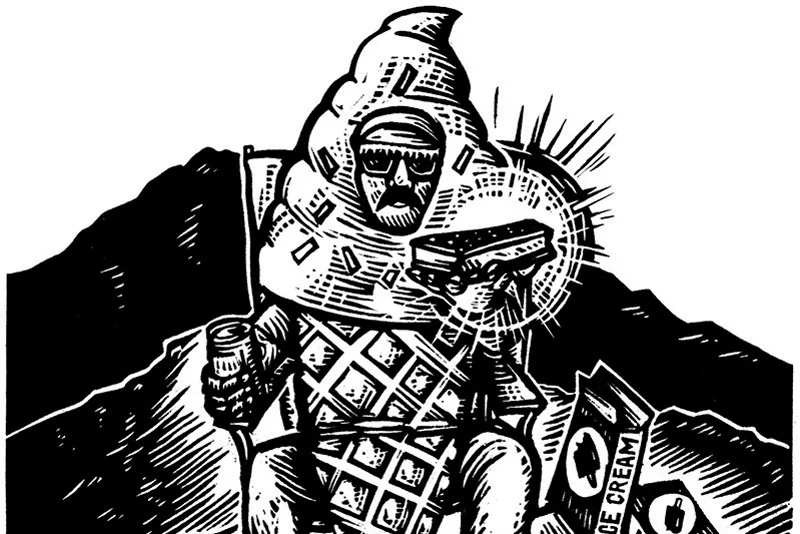
From the snow-capped peaks of the Rocky Mountains to the rugged Pacific coastline, the American West continually delivers stories of unexpected joy, peculiar wildlife encounters, and historical footnotes that defy belief, collectively weaving a rich tapestry of human and natural interaction. These narratives, often unfolding in the most improbable settings, resonate deeply, reminding us of the unpredictable charm that defines life in this expansive region.
High in the Colorado Rockies, where humanity often seeks solace and profound challenge, an extraordinary act of generosity recently transformed a strenuous ascent into a delightful surprise for dozens of hikers. On a bustling Labor Day weekend, a mysterious benefactor, now affectionately dubbed a "Legend Dairy" fellow by a dedicated Facebook group for "14ers" enthusiasts, hauled an astonishing 60 pounds of ice cream and dry ice to the 14,023-foot summit of Huron Peak. This formidable feat, while not on the scale of an Everest expedition, profoundly impressed those who had endured the arduous climb, offering a much-needed, creamy reward at the very top. The "14ers" — mountains exceeding 14,000 feet in elevation — hold a special allure for adventurers, drawing thousands annually to test their endurance against the thin air and steep trails. To find a frozen treat awaiting them was an unparalleled act of trail magic. Blaine and Katie Griffin, nearing the summit, initially feared the ice cream might be gone but were met with the blissful sight of ice cream sandwiches. Similarly, Christopher Whitestone and his two children shared in the unexpected bounty, an experience Whitestone noted would leave a lasting positive impression, albeit with a caveat that such summit surprises are not a regular occurrence. This singular act of kindness not only provided physical refreshment but also fostered a profound sense of camaraderie and shared wonder among the hiking community, momentarily elevating a personal achievement into a collective celebration. Such spontaneous acts of altruism in challenging environments highlight the enduring spirit of human connection, turning a demanding physical journey into a memorable shared experience that transcends the ordinary.
Further west, amidst the towering redwoods of California, the Sequoia Park Zoo in Eureka experienced a charmingly unexpected visitor. A wild black bear, demonstrating an impressive knack for infiltration, reportedly "broke into" the facility, making a social call on the zoo’s three resident black bears. Jim Campbell-Spickler, the zoo’s director, recounted the interaction, noting the wild bear’s intense curiosity and gentle demeanor as it introduced itself to its captive counterparts through the enclosure fence. The encounter, described as "really sweet, calm and curious," suggested the wild visitor might simply have been "looking for a friend," offering a poignant glimpse into the complex social behaviors of these intelligent mammals. Christine Noel, the zoo’s education curator, was the first to spot the polite intruder, whose presence prompted a swift but ultimately gentle response from the Eureka Police Department and a warden from California’s Department of Fish and Wildlife. After approximately 20 minutes of observation and attempts to coax it away, the bear seemingly concluded its social visit, exiting the perimeter gate and disappearing into the adjacent 67-acre Sequoia Park. The precise method of entry remains a mystery, though Campbell-Spickler theorizes the bear likely climbed a tree and dropped into the zoo grounds. This unusual incident underscores the delicate balance between urban development and wildlife habitats, particularly in regions like Northern California where human settlements often border rich natural ecosystems. It serves as a vivid reminder of the persistent curiosity of wildlife and the ongoing challenge of managing human-animal coexistence in increasingly shared landscapes, prompting reflection on the boundaries we impose and those nature effortlessly transcends.

Along the Pacific Northwest coast, another marine mammal recently made an unscheduled and decidedly inconvenient appearance. Motorists traversing Blue Slough Road near Cosmopolis, Washington, were confronted with an unusual roadblock: a sassy sea lion lounging squarely in the middle of the asphalt. This marine wanderer, several miles inland from the ocean, apparently navigated its way via a nearby river system, baffling onlookers and local authorities alike. Police Chief Heath Layman initially dismissed reports of a sea lion on the road as a joke, only to find the reports confirmed. Sea lions are known to "haul out" of the water onto land for various reasons, including resting, thermoregulation, molting, or avoiding predators. However, finding one so far removed from its typical aquatic environment, and seemingly uninclined to move, presented a unique challenge. Officials from the Washington Department of Fish and Wildlife and the National Oceanic and Atmospheric Administration were called to the scene. Their strategy involved "hazing" the creature, a humane technique aimed at making the animal sufficiently uncomfortable to prompt it to return to the river without causing harm. The intervention proved successful, and the sea lion eventually retreated into the water, allowing traffic to resume. This event highlights the dynamic and often unpredictable nature of coastal wildlife, reminding communities of the need for prepared responses to protect both human safety and animal welfare when creatures venture beyond their usual domains. Such incidents are becoming more frequent globally as human activity expands and climate shifts impact marine ecosystems, occasionally leading wildlife to unexpected terrestrial detours.
Speaking of marine spectacles, Oregon maintains a unique historical claim to fame with the infamous "exploding whale" incident of 1970, a story that continues to resonate far beyond its coastal origins. In Florence, a deceased sperm whale, having washed ashore, became a rapidly escalating olfactory nuisance. In a decision that would become legendary, local officials on November 12, 1970, opted to dispose of the massive carcass using dynamite, under the misguided assumption that the explosion would pulverize it into manageable pieces for scavengers. The reality, however, was a spectacular and messy miscalculation of the explosives needed. Instead of disintegration, huge chunks of blubber and whale tissue were propelled hundreds of feet into the air, raining down on spectators, vehicles, and the surrounding area. KATU News famously reported that "the blast blasted blubber beyond all believable bounds," cementing the event’s place in the annals of public works disasters. Far from being forgotten, this peculiar chapter in Oregon’s history has been embraced with a remarkable sense of humor and local pride. Florence has since dedicated the aptly named Exploding Whale Memorial Park, and last year, Mayor Rob Ward officially designated November as an annual Oregon holiday "to memorialize the exploding whale." The incident, initially an embarrassing debacle, has transformed into a quirky tourist attraction and a testament to the community’s ability to commemorate even its most bizarre historical moments. For those seeking more "chunks and tidbits" of this incredible tale, the "Official Unofficial Florence Oregon website of the Exploding Whale" at www.xplodingwhale.com offers a comprehensive digital archive, ensuring the legend endures. This enduring fascination with the exploding whale underscores how communities can reclaim and celebrate their unique pasts, turning moments of chaos into symbols of local identity and shared cultural heritage, contrasting sharply with modern, more environmentally sound methods of whale carcass disposal, such as towing them out to sea or controlled burial.
These disparate tales, from the selfless act on a mountain peak to the curious visit of a wild bear, the road-blocking sea lion, and the legendary exploding whale, collectively illustrate the vibrant, often unpredictable, and sometimes humorous interplay between humans and the natural world across the American West. They remind us that while the region is celebrated for its majestic landscapes and pioneering spirit, it is equally defined by these unexpected encounters that capture the imagination, forge community bonds, and become enduring elements of local folklore. Each story, in its own unique way, reflects a deeper narrative about adaptation, resilience, and the fascinating ways in which life, both wild and human, finds a way to surprise, delight, and occasionally, explode.