Roger Danuarta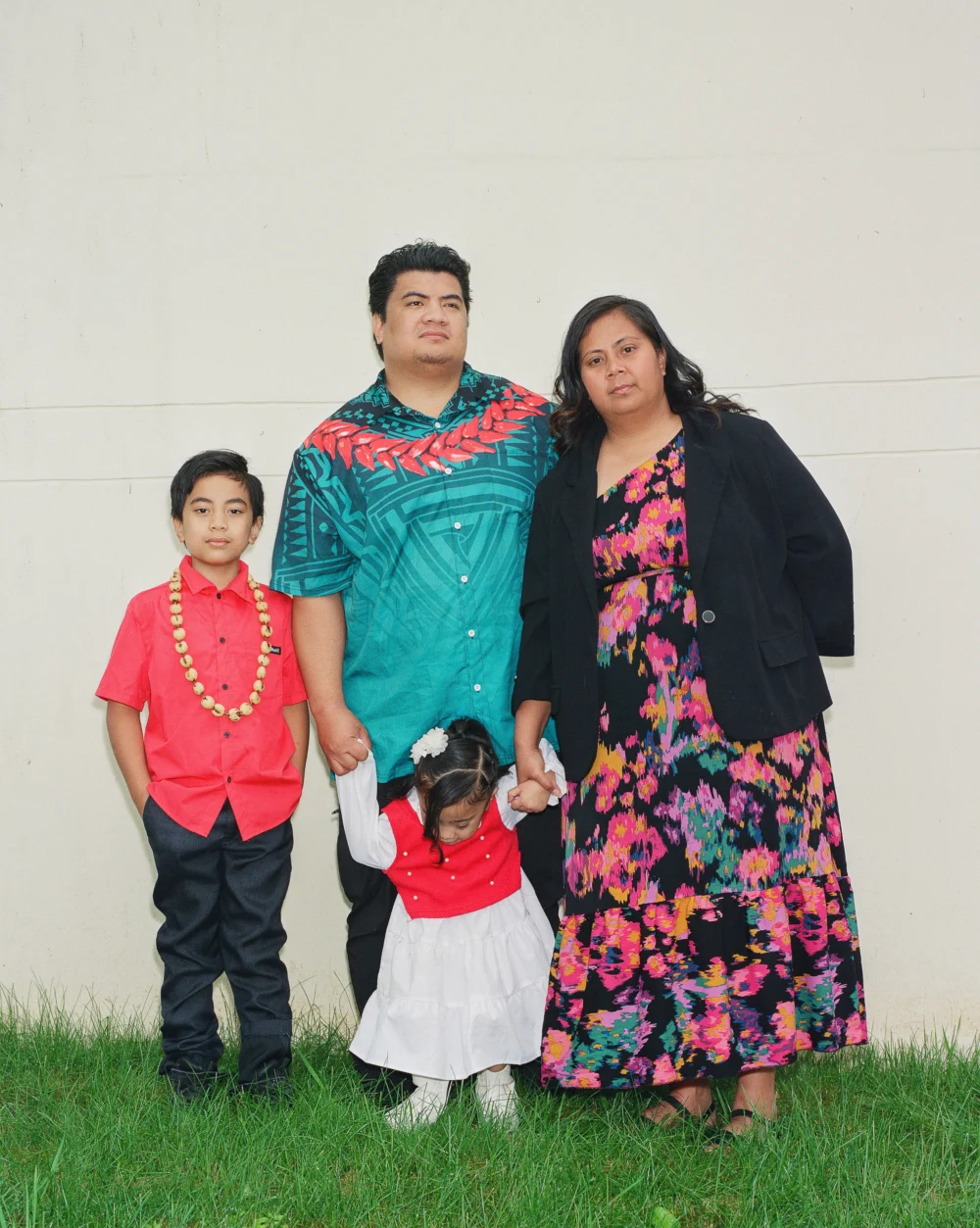
The crisp, sub-arctic air of November 30, 2023, carried an unusual chill through Whittier, Alaska, as two state troopers traversed the winding highway from Anchorage, navigating past snow-dusted peaks and a desolate valley to the entrance of the Anton Anderson Memorial Tunnel. This single-lane passage, a 2.5-mile engineering marvel carved through a glacial mountain, serves as the sole terrestrial link to the isolated port town, opening for just two 15-minute intervals each hour. The troopers, catching the 10 a.m. eastbound window, emerged into Whittier’s notoriously harsh microclimate, a relentless confluence of heavy snowfall, abundant rainfall, and ceaseless winds that shape life in this unique community.
Whittier itself is a relic of military ambition, a town born from World War II strategic needs and solidified during the Cold War. Its most striking feature, the 14-story Begich Towers, houses nearly all of its approximately 300 residents, fostering an extraordinary communal existence where groceries, mail, church services, and even the school are accessible without venturing outdoors. It was to one of these third-floor units that Sergeant Nathan Bucknall and his partner arrived, their presence an anomaly in a town where privacy often gives way to neighborly familiarity. Tupe Smith, a mother of two young children, answered the door without hesitation, unaware that her world was about to irrevocably shift.
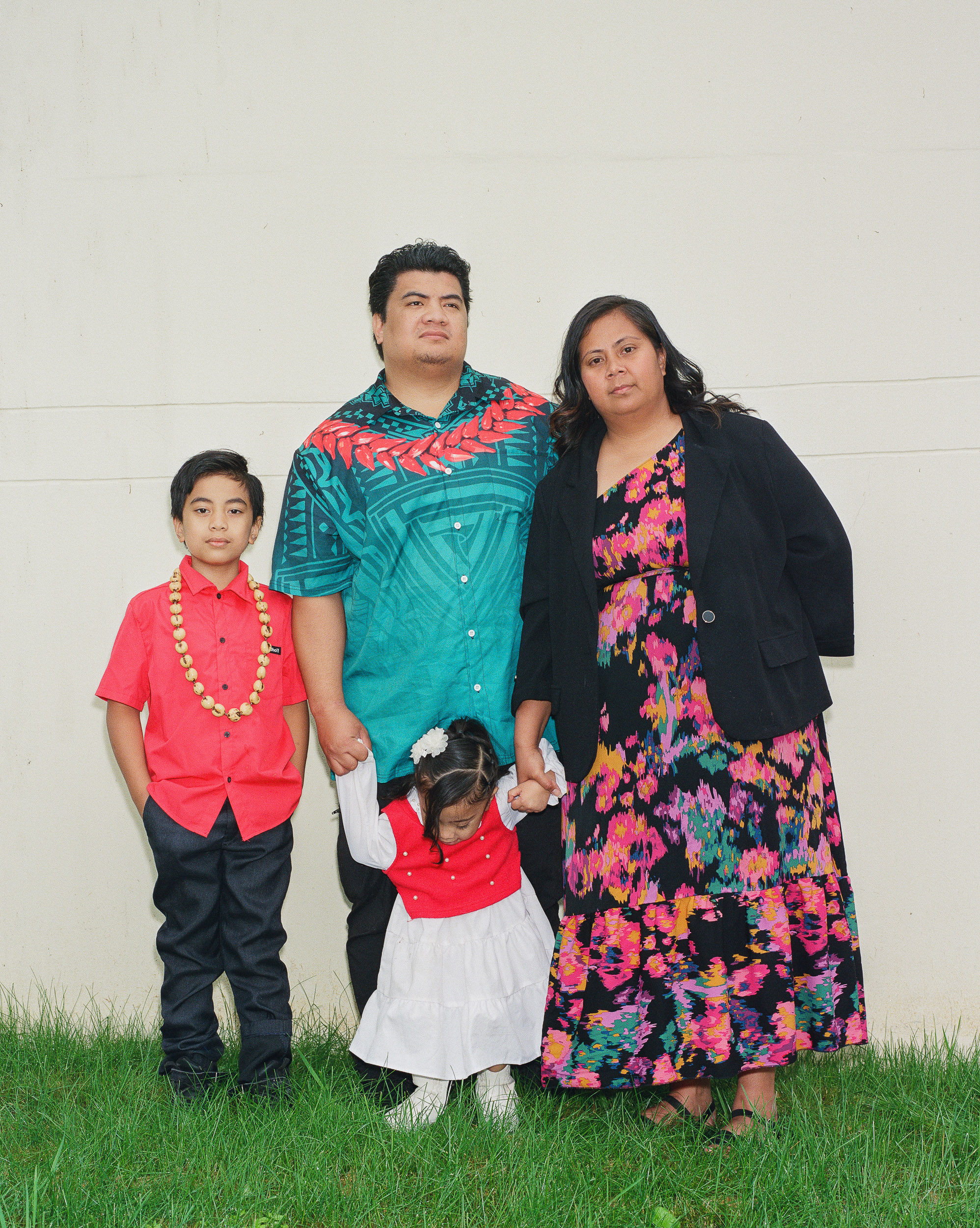
Smith, a cherished member of Whittier’s vibrant American Samoan community, had just finished breakfast with her kindergartener and 11-month-old. Her husband, Mike Pese, a first responder, was still asleep after a late shift. Sergeant Bucknall’s opening question, “You got a few minutes to talk?” quickly escalated into the solemn recitation of Miranda rights. Smith was perplexed; she had recently been elected unopposed to the local school board on October 3, having been encouraged by the teachers at Whittier’s pre-K-12 school, a facility so small it sometimes lacks graduating classes. Her dedication to the school was well-known; she volunteered frequently, read to children, and even prepared and delivered meals during the COVID-19 pandemic, her Samoan language skills invaluable to the many students still learning English. This selfless community involvement, she believed, was a testament to her commitment, not a transgression.

Yet, Sergeant Bucknall informed her that her actions constituted a violation of election law. “The voting integrity system is actually held pretty high up,” he stated, “It’s got to be protected.” Unbeknownst to Smith, and indeed, to many, her birth in American Samoa, despite possessing a U.S. passport and Social Security number, did not grant her automatic U.S. citizenship. American Samoans are uniquely classified as "U.S. nationals," a legal limbo that acknowledges their American birth but denies them the full spectrum of citizenship rights, including voting in most state and local elections outside their home territory, running for office, or serving on juries. This distinction, rooted in a contentious and often overlooked chapter of American legal history, has profound implications for individuals like Smith.
The Insular Cases, a series of U.S. Supreme Court rulings from the early 20th century, established that constitutional rights do not automatically extend to residents of unincorporated territories, including American Samoa. These rulings, steeped in overtly racist language describing territorial inhabitants as "alien races" and "savage tribes," created a permanent second-class status for many, ensuring that they could be governed by the U.S. without being fully integrated into its body politic. While other U.S. territories eventually gained birthright citizenship, American Samoa largely resisted this change, primarily due to fears that it would erode local customs, particularly land ownership laws that prioritize native Samoans. This complex history means that American Samoan nationals must undergo a naturalization process akin to foreign immigrants to become full citizens, a journey that is often costly, confusing, and protracted.

Smith’s shock was palpable. She knew she couldn’t vote for president, but the nuanced specifics of her national status had never been explicitly taught to her, nor, as it would emerge, to many Alaskan officials. As troopers handcuffed her in front of her crying children, her husband, Mike Pese, fought the instinct to intervene. Smith recalled trying to hide her cuffed hands beneath her jacket, desperate to avoid the gaze of neighbors as she was led out of the building and driven 72 miles to a jail north of Anchorage. The experience, including a humiliating strip search, left her deeply traumatized. “I felt so embarrassed,” Smith recounted later, her voice heavy with emotion. “I thought that I was doing something good with my life, having my kids in this place and volunteering.”
Months after Smith’s arrest, the state’s investigation broadened significantly. Her initial warrant included ten felony counts of voter misconduct, ultimately resulting in an indictment on two charges, each carrying a potential five-year prison sentence. It became clear that Smith was not an isolated case. Bucknall and his team began scrutinizing dozens of her relatives and neighbors, transforming Whittier into a focal point for what state officials termed "illegal voting." This aggressive stance came despite long-standing confusion surrounding American Samoan voting rights in Alaska, a state with one of the largest American Samoan populations outside of Hawaii. Many non-citizen nationals had voted for years without issue, largely due to a lack of awareness regarding the legal distinctions.

The Alaska Department of Motor Vehicles, which doubles as a voter registration office, admitted it did not include an option for "non-citizen U.S. national" on its forms until 2022, well after many in Whittier, including Smith and Pese, had initially registered. This systemic oversight by the state directly contributed to the current predicament. Immigration attorney Margaret Stock, who represents a Kodiak couple facing potential deportation over similar registration errors, highlighted the widespread nature of the problem: “Hardly anybody knows the difference between a citizen and a national. Only lawyers know that.” She estimates "dozens and dozens" of such cases exist across Alaska, underscoring a critical failure in public information and government procedure.
Attempts by the Pacific Community of Alaska, a non-profit advocating for Samoan civil rights, to seek clarity from the state’s Division of Elections in 2022 proved futile, as officials repeatedly deflected, professing ignorance about American Samoan voting eligibility. It was not until 2024, after Smith’s arrest, that the group finally received a definitive, albeit chilling, response: “If a person who is not a U.S. citizen registers or votes, legal penalties could apply.” This bureaucratic obfuscation highlights a profound disconnect between the lived experiences of U.S. nationals and the governmental structures meant to serve them. Even experienced state lawmakers, like former Republican majority leader John Coghill, admitted to only learning of the democratic exclusion of non-citizen nationals in 2025.

The local political landscape of Whittier further complicates the narrative. Just before the 2022 elections, as the Pacific Community sought answers, Whittier was embroiled in its own contentious mayoral race. The town, rich in natural beauty but struggling economically, was at a crossroads. The single-lane tunnel, only opened to road traffic in 2000, symbolized its precarious connection to the outside world. With a new cruise terminal promising a significant influx of tourists, debates raged between long-time residents like former mayor Dan Blair, who championed local control and feared gentrification, and newer residents who favored aggressive development. The Samoan community, a substantial voting bloc in this tiny town, largely rallied behind Blair, contributing to his narrow 13-vote victory.
This pivotal election ignited suspicions among some who resented the Samoan community’s influence in local politics. An anonymous complaint, filed with the state Division of Elections on December 30, 2023, precisely one month after Tupe Smith’s arrest, alleged that "a large family group, many of whom were not U.S. Citizens," had illegally voted. This complaint triggered the broader investigation that brought a dozen state trooper vehicles, including one with a police dog, back through the tunnel on a rainy September 5, 2024. This show of force was particularly striking given the state troopers’ acknowledged staff shortages and struggles to address other serious crimes.

The troopers fanned out across Whittier, confronting residents at the waterfront, the gas station, and apartment doors. Karen Dempster, who runs the post office within Begich Towers, observed that all the names being called out by officers were Samoan. Mike Pese, Smith’s husband, was interrogated in his home, video evidence showing even the troopers’ confusion. Trooper Richard Chambers, inspecting Pese’s U.S. passport, admitted, “I thought people of American Samoa were U.S. citizens.” His partner, Jason Knier, mistakenly advised Pese that he could still vote in state elections, a fundamental misunderstanding that Chambers quickly corrected.
Nine months later, Pese, his mother Mili, his twin brothers, and several cousins, a total of ten individuals, received court summonses for felony voter misconduct and perjury, each facing up to ten years in prison. Pese recalled growing up in American Samoa, learning about righteous American wars and the U.S. government, yet never about American Samoa’s unique history or its place within the broader American empire. “I pay the same taxes as a U.S. citizen, but I cannot have a voice to represent what I feel is right within my own community. It’s frustrating,” he articulated, echoing the sentiments of many American Samoans living on the mainland. Maddy Unutoa, who leads an advocacy group for Samoans in Alaska, shared a similar experience: “I do not remember ever being taught that I have second-class citizenship. I learned all of that moving back here.”

The question of American Samoan suffrage is a live legal issue, recently highlighted by the 2021 Fitisemanu v. United States case, where the U.S. District Court in Utah initially ruled that American Samoans should be granted citizenship under the 14th Amendment’s birthright citizenship clause. However, the 10th Circuit Court of Appeals reversed this, citing respect for the American Samoan government’s own opposition to automatic citizenship due to concerns about cultural and land ownership preservation. The U.S. Supreme Court declined to hear the appeal, leaving the status quo intact. Now, organizations like Right to Democracy see Tupe Smith’s case as a new opportunity to challenge the colonial legacy of the Insular Cases, with oral arguments set for January 15 in the Alaska Court of Appeals.
Local support for the Samoan community has grown in Whittier. Former Mayor Blair successfully introduced a resolution condemning "discrimination" against American Samoans and urging Alaska to amend its constitution to grant them state and local voting rights. A sign outside a local gift shop now boldly declares: "American Samoans are Americans / 14th Amendment." Blair, a vocal critic of the prosecutions, sees them as "typical colonization B.S.," arguing that the state’s actions are unjust.

The motivations behind the intense state prosecution remain under scrutiny. Austin McDaniel, spokesperson for the Division of Alaska State Troopers, insisted his office only responds to citizen complaints and does not proactively seek out voter misconduct. Deputy Attorney General John Skidmore, prosecuting the 11 Samoans, maintained the state’s position that "ignorance of the law is not a defense" and that the state is obligated to prove criminal intent. This hardline stance contrasts sharply with how other states, such as Oregon and Hawaii, have handled similar situations involving non-citizen voting errors, opting for public education rather than criminal charges.
Critics, including Democratic State Representative Andrew Gray, chair of the House Judiciary Committee, view the Whittier prosecutions as a politically motivated effort to fuel broader narratives of widespread election fraud. “I absolutely think that the reason there was a raid [in Whittier] and why we’re pursuing these prosecutions is because it gives some ammunition to the folks who want to say that our election system is not safe, and that non-citizens vote,” Gray stated. This aligns with national Republican efforts to tighten voting laws and investigate alleged irregularities, with Alaska’s Division of Elections having previously shared voter rolls with the Trump administration’s Department of Justice. The irony is not lost on observers, given Alaska’s own history as a U.S. territory where activists fought for democratic inclusion before statehood in 1959.

The human cost of these prosecutions is profound. Mili, Mike Pese’s 65-year-old mother and a beloved matriarch of Whittier’s Samoan community, suffered a stroke shortly after receiving her summonses, later diagnosed with aggressive Stage 4 cancer. Her son described her hidden stress, saying, "She doesn’t want us to see it.” From Seattle, where she underwent treatment, Mili expressed her sorrow and defiance: “It stresses me out, it stresses me a lot, going through with my treatments and everything. I try to be happy and forget everything until my treatment is all done… We have to stand proud, we have to stand firm, not just fade away.”
The state offered plea deals to all defendants except Tupe Smith, some promising to clear records after a year without further offense. However, inspired by Mili’s resilience and the counsel of advocates like Tafi Toleafoa of the Pacific Community of Alaska, who warned against setting a dangerous precedent for thousands of other vulnerable non-citizen nationals, the defendants largely rejected the offers. Mike Pese, initially inclined to accept a deal to protect his family, ultimately decided against it, recognizing the broader implications for the Samoan community.

The repercussions extend beyond the courtroom. Nelson Vaimoa, who led church services and is among the accused, lost his job at the tunnel after a speeding ticket, attributing his distraction to the impending court date. He described his first court appearance as "terrifying," a stark contrast to his previous pride in voting. The court’s lack of Samoan translation, including a made-up word for "criminal," further alienated the defendants. Vaimoa, once an engaged community member, now struggles with trust and self-censorship, reflecting the profound trauma inflicted by the state’s actions.
As a result, some Samoans are considering leaving Whittier, a testament to the deep scars left by these events. Mike Pese, who once dreamed of running for local office, has abandoned that ambition and now homeschools his son, Max, pulling him from the very school where Tupe Smith volunteered. The local election on October 5 saw Mayor Blair lose by 14 votes, a margin that many attribute to the suppressed Samoan vote. Beyond the 11 facing charges, numerous other eligible Samoan citizens abstained, traumatized by the troopers’ actions.

The state’s unwavering commitment to prosecuting these cases, despite acknowledged confusion among its own officials and the widespread lack of awareness among American Samoans, raises critical questions about justice, voter integrity, and the enduring legacy of colonial governance within the United States. As Alaska conservatives push for a ballot measure to explicitly ban non-citizen voting—a measure that critics argue is redundant and performative—the fate of the Whittier Samoans stands as a stark reminder of the fragile nature of democratic participation for those in the margins of American citizenship.