Joko Susilo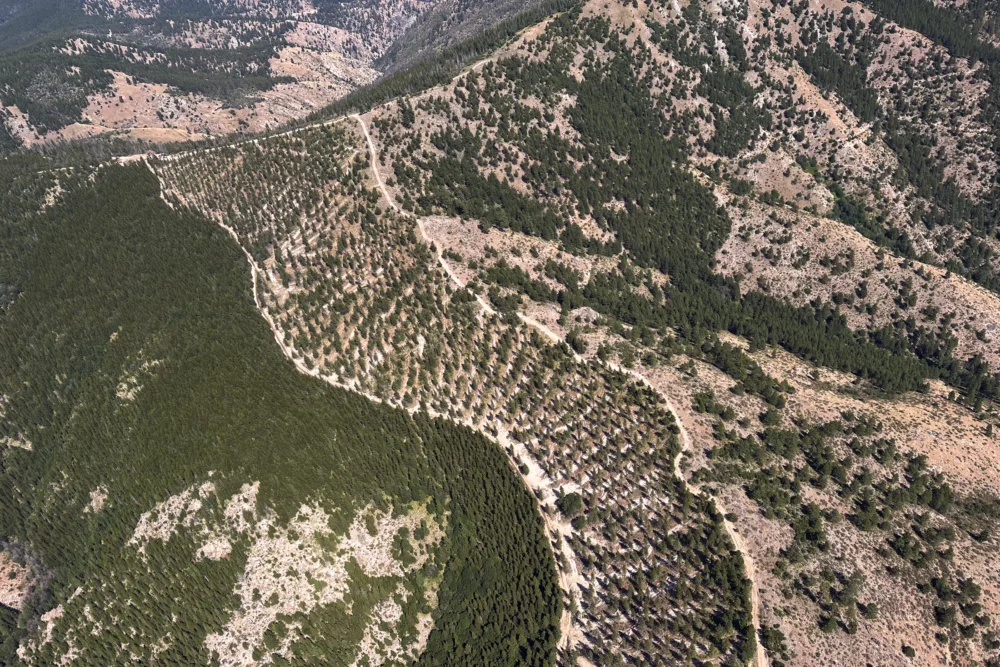
The "Fix Our Forests Act," a comprehensive legislative package designed to overhaul the management of nearly 200 million acres of the nation’s federal forests, stands on the cusp of becoming law, having decisively cleared the House and now poised for a Senate vote. This bipartisan initiative, championed by U.S. Senators John Hickenlooper (D-Colo.), John Curtis (R-Utah), Tim Sheehy (R-Mont.), and Alex Padilla (D-Calif.), recently emerged from a critical Senate committee with overwhelming support, garnering 18 votes in favor against only five opposed, signaling a rare consensus on an issue of mounting national urgency. The urgency of this legislative push underscores a pervasive recognition across the political spectrum that traditional approaches to forest management are no longer adequate in the face of increasingly severe and destructive wildfires that have ravaged communities and ecosystems nationwide, particularly across the American West. Senator Hickenlooper articulated this pressing need, stating, "There is a wildfire crisis across much of the country – our communities need action now. Wildfires won’t wait," highlighting the immediate imperative for effective intervention in a landscape increasingly defined by environmental challenges.
This proposed legislation marks a significant congressional effort to tackle the escalating wildfire threat, introducing a suite of provisions aimed at proactive forest health and community protection. Central to its strategy are measures promoting expanded prescribed burning and targeted forest thinning in areas most susceptible to fire. These practices are crucial for reducing hazardous fuel loads—accumulations of dense vegetation, deadwood, and undergrowth—that have built up over decades, creating conditions ripe for catastrophic blazes. Beyond direct forest intervention, the bill also emphasizes community engagement, advocating for collaborative programs to establish "defensible space" around homes and critical infrastructure in fire-prone regions, creating essential buffers against advancing infernos. In an important ecological recognition, the act formally acknowledges the role of wetlands as natural firebreaks, integrating their preservation and restoration into broader wildfire mitigation strategies. Furthermore, it seeks to foster greater cooperation by encouraging cross-boundary programs that unite counties, states, and tribal nations in a unified approach to land management, recognizing that wildfires do not respect administrative borders. A cornerstone of the bill’s collaborative spirit is the reauthorization of the 2009 Collaborative Forest Landscape Restoration Program (CFLRP), a vital mechanism that funnels federal funding to diverse groups working synergistically on fire mitigation and overall forest health. Michael O’Casey, public-lands director for the Theodore Roosevelt Conservation Partnership, underscored the palpable need for such interventions, observing that many Western forests are visibly unhealthy, "too thick and ready for fire, frankly."
The current precarious state of America’s forests is largely a legacy of over a century of aggressive fire suppression policies. For generations, forest management prioritized extinguishing all fires, regardless of their ecological role, leading to an unnatural accumulation of undergrowth, deadwood, and dense stands of trees. This has created a tinderbox environment, particularly in regions, like the vast pine forests of the American West, that are naturally adapted to frequent, low-intensity fires that historically cleared out underbrush. Today, this historical mismanagement is compounded by the accelerating impacts of climate change, which manifests as prolonged droughts, earlier snowmelt, and hotter temperatures, all contributing to drier fuels and longer, more intense fire seasons. Insect infestations and tree diseases, often thriving in stressed, overcrowded forests, further weaken ecosystems, making them more vulnerable to catastrophic blazes. O’Casey expressed hope that the "Fix Our Forests Act" can stem the tide of "megafires," massive, uncontrollable infernos that have increasingly scorched vast swathes of the American West, causing unprecedented ecological and economic damage. The sheer scale of the challenge is daunting: the U.S. Forest Service, tasked with managing these vast public lands, currently treats approximately 4 million acres annually. While a significant undertaking, this figure pales in comparison to the nearly 200 million acres of federal forestland requiring active management. Proponents argue that the bill will enable forest managers to accelerate crucial work in the most vulnerable areas, promoting ecosystem health and resilience.

Despite its bipartisan backing and stated objectives, the "Fix Our Forests Act" has ignited fervent debate, particularly concerning certain provisions that critics argue could undermine fundamental environmental protections. At the heart of this controversy are proposed changes to established environmental review processes. Currently, the Forest Service operates under the National Environmental Policy Act (NEPA), a landmark law mandating public comment and thorough environmental assessments for projects that could significantly impact the human environment. While exemptions exist for smaller projects (typically up to 2,000 or 3,000 acres) deemed to have no significant effect, critics point to the bill’s proposed expansion of this threshold to 10,000 acres as a significant weakening of oversight. Anna Medema of the Sierra Club highlights this concern, arguing that such an increase would allow for substantial projects to proceed with diminished public scrutiny, potentially bypassing vital community input.
Further escalating these concerns is a provision that would permit the Forest Service to conduct logging and landscape alterations within expansive "fireshed management areas," which can encompass up to 250,000 acres—a size comparable to many Western national forest ranger districts—without the standard requirement for tribal consultation or extensive environmental review. Blaine Miller-McFeeley, a legislative representative with Earth Justice, views this as a potentially dangerous carte blanche, enabling massive undertakings with minimal public accountability and potentially overriding the sovereign rights and traditional ecological knowledge of tribal nations. Both Medema and Miller-McFeeley contend that these provisions risk granting federal agencies unprecedented latitude, potentially leading to large-scale projects with insufficient environmental safeguards and public input. Conversely, O’Casey and other proponents argue that these measures are essential to cut through bureaucratic "red tape," enabling the Forest Service to act swiftly and decisively in the face of rapidly evolving wildfire threats, rather than having critical projects delayed for years by administrative hurdles or protracted litigation.
The bill also seeks to curtail judicial review, a move that environmental advocates view with alarm. It proposes shortening the statute of limitations for challenging forest management projects from a standard six years to a mere 150 days. This compressed timeline, critics assert, would severely limit the ability of environmental groups, local communities, and other stakeholders to legally contest projects they deem harmful or improperly vetted, effectively narrowing avenues for legal recourse against potentially damaging decisions. Moreover, another contentious clause suggests that neither the Forest Service nor the Bureau of Land Management (BLM) would be consistently obligated to collaborate with the U.S. Fish and Wildlife Service to update forest plans in response to newly listed endangered species or updated information on existing protected species. This provision raises significant concerns about the potential impact on biodiversity and the integrity of the Endangered Species Act (ESA), a cornerstone of U.S. conservation law. Critics fear that prioritizing expedited forest management could inadvertently jeopardize vulnerable species and their habitats, undermining decades of conservation efforts.
Beyond the procedural changes, a major point of contention revolves around the bill’s financial implications. Critics lament that the legislation, despite its ambitious scope, appropriates no new dedicated funding for the extensive forest thinning, prescribed burning, or the creation of defensible spaces around at-risk communities. This omission is particularly problematic given the current state of federal land management agencies. Susan Jane Brown, an Oregon-based staff attorney for Silvix Resources, a nonprofit environmental law firm, points out that the Forest Service is already severely underfunded and understaffed, with the Department of Agriculture having significantly reduced its workforce in recent years. This resource deficit raises questions about the agency’s capacity to implement the bill’s directives effectively, even with streamlined processes, potentially shifting the burden onto already strained local and state resources.

Adding another layer of complexity, Miller-McFeeley warns that the legacy of the previous administration’s "Big Beautiful Bill," which imposed annual timber quotas on the Forest Service, could exacerbate these issues. Without new funding specifically tied to ecological restoration, and with a reduced workforce facing existing timber targets, there’s a risk that the agency’s remaining staff might be incentivized to prioritize commercial logging projects over more ecologically nuanced thinning or prescribed burning, potentially leading to outcomes that do not fully align with the stated goals of forest health. Miller-McFeeley starkly summarized these cumulative concerns, stating, "You tie those together, and it’s an existential threat to our forests and communities that survive because of them."
Acknowledging the legitimate concerns raised by critics, O’Casey emphasizes that any bipartisan legislative effort inherently involves compromise. He firmly refutes the characterization of the bill as a "congressionally authorized logging free-for-all," explaining that many Western forests are choked with low-commercial-value timber, such as dense stands of ponderosa pine and juniper, which desperately need thinning to restore ecological balance and reduce fire risk. He maintains that the bill is designed to facilitate this crucial work, guided by the best available science, and views it as a long-term net positive for preserving old-growth forests, safeguarding vital water supplies, and enhancing the resilience of fire-prone communities. The focus, he insists, is on ecological restoration, not solely commercial timber extraction. However, the absence of direct federal appropriations within the bill means that the onus will largely remain on local entities—cities, counties, tribal nations, states, and non-profit organizations—to secure funding and continuously lobby for critical projects like wetland restoration and community fire resiliency initiatives. This reliance on external funding sources adds a layer of uncertainty to the widespread implementation of the act’s goals. The divergent views underscore the complex challenge of balancing urgent environmental action with robust public oversight and protection. "There are a lot of people who are really afraid of the bill for what it could do rather than excited about what it could do," O’Casey conceded, encapsulating the deeply divided sentiment surrounding this pivotal piece of legislation. As climate change continues to intensify wildfire seasons globally, from the boreal forests of Canada to the Mediterranean coastlines and the vast expanses of Australia, the "Fix Our Forests Act" represents a critical, albeit contentious, attempt by the United States to adapt its land management strategies to a new, fiery reality. Its ultimate impact will hinge on careful implementation, sustained funding, and a continued commitment to both ecological health and community safety.