

 Rocky Gerung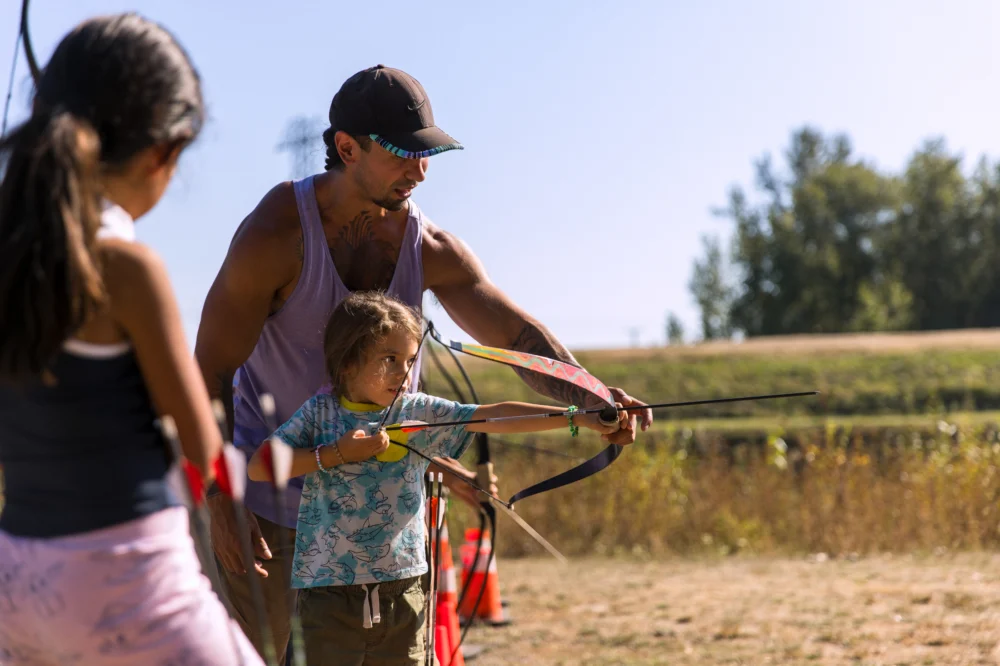
For Joshua Hood, a Klamath-Modoc descendant and bow maker, a Pacific yew tree represents far more than raw material for a bow; it embodies a connection to his ancestors, a practice of balance and intentionality, and a profound connection to his heritage, particularly his tribal name, nteys s?odt’a, meaning "bow worker." This ancestral moniker has become a guiding principle for the 35-year-old’s multifaceted work. Hood not only crafts custom bows but also leads traditional bow-making and archery courses, primarily serving students of color in Portland, Oregon, and spearheading a nonprofit dedicated to teaching youth essential outdoor skills. His endeavors are deeply rooted in traditional archery, with every aspect of his professional life reflecting this commitment.
Hood’s courses are open to all, with announcements typically made via his Instagram account, fostering an inclusive environment. His work addresses a critical gap in outdoor education for BIPOC communities, particularly at a time when funding for programs supporting historically marginalized groups has faced significant reductions. As the broader "primitive skills" movement, encompassing bushcraft and wilderness survival, increasingly features high-cost courses and exclusive retreats, it often overlooks its Indigenous origins. Hood’s approach actively decolonizes the transmission of Indigenous archery knowledge while maintaining affordability, creating a vital sanctuary for individuals who may not feel at home in mainstream archery communities. "There aren’t a lot of Native folks doing this type of work," Hood observes, noting the dominance of other groups in the skills-based arena. While many high-end bow-making courses can cost upwards of $1,500 for a few days of instruction, Hood offers his three-day workshops for $500 to $750. "I have to put food on the table and keep the lights on, but I’ve been able to do this work without breaking the pockets of our participants," he explains.
Hood’s journey into traditional bow-making began in his late teens while working at a survival school where a colleague conducted bow-making workshops. Though eager to learn, he found the experience unsatisfying. The group relied on power tools and commercially sourced lumber, a stark contrast to the methods of his ancestors. "I wanted to be able to do this like my ancestors did it, without going to Home Depot to get the lumber," Hood states. Initially, he experimented with ash saplings and a whittling knife, gradually incorporating hatchets and draw knives. His goal was to master the craft using only hand tools, enabling him to work with materials wherever he found them.

His bow-making process commences with the careful and deliberate selection of wood. While he has worked with hazel, ash, and dogwood in the past, he now favors denser hardwoods like osage orange, black locust, and, most importantly, Pacific yew, known as ts’pinksham in the Klamath-Modoc language and the tribe’s traditional choice for bow staves. Due to concerns about overharvesting, Hood reserves this sacred wood exclusively for bows crafted for himself or other members of the Klamath-Modoc community.
Upon selecting a tree, Hood performs a reciprocal offering of tobacco, a gesture of respect and gratitude. He credits his sobriety, embraced in 2019, with fostering a deeper, more meaningful relationship with the trees he harvests, emphasizing the importance of seeking permission. "We take a life from something very precious, that gives us oxygen, and then it just kind of sits in a void," he reflects. "The spirit of that tree is like, ‘Where am I going next? Am I going to be firewood, or am I going to be made into something, or am I just going to sit, and get eaten by bugs?’" Following the harvest, the wood undergoes a curing period of approximately nine months, likened to a gestation period. Once the cured stave is ready, Hood initiates a ceremonial blessing before commencing the woodworking.

"We let it know what our intentions are for it, and then we smudge it with cedar, give a prayer, and try to welcome it into a new form that can teach us how to restore balance to our lives," he explains, highlighting the critical need for a bow’s limbs to be perfectly balanced for accurate arrow projection. "To have some type of vision, to see a bow in a piece of wood that otherwise normally just looks like a big stick, it’s like a mirror," Hood muses. "How do we have vision for where we’re going?"
Vee, a 32-year-old apprentice who requested her last name be withheld, shares Hood’s perspective, viewing bow-making as a potent metaphor for envisioning a more hopeful future. She began her training with Hood in the fall of 2023, a year after losing her brother to gun violence. Hood became a supportive, brotherly figure, and Vee returned the following spring to deepen her study of bow-making and assist with workshops. "We take a tree that was once living and bring it back to life in a new form, one shaped by who we are," Vee says. "I’ve seen people come in with hopes of making a bow and walk away with a little more soul, having tended to some of their wounds. Our world is medicine, and healing can be so simple."

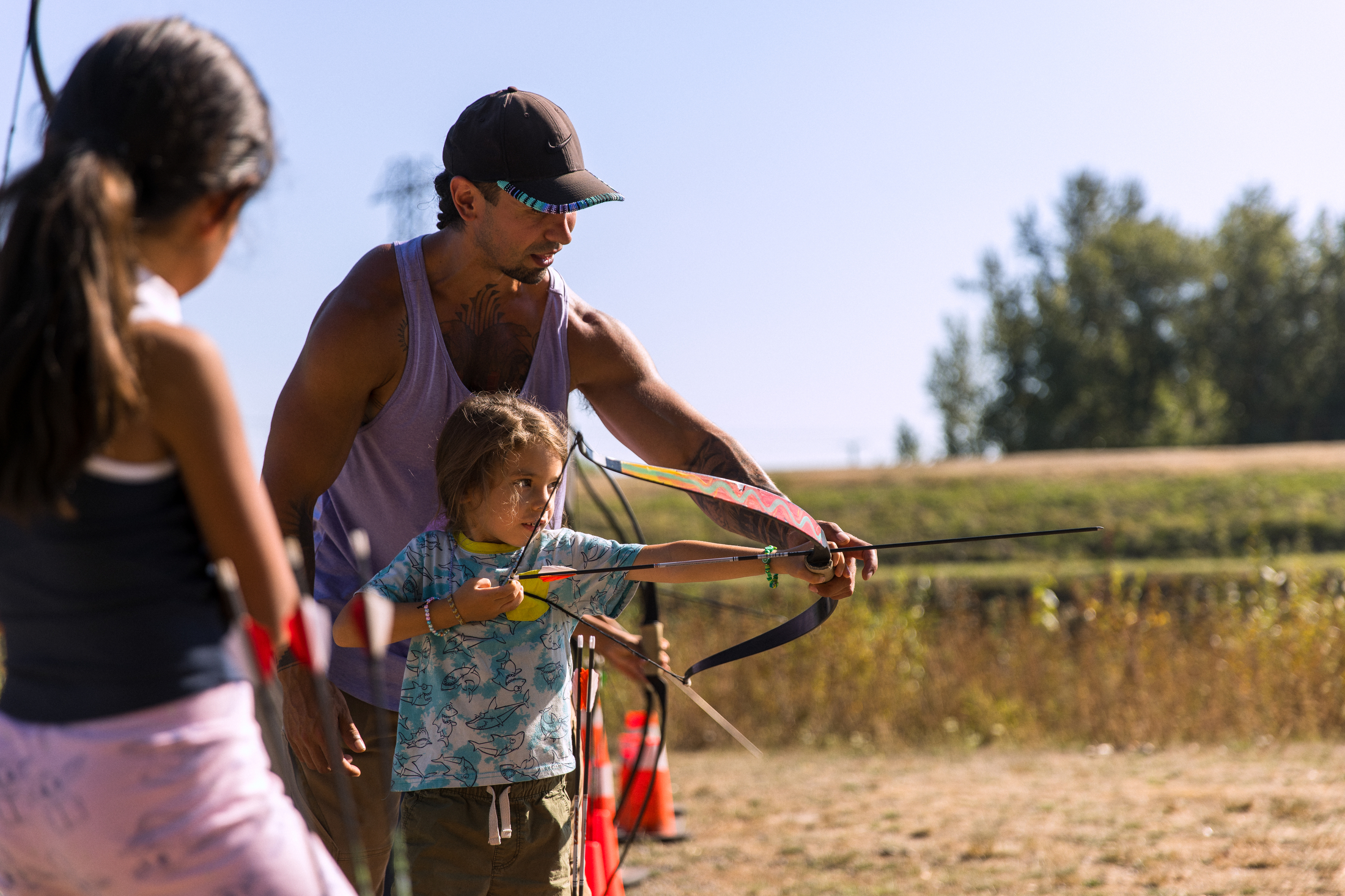
Hood emphasizes that distilling such profound meaning into an educational course requires patience, allowing each student ample time to complete their work. The three-day course often extends beyond its formal conclusion, with students returning to finish their bows at their own pace. "Patience is a big value in bow-making," Hood asserts. "Nothing sacred should be rushed." Upon completion of their bows, Hood guides participants through archery practice, ensuring they can use their creations safely and attentively. His certification as a USA Archery instructor further enables him to teach archery in school settings.
In September, Hood and his co-founder, Joshua Tuski, launched Learning Through Land, a nonprofit organization dedicated to providing outdoor skills classes for youth in the Portland area. While archery and bow-making remain central, the curriculum will expand to include arrow-making, hide-tanning, knife-carving, and friction fire starting. Hood and Tuski aspire to enrich young lives by imparting these practical skills and the invaluable wisdom that accompanies them. "These are fun and important skills, but also we want to have conversations with students about how they can impact our daily lives," Hood states. "There are always teachings within teachings."

Hood’s ultimate aspiration is to hunt on his tribe’s traditional homelands using a bow he crafted himself, a moment that would signify a profound spiritual and ancestral reunion. Until then, he remains dedicated to refining his own mastery and taking immense pride in empowering others to do the same. "This is in everyone’s DNA," Hood declares. "We just have to wake it up."







