Roger Danuarta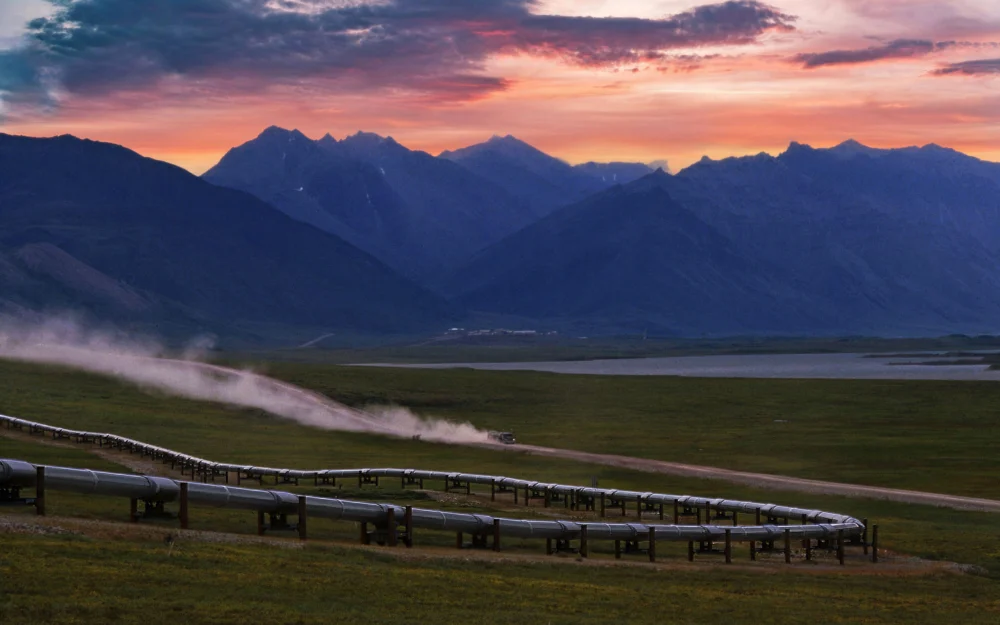
For centuries, the federal government has regarded Alaska as an exceptionally resource-rich territory, a perspective that gained considerable momentum and strategic focus under the Trump administration. Following a meeting with then-President Trump in 2018, Governor Mike Dunleavy succinctly characterized Alaska as "America’s natural resource warehouse," underscoring a prevailing state philosophy that champions resource extraction as an economic imperative. This current period of intense scrutiny and accelerated development mirrors, in its prominence, only the late 1970s, when the nation wrestled with the landmark Alaska National Interest Lands Conservation Act (ANILCA), as noted by Philip Wight, an Arctic energy historian at the University of Alaska Fairbanks. However, the contemporary landscape presents a distinct challenge: a largely unified federal government aggressively advancing numerous contentious development proposals simultaneously. This push faces less resistance from moderate Republican voices, which have dwindled, and a conservation movement arguably weakened by systemic funding issues and sustained political pressure.

While Alaska’s identity has long been intertwined with its abundant natural resources, Wight points out a persistent paradox: this wealth has too frequently flowed to outside corporations, failing to translate into sustainable, long-term welfare for many Alaskans. Residents continue to endure some of the nation’s highest energy costs, even as the state’s very existence confronts the palpable and accelerating threats of climate change, jeopardizing both existing infrastructure and future development plans. This complex reality underscores a critical dilemma: "While Alaska has much to gain from developing our resources, we also have much to lose," a sentiment that encapsulates the precarious balance facing the Last Frontier. The unfolding drama plays out across several key hotspots, each representing a unique facet of this overarching conflict.
One of the most significant environmental battles centers on the Tongass National Forest, the nation’s largest national forest and the planet’s most extensive temperate rainforest, sprawling across nearly 17 million acres in Southeast Alaska. This ecological marvel serves as a vital carbon sink, a global biodiversity hotspot, and a critical resource for local communities dependent on subsistence hunting, fishing, and a burgeoning tourism economy. In the summer of the previous year, the U.S. Department of Agriculture announced plans to rescind the Roadless Rule, a protective measure that shields millions of acres of national forest from road construction and industrial logging. This rule has been a political football, initially rolled back during the Trump administration in 2020, only to be reinstated by the Biden administration in 2023, and now once again targeted for removal. The potential rescission could open up over 9 million acres of the Tongass to significant development, leading to habitat fragmentation, increased erosion, and disruption to delicate ecosystems. Nathan Newcomer of the Southeast Alaska Conservation Council emphasizes the forest’s multifaceted importance to local livelihoods and cultural heritage. A draft environmental impact statement from the USDA is anticipated in early 2026, with a final rule expected by year-end, coinciding with reports that former President Trump is actively working to reopen international markets for timber harvested from the Tongass, intensifying the economic pressures on this irreplaceable natural treasure.

Further north, the Arctic National Wildlife Refuge (ANWR) remains a focal point in the enduring national debate over energy security versus pristine wilderness preservation. Spanning 19 million acres between Alaska’s established Prudhoe Bay oil fields and the Canadian border, this remote expanse is America’s largest and northernmost wildlife refuge. The U.S. Geological Survey estimates its biologically rich 1.57 million-acre coastal plain, a critical habitat for caribou calving and polar bear dens, could hold between 4.3 billion and 11.8 billion barrels of recoverable oil, alongside substantial natural gas reserves. Despite these vast potential resources, geopolitical, economic, environmental, and legal complexities have historically impeded extraction efforts. During his initial term, President Trump moved to open the refuge’s coastal plain to oil and gas leasing. Subsequent lease sales in January 2021 saw the state-owned Alaska Industrial Development and Export Authority (AIDEA) acquire leases, while a second sale in January 2025 garnered no bids, reflecting the substantial hurdles and perceived risks. The Biden administration attempted to cancel AIDEA’s leases, but a federal court reinstated them in March 2025. In January of the previous year, an executive order from then-President Trump, titled "Unleashing Alaska’s Extraordinary Resource Potential," directed the Interior Secretary to pursue all necessary steps for additional coastal plain lease sales. This push culminated in an October 2025 Record of Decision that opened the entire coastal plain, followed by a Congressional vote in December that overturned a Biden-era land-management plan which had sought to restrict drilling to a smaller, less sensitive section of the refuge, intensifying the battle over this iconic landscape.
Adjacent to ANWR, the National Petroleum Reserve in Alaska (NPR-A), a vast federal landholding to the west of Prudhoe Bay, is also experiencing a significant push for oil and gas development. This immense area, covering more than 23 million acres, holds critical habitat for migratory birds and serves as vital calving grounds for the Teshekpuk caribou herd, a crucial subsistence resource for many Alaska Native communities. In October of the previous year, the Bureau of Land Management initiated a call for nominations for future lease sales, a move coinciding with comprehensive rollbacks of environmental protections across the reserve. These regulatory changes are poised to open over 18.5 million acres to leasing, potentially impacting ecologically sensitive areas. Furthermore, in December of the previous year, then-President Trump signed Senate Joint Resolution 80 into law, effectively stripping restrictions enacted by the Biden administration in 2022 that aimed to safeguard these delicate regions within the NPR-A from industrial development. Against this backdrop, construction for ConocoPhillips’ massive Willow project, a landmark development approved under the Biden administration and the first major undertaking within the NPR-A, is well underway, with oil production anticipated before 2030. The project, projected to produce over 600 million barrels of oil over its lifetime, has sparked intense global controversy due to its substantial carbon footprint and potential ecological disruption.

Meanwhile, a decades-long struggle over a crucial transportation link has re-emerged with the proposed King Cove Road. The isolated community of King Cove, home to 750 residents, has advocated for 50 years for a direct, 18-mile gravel road connection to the all-weather airport in Cold Bay, citing dire public safety concerns, particularly for emergency medical evacuations. In late October of the previous year, the Interior Department signed a land exchange agreement designed to facilitate the road’s construction, primarily through the Izembek National Wildlife Refuge. This refuge is internationally recognized for its critical importance as a staging and resting area for millions of migratory birds, including significant populations of Brant, Pacific Black Ducks, and the endangered Steller’s Eider, making it a cornerstone of conservation efforts. The land swap would transfer less than 500 acres of refuge land to the Alaska Native Corporation King Cove Corp., which in turn would add 1,739 acres of its own land to the refuge. While proponents emphasize the road’s vital role in addressing long-standing public safety issues and enhancing subsistence access for residents, several tribal governments, including the Native Village of Paimiut, Native Village of Hooper Bay, and Chevak Native Village, alongside major environmental organizations, filed a lawsuit in November of the previous year. They seek to block the land trade, arguing that the road would cause irreparable damage to invaluable bird habitats and disrupt the traditional subsistence practices of Alaska Native people in the region. Chief Edgar Tall Sr. of the Native Village of Hooper Bay warned, "If the Izembek road happens, it will cause a lot of chaos for Alaska Native people in my region who still live off the land and sea. The birds we hunt may not be able to survive," highlighting the profound cultural and ecological stakes.
Finally, the contentious Ambler Road project, an industrial route designed to unlock the mineral wealth of the remote Ambler Mining District, is once again on the fast track. For years, the construction of this 211-mile road had been mired in litigation and environmental reviews. In 2024, the Biden administration had rejected the road plan, citing its anticipated severe impacts on wildlife habitat and critical waterways. Analyses revealed the project would necessitate approximately 3,000 stream crossings, directly affecting vital fish populations like sheefish and the declining Western Arctic caribou herd, both essential subsistence food sources for communities in Alaska’s Brooks Range area. However, in a significant reversal on October 6 of the previous year, then-President Trump approved an appeal from AIDEA, paving the way for federal agencies to reissue permits for the road. Simultaneously, the Trump administration announced a partnership with Trilogy Metals, committing $35.6 million to support exploration in the area and making the federal government a 10% shareholder in the company. Later that month, the AIDEA board allocated $50 million for the project’s construction, signaling an aggressive push forward. The road aims to open access to an area rich in strategic minerals such as copper, silver, gold, lead, and cobalt, which are increasingly crucial for the global transition to renewable energy technologies and for bolstering domestic supply chains, reducing reliance on foreign sources for these vital resources. This project encapsulates the complex interplay between economic development, national strategic interests, and environmental preservation in the Arctic.