Joko Susilo
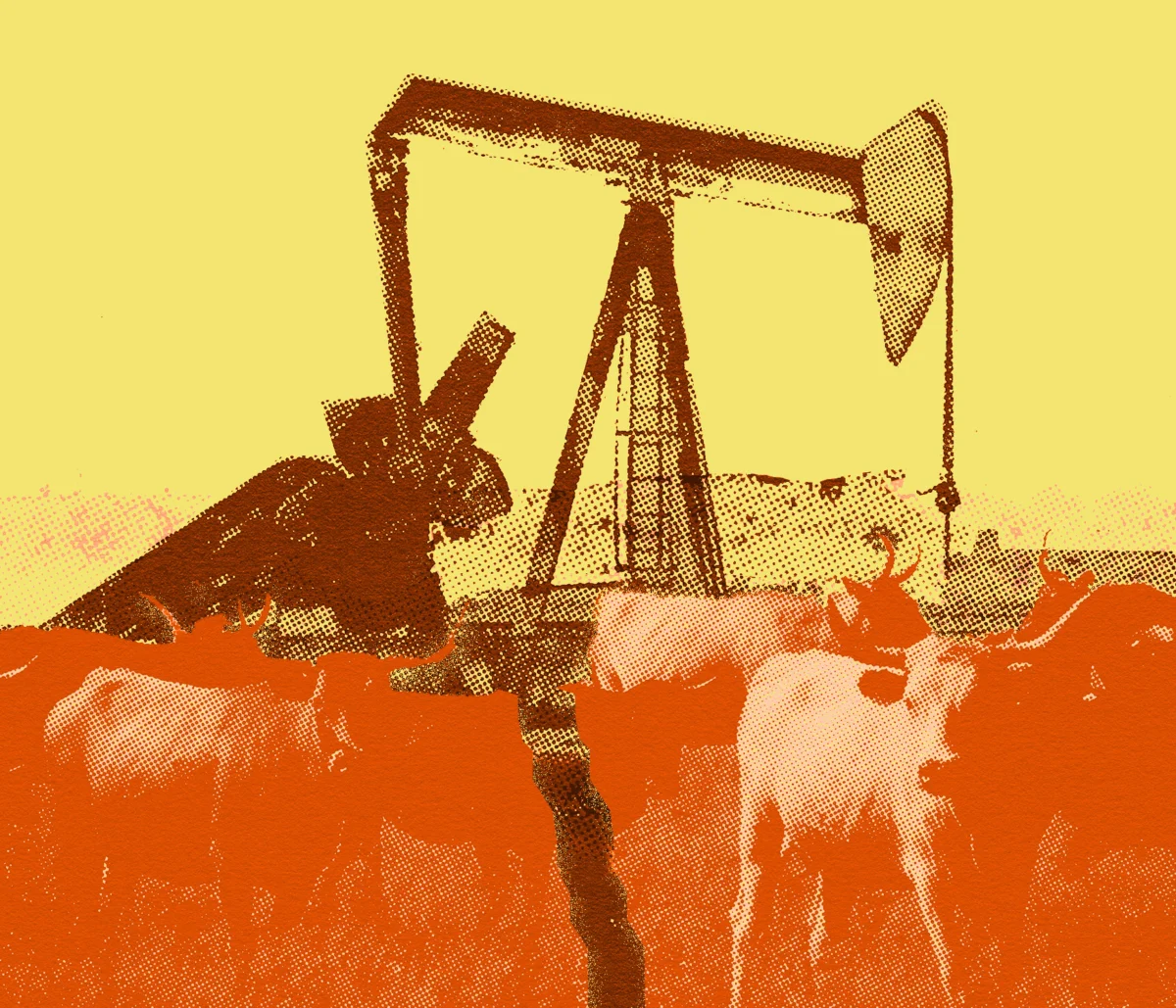
Livestock grazing across an expanse of publicly owned land, a territory exceeding twice the size of California, positions ranching as the predominant land use throughout the American West, supported by billions of dollars in taxpayer subsidies despite frequently documented environmental harm. This extensive system, which has deep roots in the nation’s history, faces renewed scrutiny as government policies continue to favor agricultural interests, raising critical questions about ecological stewardship, economic equity, and the true cost to the public.
Amidst the former Trump administration’s pronounced pro-ranching agenda, an in-depth investigation by High Country News and ProPublica meticulously charted the evolution of public lands ranching. This comprehensive inquiry involved submitting over 100 public record requests, including litigation against the Bureau of Land Management (BLM) to secure crucial documents and data. Researchers engaged with a broad spectrum of stakeholders, from seasoned ranchers to dedicated conservationists, and toured various ranching operations across Arizona, Colorado, Montana, and Nevada to gather firsthand insights into the complex interplay of policy, practice, and environmental reality.
The resulting three-part exposé delved into the profound financial subsidies underpinning the ranching industry, the escalating environmental degradation attributed to livestock, and the formidable political influence that steadfastly entrenches the existing system. These findings reveal a multifaceted challenge, highlighting how a system ostensibly designed for resource management has largely transformed into a mechanism for economic support, often at significant public and environmental expense.

The public lands grazing system, initially modernized in the 1930s as a direct response to the ecological catastrophe of the Dust Bowl—a period of severe dust storms triggered by widespread land mismanagement, including rampant overgrazing—has fundamentally shifted its focus. What began as an effort to prevent a repeat of such environmental devastation now predominantly functions as a subsidy program, ensuring the continued grazing of these federal lands. The Bureau of Land Management and the U.S. Forest Service, the two largest federal agencies responsible for overseeing vast tracts of public land, manage the bulk of this system. In 2024, these agencies collectively charged ranchers a mere $21 million in grazing fees. Analysis indicates this represents an average discount of approximately 93% when compared to prevailing market rates for forage on private land, effectively providing a substantial public handout to permit holders. Beyond these nominal fees, the federal government channeled at least $2.5 billion into various subsidy programs accessible to public lands ranchers in 2024 alone. These programs encompass critical disaster assistance following droughts and floods, which are increasingly frequent and intense due to climate change, as well as compensation for livestock lost to predators, further insulating ranchers from common agricultural risks.
This expansive and heavily subsidized system sees a significant consolidation of power and profit in the hands of a select few. A small cohort of affluent individuals and large corporations controls the vast majority of livestock on public lands. Statistical analysis revealed that roughly two-thirds of all grazing on BLM acreage is managed by just 10% of permit-holding ranchers. Similarly, on Forest Service land, the top 10% of permittees command more than 50% of the available grazing. This elite group includes high-profile billionaires such as Stan Kroenke and Rupert Murdoch, alongside large-scale mining companies and public utility corporations, underscoring how significant economic interests benefit from this public resource. The financial advantages of holding these grazing permits extend far beyond the direct revenue from cattle sales. Even properties classified as "hobby ranches" can qualify for substantial property tax breaks in numerous jurisdictions. Ranching business expenses are fully deductible from federal taxes, and the private property holdings associated with grazing permits represent a stable and attractive long-term investment, further compounding the financial benefits for these well-resourced entities. Representatives for Stan Kroenke did not respond to inquiries, while Rupert Murdoch’s representative declined to comment on these findings.
The Trump administration actively accelerated and expanded this existing system, notably by proposing further increases in subsidies. In October of that year, the administration unveiled a "plan to fortify the American Beef Industry," which specifically directed the BLM and Forest Service to amend grazing regulations, marking the first such revision since the 1990s. The plan advocated for enhanced taxpayer support for ranching through increased subsidies for relief from droughts and wildfires—events growing in frequency and severity across the West—as well as compensation for livestock fatalities caused by predators and expanded government-backed insurance programs. When questioned, the White House referred inquiries to the U.S. Department of Agriculture, which issued a statement asserting, "Livestock grazing is not only a federally and statutorily recognized appropriate land use, but a proven land management tool, one that reduces invasive species and wildfire risk, enhances ecosystem health, and supports rural stewardship." While approximately 18,000 permittees utilize BLM or Forest Service land for grazing, with many operating small-scale ranches, these smaller operations often argue that government support and affordable grazing fees are essential to their survival and to prevent insolvency in an often-precarious industry.
Compounding the environmental and financial concerns is the systemic loosening of regulatory oversight. Ranchers typically must renew their permits to graze on public lands every 10 years, a process that historically includes a mandatory environmental review to assess potential impacts. However, a significant legislative change in 2014 allowed for the automatic renewal of these permits if federal agencies prove unable to complete the required environmental assessments. The consequences of this change are stark: in 2013, the BLM approved grazing on 47% of its land open to livestock without completing an environmental review, with the status of an additional 10% remaining unclear. A mere decade later, the agency authorized grazing on approximately 75% of its acreage without any formal environmental assessment. This dramatic increase in unreviewed permits directly correlates with a shrinking federal workforce dedicated to land management. Data from the Office of Personnel Management shows a 39% reduction in BLM rangeland management staff between 2020 and 2024. Furthermore, roughly one in ten rangeland staff members departed the agency between the 2016 presidential election and June of the following year, according to BLM records, severely undermining the agencies’ capacity for diligent oversight and environmental protection.

This lax oversight has enabled widespread environmental harm across the American West. The BLM manages 155 million acres of public lands designated for grazing. Assessments conducted by the agency itself on the health of these environments have revealed that grazing practices have degraded at least 38 million acres—an area equivalent to half the size of New Mexico. Alarmingly, the agency maintains no records of land health assessments for an additional 35 million acres, leaving their ecological status unknown. Investigators observed clear instances of overgrazing in multiple states, including streambeds severely trampled by cattle, grasslands stripped bare of vegetation, and vital creeks contaminated by cow carcasses. These impacts contribute to soil erosion, reduced water quality, habitat destruction for native wildlife, and increased susceptibility to invasive species and wildfires.
Despite these documented harms, some ranchers argue for the ecological benefits of public lands grazing. They contend that maintaining ranching operations helps prevent the sale and subsequent development of nearby private lands, preserving open spaces crucial for wildlife. Bill Fales, whose family has run cattle in western Colorado for over a century, exemplifies this perspective. He asserts that "The wildlife here is dependent on these ranches staying as open ranch land," noting that while surrounding areas succumbed to development, the lands his cattle graze are increasingly shared by diverse wildlife, including elk, bears, and mountain lions. This argument highlights the complex trade-offs involved in land use, balancing conservation of open space with the potential impacts of intensive grazing.
Regulators openly acknowledge the formidable challenges in enacting meaningful changes to the public lands grazing system, primarily attributing this difficulty to the industry’s entrenched political influence. Interviews with ten current and former BLM employees, ranging from upper management to front-line rangeland managers, consistently revealed a pervasive sense of political pressure to avoid stringent enforcement against ranchers. One BLM employee stated, "If we do anything anti-grazing, there’s at least a decent chance of politicians being involved. We want to avoid that, so we don’t do anything that would bring that about." A BLM spokesperson responded to these concerns, affirming that "any policy decisions are made in accordance with federal law and are designed to balance economic opportunity with conservation responsibilities across the nation’s public lands," yet the anecdotal evidence points to a significant chilling effect on enforcement.
The industry’s sway extends to high levels of government. The Trump administration appointed a lawyer known for representing ranchers in legal disputes against the government, and who held a stake in a Wyoming cattle operation, to a high-level position within the U.S. Department of the Interior. Similarly, a tech entrepreneur who owned a ranch in Idaho received an appointment overseeing the Forest Service. These appointments underscore a direct pipeline of industry interests into federal land management agencies. Furthermore, politicians from both major parties frequently intervene when they perceive ranchers facing overly burdensome oversight. Since 2020, members of Congress from both sides of the aisle have sent more than 20 letters to the BLM and Forest Service concerning grazing issues, according to agency communication logs obtained through public records requests. This consistent, bipartisan engagement demonstrates the deep political capital the ranching industry wields, making significant reforms to the subsidized and environmentally impactful public lands grazing system a formidable political challenge. The ongoing debate encapsulates the broader global tension between economic development, food production, and the imperative of environmental sustainability, particularly in regions grappling with finite natural resources and the escalating pressures of climate change.