Roger Danuarta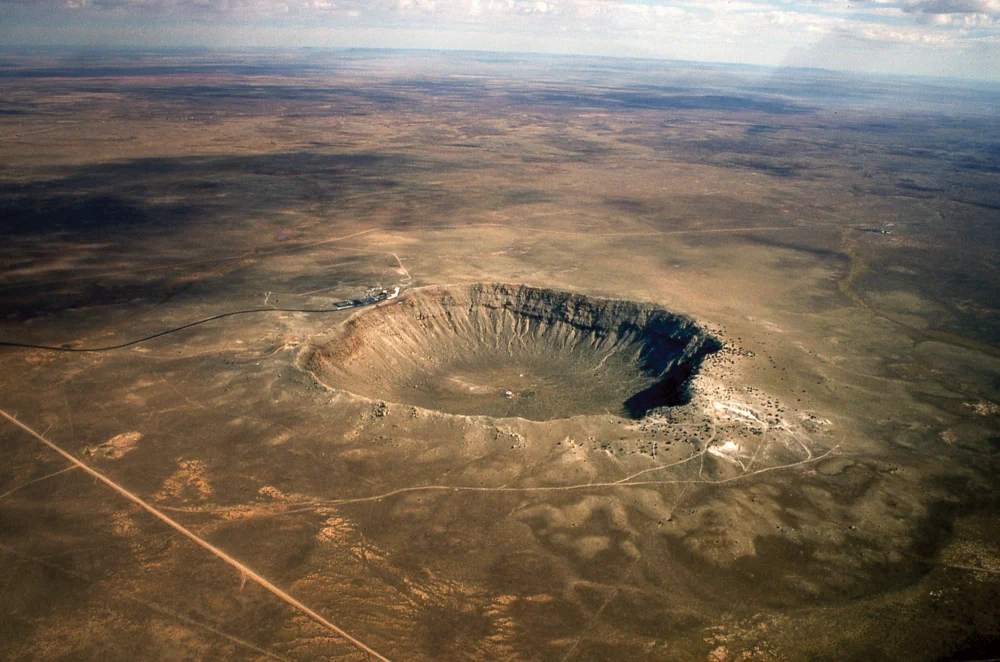
The Colorado River, a lifeline carving through the arid American Southwest, today flows with jade-colored majesty through Marble Canyon, a dramatic prelude to the vast expanse of the Grand Canyon. Rafters launching from Lees Ferry, Arizona, enter a world seemingly untouched by the cataclysmic events of deep time, surrounded by towering terracotta cliffs and the whispers of the wind. Yet, this serene corridor once lay profoundly altered, submerged beneath the expansive waters of an enormous paleolake, a landscape dramatically different from anything visible today. New scientific research now reveals a startling connection between this ancient inundation and one of Earth’s most dramatic impact scars.
A groundbreaking study, recently published in the esteemed journal Geology, presents compelling evidence that approximately 56,000 years ago, the tranquil expanse of what is now Marble Canyon experienced a seismic upheaval of immense proportions. Retired University of New Mexico geologist Karl Karlstrom and his team propose that a cosmic event – the impact of an asteroid creating the iconic Meteor Crater, located roughly a hundred miles southeast in the Arizona desert – generated shockwaves powerful enough to destabilize the canyon walls. This colossal tremor dislodged massive chunks of stone, triggering a gargantuan landslide that plunged into the Colorado River. The resulting debris formed a colossal natural dam, an ephemeral barrier that backed up the mighty river for over 50 miles, extending almost to present-day Lees Ferry. The waters swelled, creating a vast paleolake comparable in scale to the modern Lake Mead, its surface reaching nearly 300 feet above the contemporary river channel, forever changing the immediate geological and ecological fabric of the region.

The notion of such a monumental prehistoric lake within the Grand Canyon initially met with skepticism, even from seasoned geologists. Kyle House, a geologist with the Arizona Geological Survey, recalls his initial reaction to the study: "No way. How could it have taken this long to figure this out?" This sentiment underscores the inherent challenges in deciphering geological history, where subtle clues can lie hidden for millennia, awaiting the convergence of new technologies and keen scientific observation. The very idea of the Grand Canyon, a symbol of erosion and continuous flow, being temporarily dammed on such a scale runs counter to common perceptions of its enduring power.
However, the seed of this hypothesis was planted decades earlier. In the 1960s, Karlstrom’s father, also a distinguished geologist, alongside several other scientists, explored Stanton’s Cave, located 32 miles downstream from Lees Ferry. Inside, they uncovered loose sediment and fragments of driftwood, remarkably preserved nearly 150 feet above the modern river level. This discovery prompted U.S. Geological Survey geologist Richard Hereford to advance a daring hypothesis: something must have dammed the river, forming a prehistoric lake. Yet, with limited evidence – primarily the findings from Stanton’s Cave and a highly speculative, faint outline of a possible ancient dam site 20 miles downstream at Nankoweap Canyon – the younger Karlstrom admits he "never believed (Hereford’s) story, frankly." The pieces of the puzzle were too disparate, the timeline too uncertain to forge a conclusive link.
The critical breakthrough arrived in 2019, through the advancements of modern dating techniques. Researchers in Australia and New Zealand reanalyzed the driftwood samples previously found in Stanton’s Cave, pushing their age from an estimated 43,700 years old to approximately 56,000 years. This updated chronological data proved to be the pivotal piece of the puzzle. Coincidentally, one of the collaborating scientists, having recently visited Meteor Crater during a road trip and learned about its formation timeline, recognized the striking congruence: the asteroid impact was also dated to around 56,000 years ago. This serendipitous connection ignited a new line of inquiry, prompting the team to invite Karlstrom, whose decades of intimate knowledge of the canyon’s geology from both academic study and guiding river trips in the 1970s made him an invaluable collaborator, to help investigate the potential link.

As Karlstrom and his colleagues meticulously sifted through the canyon’s numerous caves and alcoves, many of which he knew intimately, the accumulating evidence began to sway his long-held skepticism. The discovery of sediment-choked nooks and crannies at elevations far above the current riverbed could only be logically explained by the presence of a substantial, ancient lake. Establishing a definitive causal link between this paleolake and the distant meteor impact, however, required a more robust, multi-pronged dating approach.
Unraveling the deep history of Earth demands a sophisticated toolkit of chronological methods, each finely tuned to different temporal scales. Radiocarbon dating, a cornerstone technique, reliably measures the age of organic materials up to approximately 50,000 years, but its accuracy diminishes rapidly beyond that threshold. Karlstrom noted that the re-dating of the driftwood was "pushing the limits" of this method. To bolster their case, the team employed luminescence dating on the cave sediments, a technique that measures the time elapsed since mineral grains were last exposed to sunlight. This innovative approach provided a complementary chronology, and remarkably, both the luminescence dates and the re-calibrated radiocarbon dates for the driftwood aligned, within acceptable error margins, with the established age of Meteor Crater, which itself had been dated using multiple independent methods. This convergence of evidence across distinct dating techniques provided a powerful argument for a synchronous event.
Ryan Porter, a geologist at Northern Arizona University not involved in the study, acknowledges the strength of the research: "They do make a pretty strong case." However, he cautiously notes that while the aligned ages are compelling, they do not definitively rule out other potential triggers for the landslide, such as a major tectonic earthquake or even a large, naturally occurring cliff collapse on an ordinary day. Despite this, when asked whether an asteroid impact could generate sufficient seismic energy to cause such a landslide in the Grand Canyon, Porter’s response was unequivocal: "Oh, 100%. There’s no question about that." This expert consensus underscores the immense power of cosmic impacts to reshape planetary surfaces, even at significant distances.

The authors of the study readily concede that other explanations for the dam’s formation are plausible. However, through rigorous geological inquiry, the team focused on Karlstrom’s principle that "In geology, you don’t absolutely prove. You eliminate other possibilities." Through meticulous analysis, outside experts concur that the driftwood and sediments found at elevated positions were not merely carried in by an exceptionally large flood or left behind as the canyon was gradually excavated. Their deposition clearly indicates a period of sustained high-water levels, consistent only with a dammed river and the formation of a significant lake.
Drawing upon this robust body of evidence, the scientists have pieced together a vivid reconstruction of that extraordinary day 56,000 years ago. When the approximately 50-meter-wide iron asteroid slammed into the Kaibab Limestone, the same resilient rock formation that caps the Grand Canyon today, it unleashed an unimaginable burst of energy. The impact generated seismic waves equivalent to a powerful magnitude 5.4 earthquake at the epicenter. These shockwaves then propagated through the Earth’s crust, diminishing in intensity but still retaining significant destructive power as they reached Marble Canyon. There, the shaking would have registered at roughly magnitude 3.5 – a level certainly potent enough to dislodge the already fractured Kaibab blocks and other geological debris, sending a massive landslide roaring down into the Colorado River at Nankoweap Canyon. Almost instantaneously, the river’s flow would have been choked, its powerful current slackening as the newly formed basin began to fill, transforming the narrow canyon into a vast, temporary inland sea.
This monumental natural dam, a testament to the Earth’s dynamic forces, raises intriguing questions about the transient nature of such geological features. Unlike modern engineered structures such as the Glen Canyon and Hoover dams, which provide a vital lifeline to the parched Southwest, natural dams are inherently temporary. They are relentlessly assailed by the very forces that created them: the relentless flow of water, the accumulation of sediment that gradually chokes their reservoirs, and the constant erosion that eventually breaches their barriers. For now, precisely how long this ancient dam endured, and the exact mechanism of its eventual failure – whether a sudden, catastrophic outburst flood or a more gradual erosion – remain compelling mysteries. This ongoing quest for answers serves as a powerful reminder that the long, intricate geological story of the Grand Canyon, a landscape that seems so ancient and immutable, continues to hold many profound secrets, revealing the constant interplay of cosmic and terrestrial forces that have shaped our world.