Rocky Gerung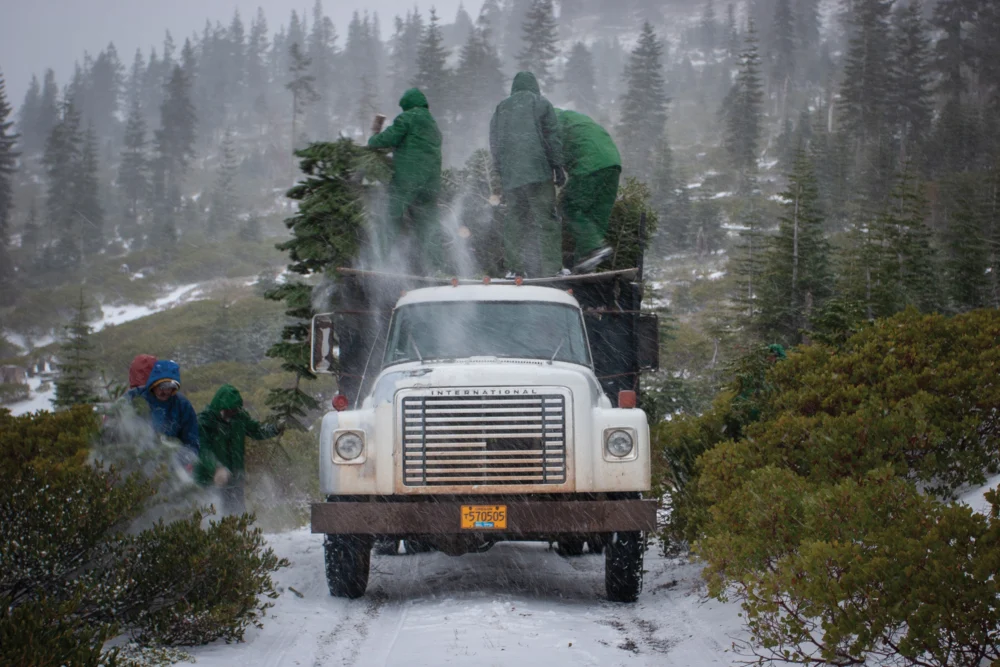
For John Wayne Strauch, affectionately known as Bambi, this annual endeavor represents more than just a business; it’s a deeply ingrained tradition he has participated in for half a century. Strauch, who owns timber rights on over 300 acres of land on Worley Mountain, situated between Eagle Lake and Susanville, California, understands the demanding nature of this profession. "You only get a few weeks," he stated, emphasizing the narrow window of opportunity before winter renders the high-altitude roads impassable. He elaborated on the critical environmental factors, noting, "If the ground doesn’t freeze, the needles won’t set. If it snows early, you’re done." This inherent unpredictability transforms the harvest into a constant race against time, a battle against an unforgiving natural clock that dictates the rhythm of their labor. Despite the formidable challenges and the often-slim profit margins, Strauch expressed a sentiment shared by many in this specialized field: "Guys are barely breaking even… but we just keep doing it." His own journey began in the early 1970s, alongside his godfather, Joe McNally, both seeking adventure and a connection to the wilderness. They learned the trade through trial and error, facing adversities such as trucks stuck in snowdrifts and trees lost to sudden blizzards, all fueled by a shared desire to bring a piece of the wild into homes during the holiday season.

The operational core of this wild harvest typically comprises two dedicated crews, totaling around 18 individuals. Their roles are diverse and essential, including a cook to sustain the team, two drivers managing logistics, two skilled cutters proficient in felling the trees, and a bail operator responsible for preparing the trees for transport. The remaining crew members are tasked with the arduous work of hauling the freshly cut trees from deep within the dense forest. This demanding work requires a high degree of coordination and efficiency, as the teams rotate roles and move with practiced speed. They navigate steep ridgelines, carefully felling and dragging the silvertips, which are then meticulously graded based on their shape, symmetry, and color. The grading system categorizes trees into distinct tiers: 2s, 1s, primos, and double primos, with prices escalating accordingly. For instance, an 8-to-9-foot silvertip, if graded as a "double primo," could command a retail price of approximately $250 on a tree lot, while a "2" of the same size might fetch only half that amount. This intricate grading process is a vital link connecting the remote, high-country forests to the living rooms of families situated hundreds of miles away.

A critical aspect of the wild harvest’s sustainability lies in the practice of stump culturing, also known as coppicing. This meticulous method involves making a specific cut above the tree’s base, leaving several whorls of branches intact. This technique allows the tree’s stump to regenerate, with one of the remaining branches eventually receiving internal biological cues to grow upward, seeking sunlight and transforming into a new tree. Strauch explained the ecological wisdom behind this approach, stating, "We’re not clear-cutting. The better we take care of the trees, the better they take care of us." He further elaborated on the long-term benefits, noting that some stumps can yield harvests for five to ten years, referring to these resilient trees as "mothers." This natural regeneration process eliminates the need for replanting, tilling, or chemical treatments, embodying a simple yet effective sustainable cycle that has ensured the productivity of these forest slopes for decades.

However, the traditional workforce for this harvest is increasingly reliant on migrant laborers, many of whom travel from agricultural backgrounds, having recently finished work in orchards or vineyards. This year, Dan Barker, who assists in overseeing the harvest, highlighted significant concerns regarding immigration policies and the escalating risks associated with Immigration and Customs Enforcement (ICE) raids. These factors introduce a new layer of uncertainty and potential disruption to the labor force, a critical component of the operation. The challenges extend beyond labor; climate change is demonstrably impacting both the forest ecosystem and the people who depend on it. Extreme early-season heatwaves, such as those experienced in May and June, have scorched thousands of young trees, hindering their growth before they could mature. These environmental shifts pose a growing threat to the long-term viability of the wild harvest.

Strauch’s operation on Worley Mountain, which yields an estimated 7,000 trees annually, represents one of the nation’s few remaining commercial wild Christmas tree harvests. While modest in scale compared to the vast operations of farmed Christmas tree plantations, its significance lies in the inherent rarity, sustainability, and the profound connection between the land and the labor involved. "These are beautiful trees with a beautiful story," Barker remarked, expressing a desire that goes beyond mere acceptance. "We don’t just want people to accept them – we want them to love them like we do." This sentiment underscores the deep appreciation for the natural origins and the human effort that bring these unique trees to consumers, embodying a tradition that is as much about stewardship as it is about commerce. The silvertips, with their characteristic needle retention that keeps them fresh well into March, are a testament to the unique ecological niche they occupy and the enduring human connection to these natural symbols of the holiday season. The careful, almost ritualistic, harvesting process, coupled with the sustainable practices of stump culturing, ensures that this tradition, while facing modern challenges, continues to offer a glimpse into a more harmonious relationship between human endeavor and the natural world.