Johny Prima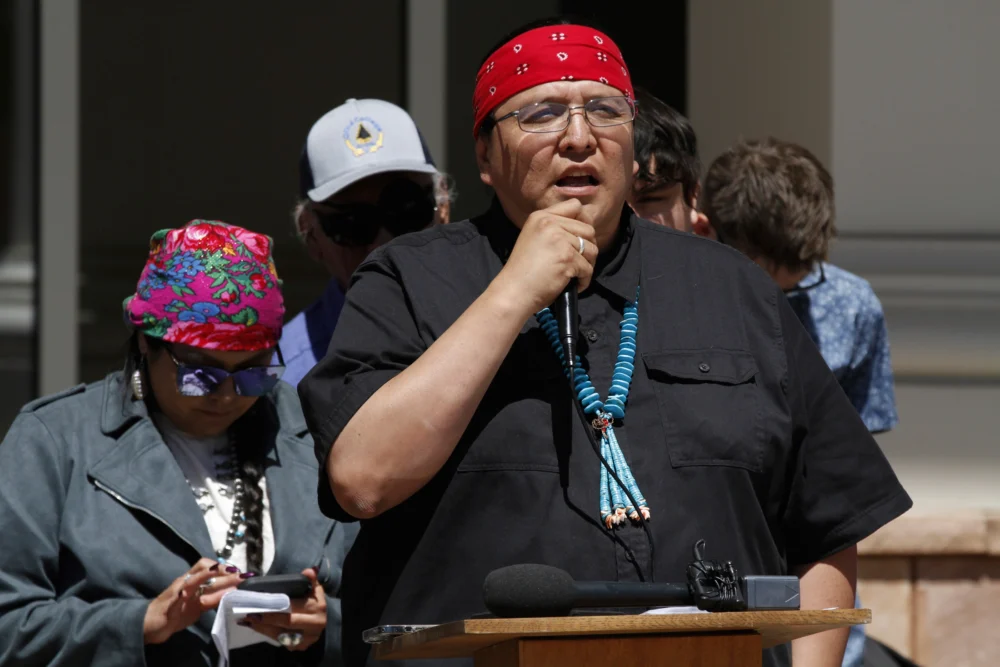
The idyllic memories of Mario Atencio’s childhood, spent visiting his grandmother in Counselor, New Mexico, paint a vivid picture of a traditional Diné (Navajo) lifestyle deeply intertwined with the land. He recalls a peaceful, verdant property, teeming with dozens of animals and traditional medicinal herbs—a place of cultural richness within the vast expanse of the Greater Chaco Landscape. However, this serene existence began to unravel dramatically in 2015, when the relentless expansion of oil and gas fracking operations encroached upon the region, transforming his grandmother’s cherished home into a zone of industrial activity and environmental degradation. The once-tranquil air now carried the cacophony of drilling and the acrid stench of volatile organic compounds, while a catastrophic series of spills in 2019 released thousands of gallons of oil, poisoning the land and water beneath it. This onslaught silenced the natural world; once-abundant plants vanished, and rare birds and wildlife, integral to the ecosystem and Diné cultural heritage, disappeared, leaving behind a stark landscape scarred by human industry.
Driven by this profound personal experience and a deep commitment to his community, Atencio became the lead plaintiff two years ago in Atencio v. State of New Mexico, a burgeoning climate litigation case poised to make history. This audacious lawsuit directly confronts the New Mexico Legislature and various state agencies, alleging a systemic failure to uphold their constitutional duty to prevent harmful pollution, thereby actively endangering Indigenous communities. "The rights that we have as Indigenous people to free, informed, prior consent are being violated," Atencio asserts, highlighting a critical point of contention: "We’ve never had people from the government come and say, ‘This is what’s going to happen to your land and water.’" This lack of meaningful consultation, a fundamental tenet of Indigenous rights globally, underscores the perceived disregard for the sovereign status and traditional ecological knowledge of the Diné people.
After navigating the complexities of the lower courts, the case has now reached the highest judicial body in the state, with the New Mexico Supreme Court agreeing this month to hear the arguments. A favorable ruling for Atencio could establish a powerful legal precedent, potentially joining the ranks of other landmark environmental decisions across the nation. Notable among these is Held v. Montana, where young plaintiffs successfully argued that the state violated their constitutional right to a healthy environment by failing to adequately regulate greenhouse gas emissions. Similarly, youth and Indigenous climate advocates in Hawaiʻi recently secured a victory against the state’s Department of Transportation, compelling action towards decarbonizing its transportation sector by 2045, despite continued support for highway expansion projects. These cases signify a growing trend in "rights-based" climate litigation, where plaintiffs assert inherent constitutional entitlements to a safe and sustainable environment.

The landscape of climate litigation is evolving rapidly, with similar cases emerging in every state, according to Margaret Barry, who tracks these developments at Columbia University’s Sabin Center for Climate Change Law. While a handful of successes have been recorded over the past decade, the strength of constitutional protections for environmental rights varies significantly. State constitutions often include provisions that proactively mandate the protection of residents’ rights, in contrast to the U.S. Constitution, which primarily focuses on limiting governmental power rather than granting explicit environmental rights. This distinction proved pivotal in cases like Sagoonick v. State of Alaska, where a group of young people sought to halt a liquefied natural gas project, arguing that the state constitution’s protection of natural resources for the general public implicitly required a livable climate. The Alaska Supreme Court, however, rejected this interpretation in March, illustrating the divergent legal pathways and judicial philosophies across jurisdictions.
New Mexico stands on firmer constitutional ground in this regard. In 1971, state voters adopted a pivotal constitutional amendment explicitly directing the government to "provide for control of pollution and control of despoilment of the air, water and other natural resources." Gail Evans, the lead attorney for the Center for Biological Diversity representing Atencio, argues that the state has demonstrably failed to fulfill these responsibilities. Evans draws a compelling parallel to the state’s duty to adequately fund public education, which requires providing resources for teachers and developing clear guidelines for schools. In stark contrast, when it comes to regulating oil and gas pollution, New Mexico has, in her words, "just utterly failed" to equip itself with the necessary tools and resources to safeguard public health and environmental integrity. The lawsuit meticulously details how lax enforcement, coupled with a labyrinth of legal loopholes, has allowed the industry to operate with minimal accountability, often polluting with little to no consequence.
The data corroborates these allegations of regulatory negligence. According to environmental watchdog group Earthworks, in 2023, the New Mexico Environment Department employed a mere two full-time inspectors to oversee an astonishing 56,000 oil and gas facilities across the state. This severe understaffing effectively leaves the industry to self-report its emissions of harmful air pollutants and potent greenhouse gases like methane, creating a system ripe for unchecked pollution. The inherent conflict of interest in self-regulation is starkly illustrated by the experience of Kendra Pinto, another Diné plaintiff in the lawsuit. Pinto independently documented a significant methane leak near her home, despite prior assurances from the Environment Department that no leaks had been found in the vicinity, highlighting the critical gaps in state oversight.
The ease with which permits are granted for new drilling operations further exacerbates the problem. "You can get a permit to frack simply for asking," Evans states, emphasizing that "the state doesn’t do any type of environmental or public health overview or consideration before granting that permit." This permissive regulatory environment persists even in regions like the Permian Basin, a geological formation spanning parts of New Mexico and Texas, where ambient air quality readings routinely exceed federal health standards. Despite documented and increasing levels of pollution, new wells continue to receive permits, contributing to a worsening environmental burden on communities situated within this major fossil fuel production zone. The consequences are particularly severe for frontline communities, often Indigenous and low-income, who disproportionately bear the brunt of respiratory illnesses, cancers, and other health ailments linked to oil and gas emissions.

The federal legal landscape offers a less hospitable environment for such rights-based challenges. As Margaret Barry notes, the U.S. Constitution’s primary function is to limit governmental power and protect civil liberties, rather than proactively grant rights like a healthy environment. This fundamental difference played a role in the October dismissal of Lighthiser v. Trump by a federal judge in Montana. While the court acknowledged the plaintiffs’ suffering from climate change, it ultimately ruled that federal courts lacked the authority to compel the government to alter its course on climate policy, thus limiting the reach of federal constitutional environmental protections. This underscores the critical importance of state-level constitutional provisions and the potential for cases like Atencio’s to effect meaningful change.
If the New Mexico Supreme Court rules in favor of Mario Atencio and his co-plaintiffs, the ramifications could be profound for the state, which is the nation’s second-largest fossil fuel producer. Atencio hopes such a ruling would compel the state to rigorously document the severe health and environmental impacts of oil and gas pollution on Indigenous communities and their sacred lands, followed by concrete actions to protect them. This could necessitate a range of transformative measures, including a moratorium on new oil and gas development until emissions are demonstrably reduced, the closure of existing legal loopholes that enable unchecked pollution, a substantial increase in funding for robust enforcement and oversight, and the establishment of larger, more protective buffer zones between drilling sites and sensitive areas like homes, schools, and cultural sites.
The industry often counters these demands with claims that such regulations would render their operations economically unviable. Evans challenges this assertion directly: "What’s so shocking to me is that the industry will come forward and say, ‘If you do what the plaintiffs are asking for, you’ll put us out of business.’" She concludes with a pointed question that lies at the heart of this legal battle: "So you can’t operate in a way that doesn’t harm people’s health and environment? Because that’s what we’re asking for." The Atencio v. State of New Mexico case is not merely a legal dispute; it is a fundamental test of whether a state’s constitutional promise of environmental protection can truly stand against the powerful economic interests of the fossil fuel industry, and whether the rights and well-being of its most vulnerable citizens will finally be prioritized.