Rocky Gerung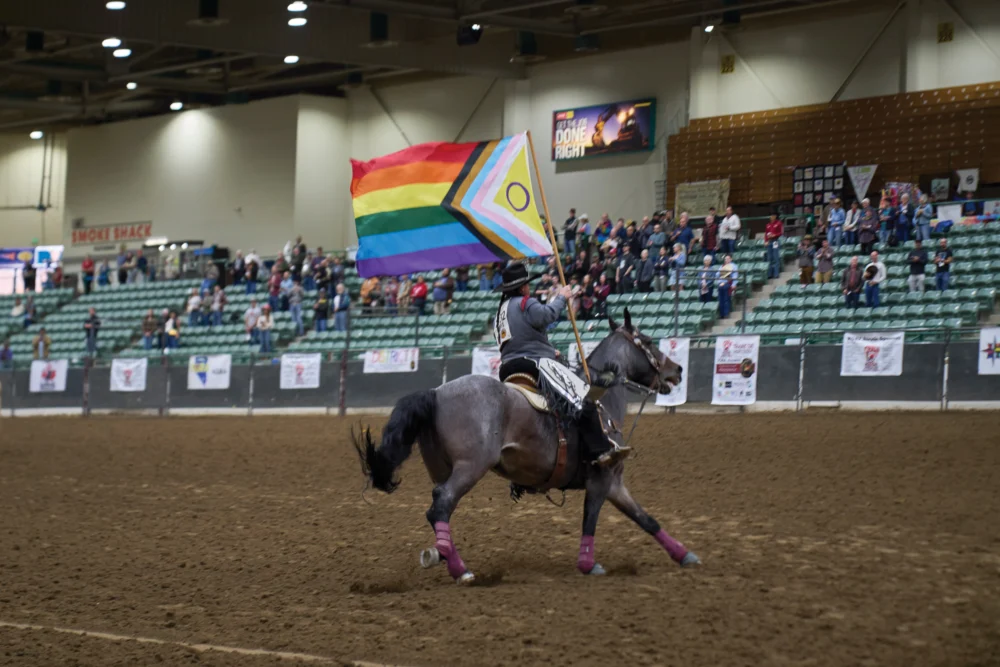
Fifty miles east of Reno, Nevada, on the outskirts of Fallon, John King stood by a highway, gazing at the ranch where a significant chapter of LGBTQ+ rodeo history was violently interrupted. Thirty-seven years prior, in October 1988, the planned Gay Rodeo Finals contestants and organizers found themselves barred from this very property, a confrontation orchestrated by the then-Churchill County Sheriff Bill Lawry. "It was the first time I’d seen raw, undeniable hate," King recounted, his voice still carrying the weight of that memory. A judge’s injunction, prominently displayed on the ranch gate, served as a stark symbol of the opposition, while the sheriff, accompanied by deputies and a shotgun, physically prevented the rodeo participants and their horses from entering. For several tense hours, the atmosphere crackled with the threat of violence as the crowd pressed against the gates, ultimately being forced to load their horses and depart. King later described this moment as "our Stonewall," a powerful assertion of its impact on the LGBTQ+ rodeo community.
The 1988 standoff in Fallon was the dramatic climax of a months-long struggle between the International Gay Rodeo Association (IGRA) and its venue hosts against a wave of anti-gay activists who had successfully campaigned to shut down that year’s finals in Reno, the very city where gay rodeo had originated. In a desperate attempt to salvage the event, the rodeo organizers sought to relocate to private land in Fallon, only to be met with a similar, forceful rejection. While gay rodeo did not falter—the finals were subsequently dispersed across several cities—the incident cast a long shadow over northern Nevada, a painful reminder of the prejudice the community faced.

This October, marking the 50th anniversary of the first Gay Rodeo, the finals have finally returned home to Reno. A few days prior to the main event, participants and supporters embarked on a poignant bus tour to Fallon, visiting the site of the 1988 confrontation. Standing near the roadside opposite the ranch gate, Andy Siekkinen, the rodeo’s press liaison and a competitor, a man of imposing stature with a distinctive handlebar mustache, shared his reflections. Brian Helander, the president of IGRA, approached, extending a hand for a handshake. "We’re not out here in anger," Helander stated, emphasizing the purpose of the visit. "It’s about understanding… and closure." Siekkinen, with a subtle smile, added, "And triumph," a sentiment Helander readily echoed, underscoring their continued presence and perseverance.
On the roadside, organizer Brian Rodgers unfurled a poster-sized reproduction of the injunction that had halted the 1988 rodeo. A gathering of about fifty individuals joined him, reciting in unison, "We remember, we honor, we continue." Rodgers then proceeded to meticulously roll up the document, a tangible symbol of past bigotry and pain, and secured it with rainbow-patterned duct tape, an act signifying the closure of that painful chapter and its consignment to history. As the group boarded the bus, a collective sense of relief and anticipation filled the air, punctuated by the clinking of beers being distributed from a large cooler. "Thanks to everybody who came," Rodgers called out from the aisle, his voice resonating with gratitude. "Drink your beers. Let’s rodeo!" The journey back to Reno was accompanied by the infectious energy of The Georgia Satellites’ hit song, "Keep Your Hands to Yourself," a soundtrack to their onward momentum.
Two days later, the Reno Livestock Events Center buzzed with anticipation as hundreds of attendees filtered in for the opening events. The air, a mixture of fresh dirt and the distinct scent of horses, was enlivened by the excited chatter of spectators. Many embraced the Western aesthetic, sporting classic blue jeans and snap-button shirts, while others opted for more flamboyant expressions of style, including fringed attire, bolo ties, and denim jackets adorned with intricate Western scenes. The calf roping on foot event kicked off the proceedings, showcasing the skill and precision of the contestants. Athletes lined up by the calf chute, their lassos expertly swung, awaiting the opportune moment when the gate would open and a calf would emerge, ideally into the waiting loop. Murmur Tuckness, a seasoned rodeo veteran who had witnessed the 1988 standoff and competed in bull riding as early as 1981, demonstrated remarkable speed, securing the best time in the women’s category.

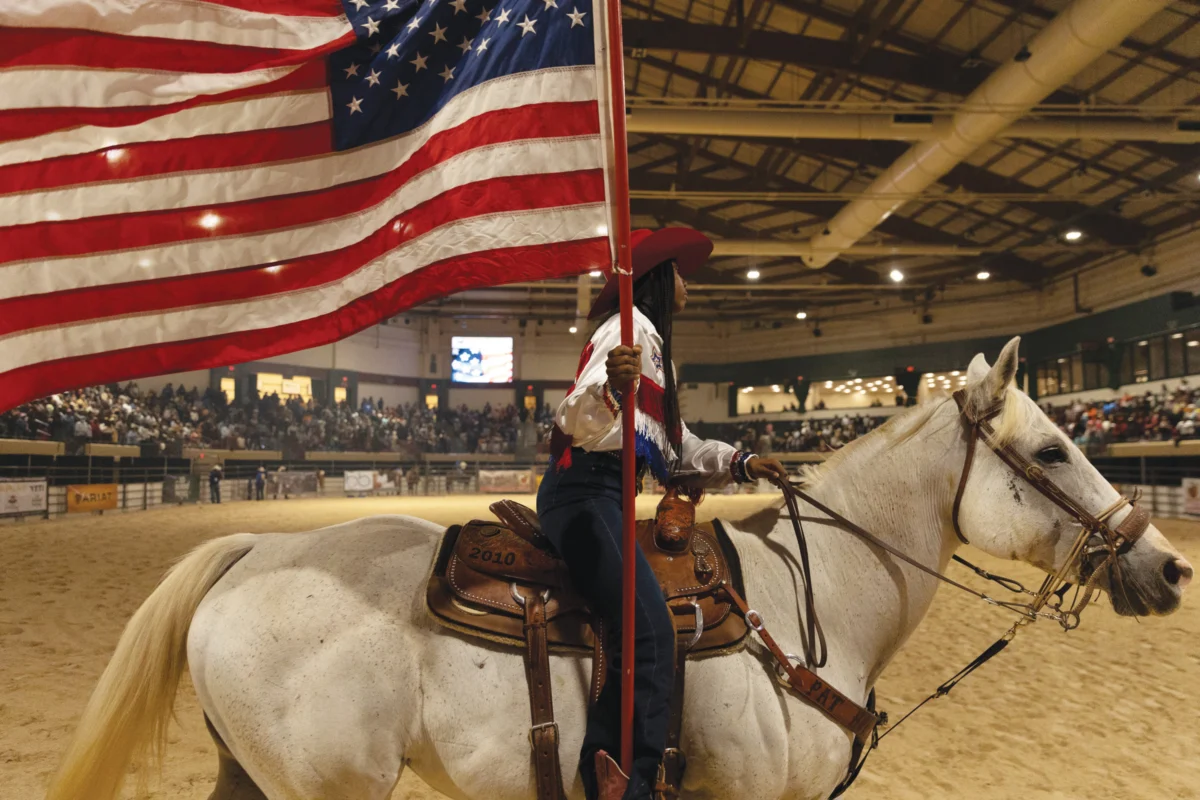
The Grand Entry, a ceremonial parade that marks the official start of the rodeo, featured a vibrant display of patriotism and inclusion. Riders on horseback carried the Canadian, U.S., and Nevada state flags, accompanied by the jubilant unfurling of the Pride flag, all galloping in unison. Rodeo royalty and contestants representing various regional gay rodeo associations paraded from the roping chutes to the bucking chutes, a dazzling procession of participants. The individual events were thoughtfully organized with divisions based on self-identification, a progressive approach that welcomes nonbinary and trans athletes to compete in their chosen gender category. This inclusivity sets the International Gay Rodeo Association apart as a sporting organization that actively encourages transgender participation. Furthermore, unlike traditional rodeo formats, women are permitted to compete in bronc, steer, and bull riding, and mixed-gender teams collaborate in the roping events, fostering a truly equitable environment where cisgender and straight individuals stand shoulder-to-shoulder with the broader LGBTQ+ community.
The atmosphere behind the chutes offered a stark contrast to the more rigidly competitive environments of traditional rodeos. Here, the intense, often fearful, expressions of young competitors were replaced by infectious smiles, supportive pep talks, and a palpable sense of camaraderie mixed with a unique brand of flamboyance and machismo. "It’s a level playing field," remarked Mark Allen Smith, an athlete and rodeo royalty contestant in the nonbinary category, clad in a casual denim shirt and sporting a neatly trimmed gray goatee. "I can walk out there with my rodeo partner Jen and compete on the same events." That day, Smith experienced the exhilaration and occasional challenges of the sport, taking a significant tumble during the steer-decorating event. Afterward, the festivities transitioned to the Silver Legacy casino downtown, where the second half of the Gay Rodeo unfolded with a Western dance competition and a royalty contest, culminating in the crowning of the Ms., Miss, Mr., Mx., and MsTer International Gay Rodeo Association.
The carpeted casino basement transformed into a lively hub of celebration, packed with a diverse crowd—burly men in cowboy hats, assertive cowgirls, dazzling drag queens, and everyone in between—all enthusiastically cheering for their friends on stage. Smith, reappearing in full drag, complete with a brunette wig, a flowing skirt, their signature trimmed goatee, and a striking black sash, captivated the audience. As the clock struck midnight, Smith was awarded the prestigious title of Mx. International Gay Rodeo Association, a crown they would proudly wear for the following year. The celebration continued late into the night with energetic performances by teams of line dancers, cloggers, and spirited two-steppers, filling the ballroom with infectious rhythm and joy.

The genesis of gay rodeo dates back to 1976 in Reno, when Phil Ragsdale, a pivotal figure in the local chapter of the Imperial Court System—a nationwide network of LGBTQ+ organizations—organized the first event. His intention was to raise funds for the Senior Citizens Thanksgiving Feed, and what better way to do so in Nevada than through a rodeo? What began with 125 attendees in 1976 blossomed into an event drawing 10,000 people by 1980. By 1988, the International Gay Rodeo Association had established chapters across the United States, and the Gay Rodeo Finals were slated to be held at the University of Nevada, Reno’s Lawlor Events Center. However, this period coincided with the devastating AIDS crisis that profoundly impacted the LGBTQ+ community, and a surge of conservative Christian activism was gaining momentum nationwide, fueling discriminatory stereotypes about the disease. In Reno, local activists exerted pressure on politicians, leading to the cancellation of the event. Rather than an outright cancellation, the university cited contractual issues as the reason for withdrawing their support. The American Civil Liberties Union (ACLU) mounted a defense, but ultimately, the IGRA opted for an alternative venue: the rodeo arena on private land in Fallon.
This relocation, however, proved to be short-lived. A subsequent series of legal entanglements ensued, culminating in a district court injunction issued by Judge Archie E. Blake, which prohibited the event. The judge’s reasoning centered on the claim that the private venue was not permitted for rodeo use, despite its history of hosting similar events without issue, according to Rodgers. This unfortunate episode effectively stripped Reno of its status as the birthplace and home of the Gay Rodeo. Growing up in the city, the author had little awareness of this significant history, a part of their hometown’s narrative that had been largely erased. In 1988, Reno missed a crucial opportunity to embrace something truly special—a vibrant community of creative individuals who had pioneered a unique cultural phenomenon. Instead, the city pushed them away.
Reno holds a special place in the author’s heart, yet they observe a tendency within the city to be self-destructive, often swayed by grandiose promises of wealth and influence, engaging in high-stakes gambles that frequently result in losses. This pattern can lead to the overlooking, or even sabotage, of its inherent, homegrown strengths in pursuit of elusive, ephemeral mirages.

On Sunday, the final day of the rodeo, the crisp air and sharp sunlight provided a quintessential Nevada backdrop, a perfect complement to the day’s events. Gay rodeo shares many similarities with its traditional counterpart, but it distinguishes itself with the inclusion of "camp events"—entertaining and often hilarious spectacles. Goat dressing, a perennial crowd favorite, involves contestants racing across the arena to don underwear on a goat, while steer decorating sees teams of two working to gently subdue a steer long enough to tie a ribbon on its tail. Perhaps the most chaotically entertaining event is the Wild Drag Race. Each three-person team comprises one man, one woman, and one drag performer. The drag participant positions themselves on a chalk line 70 feet from the chutes. One team member is given a rope attached to a steer, and upon the opening of the chutes, the other two members work to guide the steer past the chalk line and bring it to a halt. Once the steer is stopped, the drag performer mounts its back and must ride it back across the line to secure victory. This event is renowned for its comedic value and inherent danger, often resulting in the drag performer being bucked off and one of the teammates being dragged across the dirt, desperately clinging to the rope.
During intermissions, the author explored the concourse, where various booths offered an array of goods, from Western wear and cowboy boots to tie-dyed shirts and novelty items. One exhibit, a poignant display of Gay Rodeo history, featured posters, plaques, medals, ropes, and photo albums meticulously documenting the sport’s evolution and journey to its current standing. Reflecting on the entire experience, the author envisioned an alternative timeline where the annual Reno Gay Rodeo had become an integral part of the city’s identity, a celebrated and cherished event that stood as a bulwark against condescending judgments from outsiders. Reno, a city known for its capacity for reinvention, may yet have an opportunity to fully embrace this vibrant aspect of its heritage, suggesting that perhaps it is not too late to reclaim this significant part of its cultural tapestry. The rodeo concluded with a final bull ride, accompanied by the energetic anthem "Turn Down For What" by Lil Jon, as the rider successfully remained mounted for the full six seconds. The announcers then expressed their gratitude, and the timeless ballad "Happy Trails" by Roy Rogers and Dale Evans played as the arena emptied into the fading dusk. Somewhere within the venue, an organizer carefully placed the rolled-up injunction into a box, destined to be filed away with the rodeo’s archives, a silent testament to an artifact of the past.