Joko Susilo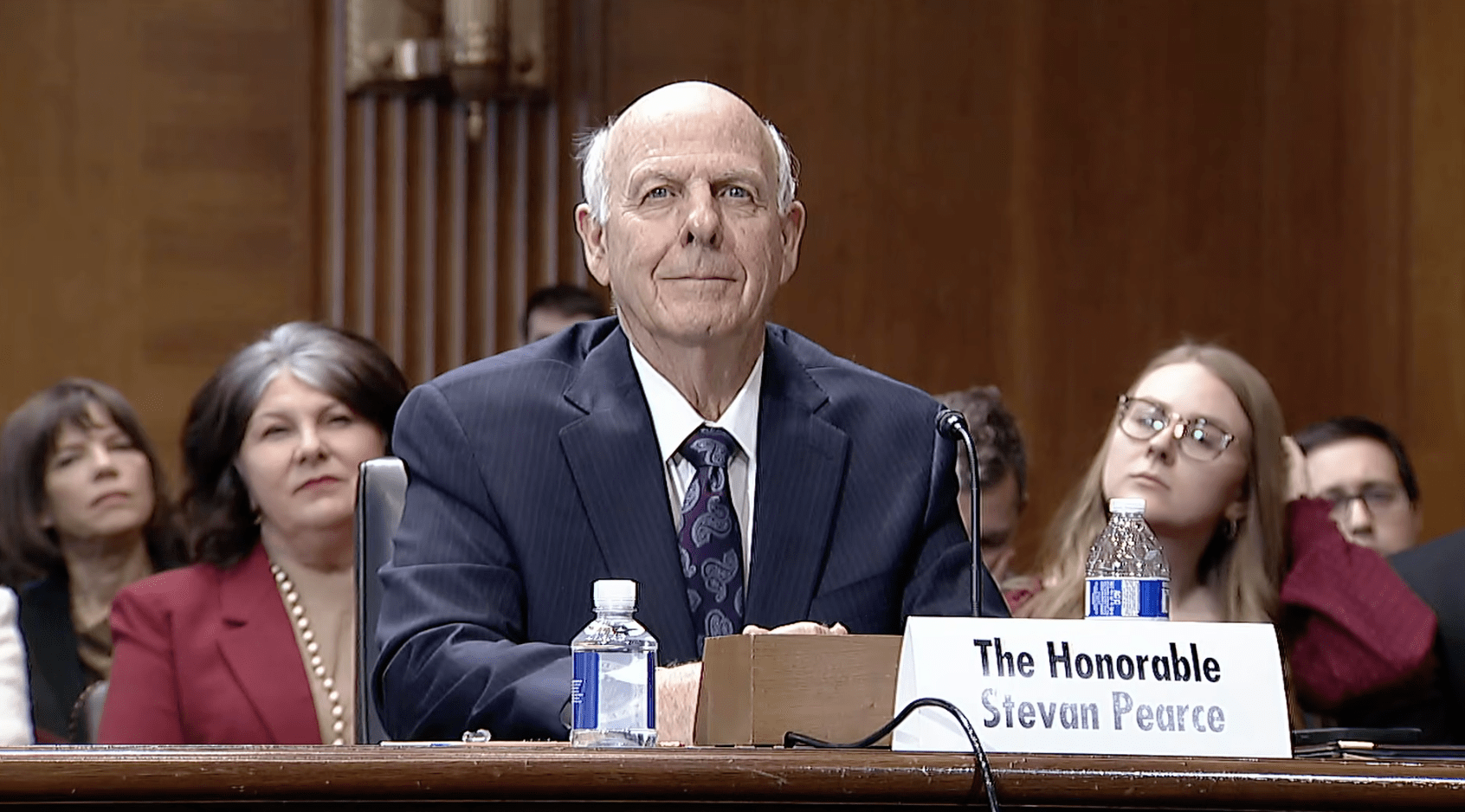
President Donald Trump’s contentious choice to lead the Bureau of Land Management (BLM), Steve Pearce, found himself at the center of a heated confirmation hearing before the Senate Energy and Natural Resources Committee, offering conflicting explanations regarding his long-standing advocacy for federal land sell-offs. Pearce, a seasoned former Republican congressman from New Mexico, has long been a lightning rod for criticism from a broad coalition of environmental, conservation, and hunting organizations, all deeply concerned by his legislative history of seeking to diminish public land protections and proposing land sales as a strategy to alleviate the national deficit. During the rigorous questioning, Pearce notably refrained from unequivocally disavowing his past positions, instead emphasizing the statutory limitations on a BLM director’s authority to initiate large-scale land divestitures.
"I’m not so sure that I’ve changed," Pearce stated when pressed by Senator Ron Wyden (D-Ore.) about his controversial public land record, signaling a continued alignment with his previous views. However, he swiftly followed this with a crucial caveat: "I do not believe that we’re going to go out and wholesale land from the federal government," adding that "federal law says that we can’t do that from the BLM itself." This dual stance, simultaneously acknowledging his personal unchanged philosophy while citing legal constraints on the agency he sought to lead, encapsulated the core tension of his nomination. Throughout the hearing, Pearce frequently deflected inquiries about major policy shifts, suggesting that decisions on designating national monuments rested with the White House and that questions regarding extensive federal land sales were more appropriately directed to Interior Secretary Doug Burgum.
The Bureau of Land Management, an agency often overlooked despite its immense purview, manages nearly 250 million acres of public land, primarily across 12 Western states. This vast expanse, representing roughly one-tenth of the nation’s landmass, is governed under a "multiple-use and sustained yield" mandate, balancing diverse activities such as livestock grazing, mineral extraction, timber harvesting, energy development (both fossil fuels and renewables), conservation, and outdoor recreation. The philosophical approach of its director profoundly shapes how these lands are managed, impacting everything from endangered species habitats to the availability of hunting grounds and access for hikers and campers. Therefore, a nominee with a history of advocating for land sales naturally draws intense scrutiny from those invested in the preservation and public access of these national treasures.
Several senators, both Republican and Democrat, underscored the significant apprehension voiced by their constituents regarding Pearce’s past calls to sell federal public lands. This concern was particularly acute in the Western states, where the overwhelming majority of these lands are concentrated and form an integral part of the region’s identity, economy, and way of life. A widely cited letter, co-signed by Pearce during his congressional tenure and addressed to former House Speaker John Boehner, explicitly advocated for the sale of public lands to reduce the federal deficit. The letter starkly asserted that "over 90% of [federal public] land is located in the Western states and most of it we do not even need," a statement that has become a rallying point for opponents of his nomination. Senator James Risch (R-Idaho), reflecting the strong sentiment in his state, unequivocally told Pearce, "Idahoans do not want their public lands sold, period, full stop."
This robust opposition is not isolated to political figures; it reflects a deep-seated public sentiment across the American West. A recent Colorado College poll, surveying residents of Western states, revealed overwhelming disapproval for selling public land for various purposes: 76% opposed sales for housing development, and 74% rejected the idea of selling public land for expanded oil, gas, or mining operations. These figures highlight a broad bipartisan consensus against land divestiture, positioning Pearce’s historical advocacy directly against the prevailing will of the very communities most affected by BLM policies.
While the most pointed criticisms during the hearing originated from Democratic members of the committee, their intensity was somewhat muted compared to the fervent backlash emanating from public land advocacy groups in the preceding weeks. Senator Martin Heinrich (D-NM), a fellow New Mexican, articulated his reservations in his opening statement, noting, "[Pearce] called for the selling off of public lands. That makes it challenging for me to view his potential tenure at the BLM as one of stewardship." Such statements underscore the ideological chasm between those who view federal lands as a national inheritance to be protected and those who see them primarily as assets for resource extraction or potential revenue generation.

Strikingly, the hearing largely sidestepped deeper inquiries into other significant areas of concern, particularly Pearce’s extensive ties to the fossil fuel industry and potential conflicts of interest. This omission raised eyebrows among watchdog groups and environmental advocates. As previously reported, Pearce, who formerly chaired the New Mexico State Republican Party, amassed considerable wealth within the oil-and-gas sector. His holdings include Trinity Industries, an oilfield services company he intended to transfer control of to his wife, as well as significant interests in multiple oil leases within the prolific Permian Basin, a major energy-producing region spanning West Texas and southeastern New Mexico. Additionally, he maintained substantial investments in various fossil fuel and energy corporations. If confirmed, ethical guidelines would mandate the divestment of many of these assets to prevent direct conflicts of interest.
Beyond his personal financial portfolio, Pearce’s political career was significantly bolstered by the energy sector. He received over $2 million in campaign contributions from the oil and gas lobby during his congressional campaigns. This financial backing, coupled with his personal investments, creates a potent ethical dilemma, given that the head of the BLM directly oversees the agency’s critical role in managing oil and gas leasing, permitting, and regulatory enforcement across vast federal land holdings. The potential for a director to make decisions that could directly or indirectly benefit their own financial interests or those of past benefactors is a serious concern for government transparency and public trust.
Despite the controversies, Pearce made efforts during the hearing to connect with senators on a personal level, repeatedly extolling the inherent value of public land access. He recounted growing up near U.S. Forest Service lands where his family vacationed, and shared fond memories of spending time with his granddaughter on federal public lands outside Tucson, Arizona. He also offered a poignant anecdote, stating, "When I got back from Vietnam I experienced the healing serenity of backpacking wilderness areas," an attempt to demonstrate a personal appreciation for the restorative power of natural landscapes.
However, this personal appeal was undercut by a noticeable lack of familiarity with key policy details. When Senator Angus King (D-Maine) questioned whether Pearce believed Interior Secretary Doug Burgum’s recent directive—requiring his personal sign-off for all renewable energy projects on public lands—stood on firm legal ground, Pearce confessed he was not sufficiently familiar with the policy to offer an opinion. This apparent ignorance on a significant and current departmental policy drew sharp criticism. Aaron Weiss, deputy director of the Colorado-based Center for Western Priorities, issued a scathing statement: "Based solely on his feigned ignorance of energy policy, Steve Pearce is unqualified to lead the Bureau of Land Management. His ethics forms are woefully inadequate and leave room for massive conflicts of interest if he is confirmed."
Pearce was not the initial choice for the demanding role of BLM director. Kathleen Sgamma, a long-time oil and gas lobbyist, had previously withdrawn her nomination abruptly just hours before her scheduled confirmation hearing in April. Her withdrawal came after a watchdog group unearthed a private memo in which Sgamma had harshly condemned former President Trump’s role in the January 6, 2021, attack on the U.S. Capitol. In stark contrast to Sgamma, Pearce has remained an unwavering supporter of Trump, consistently defending him in the aftermath of January 6 against accusations of inciting violence. In a now-deleted post on Twitter days after the riot, Pearce famously declared that Trump "will be our President FOREVER and no one can take that away from us," cementing his loyalty to the former president.
The committee ultimately adjourned the hearing without conducting a vote on Pearce’s nomination, leaving the future leadership of the Bureau of Land Management in a state of uncertainty. The outcome of this nomination carries profound implications for the management of America’s vast public lands, influencing the balance between conservation and resource development, shaping the nation’s energy future, and defining the very accessibility of these cherished landscapes for generations to come. The ongoing debate surrounding Steve Pearce’s suitability for the role underscores the deeply polarized and high-stakes nature of federal land policy in the United States, a crucial aspect of both national identity and environmental stewardship.