Rocky Gerung
The crisp air, still charged with the anticipation of the hunt, was captured in a single photograph: a young boy, barely eight years old, stood with a slight tilt to his ballcap, his gaze fixed forward. In the frame, a yellow deer emblazoned the crest on his shirt, and the stock of a rifle was firmly clasped between his elbow and ribs. Dressed in his older brother’s hand-me-down clothes, his hair still held the soft, blond hue of early childhood, a detail that seemed to slip away as easily as a rubber band. He walked the fencerow alongside the men, a blaze-orange vest, a symbol of his participation, draped over him like an oversized gown, a visual testament to his youth. He was too young to carry a gun in season when they ventured afield, a rule that underscored his observer status in this rite of passage.
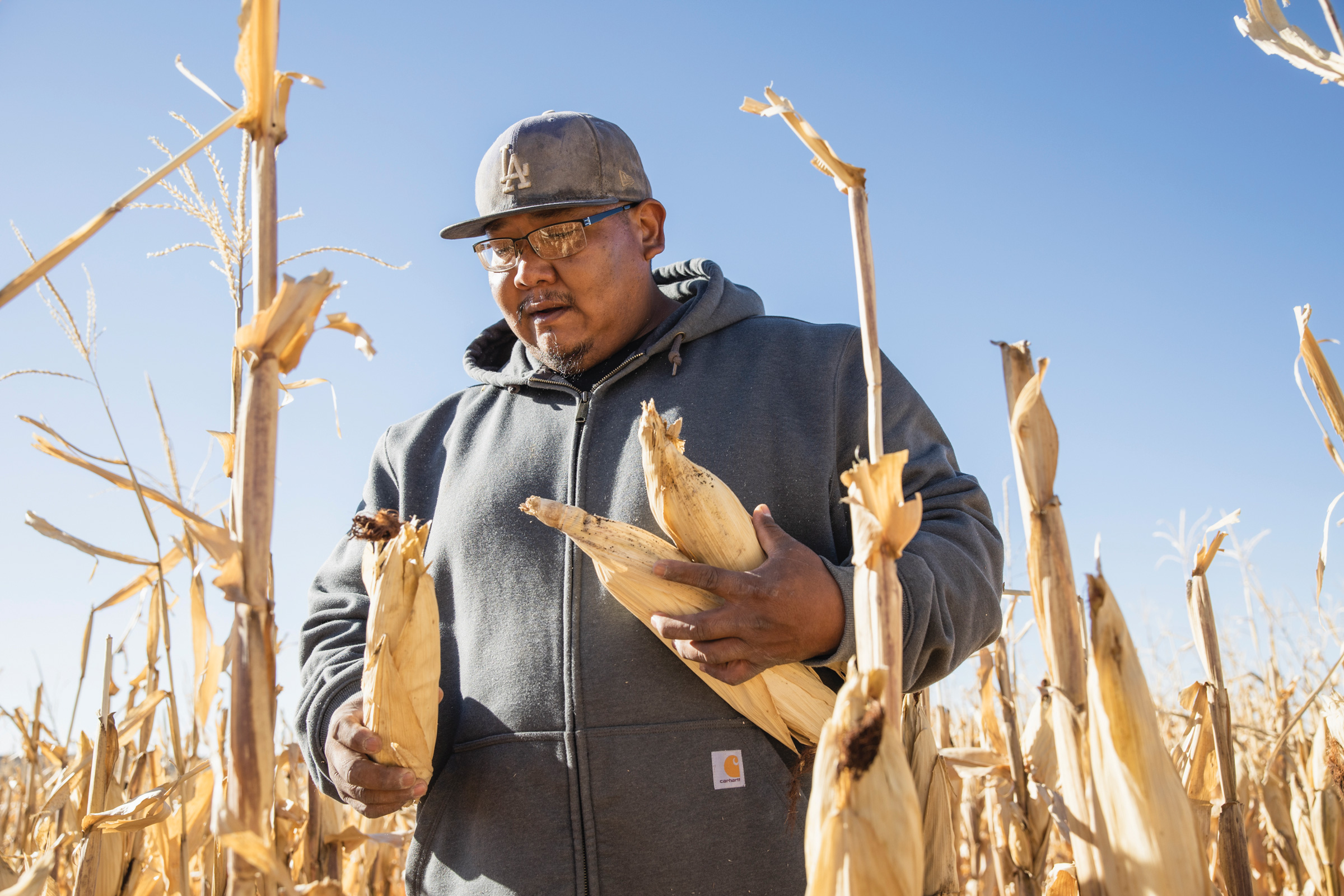
His attention, however, was fully engaged by the dog, a creature also adorned in its own vibrant orange, diligently working through the harvested corn stalks that were cut low to the ground, reaching only to the shins. Scattered amidst the stubble, golden kernels gleamed like hard, sharp teeth, remnants of the harvest’s bounty. These kernels, easily lost to the naked eye against the earth, became more apparent as they were disturbed by the combine’s passage, scattering like the very shot that would soon pepper the field. The scene evoked a sense of dual observation: the natural scattering of grain, mirroring the fanned-out spray of gunfire.
The poem then delves into a more visceral imagery, describing the finding of these kernels. Two or three, contracting like tiny hearts, sank into the downy heaps of stubble, their descent marked by the dog’s keen senses. The dog, trained and intuitive, knew its duty: to softly grasp these fallen treasures and deposit them, unpunctured, at the feet of its human companions. Yet, a subtle but profound transformation had occurred; these were no longer mere kernels, but something altered, "sieved" by unseen forces. The poem suggests a metaphor for the impact of human intervention, perhaps the hunting itself, or the industrial processes of agriculture.
The imagery shifts to the human experience of these found objects. The "little nodes" were destined for the tongue, to be dropped bright against the plate, a culinary outcome that juxtaposed the wildness of the field with the domesticity of the meal. The material composition of these kernels, whether lead, steel, zinc, or tin, became a point of contemplation, hinting at the substances that might be ingested or encountered in the agricultural landscape, perhaps remnants of ammunition or industrial byproducts. This led to a final, poignant image: "the string of pearls the wounds can make," a metaphor that elegantly links the seemingly disparate elements of the hunt, the harvest, and the potential for unintended consequences or lingering traces. The "wounds" could refer to the impact of hunting, the scars left on the land by agricultural machinery, or even the subtle ways in which human activity alters the natural world.
This poem, by Vanessa Stauffer, born and raised in the agricultural heartland of Lancaster County, Pennsylvania, and now residing in Windsor, Ontario, offers a nuanced perspective on the experience of childhood in a rural environment. It moves beyond a simple narrative of a hunting trip to explore themes of observation, participation, and the often-unseen impacts of human interaction with the land. The poem’s evocative language and layered metaphors invite readers to consider the complex relationship between nature, industry, and the human condition.

The practice of hunting, deeply embedded in many cultures worldwide, serves not only as a source of food but also as a cultural ritual, a connection to ancestral practices, and a means of managing wildlife populations. In many regions, particularly in North America and Europe, hunting seasons are strictly regulated by governments to ensure sustainability and prevent overhunting. These regulations often dictate the types of game that can be hunted, the methods allowed, and the specific times of year when hunting is permitted, reflecting a growing awareness of ecological balance. The presence of a young boy observing the hunt, rather than actively participating with a weapon, highlights a common approach to introducing children to hunting, emphasizing education and respect for the process before full participation. The blaze-orange attire, a standard safety measure in hunting, ensures visibility to other hunters, significantly reducing the risk of accidental shootings.
The poem’s setting, likely a harvested agricultural field, points to the intersection of farming and hunting. Agricultural landscapes, while providing sustenance for humans, also create unique habitats and challenges for wildlife. The "stalks cut at the shins" and the scattered "gold kernels" are direct results of modern agricultural practices, such as the use of combines for harvesting grains like corn and wheat. These practices, while efficient, can also leave behind remnants that have both ecological and symbolic significance. The gleam of the kernels, hard as teeth, suggests a resilience and perhaps even a subtle aggression in the face of human manipulation.
The dog’s role in the poem is crucial, representing a bridge between the wild and the domestic, the instinctual and the trained. The working dog, a companion to humans in various fields, embodies a partnership built on mutual understanding and shared purpose. Its ability to "softly grasp and drop unpunctured" highlights a precision and gentleness that contrasts with the potentially harsher aspects of the hunt or harvest. The dog’s keen senses, honed by generations of selective breeding, are essential for locating downed game or, in this case, scattered kernels, demonstrating the intricate symbiosis that can exist between humans and animals.
The poem’s exploration of the "sieved" kernels and the "string of pearls the wounds can make" delves into the subtle, often overlooked consequences of human activity. The mention of lead, steel, zinc, or tin hints at the potential for contamination in the environment. Lead, a common component in ammunition, has been a subject of significant environmental and health concern for decades, leading to a shift towards lead-free alternatives in many hunting contexts. Similarly, industrial processes and agricultural inputs can introduce various metals and chemicals into the soil and water systems. The "string of pearls" metaphor is particularly powerful, suggesting that the effects of these interventions, though perhaps small and discrete, can accumulate and form a continuous, interconnected chain of impact, leaving a lasting mark on the environment and potentially on those who inhabit it.
The broader context of environmental stewardship and the ethical considerations surrounding hunting and agriculture are implicitly raised by the poem. As global populations continue to grow, the pressure on natural resources intensifies, making sustainable practices in both hunting and farming more critical than ever. Debates surrounding land use, conservation, and the human impact on ecosystems are ongoing, with diverse perspectives ranging from those advocating for stricter regulation to those emphasizing the importance of traditional practices and individual responsibility. Poems like this, by grounding abstract issues in concrete, sensory details, can foster empathy and encourage deeper reflection on our place within the natural world. The act of observing and documenting these experiences, as the poet does, is a vital part of understanding and navigating the complex environmental challenges of our time. The enduring appeal of such reflections lies in their ability to connect the personal and the universal, the immediate and the far-reaching, reminding us that even seemingly small details can hold profound meaning.