Johny Prima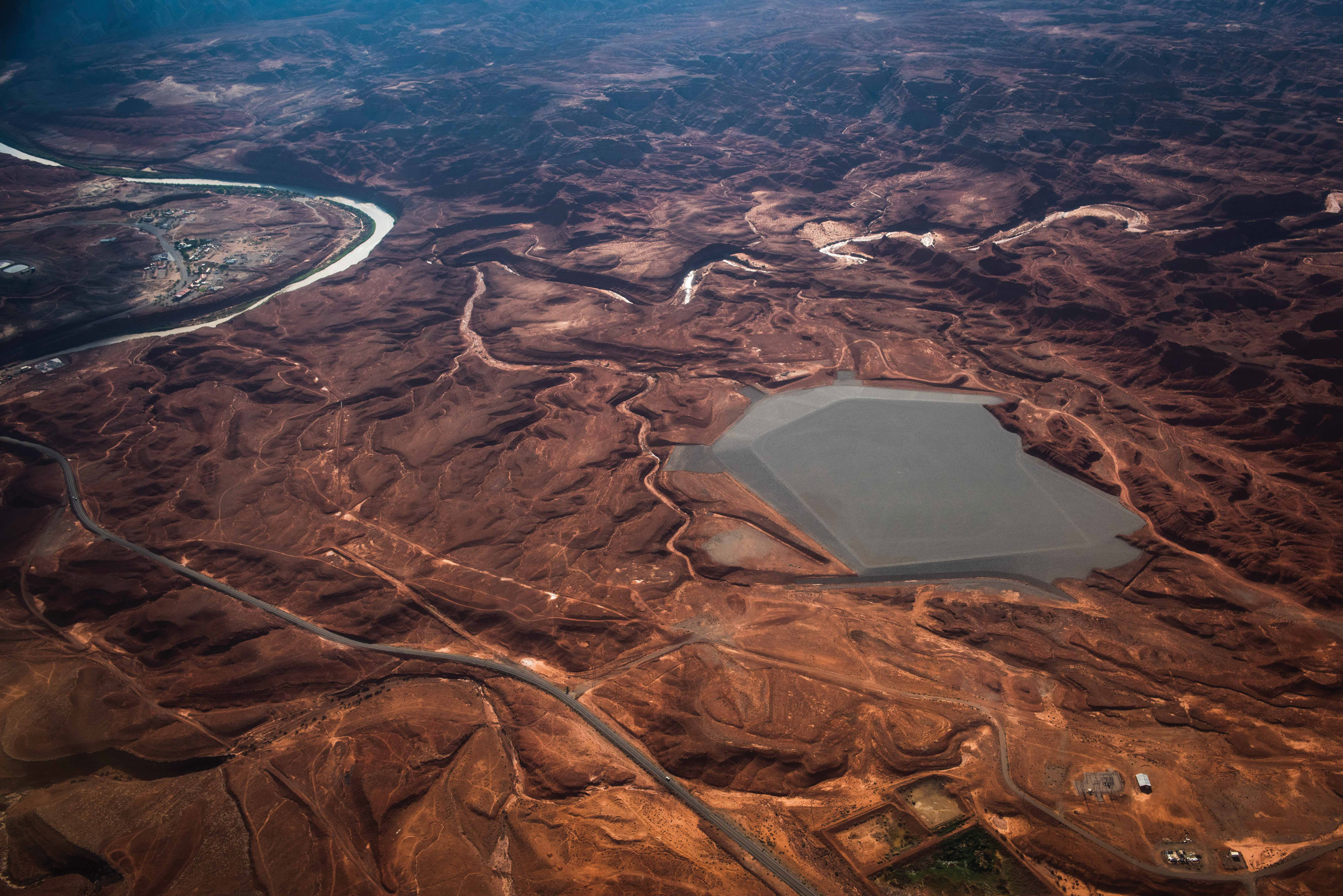
Last fall, the groundbreaking of the Velvet-Wood uranium mine in the ancient sandstone deposits of San Juan County, Utah, marked a significant, and to many, alarming precedent: it became the inaugural project to be permitted by the federal government under a newly instituted, expedited "emergency" review process. This controversial mechanism compresses the comprehensive environmental assessment typically mandated by the National Environmental Policy Act (NEPA) from a period often spanning months or even years into a mere 14 days, effectively sidelining established safeguards. The procedural acceleration further curtailed the involvement of critical stakeholders, granting tribal governments a mere seven days to offer their feedback—a stark reduction from the customary minimum of 30 days—and entirely eliminating the standard public comment period, all justified by the project’s purported "emergency" status.
The mine’s location itself is deeply resonant, situated within a region already profoundly scarred by decades of uranium extraction, a legacy that has disproportionately affected Indigenous communities. The Ute Mountain Ute Tribe, whose traditional lands encompass this area, has long been a vocal opponent of the nearby White Mesa Uranium Mill, an enduring facility that processes uranium ore and abuts their community, raising persistent concerns about its environmental footprint and health impacts. During the truncated week-long tribal comment period for the Velvet-Wood project, six sovereign tribal nations formally conveyed their profound concerns to the Bureau of Land Management, explicitly citing the unprecedented speed of the review process and the palpable risk of water contamination stemming from the mine’s proposed activities. Despite these urgent warnings and documented historical grievances, the federal agency proceeded without incorporating any modifications to the project plan.

Earlier this year, the preceding administration cemented these changes by finalizing a sweeping overhaul of the standards governing how federal agencies conduct NEPA environmental reviews for large-scale projects on public lands. Beyond mandating the expedited "emergency" processes, these new regulations systematically stripped away key provisions, most notably the requirement for public comment periods, severely limiting avenues for citizen engagement and oversight. These drastic alterations were implemented without any meaningful consultation with tribal nations, despite their strong, unified opposition, fundamentally undermining the federal government’s long-standing trust and treaty responsibilities.
The National Congress of American Indians (NCAI) and the National Association of Tribal Historic Preservation Officers (NATHPO) issued a joint letter vehemently condemning this approach, characterizing it as an "announce-and-defend method of developing federal Indian policy." They argued that such a paternalistic and historically inefficient decision-making process "ignores federal trust and treaty responsibilities, impinges on roles and sovereignty of Tribal Nations, and flouts longstanding policy and practice by failing to consult with Tribal Nations." This sentiment underscores a broader pattern wherein the federal government, while legally bound to consult with tribal nations on rules and policies that directly impact them, has consistently bypassed or drastically expedited these requirements. The stated objective behind these maneuvers was to advance an "energy dominance" agenda, particularly on tribal nations’ ancestral lands in the Western U.S., effectively transforming how these vast territories are managed and who has a say in their future.
The "energy dominance" agenda, a hallmark of the previous administration, prioritized the rapid extraction of natural resources, including fossil fuels and critical minerals, often citing a perceived national "energy emergency." This justification, however, has been widely contested by environmental groups and many Indigenous communities. Gussie Lord, managing attorney at Earthjustice’s Tribal Partnerships Programs, critically observed, "It’s all predicated on something that isn’t true: We don’t have an energy emergency." She emphasized that systematically chipping away at public input and tribal consultation would only exacerbate the multitude of issues already confronting tribal nations, whose cultural and environmental resources are inextricably linked. Lord added, "The existing laws and regulations that we have are already insufficiently protective of tribal rights and resources."

Beyond NEPA, this sweeping push for deregulation targeted other vital environmental and cultural protections. The Bureau of Land Management (BLM) and the Forest Service, for instance, rescinded the Public Lands Rule and the Roadless Rule without tribal consultation. These rules were crucial for safeguarding millions of acres of undeveloped public lands, protecting biodiversity, and preserving vital natural and cultural resources often intertwined with tribal heritage. Simultaneously, efforts were initiated to "streamline" Section 106 of the National Historic Preservation Act (NHPA), a cornerstone legal tool that empowers tribal nations to ensure government consultation on projects impacting their sacred sites, ancestral lands, and cultural heritage. Proposed changes to Section 401 of the Clean Water Act (CWA) also threatened tribal sovereignty by potentially limiting the ability of tribes to review and approve or deny permits for extractive projects within their reservation borders based on water quality concerns.
These regulatory rollbacks have provoked a strong chorus of disapproval from tribal nations across the country, highlighting deep-seated concerns about environmental justice, self-determination, and the integrity of the federal government’s relationship with Indigenous peoples. The Shoshone-Bannock Tribes in Idaho pointed to environmentally hazardous Superfund sites on their Fort Hall Reservation, lamenting that "By stripping away NEPA’s provisions for public participation and environmental review, the federal government would further entrench long-standing historic inequities that have disadvantaged Tribal communities." The Confederated Salish and Kootenai Tribes of Montana criticized the Council on Environmental Quality’s (CEQ) stance that it did not need to consult with tribes, calling it a "tortured and disingenuous reading" of executive orders that "focuses almost exclusively on a federal view of economic impacts on Tribal governments rather than the universe of environmental impacts."
The Susanville Indian Rancheria in California viewed the proposed changes as "a significant step backward in our nation’s commitment to environmental protection and tribal sovereignty," while the Cheyenne River Sioux Tribe in South Dakota decried the CEQ for "ignoring its established policy of including indigenous traditional ecological knowledge in environmental reviews under NEPA." They argued that critical considerations like cumulative effects, climate change, and impacts on environmental justice communities were being "arbitrarily cast aside in contravention of explicit statutory language." The Bishop Paiute Tribe of California powerfully articulated that their "traditional and ancestral lands extend far beyond the exterior boundaries of our reservation, and the natural resources on these lands are not merely commodities to be exploited. They are vital to the cultural, spiritual, and economic fabric of all Tribal communities, sustaining traditions that have endured for generations."

Similarly, the Tulalip Tribes of Washington noted that the "lack of consultation exacerbates the already existing power imbalances, further diminishing the ability of tribes to exercise meaningful sovereignty and protect their interests." The Nez Perce Tribe of Idaho expressed strong objections, stating the proposed rule "eviscerates the framework that has been relied upon since CEQ first issued NEPA regulations in 1978." The Big Pine Paiute Tribe of California condemned the interim final rule for sidestepping NEPA to endorse a "personal agenda," asserting that "The USA is a country of laws, not a place where one’s personal agenda may supersede the law." These diverse but unified voices underscore the profound constitutional, cultural, and environmental stakes involved in the erosion of these regulatory frameworks.
While the Biden administration later undertook a three-and-a-half-year process to update NEPA implementation regulations, consulting with tribal nations and the public to reincorporate provisions requiring agencies to consider climate change and environmental justice impacts, the prior administration’s changes took immediate effect without such deliberation. Given that NEPA applies to all federal agencies, requiring each to develop its own implementation guidelines, experts and tribes alike voiced serious apprehension that under the new, weakened directives, agencies might no longer feel compelled to engage in meaningful consultation with tribal nations.
The resulting regulatory uncertainty, according to Justin Pidot, a University of Arizona professor of law and former general counsel for the White House Council on Environmental Quality, carried severe repercussions. Pidot highlighted three primary issues: "One is the agencies don’t know how to work together. The second is that there’s litigation risk. The third is that project sponsors don’t know what they’re supposed to do." He warned that the removal of standardized procedures "creates lots of complexity for the public, for tribes, for states, for local governments, for nonprofits," potentially leading to protracted legal battles and administrative delays, ironically counteracting the stated goal of "streamlining."

Under the Interior Department’s new interim set of standards, a typical mining project review could be compressed into 28 days. When an "emergency" declaration is invoked, as with the Velvet-Wood mine, this timeline further shrinks to a mere 14 days, a drastic departure from previous reviews that could extend up to four years. "It substantially limits the degree of information flowing from the federal government to the public about big projects, including to tribes," Pidot explained. He found the decision particularly perplexing, noting, "What is surprising about this particular decision of theirs is that having a common set of rules makes sense for everyone," emphasizing the benefits of clarity and consistency for all stakeholders.
Further compounding these challenges are broader systemic issues, including federal budget cuts and mass layoffs that have significantly hampered agencies’ capacity to effectively carry out their mandated work. These cuts have specifically impacted funding for vital roles such as tribal historic preservation officers, who are instrumental in facilitating critical government-to-government consultation processes required by law. Pidot summarized this alarming trend, stating the apparent strategy is to "drown people in an avalanche while providing them with no resources to meet the moment, and call that consultation and collaboration."
Simultaneously, a potential conflict of interest has emerged as the federal government has actively acquired stakes in various mining companies. This includes investments in firms behind highly contentious projects already facing strong opposition from tribal nations and Indigenous communities, such as the Thacker Pass lithium mine in Nevada and the Ambler Road project in Alaska. These investments, often framed under the imperative of securing critical minerals for the green energy transition and national security, raise profound questions about regulatory impartiality. Gussie Lord pondered the implications: "It’ll be interesting to see if their approval processes for mines in which the federal government has a stake is quicker than it otherwise would have been."

Ultimately, the confluence of expedited environmental reviews, diminished tribal consultation, and government investment in extractive industries paints a stark picture of a shifting policy landscape. Pidot concluded with a trenchant observation: "The big theme is that anything and anyone that stands in the way of the kinds of projects that this administration wants to do is an obstacle to progress that they’re going to overrun," signaling a determined, and to many, troubling trajectory for public lands management and Indigenous rights in the United States.