Joko Susilo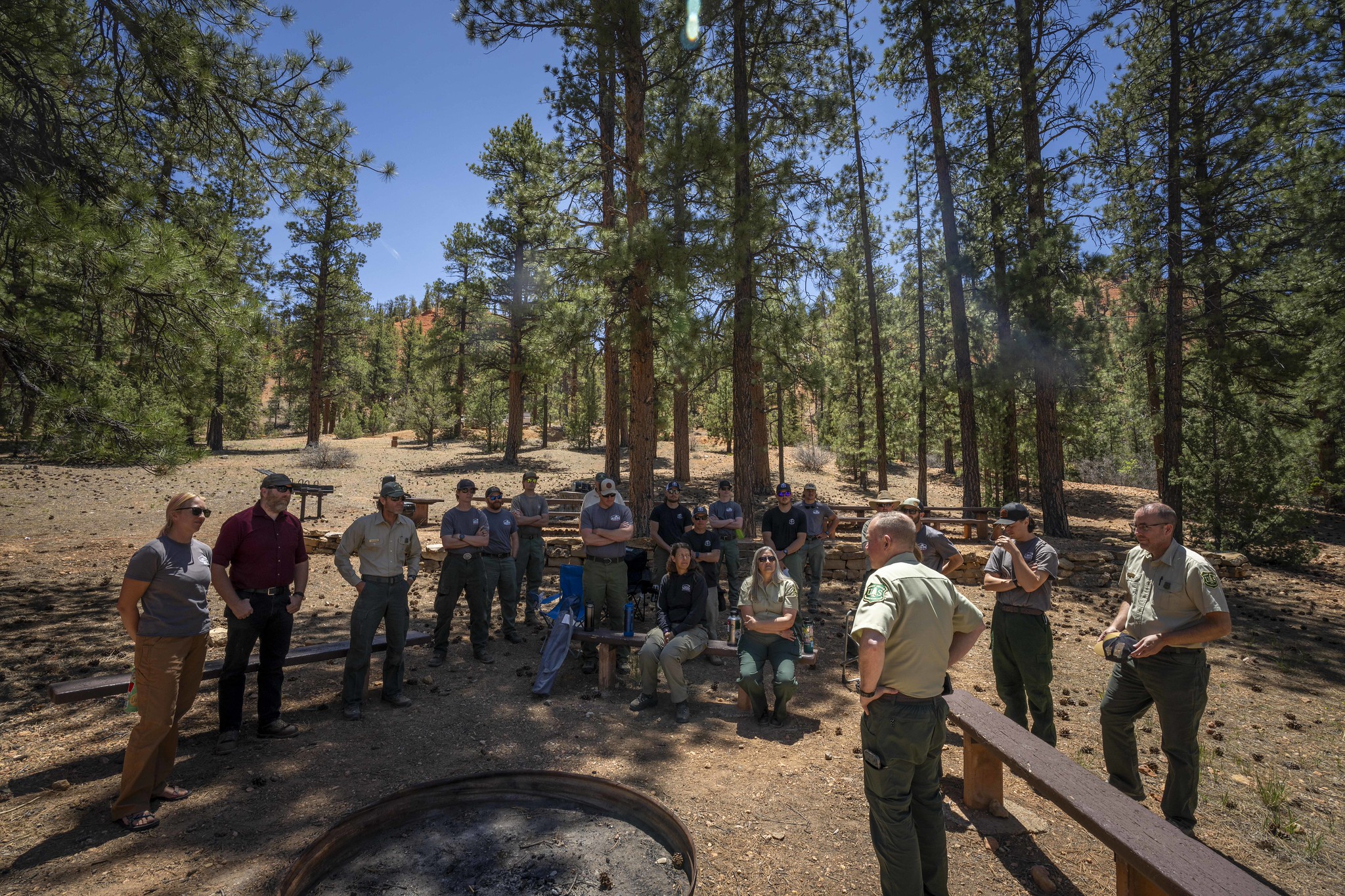
The United States Forest Service (USFS), steward of 193 million acres of national forests and grasslands, announced on March 31 its ambitious and controversial plan to relocate its national headquarters from Washington, D.C., to Salt Lake City, Utah, marking a monumental shift in the agency’s operational and philosophical framework. This sweeping overhaul extends far beyond a simple change of address, encompassing the closure or repurposing of all nine existing regional offices, the establishment of 15 new state-level offices, and the cessation of operations at numerous research and development facilities across more than 30 states. The Trump administration, which initiated these reforms, frames the initiative as a strategic move to foster a "nimble, efficient, and effective" agency, emphasizing a renewed focus on timber production and enhanced communication with local communities, according to official statements. However, this radical restructuring has ignited a firestorm of opposition from a diverse coalition of stakeholders, including conservation groups, tribal representatives, and former agency personnel, who warn of potentially devastating consequences for America’s public lands and the dedicated professionals who manage them.
Since the initial announcement of intent to reorganize last July, the administration has consistently promoted the plan as a means to streamline Forest Service operations, specifically highlighting its potential to boost timber output and facilitate more direct engagement with communities on the ground. This narrative, however, starkly contrasts with the public’s reaction during a congressional hearing and comment period last summer, where over 80% of the 14,000 submissions expressed strong disapproval. A summary of these public comments, compiled by the U.S. Department of Agriculture, revealed deep-seated concerns that the relocation of staff and further budgetary reductions could severely compromise the agency’s capacity for ecological management, hinder public access to national forests, and significantly erode employee morale. Despite this overwhelming public sentiment, the finalized plan largely incorporates the contentious elements of the original proposal, including the move to Salt Lake City and the elimination of the established regional office structure.
Critics, including Robert Bonnie, who served as a Department of Agriculture undersecretary overseeing the Forest Service during the Obama administration, have voiced profound skepticism regarding the stated benefits of the reorganization. "Nobody is asking for this," Bonnie asserted, emphasizing a broad lack of support from key constituencies. "None of the farm groups want this. No one in conservation wants this. Nobody." To Bonnie and a multitude of former Forest Service staff, the plan, which stands to uproot thousands of employees, appears poised to exacerbate the agency’s existing challenges, particularly in light of recent years marked by deep budget cuts and organizational turmoil. Bonnie starkly concluded that the initiative would not strengthen the Forest Service but rather weaken it, characterizing it not as a solution to problems but as an act of "blowing things up."
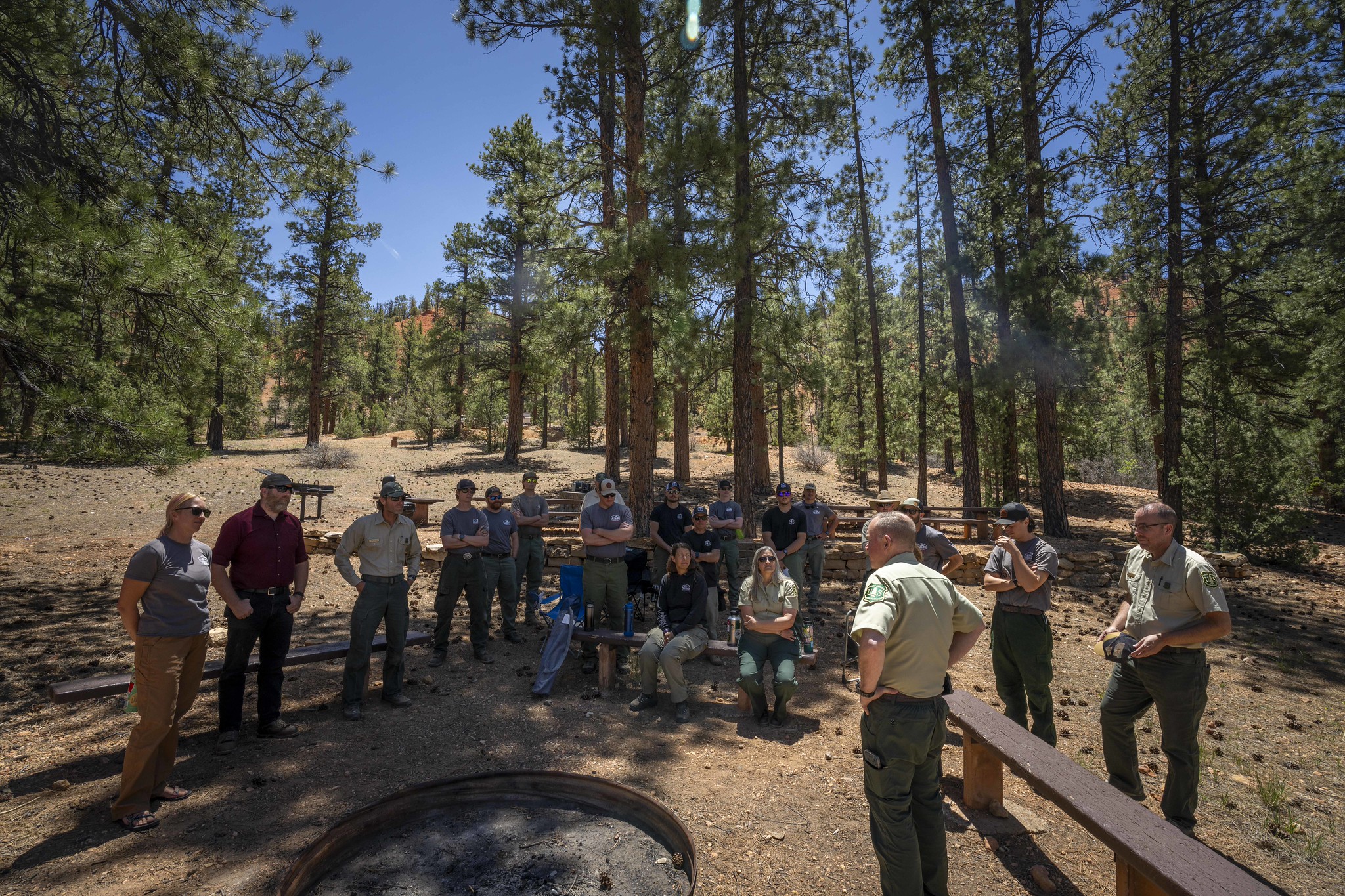
Mary Erickson, a retired supervisor from the Custer Gallatin National Forest, articulated a sentiment of uncertainty and apprehension following the announcement, stating she had "more questions than answers." While refraining from immediate judgment, Erickson underscored the profound nature of the changes, noting, "It’s just such a sweeping change with no real analysis about if there would be cost savings." Her concerns echo broader anxieties about the fiscal prudence and operational efficacy of such a large-scale, disruptive undertaking without transparent, data-driven justification.
Under the new organizational blueprint, the traditional structure of nine regional offices, which have long overseen the nation’s 154 national forests, will be dismantled. In their place, 15 state-level offices will be established. This new approach, reminiscent of the Bureau of Land Management’s (BLM) organizational model, will see states like Washington, Oregon, Montana, Alaska, and Idaho each gain their own dedicated state office for forest management. Conversely, forests in Nevada and Utah will be managed jointly, as will those in Colorado and Kansas, creating new administrative boundaries that may not always align with ecological realities or existing collaborative frameworks. This shift raises questions about how integrated landscape management, crucial for issues spanning state lines such as migratory wildlife corridors or trans-boundary watersheds, will be effectively coordinated.
The impact extends to the agency’s vital research arm, with several Forest Service research facilities facing closure or significant restructuring. While some, like the Rocky Mountain Research Station in Fort Collins, Colorado, are slated to remain operational, others, such as the research station in Portland, Oregon, face closure. The Portland facility has been instrumental in critical ecological studies, including those on endangered species like the spotted owl, a key indicator of old-growth forest health. Eric Forsman, a former Forest Service wildlife biologist who retired in 2016 after years of studying spotted owls and red tree voles, lamented the loss of local leadership and expertise. While acknowledging potential budget benefits, Forsman contended, "It’s not going to improve the quality of the research or the amount of research that gets done." The erosion of localized, long-term scientific inquiry could have lasting repercussions for the evidence-based management of complex forest ecosystems, particularly as climate change accelerates and new environmental challenges emerge.
Erickson and other former agency leaders also voiced apprehension about the strategic implications of moving high-level bureaucratic functions out of Washington, D.C., the nexus of national law and policymaking. "I would push back on this idea that moving out of D.C. is moving closer to the people you serve. That’s not the role of the national office," Erickson argued. She emphasized that the national office’s core mandate involves coordinating and establishing guidance based on national policy, while the forests and districts themselves have historically served as the primary interface with local communities and delivered on-the-ground services. The relocation risks isolating top leadership from the legislative and inter-agency processes essential for effective federal governance and funding.

Furthermore, the disarray anticipated from such a large-scale reorganization is expected to severely hamstring the agency’s ability to tackle the increasingly complex and urgent challenges confronting modern forests. These include escalating tree disease outbreaks, the expansion of the wildland-urban interface (WUI) leading to heightened wildfire risks, and climate change-induced droughts that stress forest health. The Forest Service is already grappling with significant staff losses in recent years, partially due to the now-defunct Department of Government Efficiency (DOGE), making the timing of this new disruption particularly problematic. The loss of experienced personnel and institutional memory could critically impair the agency’s capacity to develop and implement proactive strategies against these existential threats.
The reorganization also raises concerns about an increased role for states in national forest management, a development viewed with trepidation by many environmental advocates. Kevin Hood, executive director of Forest Service Employees for Environmental Ethics, who retired in 2025 after decades with the agency across the Western U.S., acknowledged that local coordination is valuable in principle. However, he expressed deep concern that the new structure could represent a significant step toward ceding the management and control of national forests and other public lands to individual states. This potential shift aligns with a long-standing movement among some political factions advocating for state control or even privatization of federal lands, which opponents argue would lead to inconsistent conservation standards and potentially increased resource extraction at the expense of ecological integrity and public benefit.
Tribal representatives, many of whom declined direct comment for this story, had already articulated profound concerns during the July public comment period. They warned that the reorganization would inevitably lead to a critical loss of expertise and the fracturing of relationships meticulously built over decades. One representative underscored the irreplaceable value of existing staff, writing that mass relocations would "destroy irreplaceable knowledge about Treaty rights, forest conditions, and working relationships built over decades, and new staff unfamiliar with the land will make mistakes." This highlights the unique government-to-government relationship between the federal government and tribal nations, where long-standing relationships and deep understanding of specific treaty obligations and ancestral lands are paramount for meaningful consultation and co-management. The disruption threatens to undermine these crucial partnerships and potentially lead to legal and ethical challenges.
For many within the conservation community, this Forest Service reorganization evokes a strong sense of déjà vu, recalling similar, deeply problematic initiatives from the previous Trump administration. A stark parallel is drawn to the 2019 plan to relocate nearly all Bureau of Land Management (BLM) staff from its D.C. headquarters to Grand Junction, Colorado—then a city of 66,000 located hundreds of miles from a major airport. That administration similarly argued the move would bring high-level staff closer to the predominantly Western lands they managed. However, as Tracy Stone-Manning, who later directed the BLM under President Joe Biden and now serves as president of The Wilderness Society, pointed out, the actual outcome was a mass exodus of experienced staff from the agency.

Indeed, a comprehensive investigation revealed that by the time the Grand Junction office opened in 2020, only 41 of the 328 BLM employees slated for relocation chose to move. For many, the decision involved uprooting their entire families and forcing spouses to seek new employment in a significantly smaller job market. This ill-fated reorganization ultimately cost taxpayers $28 million. The Biden administration subsequently reversed course, moving many high-level positions back to D.C., though it did retain some agency leaders in the Grand Junction office, rebranding it as the agency’s "Western Headquarters." John Gale, who headed the Grand Junction office for two years under Biden, acknowledged the merit in exploring ways to enhance public-lands management but stressed that any such restructuring and relocation must be executed with meticulous thought and care to be genuinely effective.
Stone-Manning reiterated that agencies incur an immeasurable loss of institutional knowledge when experienced professionals, often with decades of specialized expertise, are compelled to leave. While she conceded that the first Trump administration’s intention might not have been to intentionally deplete the BLM’s talent pool, it was undeniably the outcome of that reorganization. She and other observers widely anticipate that the Forest Service will suffer a similar fate, with potentially even more severe ramifications for the public and the nation’s natural heritage. "Our public lands are not being cared for the way they need to be," Stone-Manning warned, articulating a profound concern that such governmental dysfunction could ultimately fuel arguments for divesting federal lands. This outcome, she suggested, could see the federal government throwing up its hands, leading to calls to "sell them off," a prospect that alarms conservationists and threatens the foundational principles of public land stewardship for future generations.