Joko Susilo
A contentious decision by the Department of the Interior (DOI) to revoke federal grazing permits for a conservation nonprofit aiming to restore bison to Montana’s vast public lands has ignited a fierce debate, drawing significant attention to the actions of Interior Secretary Doug Burgum and his top deputy, Karen Budd-Falen. At the heart of the controversy is Burgum’s unusual intervention in administrative appeals that challenged the Bureau of Land Management’s (BLM) initial authorization for the American Prairie Reserve (APR) to graze bison, with the outcome directly benefiting clients formerly represented by Budd-Falen before her appointment to a high-ranking federal post. This series of events has prompted serious ethics questions and calls for investigation into the management of America’s cherished public domain.
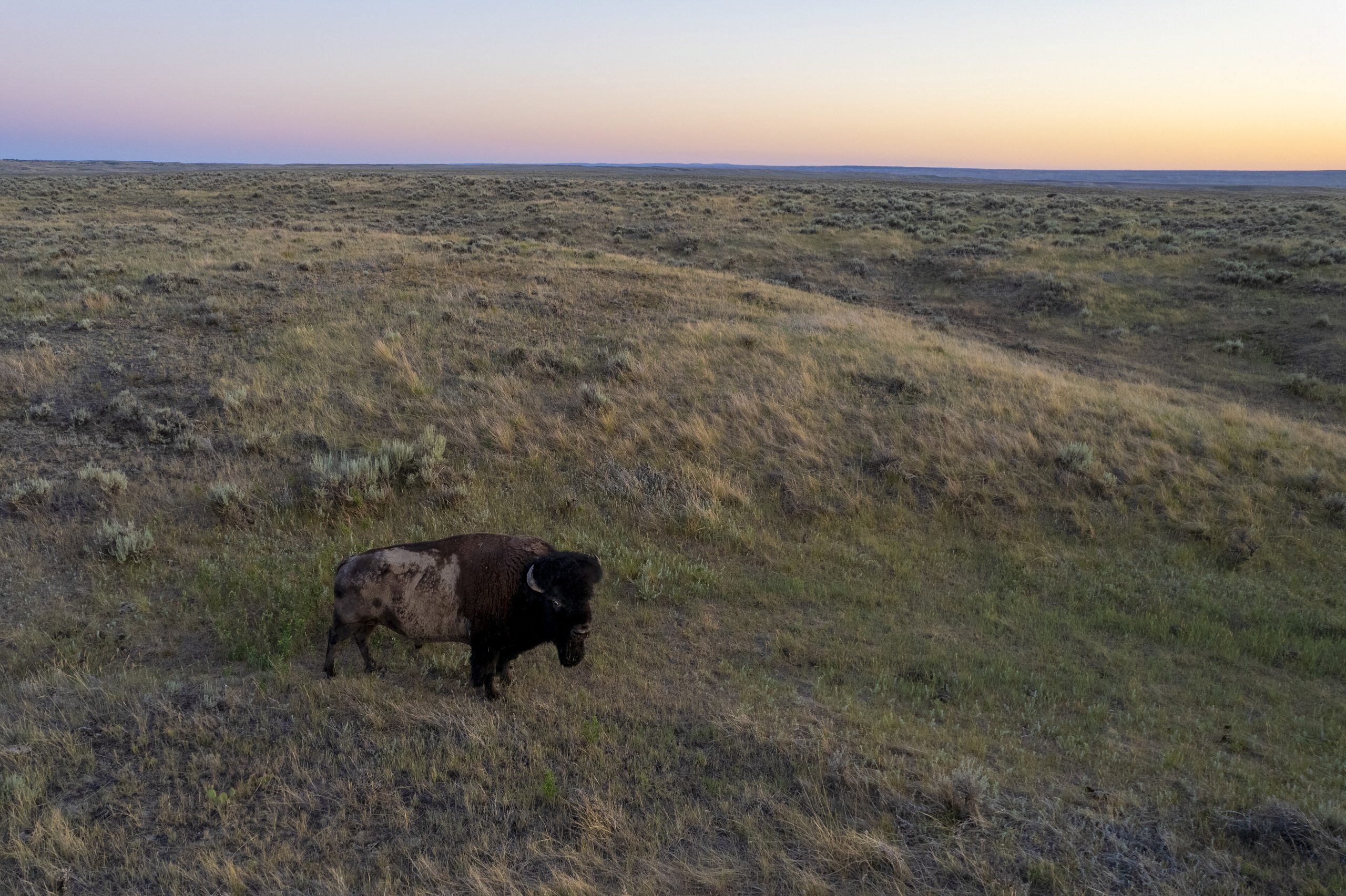
The saga began in August 2022 when Karen Budd-Falen, then a private attorney known for her ardent advocacy for ranching interests, filed a comprehensive 53-page appeal. This appeal directly challenged a Bureau of Land Management decision that had allowed the American Prairie Reserve, a prominent conservation nonprofit, to continue grazing bison on federally managed land in central Montana and even expand its access to new areas. The APR’s ambitious mission is to re-establish free-ranging bison herds across hundreds of thousands of acres of both private and public lands in the state, a vision that aims to restore ecological processes and wildlife populations that once defined the North American prairie. This bold initiative, however, has consistently faced strong opposition from established ranching communities in Montana, who view the burgeoning bison herds as a direct threat to their livestock operations, traditional grazing allotments, and their deeply rooted way of life on the range.
Budd-Falen, often self-described as a "cowboy lawyer" due to her long history of representing agricultural clients in land-use disputes, lodged her appeal on behalf of three powerful pro-ranching entities: the Montana Stockgrowers Association, alongside the North and South Phillips County Cooperative State Grazing Districts. In her legal filing, she asserted that the BLM’s authorization of bison grazing on the designated Montana allotments constituted a violation of multiple federal statutes and regulations. Crucially, she cited the Taylor Grazing Act of 1934, a landmark piece of legislation designed to regulate grazing on public lands, prevent overgrazing, and stabilize the livestock industry. Budd-Falen contended that the BLM’s decision failed to properly apply the law, specifically by allowing bison grazing outside the "production livestock framework" mandated by the Act, thereby causing "significant harm" to her clients’ economic interests and land-use rights.
The appeal was initially submitted to the Office of Hearings and Appeals (OHA), a quasi-judicial administrative law body within the Interior Department that typically possesses the authority to issue binding rulings on such matters. However, in a move that observers describe as rare and highly unusual, Interior Secretary Doug Burgum personally intervened, asserting his authority and effectively overriding the OHA’s jurisdiction over the case. On December 9 of last year, Secretary Burgum formally assumed jurisdiction over three distinct appeals challenging American Prairie Reserve’s federal grazing permits, including the very appeal Budd-Falen had filed years prior. Shortly thereafter, Burgum issued a directive instructing the BLM to reconsider its original decision, explicitly mandating that the agency "take into account the arguments raised" by Budd-Falen’s former clients and other appellants.
The timing of this intervention quickly raised eyebrows within and outside the department. By December 2025, Karen Budd-Falen had been serving as one of Secretary Burgum’s top deputies for approximately nine months, having joined the Interior Department in March 2025. This meant that a senior official within the department was now in a position to benefit from a reversal of a BLM decision, a reversal that was being directly influenced by the Secretary, in a case initiated by her former law firm. The unusual nature of the situation was not lost on the administrative judges handling the case. On December 10, 2025, Dawn Perry, an administrative law judge at the Interior’s Office of Hearings and Appeals, sent an email to a colleague, Amy Sosin, then the acting director of the appeals office, to flag the "high-profile" nature of the bison grazing cases. Judge Perry explicitly highlighted the involvement of Budd-Falen’s long-time law firm, noting, "I wanted to alert you to the fact that Falen Law firm (formerly the Budd-Falen law firm) represents one of the parties to the administrative proceeding." While Budd-Falen had divested her interest in her namesake law firm in March 2025—the same month she joined the DOI—her husband, Frank Falen, remains a principal at the firm, maintaining its direct connection to the ongoing litigation. These critical email exchanges and other case documents were obtained by the Southern Utah Wilderness Alliance (SUWA), a prominent conservation watchdog group, and subsequently shared with the public, adding a layer of transparency to the unfolding controversy.
Just last week, the Bureau of Land Management—an agency that Karen Budd-Falen helps oversee in her capacity as the Interior Department’s associate deputy secretary—finalized its reconsidered decision. The BLM officially revoked American Prairie Reserve’s permits to graze bison on at least six different federal allotments, a move that directly fulfills the precise request Budd-Falen and her clients had made of the agency back in 2022. Among the grazing allotments affected by this significant reversal is the Flat Creek allotment in Malta, Montana. Notably, in her most recent financial disclosure, Budd-Falen explicitly listed the "Flat Creek Allotment" in Malta, Montana, as one of her former legal clients, further intertwining her past professional advocacy with the present departmental outcome.
The Montana Stockgrowers Association, a powerful voice for the state’s cattle ranchers, wasted no time in applauding the BLM’s reversal. In a press release issued last week, the association celebrated the decision, emphasizing the efficacy of its 2022 appeal. "Since the initial 2022 decision, MSGA has consistently argued that BLM failed to properly apply the law and overstepped its statutory authority by allowing bison grazing outside the production livestock framework required under the [Taylor Grazing Act]," the organization stated. They hailed the final decision as a validation of their long-held concerns and, more broadly, as a "significant precedent for public lands grazing policy across the West," signaling potential ripple effects for similar land-use conflicts and wildlife reintroduction efforts in other states.

In response to mounting ethical questions, the Interior Department issued a robust defense of Karen Budd-Falen, asserting that she "has followed all ethical guidelines and recused herself from all matters involving her former clients." The department’s statement further lauded her as a "highly qualified, principled public servant who brings the utmost expertise to her role at the Department." It went on to dismiss the scrutiny as an "attempt to smear a successful woman who is passionate about her work and dedicated to improving life for the American people," characterizing it as an "insult to every hardworking woman across this country." As of the time of this report, the Falen law firm had not responded to requests for comment regarding its continued involvement in the case.
The American Prairie Reserve case is not an isolated incident in which Secretary Burgum has intervened in appeals involving Budd-Falen’s former clients. In February 2025, just a month before Budd-Falen officially joined the Interior Department, Burgum assumed jurisdiction over a substantial number of OHA appeals related to grazing permits in Idaho. One of the appellants in these cases was a grazing association that had been directly represented by Budd-Falen herself. She subsequently withdrew from the case in the same month she commenced her duties at the DOI. Burgum’s intervention in the Idaho cases also implicated Josephine Creek Ranch, an entity with ties to Mike Boren, a multimillionaire conservative donor. Boren, whose name is listed in one of the cases Burgum took control over, currently serves as the Under Secretary of Agriculture for Natural Resources and Environment at the Department of Agriculture. He also had a previous stint at the Interior Department during the Trump administration, highlighting a pattern of individuals with strong ties to ranching and conservative land-use policies occupying influential positions across federal agencies. A Department of Agriculture spokesperson, defending Boren, stated that he has never "conversed with" Burgum about the case and strictly adheres to his ethics guidance. The spokesperson added that Boren is a minority shareholder of Josephine Creek Ranch, Inc., and divested himself of any management responsibilities before entering the administration. They further asserted that, to Boren’s knowledge, the settlement of the lawsuit has had "no impact on the practices of Josephine Creek Ranch, which has always been managed with conservation in mind, although it is likely to be detrimental to the income of several environmental activist attorneys."
This apparent pattern of Secretary Burgum delivering policy changes that either involve or directly benefit Budd-Falen’s former clients has raised significant alarms among conservation groups and ethics watchdogs. Landon Newell, a staff attorney at the Southern Utah Wilderness Alliance, voiced strong concerns, stating, "Public lands should be managed for the long-term benefit of all Americans, not for the short-term personal gain of Karen Budd-Falen or her clients." Newell added that "recent news coverage makes clear that an investigation into her actions at DOI is warranted," underscoring the seriousness of the allegations and the perceived impropriety.
Since joining the Interior Department, Budd-Falen has found herself embroiled in multiple ethics controversies. As extensively reported by various media outlets, she faces calls for investigations stemming from potential conflicts of interest related to her personal financial ties to the controversial Thacker Pass lithium mine project, a significant mining development in Nevada. Furthermore, her work on grazing policies has come under intense scrutiny. It is noteworthy that during her previous tenure in the first Trump administration, Budd-Falen was explicitly barred from discussing grazing policy due to potential conflicts. Her current influence on these policies has the potential to directly benefit her family’s extensive ranching operations. In March, amidst persistent questions from media outlets regarding her involvement in several grazing policies, the Interior Department’s ethics office granted Budd-Falen a partial waiver. This waiver afforded her wide latitude to work on grazing-related matters, despite her substantial ranch holdings and the inherent potential for conflicts of interest. The cumulative weight of these incidents—from the Secretary’s interventions to the specific outcomes benefiting former clients and the broader ethics concerns—casts a long shadow over the integrity of public land management decisions and the ethical conduct of high-ranking officials within the Department of the Interior.