

 Rocky Gerung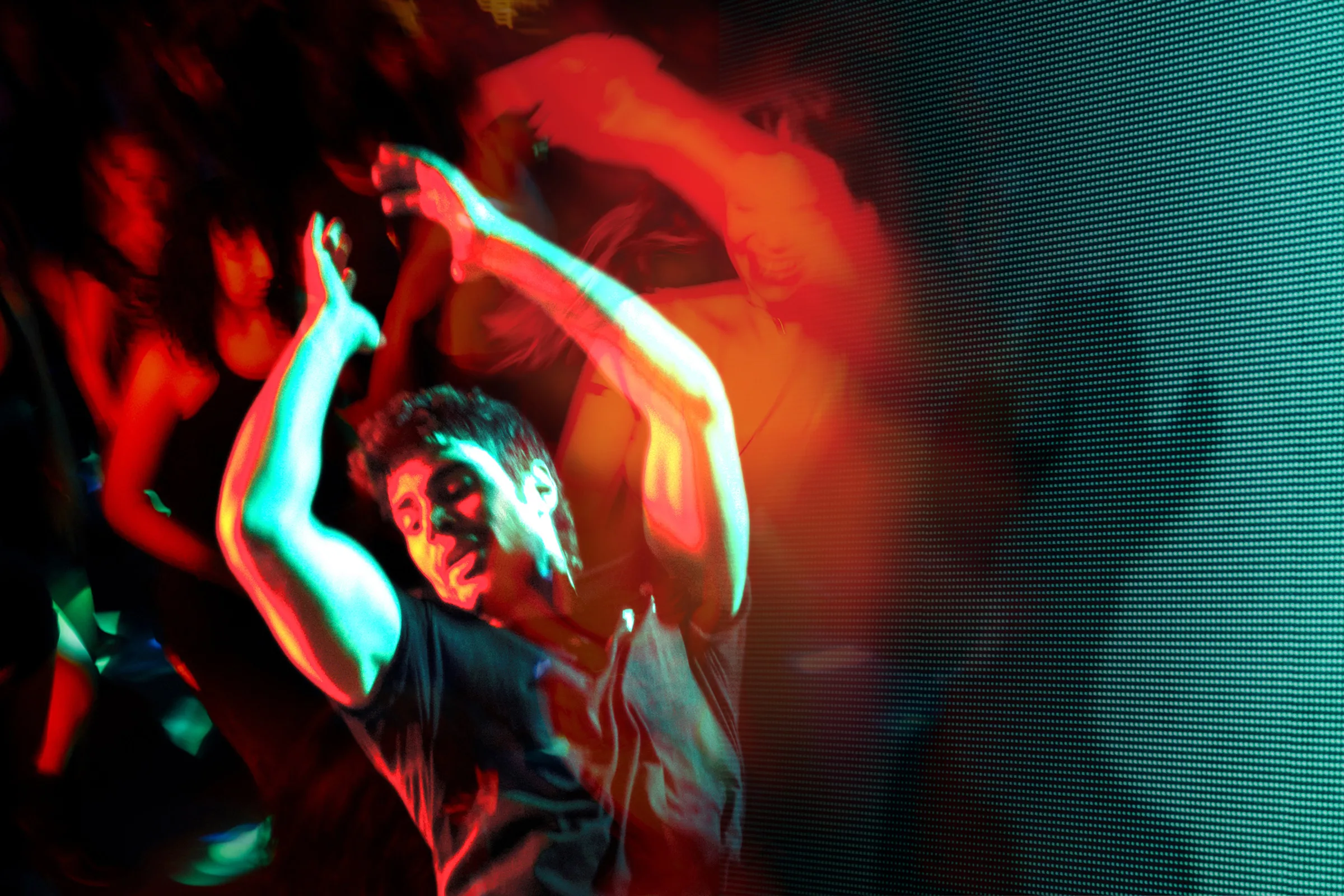
As a "pineapple express" storm raged outside, my husband, Aaron, and I stepped into Stud Country, a vibrant hub for queer country dancing in Los Angeles. Donning white N95 masks and shedding our raincoats to reveal damp t-shirts tucked into jeans and cargo pants, our matching cowboy boots and belts signaled our readiness for the evening. This particular Thursday, a school night, found us at Los Globos, the venue for Stud Country’s weekly country dance event, eager to learn the two-step. My early twenties were spent frequenting this historic Silver Lake establishment for late-night techno-house sets and weekday salsa lessons, but tonight marked a return for a different kind of rhythm – a beginner’s two-step class.
Our recent courthouse wedding, a proactive measure before a potential Supreme Court ruling that could impact same-sex marriage rights, spurred our pursuit of the perfect "first dance." While the court ultimately declined to hear the case, we were still set on a spring desert reception with friends and family, and mastering the two-step felt like the ideal preparation. Stud Country, renowned for its blend of classic and ’90s country dances set to Western and modern pop tunes, has become a significant force in California’s queer country scene. This resurgence echoes a half-century tradition of LGBTQ+ cowboy culture and line dancing in Los Angeles, with its influence now extending to New York City, evident in merchandise proclaiming "I’m Bi for Stud Country."

The dance floor was initially sparse until the resonant twang of a dobro filled the air. As the lights dimmed and a disco ball began to spin, Stud Country co-founder Sean Monaghan and esteemed Los Angeles queer country figure Anthony Ivancich took center stage, demonstrating a captivating two-step. Their fluid movements, characterized by looping twirls and elegant holds, commanded the room’s attention, much like the impressive display of the greater sage grouse. This performance, however, was not a mating ritual but a powerful exhibition of intergenerational camaraderie.
Stud Country emerged in 2021, a testament to resilience following the closure of Oil Can Harry’s, a legendary gay country-western bar where Ivancich had danced for over five decades. Situated in Studio City, Oil Can Harry’s stood as one of the oldest queer establishments in the United States, operating since 1968. It served as a sanctuary for diverse forms of expression, from disco to leather, navigating through the targeted police raids of the late 1960s and the devastating AIDS crisis of the 1980s, becoming a vital center for community support and fundraising. Ultimately, however, the COVID-19 pandemic proved insurmountable.
The building that once housed Oil Can Harry’s, a site alongside other pivotal LGBTQ+ landmarks like The Black Cat – which hosted some of the nation’s earliest LGBTQ+ protests predating the Stonewall Uprising – is now recognized as a historic-cultural monument by the Los Angeles Conservancy. Stud Country has admirably embraced the mantle of queer country, organizing events across Los Angeles and increasingly nationwide. This model of pop-up parties has gained traction as rising rents and gentrification continue to force the closure of LGBTQ+ bars across the country, a persistent challenge for community spaces.

Sean Monaghan reflected on this cultural continuity in a Los Angeles Times documentary, emphasizing the significance of those who paved the way: "Remembering that the elders that come to Stud Country now literally got arrested for trying to create this culture is remarkable. They laid the foundation for what we do now."
Upstairs, during the two-step class, Aaron led while I followed. Our hands intertwined, his resting on my hip and mine on his shoulder, we glided counterclockwise with over twenty other couples. The fundamental rhythm of the two-step, a pattern of two quick steps followed by two slow steps, echoed through the room. "Quick, quick, slow, slow!" our instructor called out above the music. My feet occasionally stumbled as I grappled with the syncopated beat, but closing my eyes allowed a growing confidence to emerge, mirroring the assured grace of the sage grouse. Like any strong partnership, successful pair dancing hinges on trust.
The two-step, a dance rich in local variations, includes unique queer traditions such as "shadow dancing." This intimate style involves partners facing the same direction, moving in close synchrony. Our instructor highlighted that two-stepping transcended mere partner dancing; it fostered intergenerational connections and strengthened community bonds, acting as a bridge across generational divides.

Just as Aaron and I began to find our flow, the instructor signaled a partner rotation. Suddenly, I was dancing with Ariella, her lips painted a bold purple, then with Bri, whose boots sparkled with embellishments, and finally with Jorge, sporting a stylish crop top. Each partner brought a distinct lead, and the experience of being spun by individuals of varying genders and heights while navigating new steps together proved both exhilarating and enlightening.
As we departed in the pouring rain, the rhythm of the two-step still resonated in our steps. "Quick, quick, slow, slow." I found myself envisioning our first dance at the reception, contemplating a two-step to The Chicks’ "Cowboy Take Me Away," the very song our friend Taylor had performed at our courthouse ceremony, bringing tears to many eyes. For Aaron and me, two queer individuals embracing a cowboy aesthetic, the song held profound personal meaning, evoking memories of road trips across the Southwest, witnessing desert blooms, traversing vast expanses of sagebrush, and sleeping beneath starry skies, just as the lyrics described.
One certainty remained: we had our work cut out for us. To truly do justice to the song and honor the legacy of our queer ancestors on that dusty desert dance floor, we needed to polish our moves and master the art of shadow dancing.

Confetti Westerns is a recurring column exploring the queer natural and cultural histories of the American Southwest.







