

 Roger Danuarta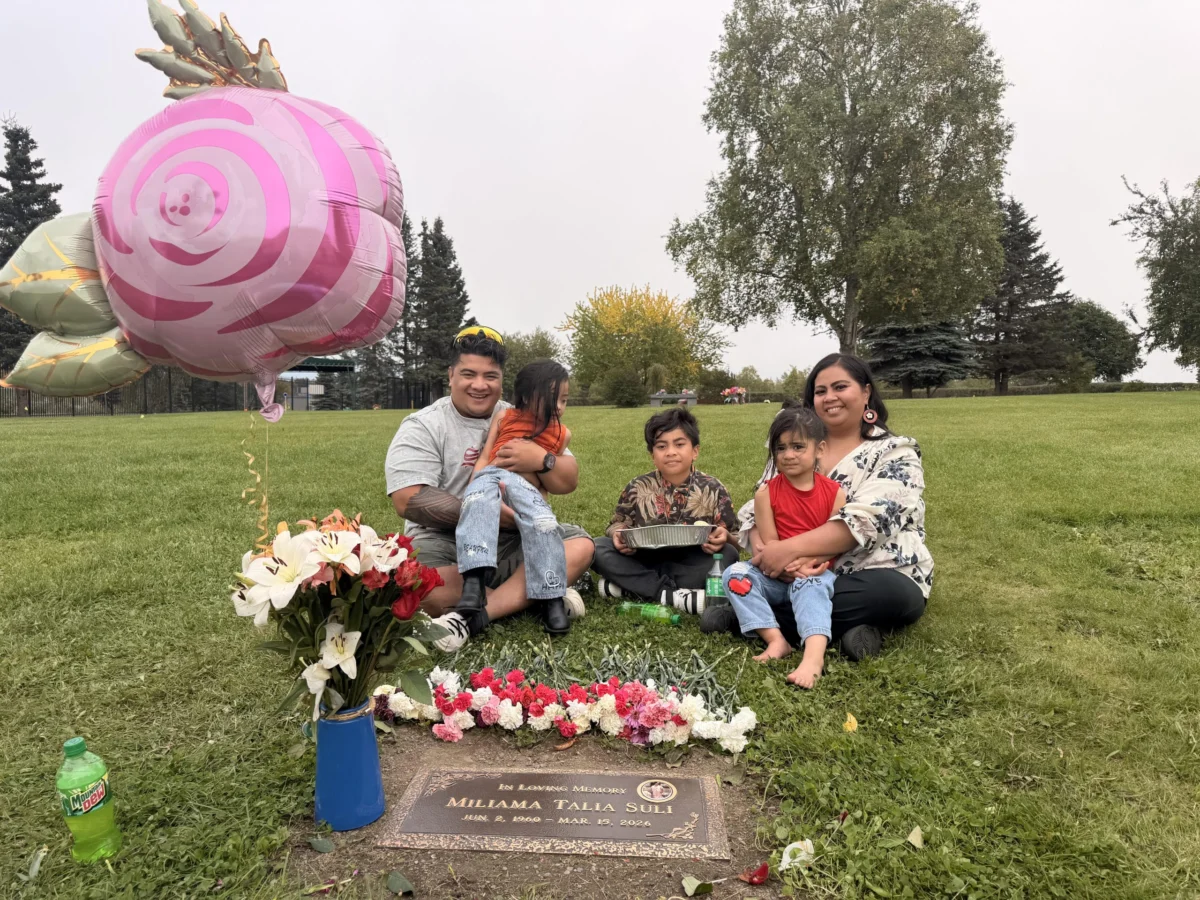
After nearly three years of intense legal and emotional strain, Alaska prosecutors have formally dismissed all voter fraud charges against an American Samoan family residing in the small harbor town of Whittier, a decision that brings profound relief to the accused while simultaneously casting a spotlight on the arcane and often misunderstood legal status of U.S. nationals. The Republican-led state attorney general’s office, which had pursued felony charges against 11 members of the Pese-Suli family, including the now-deceased matriarch Miliama Suli, announced the move following a significant setback in the state Court of Appeals. This long-awaited resolution marks a pivotal moment for the family and reignites critical discussions about citizenship rights, voter access, and the unique challenges faced by American Samoans living on the U.S. mainland.
For Mike Pese, whose mother, Miliama Suli, passed away in March while under prosecution, the news transformed a weekly somber visit to her Anchorage grave into a jubilant celebration. On September 13, surrounded by his wife and children, Pese shared the joyous update with balloons, flowers, and traditional Samoan pork buns, confident that his mother, a revered community pillar, would have praised the Lord and thrown a grand barbecue to mark the victory. His mother had been deeply worried about the case in her final days, a burden now lifted from the family’s shoulders. "It’s a huge amount of weight lifted off my shoulders," Pese shared, reflecting on the immense stress that had consumed their lives.

The legal ordeal began in the wake of Tupe Smith’s 2023 victory in a local school board election. Smith, Pese’s wife and a U.S. national, believed she had the right to vote in local elections, a common misconception among American Samoans who often navigate a complex, ambiguous legal landscape. Unlike individuals born in other U.S. states and territories, American Samoans are classified as U.S. nationals, not citizens, under U.S. law. This distinction, rooted in the Insular Cases of the early 20th century, grants them U.S. passports and many federal protections, such as Social Security benefits, but crucially denies them the right to vote in federal, state, or even most local elections if they reside outside of American Samoa. They are effectively treated as non-citizen immigrants for electoral purposes, a status that remains largely unknown to the broader public and, remarkably, even to many U.S. officials.
The confusion surrounding this status was evident throughout the investigation. Alaska state troopers who arrested Smith and later interrogated her relatives admitted their own misunderstanding, with one trooper confessing, "I thought people of American Samoa were U.S. citizens." A year-long investigation into the case revealed that Alaska state lawmakers, elections officials, and police generally lacked a clear understanding of American Samoan nationals’ voting rights. This systemic ignorance led to the proactive registration of ineligible voters and the mailing of voter registration cards to them, inadvertently setting the stage for the Whittier family’s legal quagmire.
Despite this widespread confusion and the lack of demonstrable intent to defraud, the office of Alaska Attorney General, operating under Republican Governor Mike Dunleavy, pressed ahead with felony charges, threatening the defendants with up to a decade in prison. This aggressive prosecution drew sharp criticism from civil rights advocates, who viewed it as part of a broader, politically motivated campaign to validate claims of widespread voter fraud by non-citizens—a phenomenon that numerous studies have shown to be exceedingly rare. Such high-profile prosecutions, regardless of their outcome, can have a chilling effect, intimidating eligible voters and deterring participation from communities with intricate citizenship ties.

The case sent ripples of anxiety throughout Alaska’s sizable American Samoan community, which extends far beyond Whittier to cities like Anchorage, Juneau, Utqiagvik, and Fairbanks. "There were questions across the whole state," noted Tafilisaunoa Toleafoa, executive director of the nonprofit Pacific Community of Alaska. "Community members have reached out, concerned about the possibility of the same thing happening to them." While celebrating the dismissal of charges, Toleafoa emphasized that the underlying issues remain unresolved: the pervasive confusion about U.S. national status and the denial of birthright citizenship to American Samoans. "American Samoa is the United States and therefore birthright citizenship is a right for all American Samoans," she asserted, underscoring the ongoing advocacy for equal rights.
The turning point came earlier this month when the Alaska Court of Appeals dismissed the indictment against Tupe Smith. The court found that state troopers had misled her during her initial interrogation and that prosecutors had similarly misled the grand jury in securing her indictment. Crucially, the appellate court ruled that the state failed to prove Smith acted with "consciousness of wrongdoing," establishing that "knowingly" casting a vote is not synonymous with "intentionally" violating election law. This distinction proved fatal to the state’s case, as the circumstances of the other 10 defendants were largely identical. Consequently, the attorney general’s office, recognizing the diminished prospects of success, moved to dismiss the remaining charges "without prejudice," a legal term indicating that they retain the option to refile charges in the future.
However, the attorney general’s office, in a press release following the dismissals, maintained its belief that Smith had lied and expressed respectful disagreement with the Appeals Court’s findings regarding the grand jury. Deputy Attorney General Angie Kemp affirmed their confidence in the Department of Public Safety and the troopers involved. This stance suggests that while the current battle is over, the underlying ideological friction regarding voter fraud perceptions may persist.

The family’s steadfast refusal to accept plea deals last summer, despite facing severe penalties, played a crucial role in securing this broader victory. They steadfastly maintained their innocence and declined to set a precedent that could negatively impact other U.S. nationals. Their resilience came at an enormous personal cost, both emotional and financial. Nelson Vaimoa, another defendant, described the all-consuming stress, resorting to working three shifts to distract himself, even forgetting his daughter’s second birthday due to the mental toll. The case eroded his willingness to volunteer in Whittier, a tight-knit community where nearly all 300 residents live within a single apartment tower. "I don’t feel like helping out anymore. I just want to go to work and come back home. All of the savings I had were canceled, all the plans I had—all because of this case," Vaimoa lamented.
Miliama Suli, the family matriarch, embodied the community spirit, owning the local grocery store and serving as a religious and civic leader. The state’s continued prosecution of her even as her health rapidly declined underscored the perceived harshness of the charges. Tupe Smith spoke of how her mother would have been the first to call, celebrating God’s goodness at the news of the dismissal.
Attorneys representing the family members lauded the outcome but also highlighted the irreparable damage already inflicted. Neil Weare, co-founder of Right to Democracy, an organization advocating for territorial Americans, stated, "These are stand-up people, and to see them treated like criminals was just really disgusting. It’s nice to see their good name and reputation getting cleared." Weare, however, criticized the "without prejudice" dismissal, arguing that the family deserves permanent closure and a definitive end to the threat of future prosecution, suggesting an apology would also be appropriate. Matt DiTullio, an Alaska public defender involved in the case, echoed this sentiment, expressing relief that the courts reached a "sensible and correct conclusion" but lamenting the years of stress the Pese family and their community endured.

The trauma of the prosecution had led many defendants to consider leaving Whittier and Alaska to seek a fresh start. Yet, Mike Pese, at his mother’s gravesite, reaffirmed their commitment to their home. "She loved Whittier. She’d made it her home. In the last weeks of her life, we talked about it, and decided we’re going to stay in Whittier and fight for it," he declared. This determination reflects a broader resolve within the American Samoan community and among advocates to continue the fight for full and equal citizenship, challenging a historical legacy that has relegated them to a second-class status within their own nation. The Whittier case, while resolved for this family, serves as a powerful reminder of the ongoing struggle for democratic inclusion and the need for greater clarity and equity in U.S. citizenship laws for all its people.








