

 Joko Susilo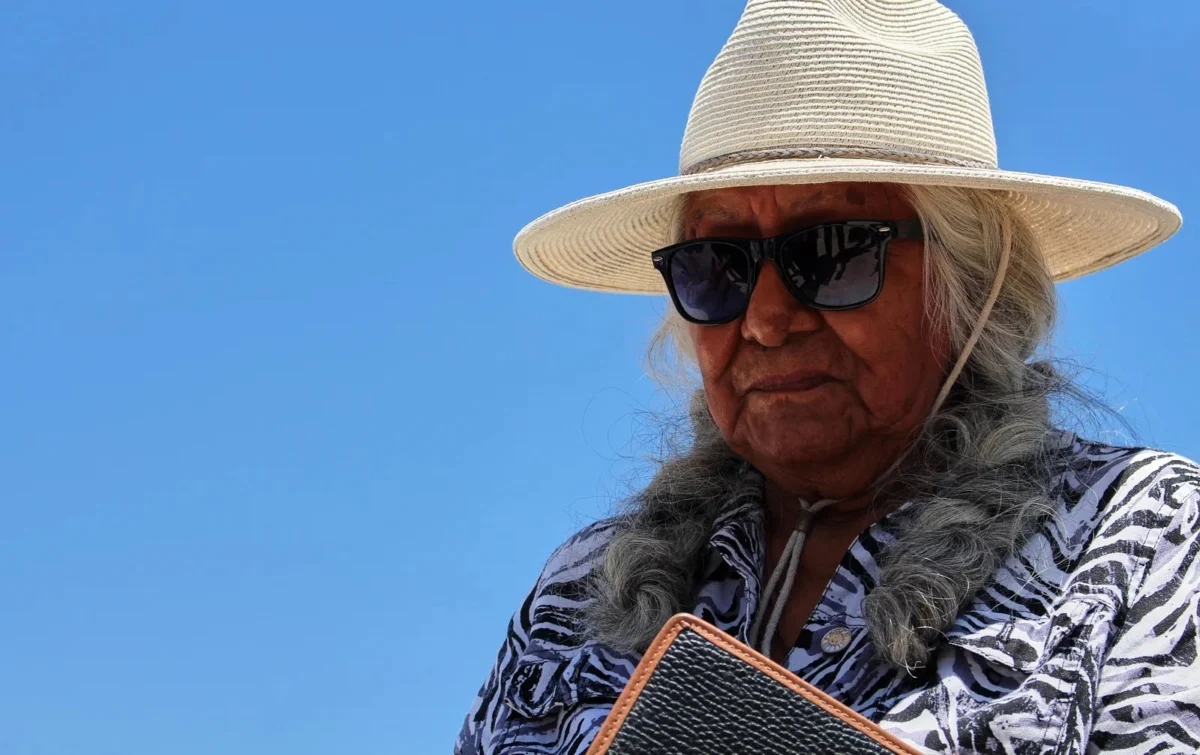
Near the serene pond of Quitobaquito Springs, a vital desert oasis nestled within a U.S. national park, Lorraine Marquez Eiler, a revered Hia-Ced O’odham elder, spoke with profound emotion about her ancestors’ enduring connection to this sacred site. For generations, her family and community have journeyed through the formidable Sonoran Desert, undertaking arduous 50-mile pilgrimages to A’al Vaipia, the life-giving waters known to the O’odham. Holding a faded photograph of her great-great grandparents and great-grandparents, who traversed these very lands, Marquez Eiler shared their stories with a gathering of Indigenous leaders and a U.S. congressional representative on August 24, all united in their condemnation of impending border wall construction.
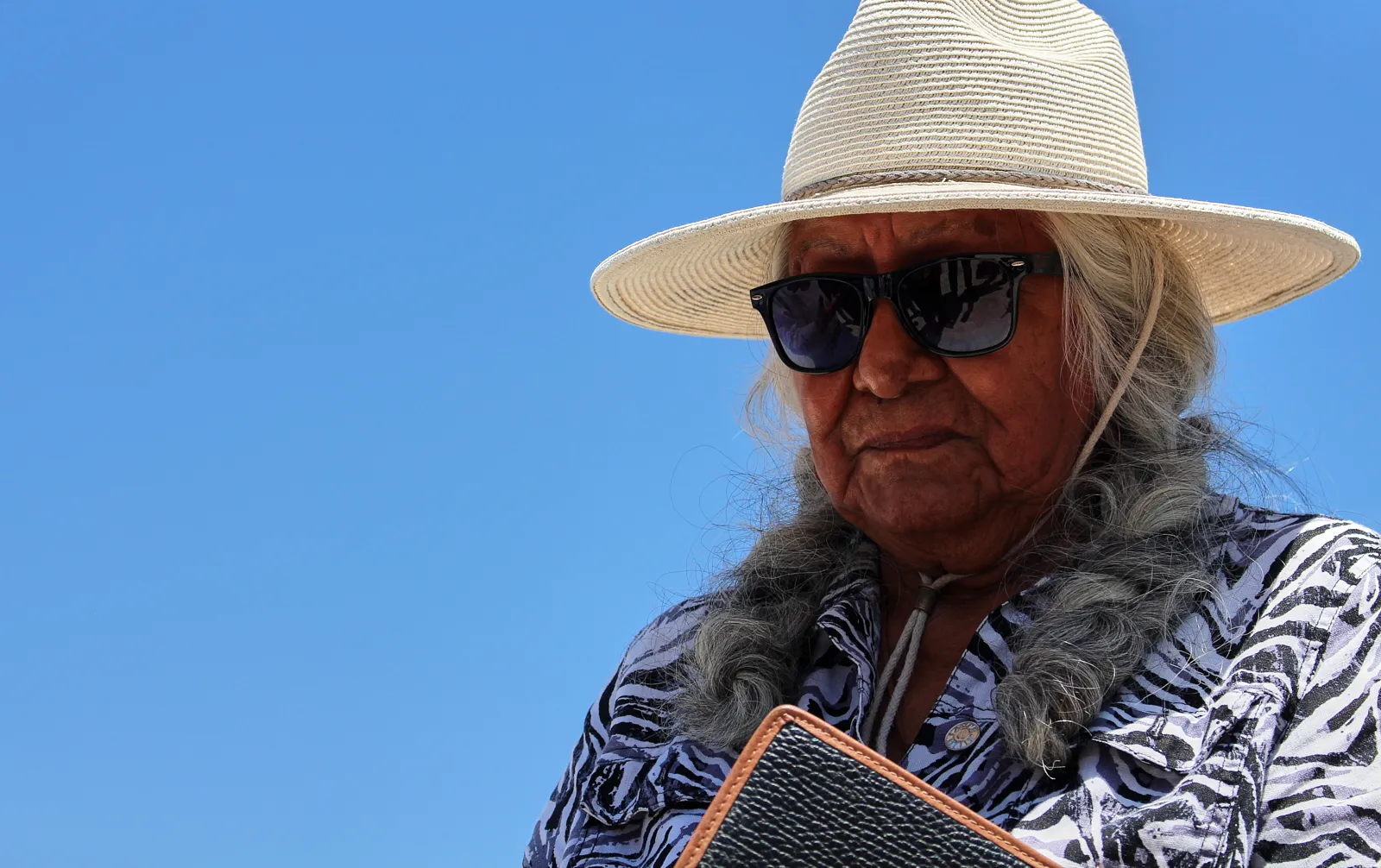
“All of my lifetime of work has been for the memories of my ancestors, of what they went through. With the incoming wall, should it be disrupted?” Marquez Eiler articulated in a voice filled with determined conviction, her gaze sweeping across her ancestral lands. “That’s just another slap in the face, as far as I’m concerned, to my ancestors. And so I ask: Why?” Her plea resonated deeply, echoing the anguish of a people whose heritage faces an existential threat from federal infrastructure projects.
The gathering at Quitobaquito Springs, followed by a town hall attended by over 100 community members, underscored the mounting tension and desperate hope for a reprieve. Marquez Eiler, along with others, expressed a fervent wish that the federal government might halt construction, drawing parallels to a recent pause in Texas that followed widespread public outcry. Quitobaquito holds immense spiritual significance for the Hia-Ced O’odham, the Tohono O’odham, and other Indigenous communities spanning Southern Arizona and Mexico. For centuries, these peoples have undertaken religious pilgrimages and ceremonies at the springs, a tradition now jeopardized by the proposed barrier. Fears abound that the very existence of the spring, a delicate hydrological system in an arid landscape, is at risk of drying up should another border wall proceed across these protected lands, situated approximately 30 miles west of the Tohono O’odham Nation’s main territory.

The Tohono O’odham Nation currently finds itself engaged in a multi-front struggle against federal border construction. One battle unfolds on their sovereign O’odham land, where the government intends to erect a new 30-foot border wall. Simultaneously, another confrontation looms on adjacent federal land, where a proposed border fence threatens the ecological and cultural integrity of Quitobaquito Springs. These projects represent a significant component of the Trump administration’s ambitious initiative to allocate nearly $50 billion in taxpayer funds towards expanded border wall construction across the U.S.-Mexico frontier, a policy deeply unpopular with many environmental groups, Indigenous communities, and human rights advocates.
This is not the first instance of tribal citizens confronting the U.S. government over the fragmentation and destruction of their ancestral domains. Historically, the Tohono O’odham people lived across vast, undivided territories, long before the imposition of modern international boundaries. The 1854 Gadsden Purchase, which solidified the U.S.-Mexico border, was executed without consultation or consent from the Indigenous nations whose lands it bisected. This arbitrary demarcation profoundly impacted the O’odham, arbitrarily separating families and communities that had always moved freely within their traditional homelands. To this day, O’odham citizens on both sides of this imposed border continue to traverse their nation, maintaining cultural ties and familial bonds, often facing increased scrutiny and division from border officials. While the tribal nation has sought cooperation with border authorities to address illicit activities, they have consistently resisted physical barriers that disrupt their way of life and desecrate their ancestral landscapes.

The most recent conflicts under the Trump administration have escalated into complex legal battles and high-profile standoffs, notably between federal agents and law enforcement from the Tohono O’odham Nation. At its heart, this dispute pits the assertion of tribal sovereignty against the federal government’s claim of U.S. national sovereignty, highlighting a fundamental clash over land rights, cultural preservation, and self-determination.
In the Organ Pipe Cactus National Monument, an internationally recognized biosphere reserve where Quitobaquito Springs is located about 13 miles west of the Lukeville port of entry, the federal government has proposed constructing a new 30-foot border fence just 150 feet from the existing barrier. This plan ignites deep concern within the Hia-Ced O’odham community, particularly for Marquez Eiler, who fears irreversible loss of access to lands integral to generations of tribal religious traditions and ceremonies. The irony is stark: the Organ Pipe Cactus National Monument itself was established in 1937 by President Franklin Roosevelt with the stated purpose of preserving a vast expanse of the unique Sonoran Desert’s ecological wonders, a mission now seemingly at odds with federal border policies.

A few miles east of the sacred pond, the grim reality of construction is already visible. Federal government contractors have deployed heavy equipment, and the surrounding land lies cleared, stripped of its natural vegetation. Cacti, many of them legally protected desert plants and sacred to the O’odham, who traditionally revere flora and the earth as their ancestors, are marked with colored strings. A rope delineates the proposed path for the second border wall, a line that, if extended westward, runs directly into the Quitobaquito pond. Such actions risk not only the destruction of culturally significant plant life but also irreparable harm to the delicate desert ecosystem.
The Quitobaquito Springs ecosystem is a unique biodiversity hotspot in the desert, home to several endangered species including the Quitobaquito pupfish, the Sonoyta mud turtle, the desert caper plant, and the tiny Quitobaquito tryonia, a springsnail. The disruption of groundwater, increased dust, and habitat fragmentation caused by construction could lead to the extinction of these species, further compounding the environmental tragedy.

Approximately 30 miles east of Quitobaquito, on lands belonging to the Tohono O’odham Nation, the administration has also proposed replacing existing low-level steel fencing with a towering 30-foot barrier in three distinct areas. In response, the Tohono O’odham Nation filed a federal lawsuit against the Department of Homeland Security in June, seeking to block border wall construction on their sovereign territory. The lawsuit meticulously outlines the Nation’s long-standing opposition to a border wall on their Reservation, emphasizing that such construction would entail “significant devastation.” It highlights the destruction of sacred mountain peaks, the severing of ties between O’odham communities and families divided by the border, profound interference with religious rituals and practices, and the obliteration of plant and animal resources vital to the O’odham way of life. The legal filing also cited previous instances earlier in the year where federal contractors, while constructing sections of the wall adjacent to O’odham land, “destroyed ancestral sites of great importance.” One particularly egregious incident in April involved a Department of Homeland Security contractor damaging the Las Playas Intaglio, a 1,000-year-old fish-shaped geoglyph in Arizona’s Cabeza Prieta National Wildlife Refuge, a site that historically pointed towards the Gulf of California.
In its legal memorandum opposing the lawsuit, the federal government argued that the Tohono O’odham Nation failed to demonstrate that the border wall construction exceeded the government’s legal authority. The document forcefully asserted the U.S. government’s "preexisting right to secure the border," a claim that directly challenges the concept of tribal sovereignty and treaty obligations. “While the United States has worked — and will continue to work — cooperatively with Plaintiff to promote their shared interest in border security, Plaintiff does not hold veto power over the United States’ sovereign duty to secure its borders,” the memo stated, underscoring the federal perspective on national security overriding tribal objections.

Amidst the legal proceedings, tribal leaders took direct action on August 7, erecting “No Trespassing” signs and issuing a news release declaring that any border wall contractors attempting to enter the Tohono O’odham Nation would be deemed "illegally trespassing." However, in the early morning hours of August 25, contractors entered the tribal nation, reportedly accompanied by approximately 20 "masked, armed" Border Patrol agents, according to a subsequent news release from the Tohono O’odham Nation, signaling a direct confrontation. Rodney Scott, U.S. Customs and Border Protection commissioner, affirmed in an emailed statement that CBP was proceeding with the federal government’s border wall construction project along the 62 miles that traverse the Tohono O’odham Nation. Scott characterized the project as vital for closing "one of the most dangerous smuggling and trafficking corridors on the Southwest border: remote desert that has facilitated decades of drug loads, migrant deaths, and cartel activity." A Department of Homeland Security spokesperson further clarified that “the worksites are inside the 60-foot Roosevelt Reservation,” referring to a strip of federally managed land north of the U.S.-Mexico border, asserting federal jurisdiction over the construction sites.
Back at Quitobaquito Springs, U.S. Rep. Adelita Grijalva listened intently as Marquez Eiler shared more insights into the tribal communities’ tenacious struggle. “After standing here today, seeing this land, and directly hearing from the nation, I am more convinced than ever, this is not just a border construction project,” Grijalva declared. “This is about tribal sovereignty, it’s about sacred land, it’s about history, culture and spiritual practices of the O’odham people and others.” Tohono O’odham Chairman Verlon Jose and Vice Chairwoman Carla Johnson spearheaded the visit to Quitobaquito, making a powerful stand against the Trump administration’s unwavering commitment to building new border infrastructure. Jose emphasized that for the Tohono O’odham and other Indigenous peoples, the land itself serves as their church, a place for ceremony and prayer. He recounted the federal government’s historical pattern of desecrating O’odham sacred lands, pointing to the destruction of O’odham burial sites on Monument Hill when the first border fence was erected between 2019 and 2020. “This is not ours to own. It is ours to protect, to protect for the people. To protect for you and I and everyone the creator has placed here on this earth,” Jose articulated, underscoring a philosophy of stewardship over ownership.

A few hours after their visit to Quitobaquito on August 24, the International Sonoran Desert Alliance, co-founded by Marquez Eiler, hosted a town hall in Ajo, approximately 40 miles north of the springs. Congresswoman Grijalva, Chairman Jose, and Vice Chairwoman Johnson updated the more than 100 residents who packed the Ajo Plaza Rec Hall on their efforts to halt the construction projects. Community members voiced deep concerns over the fate of the region’s unique wildlife, including the endangered Quitobaquito pupfish, Sonoyta mud turtle, desert caper plant, and Quitobaquito tryonia springsnail, all of which call the springs home. They also criticized the exorbitant taxpayer cost of the border fence, estimated at over $46 billion in federal funding across projects from California to Texas, arguing for comprehensive, humane immigration reform as a more effective and ethical alternative. “Why do we not want a wall? Because we are not afraid of who is on the other side,” stated Sara Mae Williams, Justice of the Peace in Ajo and a proud citizen of the Tohono O’odham Nation. “It’s us. It’s our people. It pains me when they try to divide us.” The following day, August 25, Grijalva, alongside fellow Democratic federal lawmakers representing border regions—Reps. Veronica Escobar of Texas, and Raul Ruiz and Juan Vargas of California—sent a unified letter to the Departments of Homeland Security and the Interior, formally opposing further wall construction. The lawmakers urged the administration to cease all activity “until meaningful government-to-government consultation has occurred with the Tohono O’odham Nation and Congress has received a full accounting of the project’s impacts on Tribal lands, cultural resources, and surrounding communities.”
Despite these concerted efforts, U.S. District Judge Richard J. Leon denied the Nation’s motion for a preliminary injunction on August 14. In his written opinion, Judge Leon concluded that the Tohono O’odham Nation was “unlikely to succeed on the merits because the federal Roosevelt Reservation exists along the international border and, in any event, plaintiff has not established that construction of a border wall will indeed alter Reservation boundaries.” While denying the injunction, Judge Leon noted the significant importance of the international border to both the United States and the Nation, stating, “While I have concluded that a preliminary injunction is unwarranted, I fully expect the Government in the months ahead to follow through on its guarantees of consultation and cooperation with the Nation to address the Nation’s concerns regarding border wall construction!” Undeterred, the Tohono O’odham Nation appealed Judge Leon’s decision to a higher court on August 26. The very next day, they again petitioned Leon’s lower court to halt border wall construction pending the resolution of their appeal. As of September 10, Judge Leon had not yet responded, and the federal government has signaled its intent to fight both the injunction and the appeal. The battle for Quitobaquito Springs and the broader Tohono O’odham ancestral lands continues, with tribal leaders resolute in their defense. “We will not let this destroy our sacred sites, our burial sites, our holy places, the places of our ancestors,” Chairman Jose declared emphatically at the town hall. “We will not let it destroy our environment. We will not let it further divide our people. We will not let it divide our reservation.” Their words underscore a profound commitment to preserving a cultural and ecological legacy against overwhelming federal power, highlighting a critical flashpoint in the ongoing debate over border security, environmental conservation, and Indigenous rights.








