

 Johny Prima
Energy developer Avangrid has officially withdrawn its longstanding permit application for an industrial-scale solar facility on Badger Mountain, a site profoundly sacred to the Confederated Tribes of the Colville Reservation and the Confederated Tribes and Bands of the Yakama Nation in central Washington. This pivotal decision, coming after years of tribal opposition and public scrutiny, marks a significant moment in the ongoing national dialogue concerning renewable energy development and the protection of Indigenous cultural heritage. The proposed project site, spanning both private and public lands managed by the Washington Department of Natural Resources, had become a flashpoint, highlighting the complex intersection of green energy ambitions and ancestral rights. Tribal nations possess inherent rights to practice cultural traditions, including vital food gathering, ceremonial practices, and spiritual connections, on public lands, a principle central to their sovereignty and way of life. A comprehensive 2024 investigation by High Country News and ProPublica had previously illuminated how Avangrid’s proposed development directly threatened these constitutionally protected rights, amplifying the voices of those who sought to preserve the sanctity of Badger Mountain.
Chairwoman Cindy Marchand of the Colville Tribes expressed profound satisfaction following the withdrawal, stating in an emailed statement, “The Colville Tribes is very happy to hear that the proposed solar project on Badger Mountain has been withdrawn. While the Colville Tribes certainly appreciates the value of renewable energy such as solar power, sacred sites must remain pristine to pass down to future generations. We appreciate Avangrid Power LLC’s decision to withdraw this project and we trust that they can find a more appropriate site.” This sentiment underscores a global challenge: balancing the urgent need for renewable energy to combat climate change with the imperative to respect and protect Indigenous lands, cultures, and self-determination. Across continents, from the Arctic to the Amazon, similar conflicts arise as energy transition projects, though well-intentioned, often encounter resistance from communities whose ancestral territories and traditional ways of life are put at risk.
The precise motivations behind Avangrid’s decision remain somewhat opaque. Official permitting proceedings suggest that the primary driver was not direct tribal considerations but rather unforeseen construction delays impacting the broader regional energy grid. Avangrid, a prominent subsidiary of the Spanish multinational utility Iberdrola, with extensive renewable energy operations across the United States, declined to offer further clarification to High Country News, and the Department of Natural Resources also chose not to comment on the matter. This lack of transparency, while common in corporate decision-making, has often fueled skepticism among communities advocating for their rights, raising questions about the true weight given to cultural and social impacts versus economic and logistical factors.
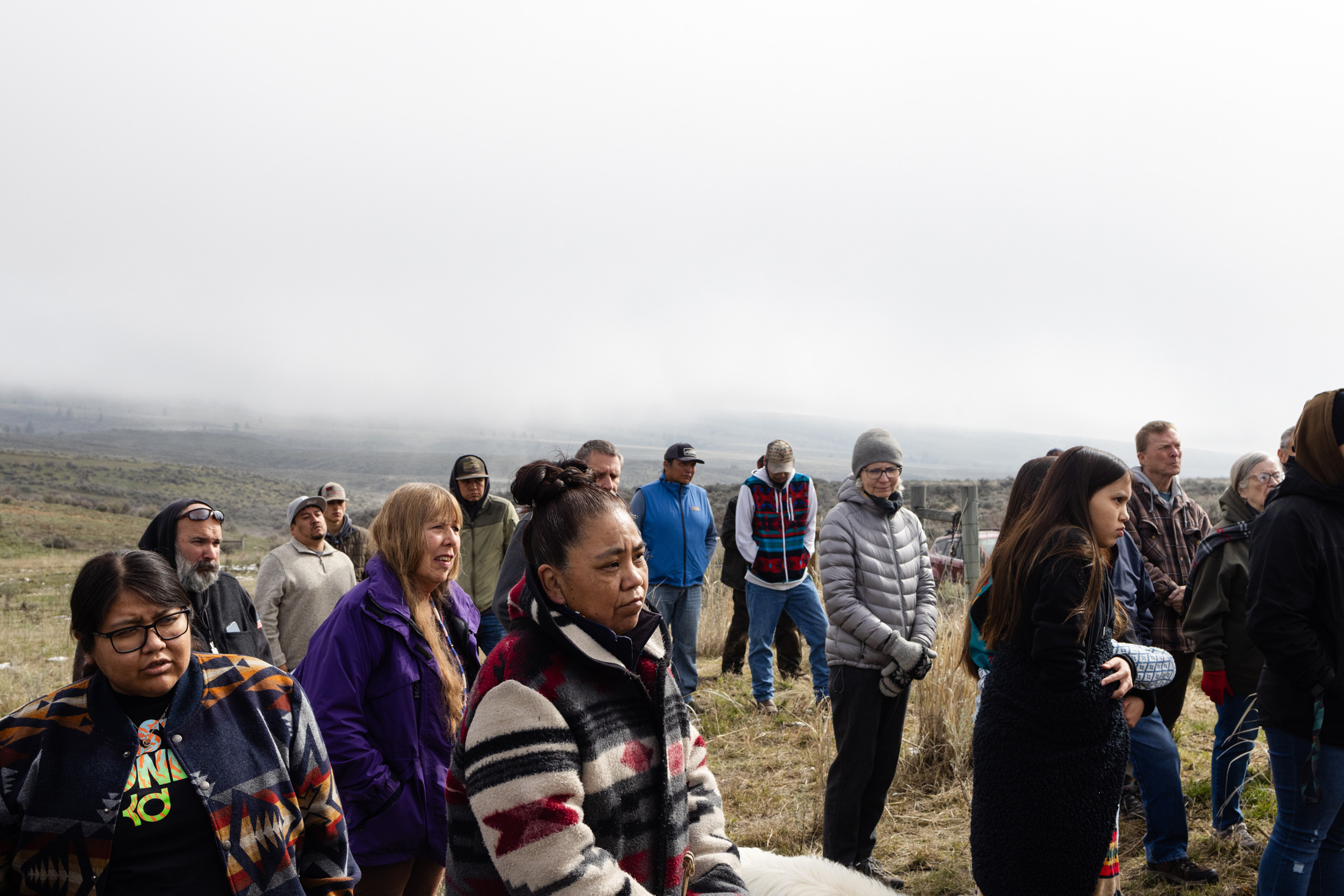
Nevertheless, the withdrawal represents a clear victory for Indigenous advocacy. Following the impactful High Country News and ProPublica investigation, members of the Wenatchi-P’squosa, one of the twelve Confederated Colville Tribes, organized a powerful demonstration on Badger Mountain in 2024. The protest, spearheaded by the Wenatchi Advisory Group – an independent body dedicated to representing the specific interests of its Wenatchi-P’squosa constituents to the Colville Tribal Business Council – articulated a nuanced stance: a firm commitment to renewable energy, but an unwavering opposition to its placement on culturally vital landscapes like Badger Mountain. This demonstration garnered significant attention, compelling Avangrid to announce a "pause" in development, publicly stating its intention to reconsider tribal input and broader public response. For tribal nations, the public comment process within state and federal permitting frameworks often serves as one of the few formal avenues available to articulate and defend their inherent rights concerning land development, underscoring the critical importance of sustained community engagement and public awareness campaigns.
The unfolding drama at the state level further illuminated the complexities. At a state energy permitting meeting earlier this month, Avangrid initially sought a year-long extension to pause the permitting work, intending to keep the project active within the state’s regulatory system. Mark Eilers, Avangrid’s senior director of business development, cited significant construction delays involving the Bonneville Power Administration (BPA) as the primary reason. The BPA, a federal agency crucial for power transmission across the Pacific Northwest, is undertaking a major grid reinforcement project called Cross-Cascades North, designed to enhance power delivery from eastern Washington to the burgeoning Seattle metropolitan area. Eilers indicated that BPA’s anticipated construction timeline for this critical transmission line had been pushed back by four years, now expected to conclude in 2032, implicitly linking this delay to Avangrid’s request for more time. This highlights the intricate web of dependencies in large-scale infrastructure projects, where one delay can ripple across an entire development pipeline.
The Energy Facility Site Evaluation Council (EFSEC), Washington State’s primary authority for siting major energy facilities, hosted the July meeting. During discussions concerning the solar project’s potential environmental and cultural impacts, EFSEC chair Kurt Beckett acknowledged the profound objections raised by both the Yakama Nation and the Colville Tribes. While remarking that EFSEC attempts to “minimize as much of that noise” as possible in public forums – a statement that itself drew criticism for potentially downplaying legitimate concerns – Beckett nonetheless conceded, “I don’t wish to overemphasize those, but ultimately they exist,” adding that tribal objections must be duly considered in the state’s ultimate permitting decisions. This cautious acknowledgment from a state regulatory body reflects an increasing, albeit sometimes reluctant, recognition of Indigenous sovereignty and environmental justice concerns in infrastructure planning.
Just five days after requesting the extension, Avangrid filed a complete withdrawal of its proposal, which had been actively in development since at least 2019. EFSEC formally announced the withdrawal, stating, “EFSEC will move forward to process this request by closing out existing financial arrangements and notifying interested and agency partners.” They offered no further comment, directing all inquiries to the developer. Despite the persistent ambiguity surrounding Avangrid’s precise motivations for the final withdrawal, the Wenatchi Advisory Group expressed immense relief and satisfaction. Steven Wynecoop, vice chair of the Wenatchi Advisory Group and grandson of its revered founder, Matthew Dick, conveyed the community’s sentiment: “We are very, very happy that they chose to go this route with us, ‘cause it is a very sacred site to us.” Wynecoop elaborated on the mountain’s enduring significance, stating, “Generations, we’ve been going to that mountain for plenty of reasons: medicines, foods like roots and berries,” emphasizing that families continue to visit the site for essential ceremonies, maintaining a living connection to their heritage.
The deep, multi-generational connection to Badger Mountain resonates through Wenatchi lineages, steeped in stories and traditions passed down through time. Wynecoop recounted a poignant family anecdote that underscores this profound bond. He recalled his grandfather, Matthew Dick, often sharing a story from his youth. While his family was gathering traditional medicines on Badger Mountain, they were approached by non-Indigenous landowners. “A white couple showed up in their car and pulled over and started talking to my grandma, because they adored her son, Uncle Terry, so much.” Terry, Matthew’s brother, was innocently fishing in a puddle with a stick and string, a charming image that captivated the couple. “They thought he was just adorable,” Wynecoop recounted, mirroring his grandfather’s frequent retelling at ceremonies. The couple, so enamored, made an extraordinary offer: “They wanted to adopt him. They offered their part of Badger Mountain to her for her kid – which, of course, she turned them down.” Wynecoop chuckled softly as he concluded the story, echoing his grandfather’s wistful humor: “We would always laugh, ‘cause Grandpa would always say ‘Yeah, now here we are – no Badger Mountain, but we got Terry!’” This anecdote, far from a mere family tale, encapsulates the Indigenous perspective on land: not as a commodity to be traded, but as an inseparable part of identity, family, and cultural continuity, a value that transcends any monetary or developmental proposition.
The withdrawal of the Badger Mountain solar project sets a powerful precedent for future energy development across the United States and globally. It reinforces the growing understanding that the transition to a sustainable energy future must be undertaken responsibly, recognizing and honoring the rights, cultural heritage, and sovereignty of Indigenous peoples. Companies like Avangrid, operating within an increasingly scrutinized global landscape, are facing enhanced pressure from investors, consumers, and regulatory bodies to adhere to robust Environmental, Social, and Governance (ESG) standards, which include meaningful consultation and respect for Indigenous communities. This outcome at Badger Mountain serves as a crucial reminder that while the pursuit of renewable energy is vital, it must not come at the expense of sacred landscapes and the fundamental rights of those who have stewarded them for millennia. The struggle for climate action and social justice are inextricably linked, demanding a holistic approach that prioritizes both planetary health and human dignity.







