

 Johny Prima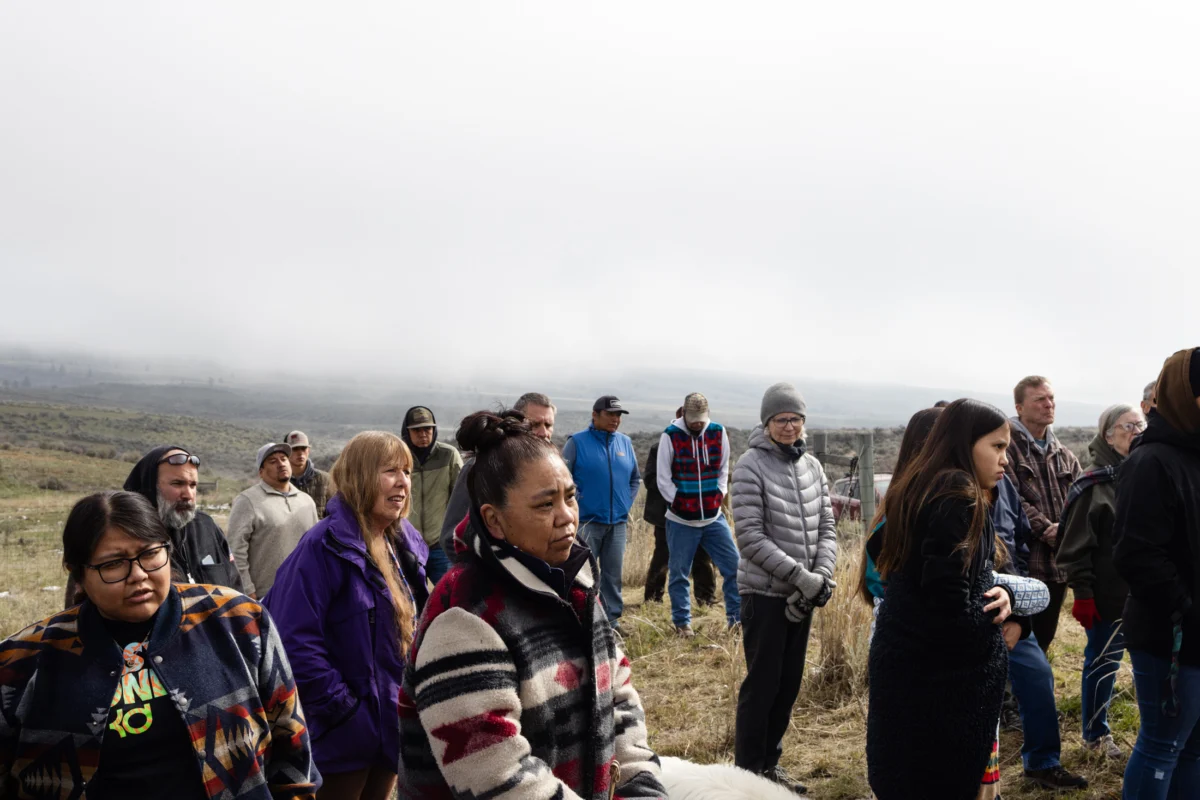
Energy developer Avangrid has officially withdrawn its longstanding permit application for an industrial-scale solar facility on Badger Mountain in central Washington, a site held profoundly sacred by the Confederated Tribes of the Colville Reservation and the Confederated Tribes and Bands of the Yakama Nation. The proposed development, intended to harness the abundant solar potential of the region, spanned both private parcels and public lands managed by the Washington Department of Natural Resources (DNR). This decision marks a significant moment in the ongoing national dialogue surrounding renewable energy development, Indigenous rights, and the preservation of cultural heritage.
For generations, Badger Mountain has served as an indispensable cultural landscape for these tribal nations, a place where ancestral traditions, including the gathering of vital food sources, medicinal plants, and the performance of sacred ceremonies, are meticulously practiced and preserved. These inherent rights to cultural traditions on public lands are legally affirmed, rooted in federal trust responsibilities, treaty obligations, and legislative frameworks such as the American Indian Religious Freedom Act (AIRFA) and the National Historic Preservation Act (NHPA), which mandate the consideration and protection of cultural resources. However, a 2024 investigative report by HCN and ProPublica starkly revealed how Avangrid’s proposed solar development directly imperiled these fundamental tribal rights and the delicate ecological balance of the sacred site.
In response to the withdrawal, Chairwoman Cindy Marchand of the Colville Tribes expressed profound satisfaction, articulating a sentiment widely shared among Indigenous communities: "While the Colville Tribes certainly appreciates the value of renewable energy such as solar power, sacred sites must remain pristine to pass down to future generations." Her statement underscores the critical, often challenging, balance between advancing sustainable energy goals and safeguarding irreplaceable cultural and spiritual landscapes. This delicate equilibrium represents a growing global tension, as many renewable energy projects — from vast solar arrays and towering wind farms to geothermal plants and extensive transmission lines — are frequently sited on or near lands of immense cultural and historical significance to Indigenous peoples worldwide.
While Avangrid did not publicly clarify its motivations, and both the company and the Department of Natural Resources declined to comment on the specific reasoning behind the withdrawal, formal permitting proceedings suggested that the decision might have been influenced by broader logistical and infrastructure challenges rather than solely by Indigenous rights concerns. Nevertheless, the protracted and vocal opposition from tribal nations, coupled with increasing public awareness, undoubtedly created a complex operational environment for the developer. Corporate decision-making often weighs not only direct costs and benefits but also reputational risks, the potential for prolonged legal disputes, and the erosion of public trust, factors that can significantly impact a project’s long-term viability.
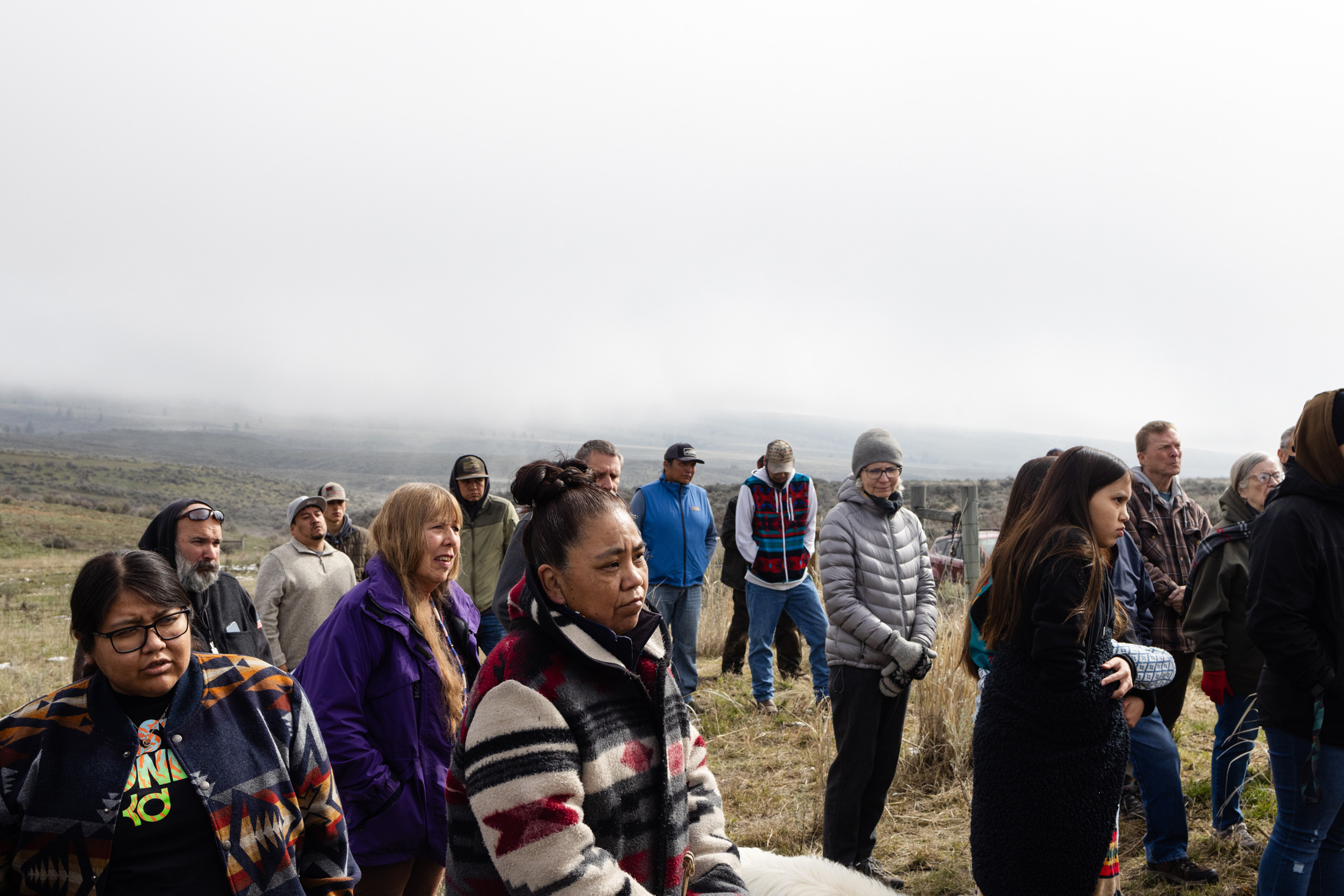
The intensity of tribal opposition became particularly evident following the publication of the investigative report. Members of the Wenatchi-P’squosa, one of the twelve Confederated Colville Tribes, staged a powerful demonstration on Badger Mountain in 2024. Organized by the Wenatchi Advisory Group, an independent body that advises the Colville Tribal Business Council on issues specific to its Wenatchi-P’squosa constituents, the demonstration conveyed a clear message: while supporting the overarching goal of renewable energy, the project’s placement on a culturally vital site like Badger Mountain was unacceptable. This grassroots mobilization highlighted the deep personal and communal connections to the land and the unwavering commitment to its protection.
Following this visible display of opposition and mounting public response, Avangrid announced a temporary pause in development, signaling a period for reconsideration of tribal input. The public comment process, while a standard component of environmental and energy permitting in the United States, often serves as one of the few formal avenues available for tribal nations to advocate for their rights concerning land development. However, many Indigenous leaders and legal scholars argue that this process falls short of the government-to-government consultation mandated by federal law and treaty, often relegating sovereign nations to the role of mere stakeholders rather than co-equal partners in decision-making.
Just weeks before the complete withdrawal, Avangrid had sought a year-long extension to pause permitting work, citing significant construction delays impacting the Bonneville Power Administration (BPA). At a state energy permitting meeting earlier this month, Mark Eilers, Avangrid’s senior director of business development, informed the Energy Facility Site Evaluation Council (EFSEC) that BPA’s anticipated construction timeline for the Cross-Cascades North transmission line had been pushed back by four years, now projected for completion in 2032. This critical transmission infrastructure project, designed to bolster power delivery from eastern Washington to the burgeoning Seattle metropolitan area, is essential for integrating new renewable energy sources into the grid and enhancing regional energy reliability. The delay implied a substantial hurdle for Avangrid’s solar project, which would have depended on this transmission capacity to deliver its generated power.
The complexities of grid modernization and transmission infrastructure development present a systemic challenge for the rapid expansion of renewable energy across the globe. New solar and wind projects frequently face "queue congestion" at interconnection points, requiring extensive and costly upgrades to existing transmission lines or the construction of entirely new ones. These infrastructure projects themselves are often mired in their own permitting challenges, environmental reviews, and land-use disputes, creating a cascading effect of delays that can impact the financial viability and timelines of associated generation projects. The Avangrid case exemplifies how delays in one critical component of the energy system can unravel an entire development plan.
During the EFSEC meeting, where Avangrid’s extension request was discussed, EFSEC chair Kurt Beckett acknowledged the substantial objections raised by both the Yakama Nation and the Colville Tribes regarding the solar project’s potential environmental and cultural impacts. While he noted the council’s effort to "minimize as much of that noise" as possible in public forums, he also affirmed, "I don’t wish to overemphasize those, but ultimately they exist," adding that tribal objections must be duly considered in state permitting decisions. This statement, while acknowledging tribal concerns, also inadvertently highlighted the inherent tension within regulatory bodies attempting to balance efficient project approval with the profound, often immeasurable, value of cultural heritage.
Just five days after that pivotal meeting, Avangrid formally filed its request to completely withdraw the proposal, effectively ending a project that had been in development since at least 2019. EFSEC subsequently announced the formal withdrawal, confirming it would proceed to close out existing financial arrangements and notify all interested parties and agency partners. While the official reason for withdrawal remained tied to the BPA transmission line delays, the persistent and culturally grounded opposition from tribal nations undoubtedly contributed to the decision-making calculus, demonstrating the increasing power of Indigenous advocacy in shaping energy development landscapes.
The Wenatchi Advisory Group expressed immense relief and gratitude for the outcome. Steven Wynecoop, vice chair of the group and grandson of its founder, Matthew Dick, articulated the community’s sentiment: "We are very, very happy that they chose to go this route with us, ’cause it is a very sacred site to us." He elaborated on the deep, intergenerational connection to the mountain, emphasizing its continuous use for centuries: "Generations, we’ve been going to that mountain for plenty of reasons: medicines, foods like roots and berries," he explained, adding that families continue to conduct sacred ceremonies there today. This profound relationship transcends mere land ownership; it is an enduring cultural identity intrinsically tied to the landscape.
Wynecoop also shared a poignant family anecdote that vividly illustrates this enduring connection. He recounted a story his grandfather often told about gathering medicines on Badger Mountain during his youth. On one occasion, a non-Indigenous couple, landowners in the area, approached his grandmother, charmed by his great-uncle Terry, who was then a young boy fishing in a puddle. "They wanted to adopt him," Wynecoop recounted. "They offered their part of Badger Mountain to her for her kid — which, of course, she turned them down." Wynecoop chuckled, recalling his grandfather’s wry humor: "Grandpa would always say, ‘Yeah, now here we are — no Badger Mountain, but we got Terry!’" This tale, rich in family history and cultural memory, underscores the immeasurable value placed on kinship and heritage over material possession, even sacred land.
The withdrawal of the Badger Mountain solar project sets a significant precedent, illuminating the complex interplay between renewable energy ambitions, Indigenous sovereignty, and cultural preservation. It underscores the critical importance of early, genuine, and respectful engagement with tribal nations in the planning stages of major infrastructure projects. As the world races to decarbonize its energy systems, cases like Badger Mountain highlight that a truly "just transition" must not only mitigate climate change but also uphold human rights, protect cultural heritage, and empower Indigenous communities in decisions affecting their ancestral lands. This outcome serves as a powerful reminder that while the demand for clean energy is urgent, its development must proceed with an unwavering commitment to equity, respect, and cultural integrity.







