

 Rocky Gerung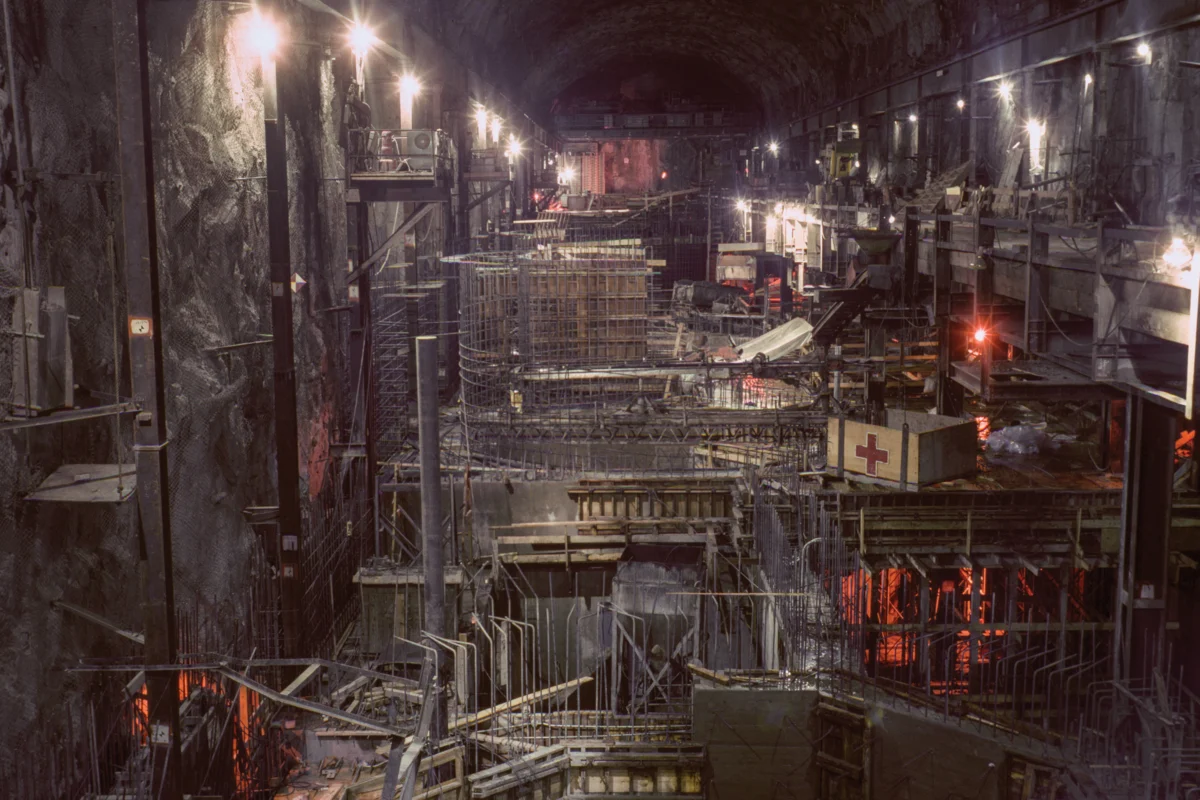
Initiated in 1961, California’s State Water Project (SWP) stood as one of the most ambitious water infrastructure undertakings in United States history, fundamentally reshaping the state’s arid landscapes. The colossal engineering feat, spanning over 700 miles from the northern Feather River watershed to Lake Perris in Southern California, commenced delivering its lifeblood to thirsty southern regions by 1972. This vast network of canals, dams, and pumping stations remains a testament to mid-20th century technological prowess and a symbol of California’s audacious spirit in confronting the challenges of its water-scarce environment. The California Department of Water Resources (DWR) meticulously documented its construction through an extensive public photo archive, images that capture a powerful narrative of California’s belief in its capacity to engineer solutions to its water needs, transforming the state into what former DWR information officer Erwin Cooper aptly termed an "Aqueduct Empire."

The DWR’s photographic collection, particularly images captured between 1962 and 1968, offers a window into a post-World War II era imbued with a profound optimism. These photographs showcase not just the utilitarian marvels of engineering designed to solve large-scale water resource problems, but also a potent political message: that the state, a colossus in its own right, could conquer the arid West’s water scarcity. This infrastructure was conceived not merely for function, but for public display and celebration, a constant affirmation of the state’s problem-solving capabilities. As anthropologist Brian Larkin notes, the aesthetic grandeur of such infrastructure often takes precedence over its technical aspects, allowing it to perform significant political work by embodying progress and state capacity. These images reflect a period when citizens more readily rallied behind monumental public works, a sentiment that has shifted considerably in contemporary times, with recent movements advocating for the removal of dams, such as the Klamath dams, signaling a public appetite for deconstruction rather than construction of water infrastructure.

The SWP’s intricate network draws water from the Sacramento-San Joaquin Delta, a vital confluence where the state’s two major river systems meet before emptying into the Pacific Ocean via the San Francisco Bay. Here, water is meticulously captured and redirected into the dual arteries of the federal Central Valley Project (CVP) and the southern portion of the SWP. The delta itself is a complex mosaic of over a thousand miles of levees, more than fifty reclaimed "islands," and a sprawling network of 700 miles of waterways, collectively forming a region roughly the size of Rhode Island. For over seven decades, the dynamic flow of water into and out of this delta has been a focal point of California’s water politics, and the images of the California Aqueduct vividly illustrate this transformation, charting the state’s landscape as it was reshaped by this ambitious project.

The construction of the Edward Hyatt Powerplant, completed in 1967 near Oroville Dam in Butte County, exemplifies the project’s integrated approach to resource management. This facility, part of the State Water Project, maximized power generation through a sophisticated pumped-storage system. During off-peak periods, excess water, beyond local and downstream needs, was pumped back into Lake Oroville. Then, during peak demand, this stored water was released through the powerplant for generation, demonstrating an early model of integrated water and energy management. Similarly, the Dos Amigos Pumping Plant, completed in 1966 on the California Aqueduct-San Luis Canal in Merced County, was a critical component in lifting waters over 100 feet to continue the SWP’s southern journey. The construction of diversion tunnels for Oroville Dam, like Tunnel No. 1, highlights the immense scale of the project, with these tunnels initially serving to divert the Feather River during dam construction and later repurposed for discharging water from the Edward Hyatt Powerplant. The South Bay Aqueduct Surge Tank in Alameda County, painted in 1965, underscores the widespread network and the attention to detail in constructing ancillary infrastructure like surge tanks, essential for managing water flow and pressure within the aqueduct system.

The political vision and the immense operational infrastructure required to deliver water across such vast distances are palpable in these photographs. These projects were conceived and executed in the years leading up to Rachel Carson’s seminal 1962 publication, Silent Spring, a period when American environmentalism was gaining momentum. Over six decades later, the mid-century optimism that fueled such grand endeavors has encountered the stark realities of 21st-century environmental challenges. Climate change and the historical over-allocation of water resources have inflicted significant and often irreparable damage on the Western landscape. The very infrastructure that once symbolized hope and progress is now increasingly viewed as aging relics, necessitating constant repairs and upgrades. The dramatic Oroville Dam incident in 2017, which forced the evacuation of nearly 200,000 people due to spillway failures, starkly illustrated the vulnerabilities inherent in this aging system.

The DWR’s commitment to documenting its operations extends to the present day, with a dedicated photography unit comprising six photographers who traverse the state. Bill Kelley III, the unit’s archivist, works from a windowless room at the department’s Sacramento headquarters, meticulously scanning an enormous backlog of over 250,000 negatives and color slides, a task that will continue for years to come. Kelley notes that these photographs initially served as engineering records but have evolved into a crucial historical and political asset for the DWR. The sheer volume of photographic material produced over seven decades is a testament to photography’s enduring political power, serving not only as a visual chronicle of state water management but also as a tool to justify the department’s continued role and potential expansion in managing California’s water resources.

California’s population has more than doubled since the SWP’s approval in 1960, soaring from 16 million to approximately 39 million today. This imbalance between population growth and water availability has been a persistent challenge for the state’s development, particularly given that over 90% of its residents reside south of Sacramento, while roughly 75% of its rainfall occurs north of the capital. The history of California, from the Gold Rush to the current era of acute climate change, is intrinsically linked to its ongoing struggle with water management. The photographs of the State Water Project do more than simply record historical moments; they encapsulate California’s enduring pursuit of a utopian vision – a fantasy where water flows abundantly, sustaining its farms, cities, and industries, perpetually defying the region’s aridity and securing a promised future. While the ambition of re-engineering the environment on such a grand scale is undeniable, the West, forever situated on the dry side of the 100th meridian, faces an inherent challenge to this vision, a climatic reality that threatens the Californian utopia, regardless of the infrastructure or the optimistic imagery produced. The Edward Hyatt Powerplant, for instance, not only facilitates water delivery and power generation but also plays a crucial role in the broader energy grid, highlighting the multifaceted importance of such large-scale water projects in a state with significant energy demands. The San Luis Reservoir, a joint-use facility between the Bureau of Reclamation and the DWR, further illustrates the collaborative efforts and the complex ownership structures involved in managing these vast water resources. The construction of the Thermalito Diversion Dam, a key component of the Oroville Dam complex, demonstrates the intricate system of water diversion and storage designed to meet the project’s multifaceted goals, including power generation and water supply. The ongoing efforts to maintain and upgrade these aging facilities, such as the extensive repairs undertaken at Oroville Dam, underscore the long-term commitment and financial investment required to sustain California’s "Aqueduct Empire" in the face of evolving environmental and infrastructural challenges.








