

 Joko Susilo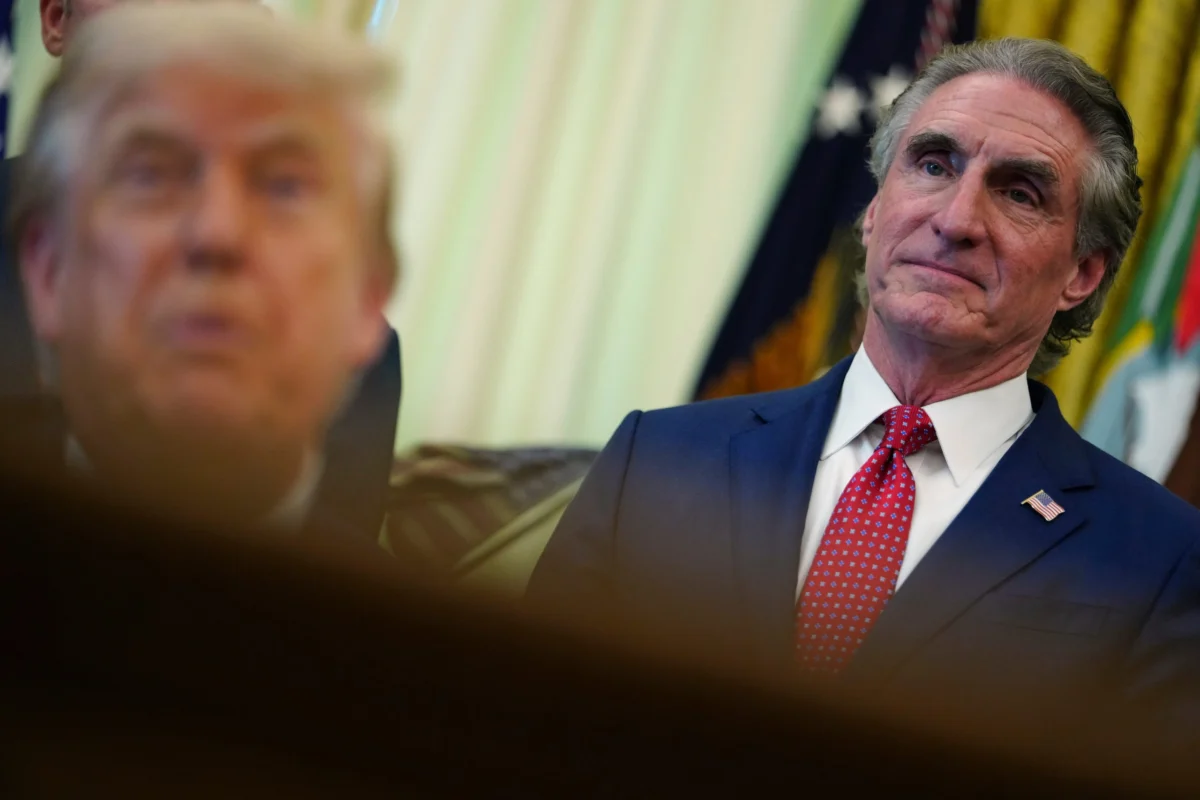
On September 14, the U.S. Fish and Wildlife Service (USFWS) issued a contentious internal memo, fundamentally altering the interpretation of the Endangered Species Act (ESA) by effectively legalizing the incidental killing of protected wildlife. This directive marks a significant departure from decades of established conservation policy, narrowing the scope of the nation’s most critical wildlife protection law. Under this new interpretation, the "take" prohibition of the ESA—a cornerstone of species recovery since its enactment in 1973—would no longer apply to harm that is not "intentionally directed against a particular animal or animals." Critics contend this move could "eviscerate" the Act, allowing industrial activities to inadvertently cause widespread harm or even extinction to vulnerable populations without legal repercussions. For instance, a timber company could clear-cut a forest, destroying the habitat and lives of an entire family of federally protected peregrine falcons, or an energy company’s oil spill could decimate an entire species of aquatic life, yet remain shielded from prosecution under this revised guidance, so long as the actions were not specifically aimed at the individual animals themselves. This interpretation starkly contrasts with the broad "harm" definition previously upheld, which recognized habitat modification as a form of "take" if it injured or killed wildlife by significantly impairing essential behavioral patterns like breeding, feeding, or sheltering. The ESA, a bipartisan triumph signed into law by President Richard Nixon, has been instrumental in preventing the extinction of hundreds of species, from the bald eagle to the gray wolf, making this administrative redefinition a profound threat to its efficacy and legacy.

This latest policy shift bears the unmistakable imprint of Interior Secretary Doug Burgum, whose tenure has been characterized by a systematic dismantling of environmental safeguards and a pronounced tilt towards industrial interests. In less than two years, the former North Dakota governor has amassed a record that places him among the most environmentally contentious Interior secretaries in U.S. history, drawing comparisons to figures like James Watt, whose controversial policies in the 1980s ignited fierce public backlash, Gale Norton, known for her industry ties, and even Albert B. Fall, who famously resigned amidst the Teapot Dome scandal. Burgum’s actions have included the dramatic reduction of 3 million acres from Bears Ears and Grand Staircase-Escalante national monuments in Utah, areas rich in archaeological and ecological significance; the opening of vast swathes of sensitive Arctic wildlands to oil and gas exploration, threatening pristine ecosystems and indigenous communities; and the acceleration of uranium mining and fossil fuel projects through streamlined permitting processes that often bypass robust environmental reviews. Furthermore, his department has approved large-scale data centers on public lands with minimal, if any, public input, raising concerns about energy consumption, water usage, and the long-term ecological footprint of such developments.
Paradoxically, Burgum’s initial appointment at the outset of the Trump administration’s second term was met with a surprising degree of optimism from some segments of the environmental community. Many saw him as a potential "lone bright spot" in a cabinet largely perceived as hostile to conservation, viewing him as a pragmatic conservationist in the vein of President Theodore Roosevelt, a figure Burgum himself claimed to admire. In January 2025, the Outdoor Recreation Roundtable, a powerful coalition representing a broad spectrum of outdoor-oriented businesses and organizations, publicly endorsed Trump’s selection. Their letter of support highlighted Burgum’s "history of support for outdoor recreation, the outdoor recreation economy, and the protection of public lands and waters," deeming his leadership "critical." This favorable view stemmed partly from Burgum’s gubernatorial record in North Dakota, where he had notably pledged to make the oil-rich state carbon-neutral by 2030 through a combination of renewable energy development and carbon capture technologies. His self-presentation as a pragmatic, old-school Western Republican offered a perceived contrast to other more ideologically driven potential nominees. This initial goodwill ultimately facilitated his confirmation by the U.S. Senate with an overwhelming 80 to 17 vote, garnering support even from conservation-minded Democrats representing Western states such as New Mexico, Colorado, Nevada, and Arizona, who might have otherwise opposed such an appointment. Outdoor gear giant REI was among the prominent companies and groups that affixed their names to the endorsement letter, signaling a hope that Burgum would champion public lands and responsible stewardship.

However, a closer examination of Burgum’s political history and business dealings would have revealed significant red flags that tempered this initial optimism. As governor, his commitment to carbon neutrality was, for instance, intertwined with his support for a controversial carbon dioxide pipeline project, a venture heavily backed by Continental Resources, the massive oil and gas company founded by his close friend, Harold Hamm. Moreover, Burgum’s administration enacted and supported draconian measures aimed at suppressing protests against the Dakota Access Pipeline, including issuing broad evacuation orders and signing legislation that effectively criminalized peaceful assembly. The energy firm behind the pipeline, Energy Transfer, subsequently made substantial donations, tens of thousands of dollars, to Burgum’s 2020 re-election campaign, raising questions about potential conflicts of interest and the influence of corporate donors on public policy.
During his Senate confirmation hearing, Burgum candidly expressed his vision for managing the Department of the Interior, framing it explicitly in business terms. He spoke of the "trillions of dollars of assets" buried beneath the nation’s public lands, referring to them as "the balance sheet of America." He argued that if the government were a company, it would be seen as "restricting its balance sheet" by not fully exploiting these resources. While this business-centric perspective undoubtedly raised alarms among environmentally conscious lawmakers and advocacy groups, Burgum attempted to assuage concerns by adding that his focus on public land "balance sheets" would not extend to designated wilderness areas, national parks, or "those areas we have to absolutely protect for their precious stuff." This caveat provided a thin veneer of reassurance, suggesting a selective approach to resource extraction that would spare the nation’s most cherished natural and cultural sites.

Yet, immediately upon assuming office, Burgum abandoned any pretense of selective protection and swiftly emerged as one of the most fervent proponents of Donald Trump’s "energy dominance" agenda. This policy prioritized maximizing domestic fossil fuel production and minimizing environmental regulations to achieve energy independence and global market influence. Under Burgum’s direct guidance, the Bureau of Land Management (BLM) witnessed an unprecedented surge in the amount of acreage leased to oil and gas companies, with drilling permits issued at a rate not seen since the George W. Bush administration. His department drastically truncated the environmental review and permitting process for a proposed uranium mine in Utah, reducing it to a mere two weeks, a timeline critics argued was utterly insufficient for proper impact assessment. These actions were part of a broader series of dozens of regulatory rollbacks, including a contentious redefinition of "take" under the Migratory Bird Treaty Act, a century-old law protecting avian species, which effectively exempted incidental bird deaths from prosecution. The aggressive pursuit of resource extraction prompted REI CEO Mary Beth Laughton to publicly retract the company’s earlier endorsement, acknowledging the stark divergence between Burgum’s actions and the company’s conservation values. Despite these widespread policy shifts, Burgum initially maintained his promise to safeguard national monuments, parks, and other areas he had vaguely categorized as "precious."
However, as his tenure progressed, it became increasingly apparent that the only things "precious" to Secretary Burgum were the unwavering support of his corporate allies, the adulation of the MAGA political base, and, above all, the continued approval of President Donald Trump. In an astonishingly brief period, Burgum has overseen the systematic erosion of critical environmental safeguards, leaving vast expanses of America’s public lands vulnerable to unbridled exploitation by corporate interests.

Even when evaluated solely on his own "pro-business" rhetoric, Burgum’s leadership has demonstrably failed to deliver economic benefit to the nation. His administration has actively impeded the growth of the burgeoning clean energy sector by blocking numerous solar and onshore wind projects. It went further by effectively paying offshore wind companies to abandon their federal leases, thereby stifling renewable energy development and incurring significant financial costs. The controversial killing of the Public Lands Rule, which aimed to elevate conservation to a co-equal status with other uses like grazing and mining on BLM lands, further undermined sustainable land management. Financially, Burgum’s decision to reduce royalty rates on oil and gas leases directly diminished the revenue streams that the federal government and American taxpayers received from the extraction of resources on public lands. His evisceration of methane emissions limits on oil and gas facilities allowed drillers to freely vent and leak this potent greenhouse gas—which is significantly more effective at trapping heat than carbon dioxide over a shorter period—and other hazardous pollutants into the atmosphere. This not only exacerbated climate change but also represented the wasteful squandering of millions of dollars’ worth of marketable "assets" in the form of natural gas. Moreover, Burgum’s aggressive push to expand public-lands grazing, often at rates less than $2 a month per cow, represents a considerable financial drain. Such low fees fail to cover the administrative costs of managing grazing permits and contribute to ecological degradation through overgrazing, particularly in sensitive riparian areas, thereby diminishing the long-term health and productivity of public forage resources.
Concurrently, Secretary Burgum has served as the primary facilitator for some of Trump’s most ostentatious and controversial vanity projects. He eagerly oversaw the funneling of tens of millions of dollars from the country’s "precious" national parks—funds typically earmarked for maintenance, infrastructure, and visitor services—into projects like a proposed ballroom and triumphal arch, perceived by many as "Trump dictator kitsch." This redirection of vital park funds also coincided with the widely criticized "reflecting pool fiasco," a costly and disruptive renovation project at the Lincoln Memorial Reflecting Pool that faced public scrutiny for its design and execution.

Perhaps most egregiously, Burgum ultimately reneged on his earlier assurances to keep his "greedy hands off precious places." He initiated steps to overturn the Biden-era ban on new oil and gas leases in the vicinity of Chaco Culture National Historical Park, a UNESCO World Heritage site revered for its ancient Puebloan architecture and profound cultural significance. Furthermore, his department not only reinstated the previous administration’s controversial decision to shrink the boundaries of Bears Ears and Grand Staircase-Escalante national monuments but also went a step further by eliminating the Intertribal Bears Ears Commission. This commission, established to ensure indigenous co-management and provide crucial traditional ecological knowledge for the monument’s stewardship, represented a significant blow to tribal sovereignty and self-determination over ancestral lands. The new, reduced boundaries for these monuments took effect on September 11; alarmingly, within just one week, at least 13 new mining claims had already been filed within the newly unprotected areas of Bears Ears, underscoring the immediate and tangible impact of these policy reversals.
Less than two years into his term, it has become unequivocally clear that Doug Burgum is not merely an ideologue driven by a consistent philosophy, but rather a naked opportunist. He has demonstrated a willingness to compromise his integrity and credibility, sacrificing the long-term health and integrity of the nation’s public lands and wildlife to benefit his corporate allies and, critically, to maintain the favor of President Donald Trump and the political base he commands. As a result, Burgum has profoundly failed in his fundamental role as a steward of America’s environment and its invaluable wildlife heritage. His policies have also proven to be fiscally unsound, contradicting his own professed business acumen by squandering public assets and reducing government revenues. While history will ultimately render its definitive judgment on whether he will be remembered as the worst Interior Secretary of all time, the swift and dramatic reversals of environmental policy under his watch have already cemented his legacy as arguably the most disappointing.







