

 Johny Prima
The proposed Painted Desert Power project, poised to become one of the largest solar installations in the United States, has ignited a complex debate within the Coalmine Canyon Chapter of the Navajo Nation, exposing deep-seated distrust and highlighting critical challenges in the transition to renewable energy on Indigenous lands. Initially presented as a 1,000-acre endeavor, the project rapidly expanded its footprint to encompass over 4,000 acres of rangeland, fueling skepticism among community members who felt increasingly marginalized by both the tribal government and the project’s developers. This sentiment echoes a historical pattern of resource extraction on tribal territories where local communities often bear the environmental burden while seeing minimal direct benefits.
"As this whole project kept progressing, it felt more and more like we were being sold down the river, or being taken advantage of, and not given any real voice," stated Tyrel Jones, secretary of the Coalmine Canyon Chapter’s Community Land Use Planning Committee. This concern underscores a broader struggle for energy justice, where marginalized communities, particularly Indigenous peoples, often face an uphill battle in ensuring their self-determination and equitable participation in large-scale energy developments.
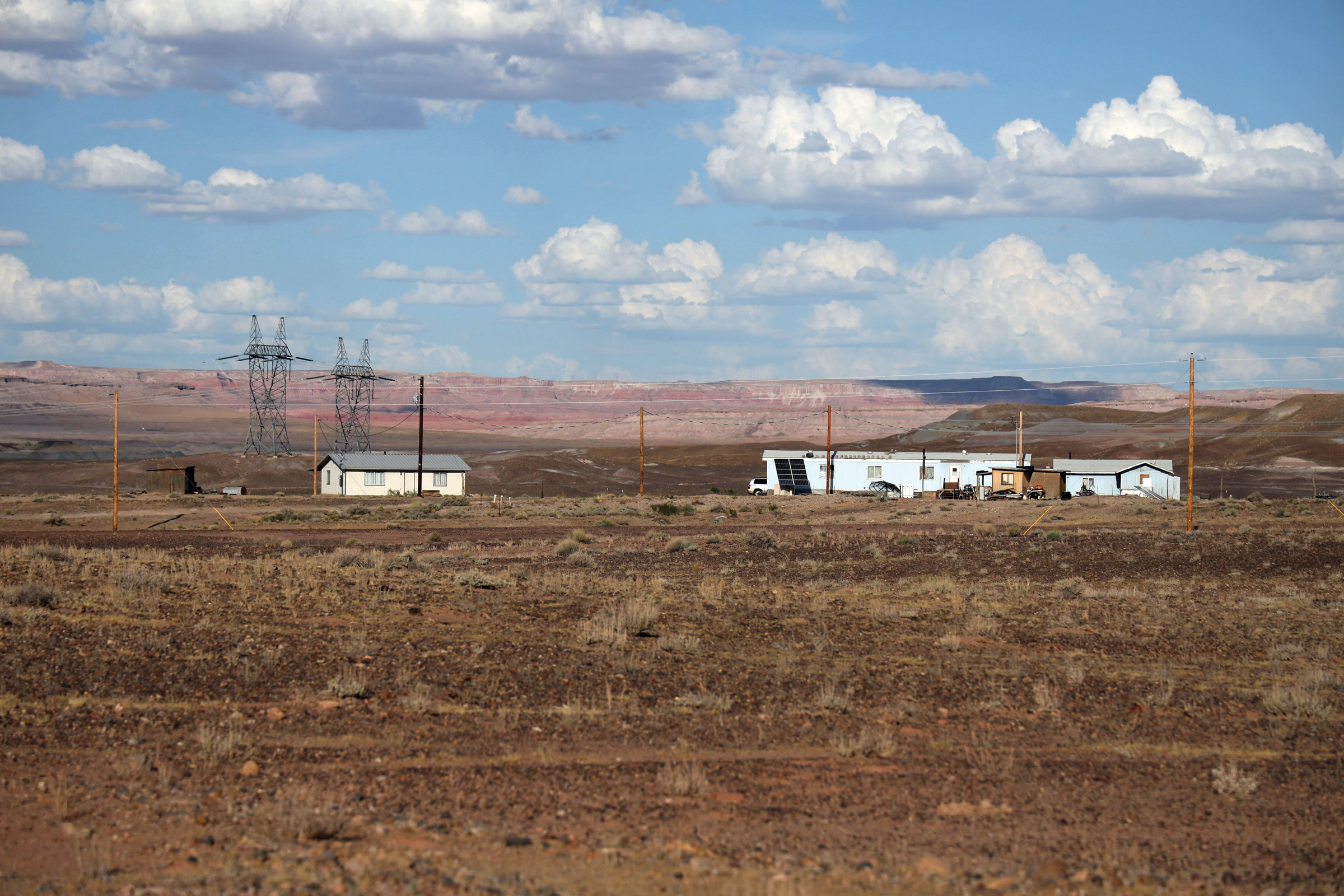
For many residents of Coalmine Canyon, a remote community in northeast Arizona, visualizing a project of this magnitude – generating hundreds of megawatts of electricity – proved challenging. Freddie Hatathlie, a retired Army veteran and lifelong rancher, noted that technical presentations, frequently delivered in English, were difficult for many locals to comprehend. "Make a model, draw models, build a model, so we can see it," Hatathlie urged, highlighting the critical need for culturally and linguistically appropriate communication strategies to foster genuine understanding and informed consent. This communication gap is not unique to the Navajo Nation; it is a pervasive issue in global development projects impacting Indigenous communities, where complex technical and legal information often fails to bridge linguistic and cultural divides.
The rapid expansion of solar development across the Navajo Nation, a strategic pivot following the closure of major coal operations that once provided substantial tribal revenue, has simultaneously exposed significant gaps in existing lease and tax policies. This nascent renewable energy boom necessitates a robust framework to ensure that the economic and social benefits are distributed equitably across the vast Navajo Nation, while also refining communication protocols to ensure residents are genuinely informed and empowered. The Painted Desert Power project, therefore, serves as a crucial case study, offering insights into the intricate processes through which large-scale renewable energy ventures, often spearheaded by external corporations, seek and gain tribal approval, and the challenges inherent in reconciling global energy demands with local community rights and aspirations.
While existing solar projects on the Navajo Nation currently occupy approximately 915 acres, the Painted Desert Power project’s proposed 4,500-acre footprint dwarfs these, signaling a new era of utility-scale development. Many of the earlier projects were led by the Navajo Tribal Utility Authority (NTUA), a tribal enterprise focused on local energy infrastructure. However, the Painted Desert Power project distinguishes itself through its sheer scale and its unique partnership structure. Navajo Power PBC, a Navajo-owned, non-tribal-affiliated organization dedicated to advancing renewable energy in tribal communities, joined forces with Applied Energy Services (AES), a Virginia-based global energy company renowned for its diverse portfolio of power generation and distribution assets, to establish the subsidiary, Painted Desert Power LLC. This collaboration highlights a growing trend of public-private partnerships in renewable energy, yet it also raises questions about control, benefit-sharing, and accountability to local populations.

AES, responding on behalf of the project team, asserted that extensive community engagement efforts were undertaken, including more than 70 chapter and community meetings before the lease received tribal approval. The company also secured four chapter resolutions of support, alongside written consent from affected grazing-permit holders, as mandated by Navajo leasing regulations. "At AES, we understand that our success as a company is only as strong as our partnerships with the communities where we operate. Community consent is at the core of AES and Navajo Power PBC’s approach to development on the Navajo Nation," an email from the project team stated. However, despite these assurances, many residents living in the immediate vicinity of the proposed development expressed persistent confusion and a profound lack of clarity regarding the project’s precise scope, operational details, and ultimate impact on their daily lives.
Jones underscored that the project’s dramatic expansion significantly altered community perceptions regarding the ultimate beneficiaries. He voiced concern over a "large U.S. global company called AES that has no affiliation ever with the Navajo Nation" making demands and offering power that it would solely control. Drawing a powerful analogy, Jones described the situation as "another example of a Trojan horse after another Trojan horse after another Trojan horse," leading to a future where local communities might lose all say-so over these major, often ostensibly beneficial, entities. He recalled that the proposal was initially presented during the early stages of the COVID-19 pandemic, with chapter members receiving minimal formal paperwork beyond general bullet points in pamphlets. This lack of detailed, accessible information, coupled with vague references to other organizations, fueled questions about the true scale, ownership, and rapidly increasing footprint of the project.
A major point of contention for residents like Hatathlie was the proposed distribution of power. Unlike smaller, localized projects, the electricity generated by the Painted Desert Power project would not directly flow to area homes but would instead be fed into the broader regional electrical grid. Hatathlie drew a stark comparison to the now-decommissioned Navajo Generating Station, a massive coal-fired power plant located on the Navajo Nation that, despite its immense output, primarily powered distant cities outside the Nation, providing "zero" power to nearby Page, Arizona, let alone the Navajo communities that hosted it. This historical precedent deeply influences current community skepticism, highlighting the "energy paradox" where energy-rich Indigenous lands often suffer from energy poverty.

AES confirmed that the Painted Desert Power project is indeed designed to serve the broader grid and would not directly supply power to local Navajo homes, as it is not a registered utility in Arizona. To address the immediate electricity needs of Navajo households, Navajo Power PBC co-created a subsidiary, Navajo Power Home, which installs off-grid solar solutions for individual residences. AES reported that Navajo Power Home has already installed over 550 such systems across the Navajo Nation, including more than 80 in the Cameron and Coalmine Canyon chapters, with another 300 installations planned by year-end. While these off-grid units offer vital access to electricity, Coalmine Canyon resident and Navy veteran Arlando Yellowhair, a recipient of a Navajo Power Home unit, noted its limitations. "Eight kilowatts is not sufficient for a family to function without being aware of how much you’re using. You really have to pay attention to the amount that you’re using," Yellowhair explained, underscoring the vast difference between meeting basic needs and providing robust, modern household energy.
The Painted Desert Power project is slated for phased construction, with the first phase anticipated to commence in 2027 and the facility becoming fully operational by 2030. Once completed, AES projects the installation will deploy "1,363,635 solar panels and 816 battery enclosures," a scale that firmly positions it among the largest renewable energy assets in North America. Such monumental infrastructure projects inevitably raise profound questions about environmental impact, land use, and long-term socio-economic consequences for the host communities.
Beyond the immediate energy access, significant uncertainty lingers regarding how, and indeed whether, AES’s substantial lease payments and tax revenues will directly benefit the Coalmine Canyon community. The chapter’s status as an "uncertified chapter" further complicates this financial pathway. Unlike certified chapters, which possess greater autonomy in managing their finances and directly engaging with external entities, uncertified chapters route their funds through the Navajo Nation Office of the Controller in Window Rock, the tribal capital. AES’s lease agreement with the Navajo Nation stipulates annual payments of $545 per acre, with a 2% annual increase over the project’s 40-year lifespan, estimated to generate over $310 million in lease and tax revenues. The company also committed to an additional "$16.7 million per Chapter over project lifetime," claiming these annual payments would "more than double the Chapter’s FY26 budget." Yet, the critical question remains: will individual residents, whose ancestral lands are being utilized, receive any direct compensation? Shaun Hudson, the Coalmine Canyon Chapter Grazing Official, expressed doubts, noting that financial benefits might not directly reach uncertified chapters.

The communication of this complex financial and procedural information to residents, often through a lengthy 60-slide PowerPoint presentation over a mere two days, exacerbated existing frustrations. Hatathlie reiterated that developers frequently relied on technical jargon and English-only presentations, making genuine understanding difficult for many. This created a prevailing sense that, despite ongoing workshops and informational meetings, key decisions had already been made by the higher echelons of the Navajo government, largely bypassing meaningful local input.
The ambiguity surrounding the Coalmine Canyon Chapter’s uncertified status profoundly impacts its ability to directly benefit from such large-scale projects. Non-Governance Certified Chapters lack the financial independence and administrative capacity to manage funds directly, negotiate complex leases, or enter into contracts with external entities, unlike their certified counterparts. This structural disparity means that funds intended for the chapter are routed through the Navajo Nation Administrative Service Centers, potentially delaying or obfuscating direct local benefits and exacerbating feelings of disenfranchisement.
The inherent complexity of Navajo Nation legislative procedures further compounds community confusion. Leases, tax measures, and project approvals navigate multiple committees and review stages before reaching final action. Shawna Claw, a Chinle Council delegate and member of the Navajo Nation Resource and Development Committee, acknowledged this legislative labyrinth as a significant source of misunderstanding. She cited instances where residents confused the lease approval process with the separate tax structure measure, leading to concerns about grazing permits being obtained without their consent. In fact, legislative documents related to the project’s tax arrangement reveal letters from chapter residents requesting their grazing permits be rescinded, fearing their land rights were being compromised for the solar development.

Claw emphasized that residents believing their grazing permits were obtained without consent can appeal through the Navajo Nation Department of Agriculture for an independent review. However, she conceded that many residents, particularly in remote areas with limited access to information and resources, remain unaware of these crucial administrative and legal avenues. This highlights a critical need for enhanced legal literacy and accessible support systems within the Nation.
Ultimately, the extensive discussions surrounding the Painted Desert Power project have brought into sharp focus the broader questions concerning the regulation and governance of renewable energy projects on the Navajo Nation. Jones noted that tribal leaders are still in the process of developing a comprehensive renewable energy policy framework, including clear guidelines for taxation and governance of such large-scale developments. Former Navajo Nation Council Delegate Thomas Walker Jr., who represented the affected chapters, stressed that the Nation’s legislative, land-leasing, and review processes were designed to ensure all stakeholders have a role. "If the processes are allowed to be utilized without any shortcuts… if it’s allowed to run its course all the way through, and you know our leaders are there to consider if they’re fully informed and if they have absolutely no questions… then they vote on it," he explained. Walker asserted that if any steps are sidestepped or missed, "community and the public deserve to know what happened," reinforcing the critical importance of transparency and adherence to established tribal law, especially for projects involving such extensive use of tribal land.
Yet, for local community members like Hudson, the grazing official, the act of questioning often feels futile. A pervasive sentiment among many is that key decisions are often "pre-made in Window Rock." He articulated a feeling that developers "come in just to follow procedure, you know, just to show their place. So, it doesn’t matter." This deep-seated skepticism, rooted in historical experiences of external control and limited local agency, presents a formidable challenge for the Navajo Nation as it strives to balance economic development, sustainable energy goals, and the fundamental rights and aspirations of its sovereign communities. The Painted Desert Power project, while promising a green energy future, undeniably illuminates the complex socio-political landscape of Indigenous self-determination in the global energy transition.







